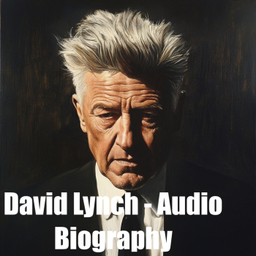
Podcast thumbnail for David Lynch - Audio Biography

David Lynch - Audio Biography

Claim This Podcast

by Inception Point AI

2.3(6 reviews)
1 episodes
Updated Daily
Accepts GuestsHas SponsorsLocation 🇺🇸
41

Podcast Authority

Beta
FairBased on show quality, social media presence, reviews, charts, and more
Pod Engine
Quality70
Social0
YouTube0
Engagement31

Podcast Overview

David Keith Lynch, born on January 20, 1946, in Missoula, Montana, was an artist, filmmaker, and visionary whose work defied categorization. Known for his ability to blend the surreal with the everyday, Lynch crafted a cinematic style that pushed the boundaries of storytelling, creating worlds that were both deeply unsettling and profoundly beautiful. From his early days as an aspiring painter to his rise as one of the most celebrated directors of his time, Lynch's career was a testament to his relentless creativity and unique perspective on art and life.Lynch’s childhood was shaped by frequent moves due to his father’s work as a research scientist for the U.S. Department of Agriculture. These relocations exposed him to a variety of landscapes and communities, experiences that would later manifest in his work. His upbringing in a traditional American household, contrasted with his innate curiosity about the strange and uncanny, laid the groundwork for his artistic voice. As a young man, Lynch aspired to be a painter, enrolling at the School of the Museum of Fine Arts in Boston. His pursuit of art eventually led him to Europe, where he intended to study under expressionist painter Oskar Kokoschka. However, his time abroad was short-lived, as he quickly realized his connection to the European art scene was tenuous, and he returned to the United States.Back in the U.S., Lynch found his footing at the Pennsylvania Academy of Fine Arts in Philadelphia. It was here that he began experimenting with film, discovering a passion for moving images. His first foray into filmmaking was a short project that captured the intersection of his painterly instincts and a newfound interest in storytelling. The bleak, industrial setting of Philadelphia also left an indelible mark on him, inspiring much of the atmospheric tension and haunting visuals seen in his later work.In 1977, Lynch released his first feature-length film, Eraserhead. The film, a surrealist horror, was unlike anything audiences had seen before. Shot in black and white, it told the story of a man navigating a nightmarish world filled with grotesque imagery and disturbing soundscapes. The film’s bizarre narrative and unsettling aesthetic earned it a cult following, establishing Lynch as a filmmaker unafraid to challenge conventions. Eraserhead was not just a film; it was an experience, one that set the tone for the rest of his career.Lynch’s next major project, The Elephant Man (1980), showcased his ability to balance his avant-garde tendencies with mainstream appeal. The film, a biographical drama about Joseph Merrick, a severely deformed man in 19th-century London, was both critically acclaimed and commercially successful. It received eight Academy Award nominations, including Best Director and Best Adapted Screenplay for Lynch. The film's emotional depth and visual storytelling demonstrated Lynch's versatility and cemented his reputation as a serious filmmaker.In 1986, Lynch released Blue Velvet, This content was created in partnership and with the help of Artificial Intelligence AI.

Language

🇺🇲

Publishing Since

1/16/2025

Unlock The Full Podcast Authority Score Report

See how your podcast performs across key metrics

41

Podcast Authority

Beta
FairBased on show quality, social media presence, reviews, charts, and more
Pod Engine
Quality70
Social0
YouTube0
Engagement31
7
Excellent Areas
2
Good Performance
10
Growth Opportunities
excellent
Publishing Consistency
Every 0 days
Performing excellently!
good
Show Notes Quality
3.0/5

Recommendations available

Unlock the full report to see detailed tips

poor
Episode Thumbnails

Recommendations available

Unlock the full report to see detailed tips

+16 More Metrics

Unlock comprehensive insights including:

  • • YouTube presence analysis
  • • Social media reach metrics
  • • RSS compliance scoring
  • • Podcast 2.0 features
  • • Technical standards
What's Included in Your Full Report

Detailed Analytics

  • Complete breakdown of all 19 authority metrics
  • Personalized recommendations for each metric
  • Industry benchmarks and comparisons
  • Technical RSS feed analysis and compliance scoring

Growth Strategies

  • Step-by-step action plans for improvement
  • Quick wins to boost your score immediately
  • Pro tips from successful podcasters
Get your free podcast insights report

See how your show performs across every key metric

Instant delivery
No spam
Attract Better Guests

High authority scores make your podcast more attractive to industry leaders and influencers who want to appear on credible shows.

Secure Sponsorships

Sponsors look for podcasts with proven authority and engagement. Your score demonstrates your podcast's value to potential partners.

Grow Your Audience

Understanding your strengths and weaknesses helps you make data-driven decisions to expand your listener base effectively.

2 verified contact emails on file for David Lynch - Audio Biography

Pitch yourself as a guest, propose sponsorships, or reach out directly to the host.

Recent Episodes

Episode thumbnail for David Lynch - Audio Biography

January 16, 2025

David Lynch - Audio Biography

David Keith Lynch, born on January 20, 1946, in Missoula, Montana, was an artist, filmmaker, and visionary whose work defied categorization. Known for his ability to blend the surreal with the everyday, Lynch crafted a cinematic style that pushed the boundaries of storytelling, creating worlds that were both deeply unsettling and profoundly beautiful. From his early days as an aspiring painter to his rise as one of the most celebrated directors of his time, Lynch's career was a testament to his relentless creativity and unique perspective on art and life. Lynch’s childhood was shaped by frequent moves due to his father’s work as a research scientist for the U.S. Department of Agriculture. These relocations exposed him to a variety of landscapes and communities, experiences that would later manifest in his work. His upbringing in a traditional American household, contrasted with his innate curiosity about the strange and uncanny, laid the groundwork for his artistic voice. As a young man, Lynch aspired to be a painter, enrolling at the School of the Museum of Fine Arts in Boston. His pursuit of art eventually led him to Europe, where he intended to study under expressionist painter Oskar Kokoschka. However, his time abroad was short-lived, as he quickly realized his connection to the European art scene was tenuous, and he returned to the United States. Back in the U.S., Lynch found his footing at the Pennsylvania Academy of Fine Arts in Philadelphia. It was here that he began experimenting with film, discovering a passion for moving images. His first foray into filmmaking was a short project that captured the intersection of his painterly instincts and a newfound interest in storytelling. The bleak, industrial setting of Philadelphia also left an indelible mark on him, inspiring much of the atmospheric tension and haunting visuals seen in his later work. In 1977, Lynch released his first feature-length film, Eraserhead. The film, a surrealist horror, was unlike anything audiences had seen before. Shot in black and white, it told the story of a man navigating a nightmarish world filled with grotesque imagery and disturbing soundscapes. The film’s bizarre narrative and unsettling aesthetic earned it a cult following, establishing Lynch as a filmmaker unafraid to challenge conventions. Eraserhead was not just a film; it was an experience, one that set the tone for the rest of his career. Lynch’s next major project, The Elephant Man (1980), showcased his ability to balance his avant-garde tendencies with mainstream appeal. The film, a biographical drama about Joseph Merrick, a severely deformed man in 19th-century London, was both critically acclaimed and commercially successful. It received eight Academy Award nominations, including Best Director and Best Adapted Screenplay for Lynch. The film's emotional depth and visual storytelling demonstrated Lynch's versatility and cemented his reputation as a serious filmmaker. In 1986, Lynch released Blue Velvet, a neo-noir film that delved into the dark underbelly of suburban life. Starring Kyle MacLachlan, Isabella Rossellini, and Dennis Hopper, the film explored themes of innocence, corruption, and the duality of human nature. Blue Velvet was polarizing at the time of its release, but it has since been hailed as a masterpiece, often cited as one of the greatest films ever made. Its haunting imagery and enigmatic characters became hallmarks of Lynch's style, and the film's success further solidified his place in cinematic history. Lynch's foray into television came in 1990 with the creation of Twin Peaks, a series that redefined what TV could be. Co-created with Mark Frost, the show followed the investigation into the murder of Laura Palmer in the small town of Twin Peaks. Combining elements of mystery, horror, and soap opera, the series captivated audiences with its quirky characters and surreal twists. Twin Peaks became a cultural phenomenon, earning Lynch a legion of devoted fans...

1 total episodes available

Deep-dive analytics for David Lynch - Audio Biography

Frequently asked questions

Have a different question and can't find the answer you're looking for? Reach out to our support team by sending us an email and we'll get back to you as soon as we can.

What is David Lynch - Audio Biography?

David Keith Lynch, born on January 20, 1946, in Missoula, Montana, was an artist, filmmaker, and visionary whose work defied categorization. Known for his ability to blend the surreal with the everyday, Lynch crafted a cinematic style that pushed the boundaries of storytelling, creating worlds that were both deeply unsettling and profoundly beautiful. From his early days as an aspiring painter to his rise as one of the most celebrated directors of his time, Lynch's career was a testament to his relentless creativity and unique perspective on art and life.Lynch’s childhood was shaped by frequent moves due to his father’s work as a research scientist for the U.S. Department of Agriculture. These relocations exposed him to a variety of landscapes and communities, experiences that would later manifest in his work. His upbringing in a traditional American household, contrasted with his innate curiosity about the strange and uncanny, laid the groundwork for his artistic voice. As a young man, Lynch aspired to be a painter, enrolling at the School of the Museum of Fine Arts in Boston. His pursuit of art eventually led him to Europe, where he intended to study under expressionist painter Oskar Kokoschka. However, his time abroad was short-lived, as he quickly realized his connection to the European art scene was tenuous, and he returned to the United States.Back in the U.S., Lynch found his footing at the Pennsylvania Academy of Fine Arts in Philadelphia. It was here that he began experimenting with film, discovering a passion for moving images. His first foray into filmmaking was a short project that captured the intersection of his painterly instincts and a newfound interest in storytelling. The bleak, industrial setting of Philadelphia also left an indelible mark on him, inspiring much of the atmospheric tension and haunting visuals seen in his later work.In 1977, Lynch released his first feature-length film, Eraserhead. The film, a surrealist horror, was unlike anything audiences had seen before. Shot in black and white, it told the story of a man navigating a nightmarish world filled with grotesque imagery and disturbing soundscapes. The film’s bizarre narrative and unsettling aesthetic earned it a cult following, establishing Lynch as a filmmaker unafraid to challenge conventions. Eraserhead was not just a film; it was an experience, one that set the tone for the rest of his career.Lynch’s next major project, The Elephant Man (1980), showcased his ability to balance his avant-garde tendencies with mainstream appeal. The film, a biographical drama about Joseph Merrick, a severely deformed man in 19th-century London, was both critically acclaimed and commercially successful. It received eight Academy Award nominations, including Best Director and Best Adapted Screenplay for Lynch. The film's emotional depth and visual storytelling demonstrated Lynch's versatility and cemented his reputation as a serious filmmaker.In 1986, Lynch released Blue Velvet,

This content was created in partnership and with the help of Artificial Intelligence AI.

How often does this podcast release new episodes?

This podcast updates daily.

Where can I listen to this podcast?

This podcast is available on 4 platforms including Apple Podcasts, Spotify, and more. You can also use the RSS feed directly.

Does this podcast accept guests?

Yes, this podcast regularly features guests.

Legal Disclaimer

Pod Engine is not affiliated with, endorsed by, or officially connected with any of the podcasts displayed on this platform. We operate independently as a podcast discovery and analytics service.

All podcast artwork, thumbnails, and content displayed on this page are the property of their respective owners and are protected by applicable copyright laws. This includes, but is not limited to, podcast cover art, episode artwork, show descriptions, episode titles, transcripts, audio snippets, and any other content originating from the podcast creators or their licensors.

We display this content under fair use principles and/or implied license for the purpose of podcast discovery, information, and commentary. We make no claim of ownership over any podcast content, artwork, or related materials shown on this platform. All trademarks, service marks, and trade names are the property of their respective owners.

While we strive to ensure all content usage is properly authorized, if you are a rights holder and believe your content is being used inappropriately or without proper authorization, please contact us immediately at hey@podengine.ai for prompt review and appropriate action, which may include content removal or proper attribution.

By accessing and using this platform, you acknowledge and agree to respect all applicable copyright laws and intellectual property rights of content owners. Any unauthorized reproduction, distribution, or commercial use of the content displayed on this platform is strictly prohibited.