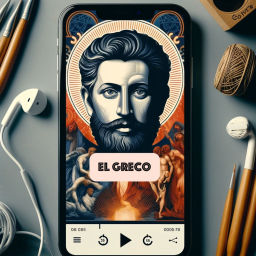
Podcast thumbnail for El Greco - Audio Biography

El Greco - Audio Biography

Claim This Podcast

by Inception Point AI

5.0(1 reviews)
1 episodes
Updated Weekly
Accepts GuestsHas SponsorsLocation 🇪🇸

Podcast Overview

Dive into the fascinating life and works of El Greco, one of the most enigmatic and influential artists of the Renaissance period, in the captivating podcast series "El Grecco." Journey through the rich history of his early life in Crete, his transformative years in Italy, and his ultimate artistic flourish in Spain. Each episode delves deep into his innovative techniques, dramatic compositions, and the elongated, expressive figures that defined his unique style. Explore the cultural and historical context that shaped his masterpieces and discover the enduring legacy of his art. Join us as we unravel the genius of El Greco, painting a vivid portrait of the man behind the masterpieces. Whether you're an art aficionado or a curious listener, "El Grecco" promises to enlighten and inspire. for more info https://www.quietperiodplease.com/ This content was created in partnership and with the help of Artificial Intelligence AI.

Language

🇺🇲

Publishing Since

6/3/2024

2 verified contact emails on file for El Greco - Audio Biography

Pitch yourself as a guest, propose sponsorships, or reach out directly to the host.

Recent Episodes

Episode thumbnail for El Greco Biography of Doménikos Theotokópoulos

June 3, 2024

El Greco Biography of Doménikos Theotokópoulos

El Greco, born Doménikos Theotokópoulos in 1541 in Candia (modern-day Heraklion), Crete, was a painter, sculptor, and architect whose unique artistic vision and groundbreaking style left an indelible mark on the history of Western art. His life, spanning from the island of Crete to the city of Toledo in Spain, was a journey of discovery, innovation, and unwavering dedication to his craft.<br /><br /><br />El Greco's early years were steeped in the rich cultural heritage of Crete, a Venetian territory at the time. Born into a prosperous family, he received a comprehensive education that included the study of classical literature, philosophy, and the arts. From a young age, El Greco displayed a keen interest in painting and began his training in the Byzantine tradition of icon painting, which had flourished on the island for centuries.<br /><br /><br />Under the guidance of skilled masters, El Greco learned the techniques and conventions of Byzantine art, characterized by its stylized figures, flat compositions, and use of gold backgrounds. He quickly mastered the art of icon painting and began to develop his own distinctive style, characterized by elongated figures, expressive faces, and a subtle interplay of light and color.<br /><br /><br />As he grew older, El Greco's artistic ambitions began to outgrow the confines of his native Crete. In 1567, at the age of 26, he made the bold decision to leave his homeland and travel to Venice, the cultural and artistic capital of the world at the time. This move would prove to be a turning point in his life and career, exposing him to new ideas, techniques, and artistic influences that would shape his work for years to come.<br /><br /><br />In Venice, El Greco immersed himself in the vibrant cultural scene of the city, studying the works of great Italian masters such as Titian, Tintoretto, and Veronese. He was particularly drawn to the Venetian style of painting, with its emphasis on color, light, and atmosphere, and he began to incorporate these elements into his own work, creating a unique fusion of Byzantine and Venetian styles.<br /><br /><br />El Greco's time in Venice was also marked by his growing interest in the intellectual and philosophical currents of the time. He became acquainted with the works of Neoplatonic philosophers such as Marsilio Ficino and Pico della Mirandola, whose ideas about the nature of the soul and the relationship between the divine and the human would have a profound influence on his artistic vision.<br /><br /><br />In 1570, El Greco left Venice and traveled to Rome, the heart of the Renaissance and the center of the Catholic Church. In Rome, he continued his studies, immersing himself in the works of Michelangelo, Raphael, and other great masters of the High Renaissance. He also began to establish himself as a portrait painter, creating striking and expressive likenesses of prominent figures in Roman society.<br /><br /><br />However, El Greco's time in Rome was not without its challenges. His unique style and unconventional approach to religious subjects often clashed with the established artistic norms of the time, and he struggled to find patrons and commissions. Despite these difficulties, El Greco remained committed to his artistic vision and continued to develop his distinctive style.<br /><br /><br />In 1577, El Greco left Rome and traveled to Spain, where he would spend the rest of his life. He settled in the city of Toledo, a thriving cultural and intellectual center that would provide him with the perfect environment to develop his art and ideas.<br /><br /><br />In Toledo, El Greco quickly established himself as one of the leading painters of his time. He received numerous commissions from churches, monasteries, and private patrons, and his work began to gain widespread recognition and admiration. His paintings from this period, such as "The Burial of the Count of Orgaz" (1586-1588) and "View of Toledo" (1596-1600), showcase his mature style, characterized by elongated figures, intense emotional expression, and a masterful use of color and light.<br /><br /><br />One of the most striking aspects of El Greco's work from his Toledo period is his ability to infuse his religious paintings with a profound sense of spirituality and mysticism. His depictions of saints, apostles, and biblical scenes are not mere physical representations, but powerful expressions of the inner life of the soul. El Greco's figures are often shown in a state of spiritual ecstasy, their elongated forms and expressive faces conveying a sense of transcendence and otherworldliness.<br /><br /><br />This emphasis on the spiritual dimension of art sets El Greco apart from many of his contemporaries and has led some scholars to see him as a forerunner of the Romantic movement. His work can be seen as a bridge between the rational, classical ideals of the Renaissance and the emotional, subjective sensibilities of the modern age.<br /><br /><br />Despite his success and recognition in Toledo, El Greco's life was not without its challenges and controversies. He was known for his fierce independence and uncompromising dedication to his artistic vision, which sometimes brought him into conflict with patrons and critics. He was also deeply involved in the intellectual and spiritual debates of his time, and his work often reflected his complex and nuanced views on religion, philosophy, and the nature of art.<br /><br /><br />In his later years, El Greco continued to push the boundaries of his art, experimenting with new techniques and styles. His late works, such as "Laocoön" (1610-1614) and "The Adoration of the Shepherds" (1612-1614), show a growing interest in the expressive power of light and color, as well as a deepening engagement with the themes of suffering, redemption, and the human condition.<br /><br /><br />El Greco died in Toledo in 1614, at the age of 73. He left behind a remarkable body of work that would continue to inspire and influence generations of artists to come. However, his reputation suffered a decline in the centuries following his death, as his unique style and unconventional approach were often misunderstood and dismissed as eccentric or unorthodox.<br /><br /><br />It was not until the late 19th and early 20th centuries that El Greco's genius was rediscovered and celebrated by modern artists and critics. His work was embraced by the avant-garde movements of the time, such as Expressionism and Cubism, who saw in him a kindred spirit and a precursor to their own artistic revolutions.<br /><br /><br />Today, El Greco is widely recognized as one of the most important and influential artists in the history of Western art. His paintings are housed in major museums and collections around the world, and his legacy continues to inspire and inform contemporary art and culture.<br /><br /><br />Some of the most notable collections of El Greco's work can be found in the following institutions:<br /><br /><br />Museo del Prado, Madrid: The Prado Museum houses the largest collection of El Greco's paintings in the world, including masterpieces such as "The Knight with His Hand on His Breast" (c. 1580), "The Holy Trinity" (1577-1579), and "The Adoration of the Shepherds" (1612-1614).<br /><br />Metropolitan Museum of Art, New York: The Met's collection includes several important works by El Greco, such as "The Vision of Saint John" (1608-1614) and "Christ Carrying the Cross" (c. 1580-1595).<br /><br />National Gallery of Art, Washington D.C.: The National Gallery of Art holds a significant collection of El Greco's paintings, including "Laocoön" (1610-1614) and "Saint Martin and the Beggar" (c. 1597-1600).<br /><br />Art Institute of Chicago: The Art Institute of Chicago's collection features several notable works by El Greco, including "The Assumption of the Virgin" (1577-1579) and "Saint Francis Kneeling in Meditation" (c. 1595-1600).<br /><br />Museo de Santa Cruz, Toledo: Located in the city where El Greco spent the latter part of his life, the Museo de Santa Cruz houses a significant collection of his works, including "The Assumption of the Virgin" (1577-1579) and "The Disrobing of Christ" (c. 1577-1579).<br /><br />These are just a few examples of the many institutions around the world that hold important works by El Greco. His paintings can also be found in numerous churches, monasteries, and private collections throughout Europe and the United States.<br /><br /><br />In addition to these physical locations, El Greco's work has also been widely reproduced and disseminated through various media, including boo

1 total episodes available

Similar Podcasts

Discover related shows you might enjoy

Deep-dive analytics for El Greco - Audio Biography

Frequently asked questions

Have a different question and can't find the answer you're looking for? Reach out to our support team by sending us an email and we'll get back to you as soon as we can.

What is El Greco - Audio Biography?

Dive into the fascinating life and works of El Greco, one of the most enigmatic and influential artists of the Renaissance period, in the captivating podcast series "El Grecco." Journey through the rich history of his early life in Crete, his transformative years in Italy, and his ultimate artistic flourish in Spain. Each episode delves deep into his innovative techniques, dramatic compositions, and the elongated, expressive figures that defined his unique style. Explore the cultural and historical context that shaped his masterpieces and discover the enduring legacy of his art. Join us as we unravel the genius of El Greco, painting a vivid portrait of the man behind the masterpieces. Whether you're an art aficionado or a curious listener, "El Grecco" promises to enlighten and inspire.

for more info https://www.quietperiodplease.com/

This content was created in partnership and with the help of Artificial Intelligence AI.

How often does this podcast release new episodes?

This podcast updates weekly.

Where can I listen to this podcast?

This podcast is available on 8 platforms including Apple Podcasts, Spotify, and more. You can also use the RSS feed directly.

Does this podcast accept guests?

No, this podcast does not typically feature guests.

Legal Disclaimer

Pod Engine is not affiliated with, endorsed by, or officially connected with any of the podcasts displayed on this platform. We operate independently as a podcast discovery and analytics service.

All podcast artwork, thumbnails, and content displayed on this page are the property of their respective owners and are protected by applicable copyright laws. This includes, but is not limited to, podcast cover art, episode artwork, show descriptions, episode titles, transcripts, audio snippets, and any other content originating from the podcast creators or their licensors.

We display this content under fair use principles and/or implied license for the purpose of podcast discovery, information, and commentary. We make no claim of ownership over any podcast content, artwork, or related materials shown on this platform. All trademarks, service marks, and trade names are the property of their respective owners.

While we strive to ensure all content usage is properly authorized, if you are a rights holder and believe your content is being used inappropriately or without proper authorization, please contact us immediately at hey@podengine.ai for prompt review and appropriate action, which may include content removal or proper attribution.

By accessing and using this platform, you acknowledge and agree to respect all applicable copyright laws and intellectual property rights of content owners. Any unauthorized reproduction, distribution, or commercial use of the content displayed on this platform is strictly prohibited.