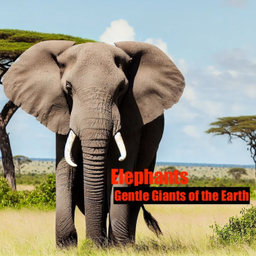
Podcast thumbnail for Elephants

by Inception Point AI

2.0(1 reviews)
1 episodes
Updated Weekly
Accepts GuestsHas Sponsors

Podcast Overview

Picture the vast landscapes of Africa and Asia, where the land stretches out in an endless tapestry of grasslands, forests, and deserts. In these diverse habitats roam some of the most iconic and awe-inspiring creatures on Earth: elephants. To witness an elephant in its natural habitat is to experience the grandeur and complexity of nature itself. These majestic animals, known for their intelligence, social structures, and sheer size, are a testament to the intricate and delicate balance of our planet’s ecosystems. The Majesty of Elephants Elephants are the largest land mammals, with three species gracing our planet: the African savanna elephant (Loxodonta africana), the African forest elephant (Loxodonta cyclotis), and the Asian elephant (Elephas maximus). African savanna elephants are the largest, with males weighing up to 12,000 pounds (5,400 kilograms) and standing up to 13 feet (4 meters) tall at the shoulder. Their forest-dwelling cousins are smaller and more elusive, while Asian elephants, though smaller than their African counterparts, are no less impressive. An elephant's physical characteristics are a marvel of evolution. Their large ears, which can span over 5 feet (1.5 meters) across, are not just for hearing but also play a crucial role in regulating body temperature. Their tusks, which are elongated incisor teeth, serve multiple purposes, including digging for water, stripping bark from trees, and as formidable weapons in defense and dominance displays. The trunk of an elephant is perhaps its most extraordinary feature. This versatile appendage, a fusion of the nose and upper lip, contains over 40,000 muscles and is capable of remarkable dexterity. Elephants use their trunks for a wide range of tasks, from picking up small objects and feeding to social interactions and communication. Feeding Habits and Diet Elephants are herbivores, and their diet consists of a wide variety of plant material, including grasses, leaves, fruits, bark, and roots. An adult elephant can consume up to 300 pounds (136 kilograms) of food and 50 gallons (190 liters) of water each day. Their massive size and high metabolic demands require them to spend a significant portion of their day foraging and eating. The feeding habits of elephants have a profound impact on their environment. As they move through their habitats, they act as ecological engineers, shaping the landscape in ways that benefit other species. For instance, by knocking down trees to access foliage, elephants create open spaces that promote the growth of grasses and other plants, supporting a diverse array of herbivores. Their dung, rich in seeds and nutrients, plays a crucial role in seed dispersal and soil fertilization. In times of drought, elephants' remarkable ability to find water becomes evident. Using their tusks and trunks, they can dig wells in dry riverbeds, accessing underground water sources that sustain not only themselves but also other animals that share their habitat. Social St This content was created in partnership and with the help of Artificial Intelligence AI.

Language

🇺🇲

Publishing Since

7/7/2024

2 verified contact emails on file for Elephants

Pitch yourself as a guest, propose sponsorships, or reach out directly to the host.

Recent Episodes

Episode thumbnail for Elephants- Gentle Giants of The Earth

July 7, 2024

Elephants- Gentle Giants of The Earth

Picture the vast landscapes of Africa and Asia, where the land stretches out in an endless tapestry of grasslands, forests, and deserts. In these diverse habitats roam some of the most iconic and awe-inspiring creatures on Earth: elephants. To witness an elephant in its natural habitat is to experience the grandeur and complexity of nature itself. These majestic animals, known for their intelligence, social structures, and sheer size, are a testament to the intricate and delicate balance of our planet’s ecosystems. <b>The Majesty of Elephants</b> Elephants are the largest land mammals, with three species gracing our planet: the African savanna elephant (Loxodonta africana), the African forest elephant (Loxodonta cyclotis), and the Asian elephant (Elephas maximus). African savanna elephants are the largest, with males weighing up to 12,000 pounds (5,400 kilograms) and standing up to 13 feet (4 meters) tall at the shoulder. Their forest-dwelling cousins are smaller and more elusive, while Asian elephants, though smaller than their African counterparts, are no less impressive. An elephant's physical characteristics are a marvel of evolution. Their large ears, which can span over 5 feet (1.5 meters) across, are not just for hearing but also play a crucial role in regulating body temperature. Their tusks, which are elongated incisor teeth, serve multiple purposes, including digging for water, stripping bark from trees, and as formidable weapons in defense and dominance displays. The trunk of an elephant is perhaps its most extraordinary feature. This versatile appendage, a fusion of the nose and upper lip, contains over 40,000 muscles and is capable of remarkable dexterity. Elephants use their trunks for a wide range of tasks, from picking up small objects and feeding to social interactions and communication. <b>Feeding Habits and Diet</b> Elephants are herbivores, and their diet consists of a wide variety of plant material, including grasses, leaves, fruits, bark, and roots. An adult elephant can consume up to 300 pounds (136 kilograms) of food and 50 gallons (190 liters) of water each day. Their massive size and high metabolic demands require them to spend a significant portion of their day foraging and eating. The feeding habits of elephants have a profound impact on their environment. As they move through their habitats, they act as ecological engineers, shaping the landscape in ways that benefit other species. For instance, by knocking down trees to access foliage, elephants create open spaces that promote the growth of grasses and other plants, supporting a diverse array of herbivores. Their dung, rich in seeds and nutrients, plays a crucial role in seed dispersal and soil fertilization. In times of drought, elephants' remarkable ability to find water becomes evident. Using their tusks and trunks, they can dig wells in dry riverbeds, accessing underground water sources that sustain not only themselves but also other animals that share their habitat. <b>Social Structure and Behavior</b> Elephants are highly social animals, living in complex matriarchal societies. The core unit of elephant social structure is the family group, typically consisting of related females and their offspring. These family groups are led by a matriarch, usually the oldest and most experienced female, who plays a vital role in guiding the group, making decisions about movement, and locating food and water sources. The bond between family members is strong and enduring. Female elephants, known as cows, remain with their natal groups for life, while males, or bulls, leave the group upon reaching adolescence. Bulls often lead solitary lives or form temporary bachelor groups, only rejoining female groups during the mating season. Communication is central to elephant social behavior. Elephants use a variety of vocalizations, body language, and tactile interactions to convey information and maintain social bonds. Their vocal repertoire includes trumpets,...

1 total episodes available

Deep-dive analytics for Elephants

Frequently asked questions

Have a different question and can't find the answer you're looking for? Reach out to our support team by sending us an email and we'll get back to you as soon as we can.

What is Elephants?

Picture the vast landscapes of Africa and Asia, where the land stretches out in an endless tapestry of grasslands, forests, and deserts. In these diverse habitats roam some of the most iconic and awe-inspiring creatures on Earth: elephants. To witness an elephant in its natural habitat is to experience the grandeur and complexity of nature itself. These majestic animals, known for their intelligence, social structures, and sheer size, are a testament to the intricate and delicate balance of our planet’s ecosystems. The Majesty of Elephants Elephants are the largest land mammals, with three species gracing our planet: the African savanna elephant (Loxodonta africana), the African forest elephant (Loxodonta cyclotis), and the Asian elephant (Elephas maximus). African savanna elephants are the largest, with males weighing up to 12,000 pounds (5,400 kilograms) and standing up to 13 feet (4 meters) tall at the shoulder. Their forest-dwelling cousins are smaller and more elusive, while Asian elephants, though smaller than their African counterparts, are no less impressive. An elephant's physical characteristics are a marvel of evolution. Their large ears, which can span over 5 feet (1.5 meters) across, are not just for hearing but also play a crucial role in regulating body temperature. Their tusks, which are elongated incisor teeth, serve multiple purposes, including digging for water, stripping bark from trees, and as formidable weapons in defense and dominance displays. The trunk of an elephant is perhaps its most extraordinary feature. This versatile appendage, a fusion of the nose and upper lip, contains over 40,000 muscles and is capable of remarkable dexterity. Elephants use their trunks for a wide range of tasks, from picking up small objects and feeding to social interactions and communication. Feeding Habits and Diet Elephants are herbivores, and their diet consists of a wide variety of plant material, including grasses, leaves, fruits, bark, and roots. An adult elephant can consume up to 300 pounds (136 kilograms) of food and 50 gallons (190 liters) of water each day. Their massive size and high metabolic demands require them to spend a significant portion of their day foraging and eating. The feeding habits of elephants have a profound impact on their environment. As they move through their habitats, they act as ecological engineers, shaping the landscape in ways that benefit other species. For instance, by knocking down trees to access foliage, elephants create open spaces that promote the growth of grasses and other plants, supporting a diverse array of herbivores. Their dung, rich in seeds and nutrients, plays a crucial role in seed dispersal and soil fertilization. In times of drought, elephants' remarkable ability to find water becomes evident. Using their tusks and trunks, they can dig wells in dry riverbeds, accessing underground water sources that sustain not only themselves but also other animals that share their habitat. Social St

This content was created in partnership and with the help of Artificial Intelligence AI.

How often does this podcast release new episodes?

This podcast updates weekly.

Where can I listen to this podcast?

This podcast is available on 4 platforms including Apple Podcasts, Spotify, and more. You can also use the RSS feed directly.

Does this podcast accept guests?

Yes, this podcast regularly features guests.

Legal Disclaimer

Pod Engine is not affiliated with, endorsed by, or officially connected with any of the podcasts displayed on this platform. We operate independently as a podcast discovery and analytics service.

All podcast artwork, thumbnails, and content displayed on this page are the property of their respective owners and are protected by applicable copyright laws. This includes, but is not limited to, podcast cover art, episode artwork, show descriptions, episode titles, transcripts, audio snippets, and any other content originating from the podcast creators or their licensors.

We display this content under fair use principles and/or implied license for the purpose of podcast discovery, information, and commentary. We make no claim of ownership over any podcast content, artwork, or related materials shown on this platform. All trademarks, service marks, and trade names are the property of their respective owners.

While we strive to ensure all content usage is properly authorized, if you are a rights holder and believe your content is being used inappropriately or without proper authorization, please contact us immediately at hey@podengine.ai for prompt review and appropriate action, which may include content removal or proper attribution.

By accessing and using this platform, you acknowledge and agree to respect all applicable copyright laws and intellectual property rights of content owners. Any unauthorized reproduction, distribution, or commercial use of the content displayed on this platform is strictly prohibited.