
Uncovering Humanity's Mystical Past
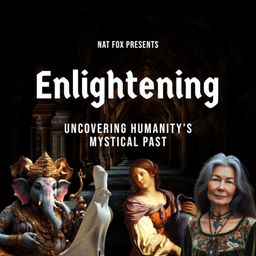
Podcast Overview
Uncovering Humanity's Mystical Past
Language
🇺🇲
Publishing Since
2/6/2023
1 verified contact email on file for Enlightening
Pitch yourself as a guest, propose sponsorships, or reach out directly to the host.
Recent Episodes
October 18, 2024
The World's First Shamans?
<p><strong>Is Shamanism older than we are?</strong></p> <p><br /></p> <p><br /></p> <p>One normal day back in 2005, archaeologist Leore Grosman made her way up to the cave site at Hilazon Tachtit in the Southern Levant region in Israel. She probably didn’t realise that it would be quite an extraordinary day. Extraordinary because she and her team would discover something very unusual. Something that would turn accepted spiritual history on its head and would change how we viewed our ancient ancestors forever. </p> <p>The cave is located in Galilee, a region long associated with spirituality, belief systems, power and even royalty. Rocky and mountainous, Galilee is rich in plant life, water and not far from the coast. The cave, with its colossal open entrance and stunning views over the hilly region beyond held graves, deliberately built to bury members of the society that lived around 12,000 years ago.</p> <p>The people living in the region at that time were known as the Natufians. They had been hunting and foraging there for a few thousand years prior. The Natufians are interesting because they were alive during the Neolithic revolution, a time when traditional hunter-gatherer societies moved towards farming. </p> <p>One grave discovered in the cave stood out to the team of archaeologists tasked with piecing together what our ancestors were doing high up in the Galilean hills. The skeleton of an old lady, deliberately buried in a pit covered over with a specially made heavy rock slab, was discovered. This lady’s final resting place was filled with an abundance of grave goods, tortoiseshells, an eagle, and pieces of cow, leopard and boar. </p> <p>It was such an exciting discovery because it was the first of its kind. The lady buried here 12,000 ago was far from primitive. The way her grave was constructed and sealed with special animal parts and objects shows she was high-status. She was respected, and revered and the grave goods signified her belief system. This was a shamanic burial. </p> <p>It’s generally accepted that with the onset of sedentism, came changes to social behaviour. Dynamics changed as nomadic people settled and focused on growth, productivity and making sure their families never went without food, despite what nature was doing around them. </p> <p>The change in human behaviour adapted belief systems, and more organised spiritual and ritualistic behaviour started to appear.</p> <p>Spiritual and religious belief systems serve a social purpose. They hold societies together and provide a social code to live by. But we don’t really know if the belief system these ancient people held was a by-product of a new type of society, or if the societies that formed were a by-product of the belief systems as they evolved. </p> <p>We now know that ancient humans were much smarter and much more humane than we once thought. It’s likely that spending so much time out in the wild prior to sedentism, facing danger, finding food and braving mother nature led them to find spiritual beliefs. Celebration rituals, praying or honouring nature and animal deities and appreciating the food, shelter and community provided to them may have seeded a more organised and uniform belief system. </p> <p>It’s exciting to think that there were humanitarian qualities that were important to us before we’d figured out how to domesticate animals and plant crops. Savage animals we were not. Well, not always. We had empathy and respect and we meant something to each other. We had strong, caring social bonds. We respected the world around us, the people who lived before us and the unseen energies available to help us. </p> <p>When this started, it's almost impossible to say, but as we’ll find out later, it likely didn’t start with our species. </p> <p><br /></p> <p> </p> <p>www.natfox.com</p> <p>@natfoxhistory</p> <p> </p>
February 6, 2023
Ancient Egyptians And Their Snake Obsession
<p><br></p> <p> In ancient Egypt, snake symbolism abounds, but what does it represent? </p> <p><br></p> <p> Somewhere, archived away in The British Museum is a green-tinged, oxygen-mottled cobra, fiercely raising its head in attack mode. Carved into it are ladder-like central vertebrae, and some circles, right around where the snake's heart and stomach would be, which look like an infinity symbol. The snake has a long tail and is simply described as 'magician's equipment'. But what would the 18th dynasty Egyptian magicians have used this strange object for? </p> <p><br></p> <p> There are many of these cobras in The British Museum. Collectively, this cobra shape is known as a uraeus. Uraeus were found everywhere in ancient Egypt, on furniture, amulets, paintings and almost always on the pharaoh's head. The uraeus is thought to represent sovereignty. But sovereignty over what? Perhaps over the land, the kingdom, the people and their enemies. Surely if you could command a deadly cobra to act upon your will, you would be considered very powerful. Ancient Egyptians, it seems, thought snakes were incredibly important. </p> <p> </p> <p>www.natfox.com</p> <p>@natfoxwriter</p> <p> </p>
2 total episodes available
Deep-dive analytics for Enlightening
Frequently asked questions
Have a different question and can't find the answer you're looking for? Reach out to our support team by sending us an email and we'll get back to you as soon as we can.
- What is Enlightening?
- How often does this podcast release new episodes?
This podcast updates weekly.
- Where can I listen to this podcast?
This podcast is available on 8 platforms including Apple Podcasts, Spotify, and more. You can also use the RSS feed directly.
- Does this podcast accept guests?
Yes, this podcast regularly features guests.
Legal Disclaimer
Pod Engine is not affiliated with, endorsed by, or officially connected with any of the podcasts displayed on this platform. We operate independently as a podcast discovery and analytics service.
All podcast artwork, thumbnails, and content displayed on this page are the property of their respective owners and are protected by applicable copyright laws. This includes, but is not limited to, podcast cover art, episode artwork, show descriptions, episode titles, transcripts, audio snippets, and any other content originating from the podcast creators or their licensors.
We display this content under fair use principles and/or implied license for the purpose of podcast discovery, information, and commentary. We make no claim of ownership over any podcast content, artwork, or related materials shown on this platform. All trademarks, service marks, and trade names are the property of their respective owners.
While we strive to ensure all content usage is properly authorized, if you are a rights holder and believe your content is being used inappropriately or without proper authorization, please contact us immediately at hey@podengine.ai for prompt review and appropriate action, which may include content removal or proper attribution.
By accessing and using this platform, you acknowledge and agree to respect all applicable copyright laws and intellectual property rights of content owners. Any unauthorized reproduction, distribution, or commercial use of the content displayed on this platform is strictly prohibited.