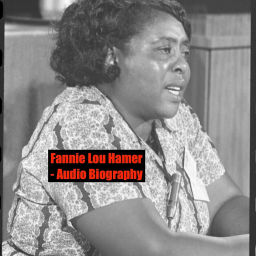
Podcast thumbnail for Fannie Lou Hamer - Audio Biography

Fannie Lou Hamer - Audio Biography

Claim This Podcast

by Inception Point AI

1 episodes
Updated Weekly
Accepts GuestsHas SponsorsLocation 🇺🇸

Podcast Overview

Fannie Lou Hamer: The Indomitable Voice of Civil Rights Fannie Lou Hamer, born Fannie Lou Townsend on October 6, 1917, in Montgomery County, Mississippi, emerged as one of the most powerful voices of the civil rights movement in the 1960s. Her life story is a testament to the resilience of the human spirit and the transformative power of grassroots activism. From her humble beginnings as a sharecropper to becoming a nationally recognized civil rights leader, Hamer's journey embodies the struggle for equality and justice in 20th century America. Early Life and Background Fannie Lou was the youngest of 20 children born to Lou Ella and James Townsend, sharecroppers who struggled to make ends meet in the segregated and economically oppressive system of the Mississippi Delta. Her early life was marked by poverty and hardship, experiences that would later fuel her passion for social justice and equality. From the tender age of six, Fannie Lou worked alongside her family in the cotton fields. Despite the grueling labor, she developed a strong work ethic and a deep connection to the land and her community. Her formal education was limited; like many African American children in the rural South, she was only able to attend school for a few months each year when her labor wasn't needed in the fields. Despite these obstacles, Fannie Lou demonstrated a keen intelligence and a thirst for knowledge that would serve her well in her later activism. In 1944, at the age of 27, Fannie Lou married Perry "Pap" Hamer, a fellow sharecropper. The couple worked on the plantation of W.D. Marlow near Ruleville, Mississippi. They were unable to have children of their own, but they adopted two girls, providing them with the loving home they had always wanted. Awakening to Activism Fannie Lou Hamer's life took a dramatic turn in 1961 when she underwent surgery to remove a uterine tumor. Without her consent or knowledge, the white doctor performed a hysterectomy, a practice so common it was known as a "Mississippi appendectomy." This horrific experience of medical racism was a turning point for Hamer, igniting a fire of resistance that would burn for the rest of her life. In 1962, at the age of 44, Hamer attended a meeting of the Student Nonviolent Coordinating Committee (SNCC) and the Southern Christian Leadership Conference (SCLC). It was here that she first learned that African Americans had a constitutional right to vote. This revelation transformed her. As she later recounted, "I had never heard, until 1962, that black people could register and vote." Determined to exercise this right, Hamer and a group of fellow activists traveled to the county courthouse in Indianola to register to vote. They were met with intimidation, harassment, and literacy tests designed to disenfranchise Black voters. Hamer, who had taught herself to read and write, managed to complete the test but was ultimately denied registration on a technicality. Upon returning home, Hamer found that her acti This content was created in partnership and with the help of Artificial Intelligence AI.

Language

🇺🇲

Publishing Since

8/22/2024

2 verified contact emails on file for Fannie Lou Hamer - Audio Biography

Pitch yourself as a guest, propose sponsorships, or reach out directly to the host.

Recent Episodes

Episode thumbnail for Fannie Lou Hammer - Audio Biography

August 22, 2024

Fannie Lou Hammer - Audio Biography

Fannie Lou Hamer: The Indomitable Voice of Civil Rights Fannie Lou Hamer, born Fannie Lou Townsend on October 6, 1917, in Montgomery County, Mississippi, emerged as one of the most powerful voices of the civil rights movement in the 1960s. Her life story is a testament to the resilience of the human spirit and the transformative power of grassroots activism. From her humble beginnings as a sharecropper to becoming a nationally recognized civil rights leader, Hamer's journey embodies the struggle for equality and justice in 20th century America. Early Life and Background Fannie Lou was the youngest of 20 children born to Lou Ella and James Townsend, sharecroppers who struggled to make ends meet in the segregated and economically oppressive system of the Mississippi Delta. Her early life was marked by poverty and hardship, experiences that would later fuel her passion for social justice and equality. From the tender age of six, Fannie Lou worked alongside her family in the cotton fields. Despite the grueling labor, she developed a strong work ethic and a deep connection to the land and her community. Her formal education was limited; like many African American children in the rural South, she was only able to attend school for a few months each year when her labor wasn't needed in the fields. Despite these obstacles, Fannie Lou demonstrated a keen intelligence and a thirst for knowledge that would serve her well in her later activism. In 1944, at the age of 27, Fannie Lou married Perry "Pap" Hamer, a fellow sharecropper. The couple worked on the plantation of W.D. Marlow near Ruleville, Mississippi. They were unable to have children of their own, but they adopted two girls, providing them with the loving home they had always wanted. Awakening to Activism Fannie Lou Hamer's life took a dramatic turn in 1961 when she underwent surgery to remove a uterine tumor. Without her consent or knowledge, the white doctor performed a hysterectomy, a practice so common it was known as a "Mississippi appendectomy." This horrific experience of medical racism was a turning point for Hamer, igniting a fire of resistance that would burn for the rest of her life. In 1962, at the age of 44, Hamer attended a meeting of the Student Nonviolent Coordinating Committee (SNCC) and the Southern Christian Leadership Conference (SCLC). It was here that she first learned that African Americans had a constitutional right to vote. This revelation transformed her. As she later recounted, "I had never heard, until 1962, that black people could register and vote." Determined to exercise this right, Hamer and a group of fellow activists traveled to the county courthouse in Indianola to register to vote. They were met with intimidation, harassment, and literacy tests designed to disenfranchise Black voters. Hamer, who had taught herself to read and write, managed to complete the test but was ultimately denied registration on a technicality. Upon returning home, Hamer found that her activism had consequences. The plantation owner, angered by her attempt to register, fired her and evicted her family from their home. Undeterred, Hamer famously declared, "I didn't try to register for you. I tried to register for myself." The Freedom Summer and Beyond Hamer's courage in the face of adversity caught the attention of SNCC organizers, who recognized her natural leadership abilities and her deep connection to the local community. She quickly became a key figure in the civil rights movement in Mississippi, helping to organize Freedom Summer in 1964, a massive effort to register African American voters across the state. Her work was dangerous and met with violent resistance. In June 1963, Hamer and several other activists were arrested in Winona, Mississippi, after attending a voter registration workshop. While in custody, they were brutally beaten. Hamer suffered permanent kidney damage and a blood clot behind her eye, leaving her with a limp and partial loss of vision....

1 total episodes available

Deep-dive analytics for Fannie Lou Hamer - Audio Biography

Frequently asked questions

Have a different question and can't find the answer you're looking for? Reach out to our support team by sending us an email and we'll get back to you as soon as we can.

What is Fannie Lou Hamer - Audio Biography?

Fannie Lou Hamer: The Indomitable Voice of Civil Rights Fannie Lou Hamer, born Fannie Lou Townsend on October 6, 1917, in Montgomery County, Mississippi, emerged as one of the most powerful voices of the civil rights movement in the 1960s. Her life story is a testament to the resilience of the human spirit and the transformative power of grassroots activism. From her humble beginnings as a sharecropper to becoming a nationally recognized civil rights leader, Hamer's journey embodies the struggle for equality and justice in 20th century America. Early Life and Background Fannie Lou was the youngest of 20 children born to Lou Ella and James Townsend, sharecroppers who struggled to make ends meet in the segregated and economically oppressive system of the Mississippi Delta. Her early life was marked by poverty and hardship, experiences that would later fuel her passion for social justice and equality. From the tender age of six, Fannie Lou worked alongside her family in the cotton fields. Despite the grueling labor, she developed a strong work ethic and a deep connection to the land and her community. Her formal education was limited; like many African American children in the rural South, she was only able to attend school for a few months each year when her labor wasn't needed in the fields. Despite these obstacles, Fannie Lou demonstrated a keen intelligence and a thirst for knowledge that would serve her well in her later activism. In 1944, at the age of 27, Fannie Lou married Perry "Pap" Hamer, a fellow sharecropper. The couple worked on the plantation of W.D. Marlow near Ruleville, Mississippi. They were unable to have children of their own, but they adopted two girls, providing them with the loving home they had always wanted. Awakening to Activism Fannie Lou Hamer's life took a dramatic turn in 1961 when she underwent surgery to remove a uterine tumor. Without her consent or knowledge, the white doctor performed a hysterectomy, a practice so common it was known as a "Mississippi appendectomy." This horrific experience of medical racism was a turning point for Hamer, igniting a fire of resistance that would burn for the rest of her life. In 1962, at the age of 44, Hamer attended a meeting of the Student Nonviolent Coordinating Committee (SNCC) and the Southern Christian Leadership Conference (SCLC). It was here that she first learned that African Americans had a constitutional right to vote. This revelation transformed her. As she later recounted, "I had never heard, until 1962, that black people could register and vote." Determined to exercise this right, Hamer and a group of fellow activists traveled to the county courthouse in Indianola to register to vote. They were met with intimidation, harassment, and literacy tests designed to disenfranchise Black voters. Hamer, who had taught herself to read and write, managed to complete the test but was ultimately denied registration on a technicality. Upon returning home, Hamer found that her acti

This content was created in partnership and with the help of Artificial Intelligence AI.

How often does this podcast release new episodes?

This podcast updates weekly.

Where can I listen to this podcast?

This podcast is available on 7 platforms including Apple Podcasts, Spotify, and more. You can also use the RSS feed directly.

Does this podcast accept guests?

Yes, this podcast regularly features guests.

Legal Disclaimer

Pod Engine is not affiliated with, endorsed by, or officially connected with any of the podcasts displayed on this platform. We operate independently as a podcast discovery and analytics service.

All podcast artwork, thumbnails, and content displayed on this page are the property of their respective owners and are protected by applicable copyright laws. This includes, but is not limited to, podcast cover art, episode artwork, show descriptions, episode titles, transcripts, audio snippets, and any other content originating from the podcast creators or their licensors.

We display this content under fair use principles and/or implied license for the purpose of podcast discovery, information, and commentary. We make no claim of ownership over any podcast content, artwork, or related materials shown on this platform. All trademarks, service marks, and trade names are the property of their respective owners.

While we strive to ensure all content usage is properly authorized, if you are a rights holder and believe your content is being used inappropriately or without proper authorization, please contact us immediately at hey@podengine.ai for prompt review and appropriate action, which may include content removal or proper attribution.

By accessing and using this platform, you acknowledge and agree to respect all applicable copyright laws and intellectual property rights of content owners. Any unauthorized reproduction, distribution, or commercial use of the content displayed on this platform is strictly prohibited.