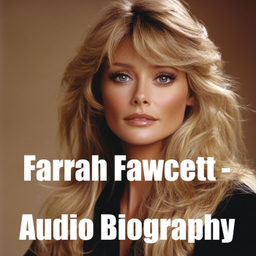
Podcast thumbnail for Farrah Fawcett - Audio Biography

Farrah Fawcett - Audio Biography

Claim This Podcast

by Inception Point AI

1 episodes
Updated Weekly
Accepts GuestsHas SponsorsLocation 🇺🇸

Podcast Overview

Farrah Fawcett, born Ferrah Leni Fawcett on February 2, 1947, in Corpus Christi, Texas, was an iconic American actress, model, and pop culture phenomenon. Known for her stunning beauty, charismatic screen presence, and signature golden locks, Fawcett became a symbol of 1970s glamour and one of the most recognizable faces of her generation. Her groundbreaking role in the television series Charlie’s Angels catapulted her to superstardom, and her image, particularly her iconic red swimsuit poster, remains one of the most enduring symbols of the era. Farrah was the younger of two daughters born to James Fawcett, an oil field contractor, and Pauline Fawcett, a homemaker. She grew up in a close-knit Catholic family and displayed artistic and athletic talent from a young age. She attended W.B. Ray High School in Corpus Christi, where she was voted "Most Beautiful" in her senior year, a title that foreshadowed her future as a beauty icon. After graduating, Fawcett enrolled at the University of Texas at Austin, initially pursuing a degree in microbiology before switching to art. It was during her college years that her beauty caught the attention of talent scouts, setting her on the path to a career in entertainment. Encouraged to try modeling and acting, Farrah moved to Los Angeles in 1968. Her early career was marked by commercial work and guest appearances on television shows. She appeared in commercials for products like toothpaste and shampoo, where her radiant smile and natural charm made her an instant favorite. Her early television credits included small roles in shows like I Dream of Jeannie, The Partridge Family, and Marcus Welby, M.D. These appearances allowed her to hone her acting skills and establish herself in Hollywood. Fawcett’s big break came in 1976 when she was cast as Jill Munroe in Charlie’s Angels, a crime drama about three female private investigators working for a mysterious boss named Charlie. The show, created by Aaron Spelling, was an instant hit, with Fawcett’s character standing out as the athletic and fun-loving member of the trio. Her portrayal of Jill Munroe, combined with her stunning looks and magnetic personality, made her a household name. Alongside co-stars Jaclyn Smith and Kate Jackson, Fawcett helped redefine the image of women on television, presenting characters who were both glamorous and empowered. During the first season of Charlie’s Angels, Fawcett’s popularity soared to unprecedented heights. Her feathered hairstyle became a global trend, inspiring millions of fans to emulate her look. That same year, she posed for the now-iconic red swimsuit poster, which sold over 12 million copies and became a cultural touchstone of the 1970s. The image captured Fawcett’s radiant beauty and playful spirit, solidifying her status as a pop culture icon. Despite the show’s success, Fawcett shocked fans and industry insiders by leaving Charlie’s Angels after just one season. She wanted to pursue film roles and expand her caree This content was created in partnership and with the help of Artificial Intelligence AI.

Language

🇺🇲

Publishing Since

11/22/2024

2 verified contact emails on file for Farrah Fawcett - Audio Biography

Pitch yourself as a guest, propose sponsorships, or reach out directly to the host.

Recent Episodes

Episode thumbnail for Farrah Fawcett - Audio Biography

November 22, 2024

Farrah Fawcett - Audio Biography

Farrah Fawcett, born Ferrah Leni Fawcett on February 2, 1947, in Corpus Christi, Texas, was an iconic American actress, model, and pop culture phenomenon. Known for her stunning beauty, charismatic screen presence, and signature golden locks, Fawcett became a symbol of 1970s glamour and one of the most recognizable faces of her generation. Her groundbreaking role in the television series Charlie’s Angels catapulted her to superstardom, and her image, particularly her iconic red swimsuit poster, remains one of the most enduring symbols of the era. Farrah was the younger of two daughters born to James Fawcett, an oil field contractor, and Pauline Fawcett, a homemaker. She grew up in a close-knit Catholic family and displayed artistic and athletic talent from a young age. She attended W.B. Ray High School in Corpus Christi, where she was voted "Most Beautiful" in her senior year, a title that foreshadowed her future as a beauty icon. After graduating, Fawcett enrolled at the University of Texas at Austin, initially pursuing a degree in microbiology before switching to art. It was during her college years that her beauty caught the attention of talent scouts, setting her on the path to a career in entertainment. Encouraged to try modeling and acting, Farrah moved to Los Angeles in 1968. Her early career was marked by commercial work and guest appearances on television shows. She appeared in commercials for products like toothpaste and shampoo, where her radiant smile and natural charm made her an instant favorite. Her early television credits included small roles in shows like I Dream of Jeannie, The Partridge Family, and Marcus Welby, M.D. These appearances allowed her to hone her acting skills and establish herself in Hollywood. Fawcett’s big break came in 1976 when she was cast as Jill Munroe in Charlie’s Angels, a crime drama about three female private investigators working for a mysterious boss named Charlie. The show, created by Aaron Spelling, was an instant hit, with Fawcett’s character standing out as the athletic and fun-loving member of the trio. Her portrayal of Jill Munroe, combined with her stunning looks and magnetic personality, made her a household name. Alongside co-stars Jaclyn Smith and Kate Jackson, Fawcett helped redefine the image of women on television, presenting characters who were both glamorous and empowered. During the first season of Charlie’s Angels, Fawcett’s popularity soared to unprecedented heights. Her feathered hairstyle became a global trend, inspiring millions of fans to emulate her look. That same year, she posed for the now-iconic red swimsuit poster, which sold over 12 million copies and became a cultural touchstone of the 1970s. The image captured Fawcett’s radiant beauty and playful spirit, solidifying her status as a pop culture icon. Despite the show’s success, Fawcett shocked fans and industry insiders by leaving Charlie’s Angels after just one season. She wanted to pursue film roles and expand her career beyond television. Although her departure led to legal disputes with the producers, Fawcett remained in the public eye, appearing in several movies and maintaining her status as a style icon. Farrah’s transition to film was met with mixed results. Early projects such as Somebody Killed Her Husband (1978) and Sunburn (1979) received lukewarm reviews, and it seemed that her fame might be confined to her television success. However, Fawcett proved her critics wrong in the 1980s when she shifted her focus to more serious and challenging roles. One of the most significant turning points in her career came with the 1984 television movie The Burning Bed. In the film, Fawcett portrayed Francine Hughes, a battered wife who sets her abusive husband on fire. Her raw and deeply empathetic performance earned her critical acclaim, including an Emmy nomination, and showcased her range as an actress. The film also sparked national conversations about domestic violence, highlighting Fawcett’s ability to use her platform to bring attention to important social issues. Following the success of The Burning Bed, Fawcett took on a string of dramatic roles that cemented her reputation as a serious actress. These included Extremities (1986), where she played a rape victim who turns the tables on her attacker, and Small Sacrifices (1989), a true-crime story in which she portrayed a mother accused of murdering her children. Both performances earned her further critical praise, as well as additional Emmy nominations. Fawcett’s personal life was as much a subject of public fascination as her career. In 1973, she married actor Lee Majors, star of The Six Million Dollar Man. Their relationship was heavily publicized, and they were often referred to as a Hollywood "golden couple." However, the demands of their careers and time spent apart led to their separation in 1979, and they divorced in 1982. In the 1980s, Fawcett began a long-term relationship with actor Ryan O’Neal, with whom she had a son, Redmond, in 1985. Their relationship was passionate but tumultuous, marked by periods of separation and reconciliation. Despite their challenges, they remained close, and O’Neal was by her side during her final battle with cancer. In her later years, Fawcett became known for her artistic pursuits, including painting and sculpture, and for her philanthropic work. She remained active in the entertainment industry, appearing in films and guest-starring on television shows. In 1997, she received widespread attention for a candid and unconventional interview on The Late Show with David Letterman, which reignited interest in her as a cultural figure. Fawcett’s life took a tragic turn in 2006 when she was diagnosed with anal cancer. She fought the disease with courage and determination, documenting her journey in the 2009 documentary Farrah’s Story. The documentary, which she co-produced, offered an unflinching look at her battle with cancer and brought attention to the disease. It received critical acclaim and earned Fawcett her fourth Emmy nomination. Farrah Fawcett passed away on June 25, 2009, at the age of 62, leaving behind a legacy as one of Hollywood’s most enduring icons. Her death coincided with the passing of Michael Jackson, overshadowing news coverage of her passing, but her contributions to entertainment and her impact on popular culture remain indelible. Farrah Fawcett was more than a beautiful face; she was a trailblazer who broke barriers in television and film, using her fame to shine a light on important issues. From her groundbreaking role in Charlie’s Angels to her award-worthy performances in hard-hitting dramas, she proved that she was a versatile and fearless artist. Her enduring influence on fashion, beauty, and the portrayal of women in media ensures that her legacy will continue to inspire for generations to come. This has been a Quiet Please production. Head over to Quiet Please dot A I to “Hear What Matters” <br /><br /><br /><br /><br />

1 total episodes available

Deep-dive analytics for Farrah Fawcett - Audio Biography

Frequently asked questions

Have a different question and can't find the answer you're looking for? Reach out to our support team by sending us an email and we'll get back to you as soon as we can.

What is Farrah Fawcett - Audio Biography?

Farrah Fawcett, born Ferrah Leni Fawcett on February 2, 1947, in Corpus Christi, Texas, was an iconic American actress, model, and pop culture phenomenon. Known for her stunning beauty, charismatic screen presence, and signature golden locks, Fawcett became a symbol of 1970s glamour and one of the most recognizable faces of her generation. Her groundbreaking role in the television series Charlie’s Angels catapulted her to superstardom, and her image, particularly her iconic red swimsuit poster, remains one of the most enduring symbols of the era. Farrah was the younger of two daughters born to James Fawcett, an oil field contractor, and Pauline Fawcett, a homemaker. She grew up in a close-knit Catholic family and displayed artistic and athletic talent from a young age. She attended W.B. Ray High School in Corpus Christi, where she was voted "Most Beautiful" in her senior year, a title that foreshadowed her future as a beauty icon. After graduating, Fawcett enrolled at the University of Texas at Austin, initially pursuing a degree in microbiology before switching to art. It was during her college years that her beauty caught the attention of talent scouts, setting her on the path to a career in entertainment. Encouraged to try modeling and acting, Farrah moved to Los Angeles in 1968. Her early career was marked by commercial work and guest appearances on television shows. She appeared in commercials for products like toothpaste and shampoo, where her radiant smile and natural charm made her an instant favorite. Her early television credits included small roles in shows like I Dream of Jeannie, The Partridge Family, and Marcus Welby, M.D. These appearances allowed her to hone her acting skills and establish herself in Hollywood. Fawcett’s big break came in 1976 when she was cast as Jill Munroe in Charlie’s Angels, a crime drama about three female private investigators working for a mysterious boss named Charlie. The show, created by Aaron Spelling, was an instant hit, with Fawcett’s character standing out as the athletic and fun-loving member of the trio. Her portrayal of Jill Munroe, combined with her stunning looks and magnetic personality, made her a household name. Alongside co-stars Jaclyn Smith and Kate Jackson, Fawcett helped redefine the image of women on television, presenting characters who were both glamorous and empowered. During the first season of Charlie’s Angels, Fawcett’s popularity soared to unprecedented heights. Her feathered hairstyle became a global trend, inspiring millions of fans to emulate her look. That same year, she posed for the now-iconic red swimsuit poster, which sold over 12 million copies and became a cultural touchstone of the 1970s. The image captured Fawcett’s radiant beauty and playful spirit, solidifying her status as a pop culture icon. Despite the show’s success, Fawcett shocked fans and industry insiders by leaving Charlie’s Angels after just one season. She wanted to pursue film roles and expand her caree

This content was created in partnership and with the help of Artificial Intelligence AI.

How often does this podcast release new episodes?

This podcast updates weekly.

Where can I listen to this podcast?

This podcast is available on 8 platforms including Apple Podcasts, Spotify, and more. You can also use the RSS feed directly.

Does this podcast accept guests?

Yes, this podcast regularly features guests.

Legal Disclaimer

Pod Engine is not affiliated with, endorsed by, or officially connected with any of the podcasts displayed on this platform. We operate independently as a podcast discovery and analytics service.

All podcast artwork, thumbnails, and content displayed on this page are the property of their respective owners and are protected by applicable copyright laws. This includes, but is not limited to, podcast cover art, episode artwork, show descriptions, episode titles, transcripts, audio snippets, and any other content originating from the podcast creators or their licensors.

We display this content under fair use principles and/or implied license for the purpose of podcast discovery, information, and commentary. We make no claim of ownership over any podcast content, artwork, or related materials shown on this platform. All trademarks, service marks, and trade names are the property of their respective owners.

While we strive to ensure all content usage is properly authorized, if you are a rights holder and believe your content is being used inappropriately or without proper authorization, please contact us immediately at hey@podengine.ai for prompt review and appropriate action, which may include content removal or proper attribution.

By accessing and using this platform, you acknowledge and agree to respect all applicable copyright laws and intellectual property rights of content owners. Any unauthorized reproduction, distribution, or commercial use of the content displayed on this platform is strictly prohibited.