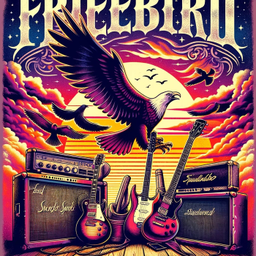
Podcast thumbnail for Freebird! The Story Behind The Legendary

Freebird! The Story Behind The Legendary

Claim This Podcast

by Inception Point AI

1 episodes
Updated Inactive
Accepts GuestsHas SponsorsLocation 🇺🇸

Podcast Overview

"If I leave here tomorrow, would you still remember me?" With these words, Lynyrd Skynyrd's epic guitar ballad "Freebird" took flight into rock and roll immortality. Though now considered an iconic staple of classic rock radio, the song had remarkably humble beginnings before ascending to arena anthem status. "Freebird's" composition provides insights into Lynyrd Skynyrd's musical influences and Southern rock style that still resonate with listeners today. Examining it’s steadily building popularity over decades reveals deeper cultural connections empowering its mythic status. Much like the free-spirited bird it pays tribute to, "Freebird" proudly soars as a timeless piece of American musical heritage. In 1970, a young guitarist named Allen Collins along with bassist Larry Junström started Lynyrd Skynyrd as a band in Jacksonville, Florida. Though skilled with fiery blues licks and heavy rock riffs, the group struggled initially to find their unique sound. After bringing in strong lead vocalist Ronnie Van Zant, their signature blend of blues, country and rock with blistering electric guitar soon defined Southern rock as a genre. It was at one low-paying gig in a rural Alabama venue that "Freebird's" distinctive acoustic opening first echoed from Collins' guitar. As Van Zant and drummer Bob Burns joined harmonizing on the yearning ballad between raucous jams, audience's reaction was immediate and overwhelming. Struck by its emotional power, Van Zant pushed the fledgling band to start opening shows with "Freebird" as their signature piece despite its length. At nearly 9 minutes long with three distinctive sections, "Freebird" broke conventions for radio singles of the early 1970s. Van Zant's soulful verses plead to know if his lover will stay faithful if he leaves. Then a moody minor key shift bridges into Collins and fellow guitarist Gary Rossington's legendary extended guitar solo battle. Finally, a swooping slide guitar closes out the balled as an elegy for the free spirit who cannot be contained by the singer's love. The composition flows seamlessly through despair, catharsis and liberation. These layers directly reflect how Southern rock fused genres, blending the melancholy and storytelling of country music with blues guitar and rock anthem sensibilities. Beyond tight ensemble playing and searing solos, "Freebird’s" aspirational symbolism of the title creature evoked powerful emotions from 1970s audiences feeling restless and caged by societal tensions over Vietnam and civil rights struggles. Just as the bird flies freely, the song gave permission to roam outside musical bounds in pursuit of cultural liberation. Lynyrd Skynyrd continued featuring “Freebird” prominently at their fiery live shows as they toured small venues across the South, their regional popularity as a must-see band slowly growing. The song truly took flight after the band's first album “Pronounced Leh-nerd Skin-nerd” was released by MCA Records in 1973, powered by const This content was created in partnership and with the help of Artificial Intelligence AI.

Language

🇺🇲

Publishing Since

2/3/2024

2 verified contact emails on file for Freebird! The Story Behind The Legendary

Pitch yourself as a guest, propose sponsorships, or reach out directly to the host.

Recent Episodes

Episode thumbnail for Freebird The Legenday Origin Story

February 3, 2024

Freebird The Legenday Origin Story

<br />"If I leave here tomorrow, would you still remember me?" With these words, Lynyrd Skynyrd's epic guitar ballad "Freebird" took flight into rock and roll immortality. Though now considered an iconic staple of classic rock radio, the song had remarkably humble beginnings before ascending to arena anthem status. "Freebird's" composition provides insights into Lynyrd Skynyrd's musical influences and Southern rock style that still resonate with listeners today. Examining it’s steadily building popularity over decades reveals deeper cultural connections empowering its mythic status. Much like the free-spirited bird it pays tribute to, "Freebird" proudly soars as a timeless piece of American musical heritage. <br />In 1970, a young guitarist named Allen Collins along with bassist Larry Junström started Lynyrd Skynyrd as a band in Jacksonville, Florida. Though skilled with fiery blues licks and heavy rock riffs, the group struggled initially to find their unique sound. After bringing in strong lead vocalist Ronnie Van Zant, their signature blend of blues, country and rock with blistering electric guitar soon defined Southern rock as a genre. <br />It was at one low-paying gig in a rural Alabama venue that "Freebird's" distinctive acoustic opening first echoed from Collins' guitar. As Van Zant and drummer Bob Burns joined harmonizing on the yearning ballad between raucous jams, audience's reaction was immediate and overwhelming. Struck by its emotional power, Van Zant pushed the fledgling band to start opening shows with "Freebird" as their signature piece despite its length. <br />At nearly 9 minutes long with three distinctive sections, "Freebird" broke conventions for radio singles of the early 1970s. Van Zant's soulful verses plead to know if his lover will stay faithful if he leaves. Then a moody minor key shift bridges into Collins and fellow guitarist Gary Rossington's legendary extended guitar solo battle. Finally, a swooping slide guitar closes out the balled as an elegy for the free spirit who cannot be contained by the singer's love. The composition flows seamlessly through despair, catharsis and liberation. <br />These layers directly reflect how Southern rock fused genres, blending the melancholy and storytelling of country music with blues guitar and rock anthem sensibilities. Beyond tight ensemble playing and searing solos, "Freebird’s" aspirational symbolism of the title creature evoked powerful emotions from 1970s audiences feeling restless and caged by societal tensions over Vietnam and civil rights struggles. Just as the bird flies freely, the song gave permission to roam outside musical bounds in pursuit of cultural liberation. <br />Lynyrd Skynyrd continued featuring “Freebird” prominently at their fiery live shows as they toured small venues across the South, their regional popularity as a must-see band slowly growing. The song truly took flight after the band's first album “Pronounced Leh-nerd Skin-nerd” was released by MCA Records in 1973, powered by constant underground radio play and enthusiastic word of mouth. Though never officially released as a single, fans voraciously requested "Freebird" on radio stations and begged for it as encores at concerts, often yelling “Play Freebird!” <br />By 1974, Lynyrd Skynyrd had developed a reputation for their incendiary stage performances. While sidling up to fame alongside Southern rock contemporaries like the Allman Brothers Band and the Marshall Tucker Band, Skynyrd's “Freebird” stood out as a crowning musical achievement of the genre for its artistic ambition. The song solidified its iconic status when Lynyrd Skynyrd performed it at the band’s career-defining breakthrough slot opening for the Who at the Charlton 1974 Concert. <br />In the coming years, as Southern rock's popularity boomed, "Freebird" became a quintessential staple of AOR (album-oriented rock) radio formats, skinny tie cover bands and high school guitar gods. Even after the devastating 1977...

1 total episodes available

Deep-dive analytics for Freebird! The Story Behind The Legendary

Frequently asked questions

Have a different question and can't find the answer you're looking for? Reach out to our support team by sending us an email and we'll get back to you as soon as we can.

What is Freebird! The Story Behind The Legendary?

"If I leave here tomorrow, would you still remember me?" With these words, Lynyrd Skynyrd's epic guitar ballad "Freebird" took flight into rock and roll immortality. Though now considered an iconic staple of classic rock radio, the song had remarkably humble beginnings before ascending to arena anthem status. "Freebird's" composition provides insights into Lynyrd Skynyrd's musical influences and Southern rock style that still resonate with listeners today. Examining it’s steadily building popularity over decades reveals deeper cultural connections empowering its mythic status. Much like the free-spirited bird it pays tribute to, "Freebird" proudly soars as a timeless piece of American musical heritage. In 1970, a young guitarist named Allen Collins along with bassist Larry Junström started Lynyrd Skynyrd as a band in Jacksonville, Florida. Though skilled with fiery blues licks and heavy rock riffs, the group struggled initially to find their unique sound. After bringing in strong lead vocalist Ronnie Van Zant, their signature blend of blues, country and rock with blistering electric guitar soon defined Southern rock as a genre. It was at one low-paying gig in a rural Alabama venue that "Freebird's" distinctive acoustic opening first echoed from Collins' guitar. As Van Zant and drummer Bob Burns joined harmonizing on the yearning ballad between raucous jams, audience's reaction was immediate and overwhelming. Struck by its emotional power, Van Zant pushed the fledgling band to start opening shows with "Freebird" as their signature piece despite its length. At nearly 9 minutes long with three distinctive sections, "Freebird" broke conventions for radio singles of the early 1970s. Van Zant's soulful verses plead to know if his lover will stay faithful if he leaves. Then a moody minor key shift bridges into Collins and fellow guitarist Gary Rossington's legendary extended guitar solo battle. Finally, a swooping slide guitar closes out the balled as an elegy for the free spirit who cannot be contained by the singer's love. The composition flows seamlessly through despair, catharsis and liberation. These layers directly reflect how Southern rock fused genres, blending the melancholy and storytelling of country music with blues guitar and rock anthem sensibilities. Beyond tight ensemble playing and searing solos, "Freebird’s" aspirational symbolism of the title creature evoked powerful emotions from 1970s audiences feeling restless and caged by societal tensions over Vietnam and civil rights struggles. Just as the bird flies freely, the song gave permission to roam outside musical bounds in pursuit of cultural liberation. Lynyrd Skynyrd continued featuring “Freebird” prominently at their fiery live shows as they toured small venues across the South, their regional popularity as a must-see band slowly growing. The song truly took flight after the band's first album “Pronounced Leh-nerd Skin-nerd” was released by MCA Records in 1973, powered by const

This content was created in partnership and with the help of Artificial Intelligence AI.

How often does this podcast release new episodes?

This podcast updates inactive.

Where can I listen to this podcast?

This podcast is available on 4 platforms including Apple Podcasts, Spotify, and more. You can also use the RSS feed directly.

Does this podcast accept guests?

Yes, this podcast regularly features guests.

Legal Disclaimer

Pod Engine is not affiliated with, endorsed by, or officially connected with any of the podcasts displayed on this platform. We operate independently as a podcast discovery and analytics service.

All podcast artwork, thumbnails, and content displayed on this page are the property of their respective owners and are protected by applicable copyright laws. This includes, but is not limited to, podcast cover art, episode artwork, show descriptions, episode titles, transcripts, audio snippets, and any other content originating from the podcast creators or their licensors.

We display this content under fair use principles and/or implied license for the purpose of podcast discovery, information, and commentary. We make no claim of ownership over any podcast content, artwork, or related materials shown on this platform. All trademarks, service marks, and trade names are the property of their respective owners.

While we strive to ensure all content usage is properly authorized, if you are a rights holder and believe your content is being used inappropriately or without proper authorization, please contact us immediately at hey@podengine.ai for prompt review and appropriate action, which may include content removal or proper attribution.

By accessing and using this platform, you acknowledge and agree to respect all applicable copyright laws and intellectual property rights of content owners. Any unauthorized reproduction, distribution, or commercial use of the content displayed on this platform is strictly prohibited.