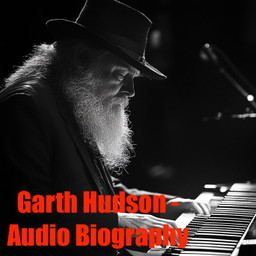
Podcast thumbnail for Garth Hudson - Audio Biography

Garth Hudson - Audio Biography

Claim This Podcast

by Inception Point AI

1 episodes
Updated Daily
Accepts GuestsHas SponsorsLocation 🇨🇦
23

Podcast Authority

Beta
PoorBased on show quality, social media presence, reviews, charts, and more
Pod Engine
Quality45
Social0
YouTube0
Engagement0

Podcast Overview

Garth Hudson was born Eric Hudson on August 2, 1937, in Windsor, Ontario, Canada. Raised in a musically inclined family, Hudson’s childhood was steeped in the rich traditions of classical and folk music. His mother, Olive, was a church organist and pianist who instilled in him a deep appreciation for the intricacies of music, while his father, Fred, was a farm inspector who also played various instruments. This combination of structured musical education and organic familial creativity provided the fertile ground for Hudson’s burgeoning talent. From an early age, Hudson showed an innate curiosity about music, mastering the piano by the age of nine and quickly moving on to instruments like the accordion and saxophone. Hudson’s formal musical education began at the University of Western Ontario, where he studied music theory and performance. There, he delved into a wide range of genres, including classical, jazz, and rhythm and blues. This eclectic mix of influences would later define his style, as he found ways to merge these seemingly disparate elements into a cohesive sound. His classical training, in particular, gave him a strong technical foundation, but it was his love for improvisation and experimentation that truly set him apart. By the time he graduated, Hudson was not just a musician but a visionary who saw music as a boundless art form. Garth Hudson’s professional music career began in the early 1960s, a time when rock and roll was still evolving and defining its identity. His talent and reputation as a versatile musician soon brought him into the orbit of Ronnie Hawkins, a rockabilly star who had gained prominence for his high-energy performances. Hudson joined Hawkins’ backing band, The Hawks, as their organist and saxophonist, a move that marked a significant departure from his classical and jazz roots. This transition was not without challenges; for Hudson, rock and roll represented a new and less formal musical landscape, one that demanded innovation and adaptability. To justify his decision to his conservative, music-loving parents, Hudson negotiated an unusually high salary for his role in The Hawks and insisted on purchasing a Lowrey organ. This instrument, which was less commonly used in rock and roll than the popular Hammond organ, would become central to Hudson’s distinctive sound. The Lowrey’s capabilities for orchestral textures and tonal versatility allowed him to experiment with new approaches to arrangement and improvisation, creating a sound that would later define The Band’s identity. Hudson’s time with The Hawks was formative, not only for him but also for the group as a whole. While performing in clubs across Canada and the United States, The Hawks began to develop a reputation for their tight musicianship and dynamic performances. Hudson’s contributions were key to this success. His ability to seamlessly blend genres—infusing rock with elements of classical music, jazz, and rhythm and blues—gave the group a unique ed This content was created in partnership and with the help of Artificial Intelligence AI.

Language

🇺🇲

Publishing Since

1/21/2025

Unlock The Full Podcast Authority Score Report

See how your podcast performs across key metrics

23

Podcast Authority

Beta
PoorBased on show quality, social media presence, reviews, charts, and more
Pod Engine
Quality45
Social0
YouTube0
Engagement0
6
Excellent Areas
2
Good Performance
11
Growth Opportunities
excellent
Publishing Consistency
Every 0 days
Performing excellently!
good
Show Notes Quality
3.0/5

Recommendations available

Unlock the full report to see detailed tips

poor
Episode Thumbnails

Recommendations available

Unlock the full report to see detailed tips

+16 More Metrics

Unlock comprehensive insights including:

  • • YouTube presence analysis
  • • Social media reach metrics
  • • RSS compliance scoring
  • • Podcast 2.0 features
  • • Technical standards
What's Included in Your Full Report

Detailed Analytics

  • Complete breakdown of all 19 authority metrics
  • Personalized recommendations for each metric
  • Industry benchmarks and comparisons
  • Technical RSS feed analysis and compliance scoring

Growth Strategies

  • Step-by-step action plans for improvement
  • Quick wins to boost your score immediately
  • Pro tips from successful podcasters
Get your free podcast insights report

See how your show performs across every key metric

Instant delivery
No spam
Attract Better Guests

High authority scores make your podcast more attractive to industry leaders and influencers who want to appear on credible shows.

Secure Sponsorships

Sponsors look for podcasts with proven authority and engagement. Your score demonstrates your podcast's value to potential partners.

Grow Your Audience

Understanding your strengths and weaknesses helps you make data-driven decisions to expand your listener base effectively.

2 verified contact emails on file for Garth Hudson - Audio Biography

Pitch yourself as a guest, propose sponsorships, or reach out directly to the host.

Recent Episodes

Episode thumbnail for Garth Hudson - Audio Biography

January 21, 2025

Garth Hudson - Audio Biography

Garth Hudson was born Eric Hudson on August 2, 1937, in Windsor, Ontario, Canada. Raised in a musically inclined family, Hudson’s childhood was steeped in the rich traditions of classical and folk music. His mother, Olive, was a church organist and pianist who instilled in him a deep appreciation for the intricacies of music, while his father, Fred, was a farm inspector who also played various instruments. This combination of structured musical education and organic familial creativity provided the fertile ground for Hudson’s burgeoning talent. From an early age, Hudson showed an innate curiosity about music, mastering the piano by the age of nine and quickly moving on to instruments like the accordion and saxophone. Hudson’s formal musical education began at the University of Western Ontario, where he studied music theory and performance. There, he delved into a wide range of genres, including classical, jazz, and rhythm and blues. This eclectic mix of influences would later define his style, as he found ways to merge these seemingly disparate elements into a cohesive sound. His classical training, in particular, gave him a strong technical foundation, but it was his love for improvisation and experimentation that truly set him apart. By the time he graduated, Hudson was not just a musician but a visionary who saw music as a boundless art form. Garth Hudson’s professional music career began in the early 1960s, a time when rock and roll was still evolving and defining its identity. His talent and reputation as a versatile musician soon brought him into the orbit of Ronnie Hawkins, a rockabilly star who had gained prominence for his high-energy performances. Hudson joined Hawkins’ backing band, The Hawks, as their organist and saxophonist, a move that marked a significant departure from his classical and jazz roots. This transition was not without challenges; for Hudson, rock and roll represented a new and less formal musical landscape, one that demanded innovation and adaptability. To justify his decision to his conservative, music-loving parents, Hudson negotiated an unusually high salary for his role in The Hawks and insisted on purchasing a Lowrey organ. This instrument, which was less commonly used in rock and roll than the popular Hammond organ, would become central to Hudson’s distinctive sound. The Lowrey’s capabilities for orchestral textures and tonal versatility allowed him to experiment with new approaches to arrangement and improvisation, creating a sound that would later define The Band’s identity. Hudson’s time with The Hawks was formative, not only for him but also for the group as a whole. While performing in clubs across Canada and the United States, The Hawks began to develop a reputation for their tight musicianship and dynamic performances. Hudson’s contributions were key to this success. His ability to seamlessly blend genres—infusing rock with elements of classical music, jazz, and rhythm and blues—gave the group a unique edge that set them apart from other acts of the time. In 1964, The Hawks parted ways with Ronnie Hawkins, seeking greater creative freedom. This decision marked the beginning of their transformation into one of the most influential bands in music history. Hudson, along with Levon Helm, Robbie Robertson, Rick Danko, and Richard Manuel, formed their own group. Initially known as Levon and the Hawks, they soon gained recognition for their innovative sound and artistic vision. The group’s collaboration with Bob Dylan in the mid-1960s was a turning point. Dylan, then transitioning from acoustic folk to electric rock, faced backlash from fans who viewed his shift as a betrayal of folk traditions. The Hawks became Dylan’s backing band during this controversial period, and their electrifying performances helped redefine the boundaries of folk and rock music. Hudson’s role was particularly significant; his ability to craft lush, multi-layered arrangements provided the perfect backdrop for...

1 total episodes available

Deep-dive analytics for Garth Hudson - Audio Biography

Frequently asked questions

Have a different question and can't find the answer you're looking for? Reach out to our support team by sending us an email and we'll get back to you as soon as we can.

What is Garth Hudson - Audio Biography?

Garth Hudson was born Eric Hudson on August 2, 1937, in Windsor, Ontario, Canada. Raised in a musically inclined family, Hudson’s childhood was steeped in the rich traditions of classical and folk music. His mother, Olive, was a church organist and pianist who instilled in him a deep appreciation for the intricacies of music, while his father, Fred, was a farm inspector who also played various instruments. This combination of structured musical education and organic familial creativity provided the fertile ground for Hudson’s burgeoning talent. From an early age, Hudson showed an innate curiosity about music, mastering the piano by the age of nine and quickly moving on to instruments like the accordion and saxophone. Hudson’s formal musical education began at the University of Western Ontario, where he studied music theory and performance. There, he delved into a wide range of genres, including classical, jazz, and rhythm and blues. This eclectic mix of influences would later define his style, as he found ways to merge these seemingly disparate elements into a cohesive sound. His classical training, in particular, gave him a strong technical foundation, but it was his love for improvisation and experimentation that truly set him apart. By the time he graduated, Hudson was not just a musician but a visionary who saw music as a boundless art form. Garth Hudson’s professional music career began in the early 1960s, a time when rock and roll was still evolving and defining its identity. His talent and reputation as a versatile musician soon brought him into the orbit of Ronnie Hawkins, a rockabilly star who had gained prominence for his high-energy performances. Hudson joined Hawkins’ backing band, The Hawks, as their organist and saxophonist, a move that marked a significant departure from his classical and jazz roots. This transition was not without challenges; for Hudson, rock and roll represented a new and less formal musical landscape, one that demanded innovation and adaptability. To justify his decision to his conservative, music-loving parents, Hudson negotiated an unusually high salary for his role in The Hawks and insisted on purchasing a Lowrey organ. This instrument, which was less commonly used in rock and roll than the popular Hammond organ, would become central to Hudson’s distinctive sound. The Lowrey’s capabilities for orchestral textures and tonal versatility allowed him to experiment with new approaches to arrangement and improvisation, creating a sound that would later define The Band’s identity. Hudson’s time with The Hawks was formative, not only for him but also for the group as a whole. While performing in clubs across Canada and the United States, The Hawks began to develop a reputation for their tight musicianship and dynamic performances. Hudson’s contributions were key to this success. His ability to seamlessly blend genres—infusing rock with elements of classical music, jazz, and rhythm and blues—gave the group a unique ed

This content was created in partnership and with the help of Artificial Intelligence AI.

How often does this podcast release new episodes?

This podcast updates daily.

Where can I listen to this podcast?

This podcast is available on 4 platforms including Apple Podcasts, Spotify, and more. You can also use the RSS feed directly.

Does this podcast accept guests?

No, this podcast does not typically feature guests.

Legal Disclaimer

Pod Engine is not affiliated with, endorsed by, or officially connected with any of the podcasts displayed on this platform. We operate independently as a podcast discovery and analytics service.

All podcast artwork, thumbnails, and content displayed on this page are the property of their respective owners and are protected by applicable copyright laws. This includes, but is not limited to, podcast cover art, episode artwork, show descriptions, episode titles, transcripts, audio snippets, and any other content originating from the podcast creators or their licensors.

We display this content under fair use principles and/or implied license for the purpose of podcast discovery, information, and commentary. We make no claim of ownership over any podcast content, artwork, or related materials shown on this platform. All trademarks, service marks, and trade names are the property of their respective owners.

While we strive to ensure all content usage is properly authorized, if you are a rights holder and believe your content is being used inappropriately or without proper authorization, please contact us immediately at hey@podengine.ai for prompt review and appropriate action, which may include content removal or proper attribution.

By accessing and using this platform, you acknowledge and agree to respect all applicable copyright laws and intellectual property rights of content owners. Any unauthorized reproduction, distribution, or commercial use of the content displayed on this platform is strictly prohibited.