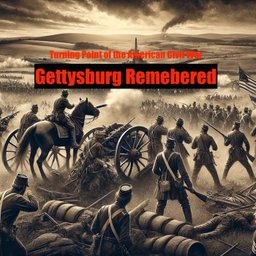
Podcast thumbnail for Gettysburg Remembered

Gettysburg Remembered

Claim This Podcast

by Inception Point AI

1 episodes
Updated Weekly
Accepts GuestsHas SponsorsLocation 🇺🇸

Podcast Overview

As the sun rose over the rolling hills of Pennsylvania on July 1, 1863, the sleepy town of Gettysburg awoke to the sound of gunfire. The Confederate Army of Northern Virginia, under the command of General Robert E. Lee, had marched north into enemy territory, seeking to deliver a decisive blow to the Union forces and bring an end to the Civil War. But the Union Army of the Potomac, led by General George G. Meade, stood in their way, determined to defend their homeland and preserve the Union at all costs. The first day of the battle was a chaotic affair, as Union cavalry under the command of General John Buford clashed with Confederate infantry on the outskirts of town. Buford's men fought bravely, but they were heavily outnumbered and outgunned, and they were eventually forced to retreat through the streets of Gettysburg, fighting a desperate rearguard action to slow the Confederate advance. As the day wore on, more Union troops arrived on the scene, taking up defensive positions on the high ground south of town, including the now-famous Cemetery Hill and Culp's Hill. The Confederates, meanwhile, occupied the town itself and prepared for a major assault on the Union lines. On the second day of the battle, July 2nd, the Confederates launched a massive attack on the Union left flank, hoping to break through the Union defenses and outflank the Army of the Potomac. The fighting was brutal and intense, with both sides suffering heavy casualties as they clashed in the rocky terrain of Devil's Den and Little Round Top. One of the most famous moments of the battle came on this second day, when the 20th Maine Regiment, under the command of Colonel Joshua Chamberlain, made a desperate stand on the slopes of Little Round Top. Outnumbered and running low on ammunition, Chamberlain ordered his men to fix bayonets and charge the advancing Confederates, driving them back down the hill and securing the Union flank. The third and final day of the battle, July 3rd, saw the most famous moment of the entire Civil War: Pickett's Charge. General Lee, convinced that the Union center was vulnerable, ordered a massive frontal assault on the Union lines, with over 12,000 Confederate soldiers marching across an open field toward the Union positions on Cemetery Ridge. The charge was a disaster for the Confederates, with thousands of men cut down by Union artillery and rifle fire before they ever reached the Union lines. Those who did make it to the Union positions were quickly overwhelmed and forced to retreat, leaving behind a field littered with the bodies of the dead and wounded. The battle of Gettysburg was a turning point in the Civil War, a decisive victory for the Union that ended Lee's invasion of the North and dashed Confederate hopes of winning the war. But the cost was staggering, with over 50,000 casualties on both sides, including over 8,000 soldiers killed in action. In the aftermath of the battle, the small town of Gettysburg found itself transformed into a v This content was created in partnership and with the help of Artificial Intelligence AI.

Language

🇺🇲

Publishing Since

7/1/2024

2 verified contact emails on file for Gettysburg Remembered

Pitch yourself as a guest, propose sponsorships, or reach out directly to the host.

Recent Episodes

Episode thumbnail for Gettysburg Remembered - Turning Point of the American Civil War

July 1, 2024

Gettysburg Remembered - Turning Point of the American Civil War

As the sun rose over the rolling hills of Pennsylvania on July 1, 1863, the sleepy town of Gettysburg awoke to the sound of gunfire. The Confederate Army of Northern Virginia, under the command of General Robert E. Lee, had marched north into enemy territory, seeking to deliver a decisive blow to the Union forces and bring an end to the Civil War. But the Union Army of the Potomac, led by General George G. Meade, stood in their way, determined to defend their homeland and preserve the Union at all costs. The first day of the battle was a chaotic affair, as Union cavalry under the command of General John Buford clashed with Confederate infantry on the outskirts of town. Buford's men fought bravely, but they were heavily outnumbered and outgunned, and they were eventually forced to retreat through the streets of Gettysburg, fighting a desperate rearguard action to slow the Confederate advance. As the day wore on, more Union troops arrived on the scene, taking up defensive positions on the high ground south of town, including the now-famous Cemetery Hill and Culp's Hill. The Confederates, meanwhile, occupied the town itself and prepared for a major assault on the Union lines. On the second day of the battle, July 2nd, the Confederates launched a massive attack on the Union left flank, hoping to break through the Union defenses and outflank the Army of the Potomac. The fighting was brutal and intense, with both sides suffering heavy casualties as they clashed in the rocky terrain of Devil's Den and Little Round Top. One of the most famous moments of the battle came on this second day, when the 20th Maine Regiment, under the command of Colonel Joshua Chamberlain, made a desperate stand on the slopes of Little Round Top. Outnumbered and running low on ammunition, Chamberlain ordered his men to fix bayonets and charge the advancing Confederates, driving them back down the hill and securing the Union flank. The third and final day of the battle, July 3rd, saw the most famous moment of the entire Civil War: Pickett's Charge. General Lee, convinced that the Union center was vulnerable, ordered a massive frontal assault on the Union lines, with over 12,000 Confederate soldiers marching across an open field toward the Union positions on Cemetery Ridge. The charge was a disaster for the Confederates, with thousands of men cut down by Union artillery and rifle fire before they ever reached the Union lines. Those who did make it to the Union positions were quickly overwhelmed and forced to retreat, leaving behind a field littered with the bodies of the dead and wounded. The battle of Gettysburg was a turning point in the Civil War, a decisive victory for the Union that ended Lee's invasion of the North and dashed Confederate hopes of winning the war. But the cost was staggering, with over 50,000 casualties on both sides, including over 8,000 soldiers killed in action. In the aftermath of the battle, the small town of Gettysburg found itself transformed into a vast hospital and burial ground, with thousands of wounded soldiers filling every available building and tens of thousands of bodies waiting to be buried. The stench of death hung heavy over the town, and the sound of moaning and weeping filled the air. It was in this somber atmosphere that President Abraham Lincoln arrived in Gettysburg on November 19th, 1863, to dedicate the new Soldiers' National Cemetery. In a brief but powerful address, Lincoln paid tribute to the bravery and sacrifice of the soldiers who had fought and died at Gettysburg, and he called on the nation to rededicate itself to the unfinished work of the war. "We here highly resolve," Lincoln declared, "that these dead shall not have died in vain - that this nation, under God, shall have a new birth of freedom - and that government of the people, by the people, for the people, shall not perish from the earth." Those words have echoed down through the generations, a lasting tribute to the courage and sacrifice of...

1 total episodes available

Deep-dive analytics for Gettysburg Remembered

Frequently asked questions

Have a different question and can't find the answer you're looking for? Reach out to our support team by sending us an email and we'll get back to you as soon as we can.

What is Gettysburg Remembered?

As the sun rose over the rolling hills of Pennsylvania on July 1, 1863, the sleepy town of Gettysburg awoke to the sound of gunfire. The Confederate Army of Northern Virginia, under the command of General Robert E. Lee, had marched north into enemy territory, seeking to deliver a decisive blow to the Union forces and bring an end to the Civil War. But the Union Army of the Potomac, led by General George G. Meade, stood in their way, determined to defend their homeland and preserve the Union at all costs. The first day of the battle was a chaotic affair, as Union cavalry under the command of General John Buford clashed with Confederate infantry on the outskirts of town. Buford's men fought bravely, but they were heavily outnumbered and outgunned, and they were eventually forced to retreat through the streets of Gettysburg, fighting a desperate rearguard action to slow the Confederate advance. As the day wore on, more Union troops arrived on the scene, taking up defensive positions on the high ground south of town, including the now-famous Cemetery Hill and Culp's Hill. The Confederates, meanwhile, occupied the town itself and prepared for a major assault on the Union lines. On the second day of the battle, July 2nd, the Confederates launched a massive attack on the Union left flank, hoping to break through the Union defenses and outflank the Army of the Potomac. The fighting was brutal and intense, with both sides suffering heavy casualties as they clashed in the rocky terrain of Devil's Den and Little Round Top. One of the most famous moments of the battle came on this second day, when the 20th Maine Regiment, under the command of Colonel Joshua Chamberlain, made a desperate stand on the slopes of Little Round Top. Outnumbered and running low on ammunition, Chamberlain ordered his men to fix bayonets and charge the advancing Confederates, driving them back down the hill and securing the Union flank. The third and final day of the battle, July 3rd, saw the most famous moment of the entire Civil War: Pickett's Charge. General Lee, convinced that the Union center was vulnerable, ordered a massive frontal assault on the Union lines, with over 12,000 Confederate soldiers marching across an open field toward the Union positions on Cemetery Ridge. The charge was a disaster for the Confederates, with thousands of men cut down by Union artillery and rifle fire before they ever reached the Union lines. Those who did make it to the Union positions were quickly overwhelmed and forced to retreat, leaving behind a field littered with the bodies of the dead and wounded. The battle of Gettysburg was a turning point in the Civil War, a decisive victory for the Union that ended Lee's invasion of the North and dashed Confederate hopes of winning the war. But the cost was staggering, with over 50,000 casualties on both sides, including over 8,000 soldiers killed in action. In the aftermath of the battle, the small town of Gettysburg found itself transformed into a v

This content was created in partnership and with the help of Artificial Intelligence AI.

How often does this podcast release new episodes?

This podcast updates weekly.

Where can I listen to this podcast?

This podcast is available on 4 platforms including Apple Podcasts, Spotify, and more. You can also use the RSS feed directly.

Does this podcast accept guests?

Information about guest appearances is not available.

Legal Disclaimer

Pod Engine is not affiliated with, endorsed by, or officially connected with any of the podcasts displayed on this platform. We operate independently as a podcast discovery and analytics service.

All podcast artwork, thumbnails, and content displayed on this page are the property of their respective owners and are protected by applicable copyright laws. This includes, but is not limited to, podcast cover art, episode artwork, show descriptions, episode titles, transcripts, audio snippets, and any other content originating from the podcast creators or their licensors.

We display this content under fair use principles and/or implied license for the purpose of podcast discovery, information, and commentary. We make no claim of ownership over any podcast content, artwork, or related materials shown on this platform. All trademarks, service marks, and trade names are the property of their respective owners.

While we strive to ensure all content usage is properly authorized, if you are a rights holder and believe your content is being used inappropriately or without proper authorization, please contact us immediately at hey@podengine.ai for prompt review and appropriate action, which may include content removal or proper attribution.

By accessing and using this platform, you acknowledge and agree to respect all applicable copyright laws and intellectual property rights of content owners. Any unauthorized reproduction, distribution, or commercial use of the content displayed on this platform is strictly prohibited.