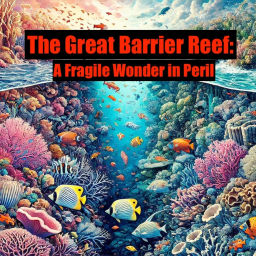
Podcast thumbnail for Great Barrier Reef

Great Barrier Reef

Claim This Podcast

by Inception Point AI

1 episodes
Updated Weekly
Accepts GuestsHas SponsorsLocation 🇦🇺

Podcast Overview

The Great Barrier Reef: A Fragile Wonder in Peril In the vast expanse of the Coral Sea, off the northeast coast of Australia, lies one of nature's most extraordinary creations: the Great Barrier Reef. This living masterpiece, visible from space, stretches for over 2,300 kilometers, a testament to the remarkable power of tiny organisms working in harmony over millions of years. But this natural wonder, home to an astonishing diversity of life, faces an uncertain future as it grapples with the mounting pressures of a changing world. As we descend beneath the azure waters of the Coral Sea, we enter a realm of unparalleled beauty and complexity. The Great Barrier Reef is not a single, contiguous structure, but rather a intricate mosaic of nearly 3,000 individual reefs and 900 islands. Each of these is a world unto itself, teeming with life in myriad forms and colors. The architects of this underwater metropolis are the coral polyps, tiny animals no larger than a pinhead. These remarkable creatures have, over millennia, built the largest living structure on Earth. The polyps secrete calcium carbonate, slowly constructing the intricate limestone skeletons that form the physical structure of the reef. It's a process of incredible patience, with some of the large coral formations we see today being over 400 years old. But the corals are far more than mere builders. They are the foundation of one of the most diverse ecosystems on our planet. The nooks and crannies of the reef provide shelter and sustenance for an astounding array of marine life. More than 1,500 species of fish dart among the coral branches, their vibrant colors a dazzling display of nature's artistry. From the tiny, jewel-like damselfish to the imposing bulk of the Queensland grouper, the reef is a piscine paradise. The diversity doesn't end with fish. The Great Barrier Reef is home to more than 400 species of hard coral, 150 species of soft coral, 5,000 species of mollusc, and 500 species of seaweed. Dugongs, the gentle sea cows, graze on seagrass meadows in the shallows, while in the deeper waters, whales and dolphins breach and play. Six of the world's seven species of sea turtle can be found here, including the vulnerable green sea turtle, which returns to the reef's islands to nest. The reef's biodiversity extends beyond the immediately visible. Microscopic plankton form the base of the food web, supporting an intricate network of life. Sponges, often overlooked, play a crucial role in filtering water and recycling nutrients. Countless species of worms, crustaceans, and other invertebrates inhabit every niche of the reef ecosystem, each playing a vital role in its intricate balance. This underwater Eden is also home to some of the ocean's most fascinating symbiotic relationships. Clownfish find protection among the tentacles of sea anemones, while cleaner wrasses set up 'cleaning stations' where larger fish come to have parasites removed. The intricate dance of life on the reef is a This content was created in partnership and with the help of Artificial Intelligence AI.

Language

🇺🇲

Publishing Since

8/8/2024

2 verified contact emails on file for Great Barrier Reef

Pitch yourself as a guest, propose sponsorships, or reach out directly to the host.

Recent Episodes

Episode thumbnail for The Great Barrier Reef- A Fragile Wonder in Peril

August 8, 2024

The Great Barrier Reef- A Fragile Wonder in Peril

The Great Barrier Reef: A Fragile Wonder in Peril In the vast expanse of the Coral Sea, off the northeast coast of Australia, lies one of nature's most extraordinary creations: the Great Barrier Reef. This living masterpiece, visible from space, stretches for over 2,300 kilometers, a testament to the remarkable power of tiny organisms working in harmony over millions of years. But this natural wonder, home to an astonishing diversity of life, faces an uncertain future as it grapples with the mounting pressures of a changing world. As we descend beneath the azure waters of the Coral Sea, we enter a realm of unparalleled beauty and complexity. The Great Barrier Reef is not a single, contiguous structure, but rather a intricate mosaic of nearly 3,000 individual reefs and 900 islands. Each of these is a world unto itself, teeming with life in myriad forms and colors. The architects of this underwater metropolis are the coral polyps, tiny animals no larger than a pinhead. These remarkable creatures have, over millennia, built the largest living structure on Earth. The polyps secrete calcium carbonate, slowly constructing the intricate limestone skeletons that form the physical structure of the reef. It's a process of incredible patience, with some of the large coral formations we see today being over 400 years old. But the corals are far more than mere builders. They are the foundation of one of the most diverse ecosystems on our planet. The nooks and crannies of the reef provide shelter and sustenance for an astounding array of marine life. More than 1,500 species of fish dart among the coral branches, their vibrant colors a dazzling display of nature's artistry. From the tiny, jewel-like damselfish to the imposing bulk of the Queensland grouper, the reef is a piscine paradise. The diversity doesn't end with fish. The Great Barrier Reef is home to more than 400 species of hard coral, 150 species of soft coral, 5,000 species of mollusc, and 500 species of seaweed. Dugongs, the gentle sea cows, graze on seagrass meadows in the shallows, while in the deeper waters, whales and dolphins breach and play. Six of the world's seven species of sea turtle can be found here, including the vulnerable green sea turtle, which returns to the reef's islands to nest. The reef's biodiversity extends beyond the immediately visible. Microscopic plankton form the base of the food web, supporting an intricate network of life. Sponges, often overlooked, play a crucial role in filtering water and recycling nutrients. Countless species of worms, crustaceans, and other invertebrates inhabit every niche of the reef ecosystem, each playing a vital role in its intricate balance. This underwater Eden is also home to some of the ocean's most fascinating symbiotic relationships. Clownfish find protection among the tentacles of sea anemones, while cleaner wrasses set up 'cleaning stations' where larger fish come to have parasites removed. The intricate dance of life on the reef is a testament to millions of years of evolution and adaptation. But this underwater Eden is under threat. In recent decades, the Great Barrier Reef has faced mounting pressures that have pushed this delicate ecosystem to the brink. The causes are many and complex, but at their heart lies the specter of climate change, a force that is altering the very conditions that have allowed the reef to thrive for millennia. One of the most visible and alarming signs of the reef's distress is the phenomenon known as coral bleaching. Corals have a symbiotic relationship with tiny algae called zooxanthellae, which live within their tissues and provide them with nutrients and their characteristic vibrant colors. When the water temperature rises above the corals' tolerance level, they expel these algae in a stress response, leaving the coral's white skeleton visible through its transparent tissue – hence the term "bleaching." While corals can recover from brief periods of bleaching, prolonged or...

1 total episodes available

Deep-dive analytics for Great Barrier Reef

Frequently asked questions

Have a different question and can't find the answer you're looking for? Reach out to our support team by sending us an email and we'll get back to you as soon as we can.

What is Great Barrier Reef?

The Great Barrier Reef: A Fragile Wonder in Peril In the vast expanse of the Coral Sea, off the northeast coast of Australia, lies one of nature's most extraordinary creations: the Great Barrier Reef. This living masterpiece, visible from space, stretches for over 2,300 kilometers, a testament to the remarkable power of tiny organisms working in harmony over millions of years. But this natural wonder, home to an astonishing diversity of life, faces an uncertain future as it grapples with the mounting pressures of a changing world. As we descend beneath the azure waters of the Coral Sea, we enter a realm of unparalleled beauty and complexity. The Great Barrier Reef is not a single, contiguous structure, but rather a intricate mosaic of nearly 3,000 individual reefs and 900 islands. Each of these is a world unto itself, teeming with life in myriad forms and colors. The architects of this underwater metropolis are the coral polyps, tiny animals no larger than a pinhead. These remarkable creatures have, over millennia, built the largest living structure on Earth. The polyps secrete calcium carbonate, slowly constructing the intricate limestone skeletons that form the physical structure of the reef. It's a process of incredible patience, with some of the large coral formations we see today being over 400 years old. But the corals are far more than mere builders. They are the foundation of one of the most diverse ecosystems on our planet. The nooks and crannies of the reef provide shelter and sustenance for an astounding array of marine life. More than 1,500 species of fish dart among the coral branches, their vibrant colors a dazzling display of nature's artistry. From the tiny, jewel-like damselfish to the imposing bulk of the Queensland grouper, the reef is a piscine paradise. The diversity doesn't end with fish. The Great Barrier Reef is home to more than 400 species of hard coral, 150 species of soft coral, 5,000 species of mollusc, and 500 species of seaweed. Dugongs, the gentle sea cows, graze on seagrass meadows in the shallows, while in the deeper waters, whales and dolphins breach and play. Six of the world's seven species of sea turtle can be found here, including the vulnerable green sea turtle, which returns to the reef's islands to nest. The reef's biodiversity extends beyond the immediately visible. Microscopic plankton form the base of the food web, supporting an intricate network of life. Sponges, often overlooked, play a crucial role in filtering water and recycling nutrients. Countless species of worms, crustaceans, and other invertebrates inhabit every niche of the reef ecosystem, each playing a vital role in its intricate balance. This underwater Eden is also home to some of the ocean's most fascinating symbiotic relationships. Clownfish find protection among the tentacles of sea anemones, while cleaner wrasses set up 'cleaning stations' where larger fish come to have parasites removed. The intricate dance of life on the reef is a

This content was created in partnership and with the help of Artificial Intelligence AI.

How often does this podcast release new episodes?

This podcast updates weekly.

Where can I listen to this podcast?

This podcast is available on 8 platforms including Apple Podcasts, Spotify, and more. You can also use the RSS feed directly.

Does this podcast accept guests?

Yes, this podcast regularly features guests.

Legal Disclaimer

Pod Engine is not affiliated with, endorsed by, or officially connected with any of the podcasts displayed on this platform. We operate independently as a podcast discovery and analytics service.

All podcast artwork, thumbnails, and content displayed on this page are the property of their respective owners and are protected by applicable copyright laws. This includes, but is not limited to, podcast cover art, episode artwork, show descriptions, episode titles, transcripts, audio snippets, and any other content originating from the podcast creators or their licensors.

We display this content under fair use principles and/or implied license for the purpose of podcast discovery, information, and commentary. We make no claim of ownership over any podcast content, artwork, or related materials shown on this platform. All trademarks, service marks, and trade names are the property of their respective owners.

While we strive to ensure all content usage is properly authorized, if you are a rights holder and believe your content is being used inappropriately or without proper authorization, please contact us immediately at hey@podengine.ai for prompt review and appropriate action, which may include content removal or proper attribution.

By accessing and using this platform, you acknowledge and agree to respect all applicable copyright laws and intellectual property rights of content owners. Any unauthorized reproduction, distribution, or commercial use of the content displayed on this platform is strictly prohibited.