- 17
- Episodes
- Weekly
- Cadence
- 2026
- First episode
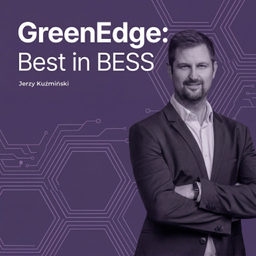
About GreenEdge: Best in BESS - ENG
A podcast about battery energy storage and the Polish renewable energy market — no marketing fluff, just real examples and verified information. We cover the entire BESS project lifecycle: development, permitting, EPC, commissioning, optimization, and O&M. Benefits, risks, real costs, investor mistakes, and how to spot a reliable contractor. Universal BESS insights plus Polish market specifics — for investors entering storage business or companies looking to cut energy costs with C&I solutions. Hosted by Jerzy Kuźmiński
- Publisher
- jerzykuzminski
- Category
- technology
- Language
- en
- Explicit
- No
- First episode
- 22 Mar 2026
- Latest episode
- 17 Oct 2026
Latest episodes
17 episodes in the feed.
17 Oct 2026
17: The EPC Contract in Poland
EPC Contract for your BESS Project is not something that you will sign within a week or two. There are tens of pages of provisions that someone needs to verify and adjust to your expectations. In this episode I walk through the EPC contract chronologically - from why your RFP quality directly determines your contract quality, through scope of works and the site security system, SCADA and schedule, to the FAT/SAT/PAC/FAC acceptance sequence, performance guarantees, and penalty structure. Looking at it from both perspective, because a fair contract has to work for the investor and the contractor alike. I close with something that is especially important for a foreign investor executing this contract in Poland - governing law, dispute resolution, and the local practicalities a standard EPC playbook does not cover. Questions or looking for support on a BESS project in Poland? contact@greenedge-solutions.com (contact@greenedge-solutions.com) | www.greenedge-solutions.com (www.greenedge-solutions.com) Looking to extend this knowledge further, or get your whole team aligned on it? Visit the training tab on our website. https://greenedge-solutions.com/en/bess-training/ (https://greenedge-solutions.com/en/bess-training/)
5 Sept 2026
16: Due diligence of a BESS Project
Buying a ready-to-build BESS project or developing one from scratch is where the most expensive mistakes happen. A battery container can be compared on a spec sheet, but a development project is unique to its location and demands individual verification. In this episode I walk through the entire due diligence chain: the land lease terms that can kill project economics, how to interpret zoning documents for a battery installation, what Poland's incoming "general plans" mean for permitting after mid-2026, how to read grid connection conditions and price the operator's side of the work, noise limits that can rule out a site entirely, cable route easements, and the difference between a technical design and an executive design. Questions or looking for support on a BESS project in Poland? contact@greenedge-solutions.com (mailto:contact@greenedge-solutions.com) | www.greenedge-solutions.com (http://www.greenedge-solutions.com/) Looking to extend this knowledge further, or get your whole team aligned on it? Visit the training tab on our website to learn more about our BESS training programme. https://greenedge-solutions.com/en/bess-training/ (https://greenedge-solutions.com/en/bess-training/)
30 Aug 2026
15: Price Arbitrage - Foundation or Supplement to the BESS Revenue?
Day-ahead and intraday markets are where a battery storage system earns money by buying electricity cheap and selling it expensive. It sounds simple, but the practical questions pile up fast: what are real spreads in Poland right now, can arbitrage be combined with balancing services, how many cycles does it actually consume, and will banks accept arbitrage revenue as a basis for financing? In this episode I go through how day-ahead and intraday arbitrage work in Poland, how spreads move seasonally, how to stack arbitrage with FCR, aFRR, and mFRR without one cancelling out the other, what arbitrage costs you in battery degradation, how it applies to C&I installations, and why bankability usually comes down to a floor-plus-profit-share structure. Questions or looking for support on a BESS project in Poland? contact@greenedge-solutions.com (contact@greenedge-solutions.com) | www.greenedge-solutions.com (www.greenedge-solutions.com)
13 Aug 2026
14: LTSA - Contract Without Obligations
In episode fourteen of Best in BESS, I open up a real LTSA package from several large, globally recognized BESS suppliers and show exactly where the numbers disappear — clause by clause, including a real example of a supplier's written response to a request for clarification, which turns out to be its own lesson in reading contracts between the lines. I also talk about why supplier bankability has to be checked with the same rigor as round-trip efficiency, using real cases from the past year of well-financed suppliers that didn't survive to see their own guarantees tested — and why the order most investors follow when negotiating an LTSA is backwards from the one that actually protects them. Contact: contact@greenedge-solutions.com (contact@greenedge-solutions.com) More at www.greenedge-solutions.com (www.greenedge-solutions.com)
26 Jul 2026
13: Owner's Engineer on BESS Project
The market is speeding up. More tenders, more conversations, more investors who, after months of just watching the market, suddenly have a budget and want to move. And that's exactly when the first contract from a supplier or contractor lands — and you're right back at square one: vague clauses, responsibility spread across three parties, a warranty with no definition of what it actually covers. In episode thirteen of Best in BESS, I talk about the function that's supposed to prevent this before it ever happens — Owner's Engineer, understood not as a stamp in the site log, but as real engineering support across the entire life of the project. I walk through this in two stages: pre-investment support at the term sheet, specification, and contractor selection stage, and on-site support during final component selection, calculation verification, and physical presence during construction — with examples straight from Rova Systems' projects running across several European markets at once. Contact: contact@greenedge-solutions.com (contact@greenedge-solutions.com) More at www.greenedge-solutions.com (www.greenedge-solutions.com) And www.rova.pl (www.rova.pl)
5 Jul 2026
12: Ancillary Services: FCR, aFRR, mFRR
FCR, aFRR, and mFRR are three different products — not three names for the same thing. Each one works differently, has different technical requirements, a different revenue profile, and a different risk structure. A surprising number of people in this industry use these three acronyms interchangeably. That's an expensive misunderstanding when you're building a financial model or negotiating an aggregator contract. In this episode I go through how each service works and at what timescale, what your system technically needs to qualify, why DUB certification is the foundation but not the full picture for FCR and aFRR, what realistic revenues look like for a 10 MW / 20 MWh project in Poland, and why your aggregator's balance sheet matters just as much as their algorithm. Questions or looking for support on a BESS project? contact@greenedge-solutions.com (mailto:contact@greenedge-solutions.com) www.greenedge-solutions.com (http://www.greenedge-solutions.com/)
21 Jun 2026
11: Entering the Balancing Market in Poland
In this episode we walk you through everything that stands between a commissioned BESS project and its first revenue from ancillary services: the regulatory structure of the Polish balancing market, the hardware certification requirements that are entirely specific to Poland, the IT infrastructure PSE requires, and the DUB qualification process itself — including where projects consistently get stuck. The NC RfG certification and the PTPiREE approved hardware list are not details. They are prerequisites. If your inverter or PCS is not on the Polish white list, you will not receive grid connection conditions, you will not complete the execution design with the DSO, and you will not energize the project. Major international suppliers — companies that have been in this market for years — lose their place on that list because they didn't respond to documentation requests in time. This is the kind of thing that needs to be checked during supplier selection, not after the supply contract is signed. Questions or looking for support on a BESS project? contact@greenedge-solutions.com (mailto:contact@greenedge-solutions.com) www.greenedge-solutions.com
7 Jun 2026
10: BESS Project Financing
You can have the right location, a solid grid connection agreement, a credible supplier, and an experienced EPC on the shortlist. None of that matters if the financing doesn't close. And the reason it doesn't close is almost always the same: the investor structured the project without understanding what the bank actually needs to see. In this episode I go through BESS project financing from the bank's perspective first — how they think about risk, what DSCR means in practice for a storage project, and why the hybrid versus stand-alone distinction shapes everything that follows. Then I cover the three main commercial structures for optimizer cooperation, because that's where the bankability question usually gets resolved. And I close with two issues specific to the Polish market right now that every investor needs to have on their radar. The projects that move fastest through due diligence are the ones that were prepared for the questions before they were asked. Looking for support with BESS project financing, financial modelling, or commercial structuring in Poland? contact@greenedge-solutions.com (mailto:contact@greenedge-solutions.com) www.greenedge-solutions.com (http://www.greenedge-solutions.com/)
31 May 2026
09: The EPC Tender - Selecting the right Contractor
You have your permits, your equipment order, and your grid connection agreement. Now you need someone to actually build the thing. And this is where a lot of projects go wrong — not because of bad technology or poor financing, but because of a contractor selection process that wasn't designed to find the right partner. In this episode I cover the full EPC procurement process from both sides of the table — I've run RFP processes as an investor advisor and prepared bids as a contractor representative. That dual perspective changes what I think actually matters here. In this episode: Three EPC delivery models — Full EPC, BoP, and Full Wrap with O&M — and what each one means for risk allocation and cost When to issue your RFP and how to structure the process in phases, from RFI to BAFO What a well-constructed tender document actually contains — and where most RFPs fail How many contractors to invite and why a wide-distribution tender produces worse outcomes The site visit — when to organise it and what it tells you about a contractor before you sign anything How to evaluate offers beyond price: track record, team, financial stability, contract posture Red flags on both sides — signals from contractors that something is wrong, and signals from investors that push the best contractors away How the Polish EPC market compares to Germany and the UK, and what that means for your procurement strategy The cheapest offer is very often the most expensive project. Looking for support with EPC procurement or owner's engineering in Poland? contact@greenedge-solutions.com (mailto:contact@greenedge-solutions.com) www.greenedge-solutions.com
24 May 2026
08: NIS2 and Cybersecurity in BESS Project
On the 19th of February 2026, Poland signed the amended Act on the National Cybersecurity System — the Polish implementation of the EU NIS2 Directive. For BESS investors and developers, this is not an IT compliance story. It's a project risk story, which affects you whether your entity is directly regulated or not. In this episode: why the energy sector — including battery storage — is explicitly covered by NIS2; how flow-down clauses mean NIS2 reaches your project even if you fall below the direct regulation threshold; what a BESS actually looks like as a cybersecurity target — the three system layers and four realistic attack vectors; what the Polish KSC Act requires from you and on what timeline; what to require from each party in your supply chain — BESS supplier, SCADA integrator, EPC contractor, O&M provider, and aggregator; what cybersecurity testing needs to happen before you sign off on commissioning and who should conduct it; which contract clauses lock this in; and why building security into a fifteen-year asset from day one is a fundamentally different calculation than treating it as an optional extra. Questions? Contact: contact@greenedge-solutions.com (mailto:contact@greenedge-solutions.com) You can find our more at: www.greenedge-solutions.com
9 May 2026
07: SGU - Significant Grid User
In September 2025, for the first time in Poland's history, battery energy storage systems were included on the SGU list — Significant Grid Users. If you are developing or financing a BESS project with a capacity of at least 10 MW and 40 MWh — this episode is for you. In this episode: what SGU is and where this obligation comes from; who ends up on the list and how that process works from the investor's and developer's side; what specific technical and operational obligations the SGU status imposes; why there is no compensation for being an SGU and what costs to expect; what grid following, grid forming, and black start mean — and why this decision should be made at the EPC specification stage; whether you can build an off-grid installation and what that means legally for a large BESS project; and why SGU, Poland's grid connection reform, and NIS2 together tell one story — BESS as critical grid infrastructure. Questions? Write to: contact@greenedge-solutions.com (mailto:contact@greenedge-solutions.com) More: www.greenedge-solutions.com
2 May 2026
06: Choosing a BESS Supplier
You've developed your project, secured the permits, and now you need to buy the system. And this is where a lot of investors — including experienced ones — discover they weren't as prepared as they thought. The BESS supplier market is crowded, opaque, and the differences between offers that look identical on paper can be enormous in practice. In this episode, I walk through how the supplier market actually works — cell manufacturers, system integrators, technology developers, and why the distinction matters. I cover the structural shift that's making life harder for smaller investors as top-tier suppliers chase volume, how to evaluate supplier credibility before you commit, what scope of supply you should actually be asking for, how to run a proper RFP and BAFO process, what certifications matter specifically for projects in Poland, and the red flags in offers and term sheets that tell you something is wrong before you've signed anything. e-mail: contact@greenedge-solution.com (mailto:contact@greenedge-solution.com) www.greenedge-solutions.com (http://www.greenedge-solutions.com/)
25 Apr 2026
05: How to Develop a BESS Project in Poland
Development is where most BESS projects succeed or fail — not on the construction site, but in the eighteen to twenty-four months before a single container arrives. In this episode, I walk you through the full development process for a utility-scale stand-alone project in Poland: site selection, land rights, zoning under the new General Plan regime, environmental decisions, grid connection under the new UC84 rules, building permits, cable route negotiations, and what RTB actually means versus how it's often marketed. UC84 changed the economics of early-stage development significantly — higher upfront deposits, new performance securities, shorter validity periods for connection conditions, and mandatory milestones in connection agreements. The Zoning Conditions system is being replaced by General Plans, which municipalities must adopt by end of August 2026. And cable pooling has finally been extended to battery storage, which opens real opportunities for PV retrofit projects. This episode also addresses the retroactivity provisions of UC84 and what they mean for anyone evaluating a project acquisition, and why remote development of Polish projects without local presence almost always ends in frustration. Questions or project enquiries: contact@greenedge-solutions.com
19 Apr 2026
04 - UC84 - Poland's New Grid Connection Rules
On April 15, 2026, Poland published UC84 in the Journal of Laws — a comprehensive amendment to the Energy Law that fundamentally changes how grid connections work. The law enters into force on April 29, 2026. After almost a year of legislative work, numerous controversies, and Senate amendments, we have the final text. Time to explain what changed and what it means for BESS and renewable energy investors and developers. In this episode: grid connection conditions validity shortened from two years to one and what this means for the development process; three new financial instruments — application fee, doubled advance payment, and an entirely new security deposit — with specific amounts; milestones in connection agreements and the force majeure clauses the Senate introduced at the last moment; two new types of connection agreements — why flexible and configurable agreements are two completely different things and why banks won't finance your full capacity under the latter; cable pooling extended to energy storage — the change the market has been waiting for; and retroactivity — the most controversial element of the law and the specific compromise that ultimately made it into the final text. Questions? Contact: contact@greenedge-solutions.com (mailto:contact@greenedge-solutions.com)
11 Apr 2026
03: C&I Energy Storage
C&I storage is not just small cabinet systems — we're talking about containerized solutions of several megawatt-hours that can fundamentally change how your business operates, with payback periods of three to four years for energy-intensive facilities rather than the seven to eight years typical in utility-scale projects. This episode covers the Commercial & Industrial segment: energy storage at factories, logistics centers, cold storage facilities, and office buildings. Different economics than stand-alone trading assets, often faster development timelines, and systems that can operate for fifteen to twenty years because they're cycled less aggressively. In this episode: C&I scale: from small cabinets to multi-MWh containerized solutions Why C&I can achieve 3-4 year payback compared to 7-8 years for utility-scale Four applications: peak shaving, PV self-consumption, backup, power quality Battery vs diesel generator: response time, maintenance, flexibility How a C&I battery can generate revenue on weekends by providing grid services Sizing fundamentals: why 15-minute consumption data is essential Common calculation mistakes and how to avoid them What we're working on now: early-stage C&I projects, RFQ/RFP support This episode is for business owners and facility managers considering storage investments who want to understand whether it makes financial sense before committing capital. E-mail: contact@greenedge-solutions.com Website: www.greenedge-solutions.com
29 Mar 2026
02: What's Really Inside a BESS Container?
From the outside, a battery container looks simple — just a box. But what's inside determines whether your investment performs for fifteen years or starts causing problems after two. In this episode, we open up the container and examine every critical component: battery cells and chemistry, BMS architecture, power conversion systems, cooling and heating (critical for Polish winters), fire safety, and energy management systems. In this episode: Key components inside a container RTE explained: the difference between marketing specs and real-world performance at the point of connection BMS: why the "brain" of your system might limit performance AC-block vs DC container: "plug and play" doesn’t exist Cooling ang heating and what happens when it's - 27°C A real life example: servicing a 5-year-old container with no manufacturer contact, fake SOH readings, and completely unbalanced cells The essential questions to ask suppliers before you commit This episode is for anyone evaluating battery storage investments who wants to understand what they're actually buying — beyond the marketing brochures. 📧 contact@greenedge-solutions.com
22 Mar 2026
01: What is BESS and Why Poland
The first episode of the English edition of Best in BESS — a podcast for international investors and developers exploring the Polish battery energy storage market. Poland has issued grid connection permits for an estimated 70 GWh of energy storage. Over 400 projects applied for the NFOŚiGW subsidy program, and the first utility-scale BESS projects are finally going live in 2026. The opportunity is real — but so are the challenges. In this episode: The Polish BESS market in 2026: subsidies, pipeline, and first projects commissioning What is BESS and why do we need energy storage The difference between cell manufacturers and system integrators — and why it matters Stand-alone vs C&I vs hybrid: What's actually inside a battery container — components, hidden costs, and real-world examples Fire safety, cooling challenges, and the gap between marketing specs and reality Why most project delays come from administrative decisions and investor overoptimism Navigating through the Polish grid landscape This podcast is for investors, developers, EPC contractors, and energy professionals who want honest, practical insights into the Polish BESS market — including what can go wrong and how to avoid it. Looking to enter the Polish market? contact@greenedge-solutions.com Want to know more? www.greenedge-solutions.com
Host of GreenEdge: Best in BESS - ENG?
Claim your podcast to manage its listing and keep your show details accurate.
Pod Engine is an independent podcast discovery and analytics service and is not affiliated with or endorsed by this podcast. Artwork and show content belong to their owners. Full legal notice.