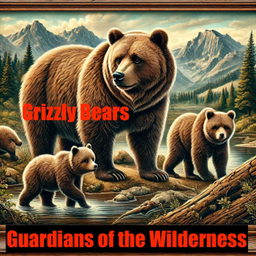
Podcast thumbnail for Grizzly Bears

Grizzly Bears

Claim This Podcast

by Inception Point AI

3.5(2 reviews)
1 episodes
Updated Weekly
Accepts GuestsHas SponsorsLocation 🇺🇸

Podcast Overview

Grizzly Bears: Majestic Icons of the Wilderness In the vast wilderness of North America, few animals capture the imagination as powerfully as the grizzly bear (Ursus arctos horribilis). These magnificent creatures, with their immense size, strength, and undeniable presence, have become symbols of the untamed wild, embodying the essence of the rugged landscapes they inhabit. From the snow-capped peaks of Alaska to the lush forests of the Rocky Mountains, grizzly bears have played a vital role in shaping the ecological and cultural fabric of the continent for thousands of years. Evolutionary History and Taxonomy Grizzly bears are a subspecies of the brown bear (Ursus arctos), which has a wide distribution across North America, Europe, and Asia. The brown bear lineage can be traced back to the Etruscan bear (Ursus etruscus), which roamed Europe during the Pliocene epoch, approximately 5.3 to 2.6 million years ago. Over time, brown bears diversified and adapted to various habitats, giving rise to numerous subspecies, including the grizzly bear. The grizzly bear's scientific name, Ursus arctos horribilis, translates to "terrible bear," a nod to its formidable size and reputation. However, the term "grizzly" actually refers to the bear's distinctive coloration, which often features light-tipped or "grizzled" fur, giving it a frosted appearance. Physical Characteristics and Adaptations Grizzly bears are among the largest terrestrial predators in North America, with adult males weighing between 400 to 1,000 pounds (180 to 450 kg) and standing up to 8 feet (2.4 m) tall on their hind legs. Females are typically smaller, weighing between 290 to 400 pounds (130 to 180 kg). These bears have a muscular build, with a distinctive hump on their shoulders formed by the massive muscles used for digging and foraging. Grizzly bears have a variety of adaptations that enable them to thrive in their diverse habitats. Their thick, dense fur provides insulation against the cold, while their long, curved claws, measuring up to 4 inches (10 cm), are perfect for digging, climbing, and defending themselves. Grizzlies also have an exceptional sense of smell, which they use to locate food sources and detect potential threats from miles away. Habitat and Distribution Historically, grizzly bears were found throughout much of western North America, from the Arctic tundra to the high desert plains. However, due to habitat loss, hunting, and conflict with humans, their range has been significantly reduced. Today, grizzly bears are primarily found in Alaska, western Canada, and isolated populations in the northwestern United States, including Montana, Idaho, Wyoming, and Washington. Grizzly bears are adaptable and can thrive in a variety of habitats, from alpine meadows and subalpine forests to grasslands and arctic tundra. They require large, contiguous areas of undisturbed land to meet their ecological needs, which include diverse food sources, denning sites, and room to roam. Fee This content was created in partnership and with the help of Artificial Intelligence AI.

Language

🇺🇲

Publishing Since

6/25/2024

2 verified contact emails on file for Grizzly Bears

Pitch yourself as a guest, propose sponsorships, or reach out directly to the host.

Recent Episodes

Episode thumbnail for Grizzly Bears- Guardians of The Wilderness

June 25, 2024

Grizzly Bears- Guardians of The Wilderness

Grizzly Bears: Majestic Icons of the Wilderness In the vast wilderness of North America, few animals capture the imagination as powerfully as the grizzly bear (Ursus arctos horribilis). These magnificent creatures, with their immense size, strength, and undeniable presence, have become symbols of the untamed wild, embodying the essence of the rugged landscapes they inhabit. From the snow-capped peaks of Alaska to the lush forests of the Rocky Mountains, grizzly bears have played a vital role in shaping the ecological and cultural fabric of the continent for thousands of years. Evolutionary History and Taxonomy Grizzly bears are a subspecies of the brown bear (Ursus arctos), which has a wide distribution across North America, Europe, and Asia. The brown bear lineage can be traced back to the Etruscan bear (Ursus etruscus), which roamed Europe during the Pliocene epoch, approximately 5.3 to 2.6 million years ago. Over time, brown bears diversified and adapted to various habitats, giving rise to numerous subspecies, including the grizzly bear. The grizzly bear's scientific name, Ursus arctos horribilis, translates to "terrible bear," a nod to its formidable size and reputation. However, the term "grizzly" actually refers to the bear's distinctive coloration, which often features light-tipped or "grizzled" fur, giving it a frosted appearance. Physical Characteristics and Adaptations Grizzly bears are among the largest terrestrial predators in North America, with adult males weighing between 400 to 1,000 pounds (180 to 450 kg) and standing up to 8 feet (2.4 m) tall on their hind legs. Females are typically smaller, weighing between 290 to 400 pounds (130 to 180 kg). These bears have a muscular build, with a distinctive hump on their shoulders formed by the massive muscles used for digging and foraging. Grizzly bears have a variety of adaptations that enable them to thrive in their diverse habitats. Their thick, dense fur provides insulation against the cold, while their long, curved claws, measuring up to 4 inches (10 cm), are perfect for digging, climbing, and defending themselves. Grizzlies also have an exceptional sense of smell, which they use to locate food sources and detect potential threats from miles away. Habitat and Distribution Historically, grizzly bears were found throughout much of western North America, from the Arctic tundra to the high desert plains. However, due to habitat loss, hunting, and conflict with humans, their range has been significantly reduced. Today, grizzly bears are primarily found in Alaska, western Canada, and isolated populations in the northwestern United States, including Montana, Idaho, Wyoming, and Washington. <br />Grizzly bears are adaptable and can thrive in a variety of habitats, from alpine meadows and subalpine forests to grasslands and arctic tundra. They require large, contiguous areas of undisturbed land to meet their ecological needs, which include diverse food sources, denning sites, and room to roam. Feeding Ecology and Behavior Grizzly bears are opportunistic omnivores, meaning they eat a wide variety of plant and animal matter depending on what is available in their habitat. Their diet varies seasonally and can include berries, nuts, roots, grasses, insects, fish, and mammals ranging from rodents to large ungulates like moose and elk. In coastal regions, grizzlies also rely heavily on spawning salmon as a key food source. One of the most remarkable aspects of grizzly bear behavior is their ability to prepare for hibernation. In the fall, grizzlies enter a period of hyperphagia, where they consume vast amounts of food to build up fat reserves. During this time, they can gain up to 3 pounds (1.4 kg) per day. This stored energy is crucial for surviving the long winter months, when bears enter their dens and hibernate for up to 7 months. Grizzly bears are typically solitary animals, with the exception of mothers and their cubs and occasional aggregations at abundant food...

1 total episodes available

Deep-dive analytics for Grizzly Bears

Frequently asked questions

Have a different question and can't find the answer you're looking for? Reach out to our support team by sending us an email and we'll get back to you as soon as we can.

What is Grizzly Bears?

Grizzly Bears: Majestic Icons of the Wilderness In the vast wilderness of North America, few animals capture the imagination as powerfully as the grizzly bear (Ursus arctos horribilis). These magnificent creatures, with their immense size, strength, and undeniable presence, have become symbols of the untamed wild, embodying the essence of the rugged landscapes they inhabit. From the snow-capped peaks of Alaska to the lush forests of the Rocky Mountains, grizzly bears have played a vital role in shaping the ecological and cultural fabric of the continent for thousands of years. Evolutionary History and Taxonomy Grizzly bears are a subspecies of the brown bear (Ursus arctos), which has a wide distribution across North America, Europe, and Asia. The brown bear lineage can be traced back to the Etruscan bear (Ursus etruscus), which roamed Europe during the Pliocene epoch, approximately 5.3 to 2.6 million years ago. Over time, brown bears diversified and adapted to various habitats, giving rise to numerous subspecies, including the grizzly bear. The grizzly bear's scientific name, Ursus arctos horribilis, translates to "terrible bear," a nod to its formidable size and reputation. However, the term "grizzly" actually refers to the bear's distinctive coloration, which often features light-tipped or "grizzled" fur, giving it a frosted appearance. Physical Characteristics and Adaptations Grizzly bears are among the largest terrestrial predators in North America, with adult males weighing between 400 to 1,000 pounds (180 to 450 kg) and standing up to 8 feet (2.4 m) tall on their hind legs. Females are typically smaller, weighing between 290 to 400 pounds (130 to 180 kg). These bears have a muscular build, with a distinctive hump on their shoulders formed by the massive muscles used for digging and foraging. Grizzly bears have a variety of adaptations that enable them to thrive in their diverse habitats. Their thick, dense fur provides insulation against the cold, while their long, curved claws, measuring up to 4 inches (10 cm), are perfect for digging, climbing, and defending themselves. Grizzlies also have an exceptional sense of smell, which they use to locate food sources and detect potential threats from miles away. Habitat and Distribution Historically, grizzly bears were found throughout much of western North America, from the Arctic tundra to the high desert plains. However, due to habitat loss, hunting, and conflict with humans, their range has been significantly reduced. Today, grizzly bears are primarily found in Alaska, western Canada, and isolated populations in the northwestern United States, including Montana, Idaho, Wyoming, and Washington. Grizzly bears are adaptable and can thrive in a variety of habitats, from alpine meadows and subalpine forests to grasslands and arctic tundra. They require large, contiguous areas of undisturbed land to meet their ecological needs, which include diverse food sources, denning sites, and room to roam. Fee

This content was created in partnership and with the help of Artificial Intelligence AI.

How often does this podcast release new episodes?

This podcast updates weekly.

Where can I listen to this podcast?

This podcast is available on 4 platforms including Apple Podcasts, Spotify, and more. You can also use the RSS feed directly.

Does this podcast accept guests?

No, this podcast does not typically feature guests.

Legal Disclaimer

Pod Engine is not affiliated with, endorsed by, or officially connected with any of the podcasts displayed on this platform. We operate independently as a podcast discovery and analytics service.

All podcast artwork, thumbnails, and content displayed on this page are the property of their respective owners and are protected by applicable copyright laws. This includes, but is not limited to, podcast cover art, episode artwork, show descriptions, episode titles, transcripts, audio snippets, and any other content originating from the podcast creators or their licensors.

We display this content under fair use principles and/or implied license for the purpose of podcast discovery, information, and commentary. We make no claim of ownership over any podcast content, artwork, or related materials shown on this platform. All trademarks, service marks, and trade names are the property of their respective owners.

While we strive to ensure all content usage is properly authorized, if you are a rights holder and believe your content is being used inappropriately or without proper authorization, please contact us immediately at hey@podengine.ai for prompt review and appropriate action, which may include content removal or proper attribution.

By accessing and using this platform, you acknowledge and agree to respect all applicable copyright laws and intellectual property rights of content owners. Any unauthorized reproduction, distribution, or commercial use of the content displayed on this platform is strictly prohibited.