
Heavy equipment refers to large machinery and vehicles that are designed to perform tasks and operations in construction, infrastructure development, mining, agriculture, and other industries that require significant power and capability. These machines are typically characterized by size, weight, and specialized functions. Here are some examples of common types of heavy equipment:<br /><ol><li>Excavators: These machines are used for digging and excavation tasks. They have a bucket attached to a hydraulic arm to dig and lift large amounts of soil, rocks, and debris.</li><li>Bulldozers: Bulldozers are heavy-duty machines equipped with a large, flat blade at the front. They are used for pushing and leveling the earth, debris, and other materials during construction and earthmoving projects.</li><li>Loaders: Loaders are used for scooping and moving materials such as soil, gravel, sand, or construction debris. They have a bucket at the front that can be raised, lowered, and tilted to load and transport materials.</li><li>Backhoes: Backhoes are versatile machines that combine the features of an excavator and a loader. They have a digging bucket on one end of the machine and a loader bucket on the other, allowing them to perform digging, excavation, and loading tasks.</li><li>Graders: Graders are used for grading and leveling surfaces, such as roads, by scraping and distributing soil or other materials. They have a long blade mounted underneath the machine that can be adjusted to achieve the desired slope and smoothness.</li><li>Dump Trucks: Dump trucks are large vehicles with an open bed at the rear for transporting and unloading bulk materials, such as soil, rocks, sand, or gravel. They are commonly used in construction, mining, and quarrying operations.</li><li>Cranes: Cranes are used for lifting and moving heavy objects and materials. They can be mobile or fixed, often with a telescopic or lattice boom that can extend and reach great heights.</li><li>Compactors: Compactors compress soil, gravel, asphalt, or other materials. They are commonly used in road construction and maintenance to achieve a smooth and stable surface.</li><li>Forklifts: Forklifts are used for lifting and moving heavy materials and pallets. They have two forks at the front that can be raised and lowered to lift and transport loads.</li><li>Trenchers: Trenchers are used for digging trenches in the ground, typically for laying utility lines, irrigation systems, or drainage pipes. They have a rotating digging chain or blade that cuts into the soil and removes it from the trench.</li></ol>These are just a few examples of the wide range of heavy equipment available for various industrial applications. Each type of heavy equipment serves a specific purpose and is crucial in completing tasks efficiently and effectively.
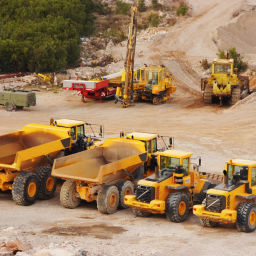
Heavy Equipment
Claim This Podcastby Christian Robbins
Podcast Overview
Heavy equipment refers to large machinery and vehicles that are designed to perform tasks and operations in construction, infrastructure development, mining, agriculture, and other industries that require significant power and capability. These machines are typically characterized by size, weight, and specialized functions. Here are some examples of common types of heavy equipment:<br /><ol><li>Excavators: These machines are used for digging and excavation tasks. They have a bucket attached to a hydraulic arm to dig and lift large amounts of soil, rocks, and debris.</li><li>Bulldozers: Bulldozers are heavy-duty machines equipped with a large, flat blade at the front. They are used for pushing and leveling the earth, debris, and other materials during construction and earthmoving projects.</li><li>Loaders: Loaders are used for scooping and moving materials such as soil, gravel, sand, or construction debris. They have a bucket at the front that can be raised, lowered, and tilted to load and transport materials.</li><li>Backhoes: Backhoes are versatile machines that combine the features of an excavator and a loader. They have a digging bucket on one end of the machine and a loader bucket on the other, allowing them to perform digging, excavation, and loading tasks.</li><li>Graders: Graders are used for grading and leveling surfaces, such as roads, by scraping and distributing soil or other materials. They have a long blade mounted underneath the machine that can be adjusted to achieve the desired slope and smoothness.</li><li>Dump Trucks: Dump trucks are large vehicles with an open bed at the rear for transporting and unloading bulk materials, such as soil, rocks, sand, or gravel. They are commonly used in construction, mining, and quarrying operations.</li><li>Cranes: Cranes are used for lifting and moving heavy objects and materials. They can be mobile or fixed, often with a telescopic or lattice boom that can extend and reach great heights.</li><li>Compactors: Compactors compress soil, gravel, asphalt, or other materials. They are commonly used in road construction and maintenance to achieve a smooth and stable surface.</li><li>Forklifts: Forklifts are used for lifting and moving heavy materials and pallets. They have two forks at the front that can be raised and lowered to lift and transport loads.</li><li>Trenchers: Trenchers are used for digging trenches in the ground, typically for laying utility lines, irrigation systems, or drainage pipes. They have a rotating digging chain or blade that cuts into the soil and removes it from the trench.</li></ol>These are just a few examples of the wide range of heavy equipment available for various industrial applications. Each type of heavy equipment serves a specific purpose and is crucial in completing tasks efficiently and effectively.
Language
🇺🇲
Publishing Since
7/3/2023
1 verified contact email on file for Heavy Equipment
Pitch yourself as a guest, propose sponsorships, or reach out directly to the host.
Recent Episodes
July 3, 2023
HEAVY EQUIPMENT
Heavy equipment refers to large machinery and vehicles that are designed to perform tasks and operations in construction, infrastructure development, mining, agriculture, and other industries that require significant power and capability. These machines are typically characterized by their size, weight, and specialized functions. Here are some examples of common types of heavy equipment:<ol><li>Excavators: These machines are used for digging and excavation tasks. They have a bucket attached to a hydraulic arm that can dig and lift large amounts of soil, rocks, and debris.</li><li>Bulldozers: Bulldozers are heavy-duty machines equipped with a large, flat blade at the front. They are used for pushing and leveling earth, debris, and other materials during construction and earthmoving projects.</li><li>Loaders: Loaders are used for scooping and moving materials such as soil, gravel, sand, or construction debris. They have a bucket at the front that can be raised, lowered, and tilted to load and transport materials.</li><li>Backhoes: Backhoes are versatile machines that combine the features of an excavator and a loader. They have a digging bucket on one end of the machine and a loader bucket on the other end, allowing them to perform digging, excavation, and loading tasks.</li><li>Graders: Graders are used for grading and leveling surfaces, such as roads, by scraping and distributing soil or other materials. They have a long blade mounted underneath the machine that can be adjusted to achieve the desired slope and smoothness.</li><li>Dump Trucks: Dump trucks are large vehicles with an open bed at the rear for transporting and unloading bulk materials, such as soil, rocks, sand, or gravel. They are commonly used in construction, mining, and quarrying operations.</li><li>Cranes: Cranes are used for lifting and moving heavy objects and materials. They can be mobile or fixed, and they often have a telescopic or lattice boom that can extend and reach great heights.</li><li>Compactors: Compactors are used to compress and compact soil, gravel, asphalt, or other materials. They are commonly used in road construction and maintenance to achieve a smooth and stable surface.</li><li>Forklifts: Forklifts are used for lifting and moving heavy materials and pallets. They have two forks at the front that can be raised and lowered to lift and transport loads.</li><li>Trenchers: Trenchers are used for digging trenches in the ground, typically for laying utility lines, irrigation systems, or drainage pipes. They have a rotating digging chain or blade that cuts into the soil and removes it from the trench.</li></ol>These are just a few examples of the wide range of heavy equipment available for various industrial applications. Each type of heavy equipment serves a specific purpose and plays a crucial role in completing tasks efficiently and effectively.
1 total episodes available
Deep-dive analytics for Heavy Equipment
Frequently asked questions
Have a different question and can't find the answer you're looking for? Reach out to our support team by sending us an email and we'll get back to you as soon as we can.
- What is Heavy Equipment?
- How often does this podcast release new episodes?
This podcast updates inactive.
- Where can I listen to this podcast?
This podcast is available on 2 platforms including Apple Podcasts, Spotify, and more. You can also use the RSS feed directly.
- Does this podcast accept guests?
Information about guest appearances is not available.
Legal Disclaimer
Pod Engine is not affiliated with, endorsed by, or officially connected with any of the podcasts displayed on this platform. We operate independently as a podcast discovery and analytics service.
All podcast artwork, thumbnails, and content displayed on this page are the property of their respective owners and are protected by applicable copyright laws. This includes, but is not limited to, podcast cover art, episode artwork, show descriptions, episode titles, transcripts, audio snippets, and any other content originating from the podcast creators or their licensors.
We display this content under fair use principles and/or implied license for the purpose of podcast discovery, information, and commentary. We make no claim of ownership over any podcast content, artwork, or related materials shown on this platform. All trademarks, service marks, and trade names are the property of their respective owners.
While we strive to ensure all content usage is properly authorized, if you are a rights holder and believe your content is being used inappropriately or without proper authorization, please contact us immediately at hey@podengine.ai for prompt review and appropriate action, which may include content removal or proper attribution.
By accessing and using this platform, you acknowledge and agree to respect all applicable copyright laws and intellectual property rights of content owners. Any unauthorized reproduction, distribution, or commercial use of the content displayed on this platform is strictly prohibited.