June 11, 2024
Humpback Whales: The Gentle Giants of the Ocean
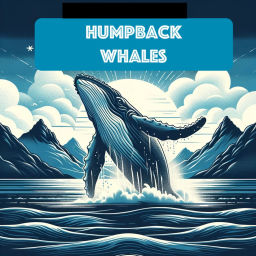
Humpback Whales: The Gentle Giants of the Ocean<br /><br /><br />In the vast expanse of the world's oceans, there exists a creature of unparalleled grace, beauty, and mystery. Weighing up to 40 tons and measuring up to 60 feet in length, the humpback whale is a true gentle giant, a magnificent behemoth that has captivated the hearts and minds of people around the world for centuries.<br /><br /><br />Humpback whales belong to the family Balaenopteridae, which includes other large baleen whales such as the blue whale and the fin whale. They are found in every ocean on Earth, undertaking long migrations between their feeding grounds in the polar regions and their breeding grounds in the tropics. These migrations are among the longest of any mammal, with some individuals traveling up to 5,000 miles each way.<br /><br /><br />But what sets humpback whales apart from other baleen whales is their incredible acrobatic abilities and their hauntingly beautiful songs. Humpbacks are known for their spectacular breaching behavior, in which they launch themselves out of the water and crash back down with a tremendous splash. They also engage in other impressive aerial displays, such as tail slapping and fin slapping, which scientists believe may serve a variety of purposes, from communication to play.<br /><br /><br />But perhaps the most enchanting aspect of humpback whale behavior is their song. During the breeding season, male humpbacks produce a complex series of vocalizations that can last for up to 20 minutes and be heard for miles underwater. These songs are among the most complex and sophisticated in the animal kingdom, consisting of a variety of sounds, including moans, cries, and whistles, which are repeated in specific patterns and sequences.<br /><br /><br />Scientists believe that humpback whale songs serve a vital role in their social and reproductive lives. Males may use their songs to attract females, to establish dominance hierarchies, or to coordinate mating activities. But the exact purpose and meaning of these songs remains a mystery, one that has captivated researchers and the public alike for decades.<br /><br /><br />In addition to their acrobatic feats and musical abilities, humpback whales are also known for their complex social lives. These whales typically travel in small groups, known as pods, which can consist of anywhere from two to fifteen individuals. Within these pods, humpbacks form close social bonds, engaging in a variety of cooperative behaviors, such as hunting, playing, and even babysitting each other's calves.<br /><br /><br />One of the most remarkable examples of humpback whale social behavior is their use of "bubble nets" to catch prey. In this cooperative hunting technique, a group of whales will swim in a circle beneath a school of fish, blowing bubbles to create a "net" that traps the fish inside. The whales then swim up through the center of the net, mouths agape, to scoop up their prey. This complex behavior requires a high degree of coordination and communication among the whales, and is a testament to their intelligence and social sophistication.<br /><br /><br />But while humpback whales are undoubtedly intelligent and socially complex creatures, they are also deeply vulnerable, facing a range of threats from human activities. Historically, humpback whales were heavily hunted for their meat, oil, and baleen, which was used to make a variety of products, from corsets to umbrellas. This hunting pressure, combined with other threats such as entanglement in fishing gear and collision with ships, led to a dramatic decline in humpback whale populations around the world.<br /><br /><br />In the mid-20th century, the International Whaling Commission (IWC) implemented a ban on commercial whaling, which helped to slow the decline of humpback whale populations. But despite this protection, humpbacks continue to face a range of ongoing threats, including climate change, ocean noise pollution, and habitat degradation.<br /><br /><br />Climate change, in particular, poses a significant threat to humpback whales and other marine species. As ocean temperatures rise and sea ice melts, the distribution and abundance of krill, a key prey species for humpbacks, is likely to change. This could have cascading effects throughout the marine food web, impacting the health and survival of humpback whales and other species that depend on krill for their survival.<br /><br /><br />Ocean noise pollution is another growing concern for humpback whales and other marine mammals. The increasing use of seismic airguns for oil and gas exploration, as well as the constant hum of shipping traffic, can interfere with humpback whale communication and navigation, leading to increased stress and potentially even physical harm.<br /><br /><br />Despite these challenges, there is reason for hope when it comes to the future of humpback whales. Thanks to the dedicated efforts of researchers, conservationists, and concerned citizens around the world, humpback whale populations have begun to recover in many parts of their range. In some areas, such as off the coast of Australia and in the North Pacific, humpback whale numbers have even surpassed their pre-whaling levels.<br /><br /><br />But this recovery is fragile, and much work remains to be done to ensure the long-term survival of these incredible creatures. This work includes ongoing research to better understand humpback whale behavior, ecology, and population dynamics, as well as efforts to mitigate the impacts of human activities on their habitat and health.<br /><br /><br />One key strategy for humpback whale conservation is the establishment of marine protected areas (MPAs) in critical feeding, breeding, and migratory habitats. These MPAs can help to reduce the risk of entanglement, ship strikes, and other threats, while also providing a refuge for humpback whales and other marine species to feed, breed, and raise their young.<br /><br /><br />Another important strategy is the development of responsible whale-watching practices that minimize disturbance to humpback whales and other marine mammals. While whale watching can be a powerful tool for education and awareness-raising, it can also have negative impacts on whale behavior and health if not conducted responsibly. By establishing guidelines for responsible whale watching, such as maintaining a safe distance from whales and avoiding sudden changes in speed or direction, we can help to ensure that these activities are sustainable and beneficial for both whales and humans.<br /><br /><br />Ultimately, the story of humpback whales is one of resilience, beauty, and the enduring power of the natural world. From their haunting songs and acrobatic displays to their complex social lives and cooperative hunting behaviors, humpback whales remind us of the incredible diversity and richness of life on Earth.<br /><br /><br />But their story is also a cautionary tale, a reminder of the profound impact that human activities can have on even the most majestic and powerful creatures. As we continue to grapple with the challenges of conservation in an increasingly complex and changing world, the fate of humpback whales and countless other species hangs in the balance.<br /><br /><br />It is up to all of us to heed the call of these gentle giants, to marvel at their beauty and to work tirelessly to protect them and their ocean home. For in doing so, we not only ensure the survival of one of the most incredible creatures on Earth, but we also reaffirm our own connection to the natural world and our responsibility to steward it for generations to come.<br /><br /><br />