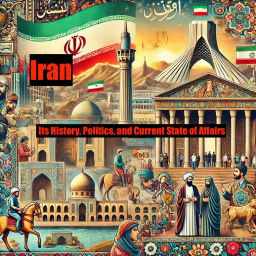
Podcast thumbnail for Iran:

by Inception Point AI

1 episodes
Updated Weekly
Accepts GuestsHas SponsorsLocation 🇮🇷

Podcast Overview

Iran, officially known as the Islamic Republic of Iran, is a country with a rich tapestry of history, culture, and geopolitical significance. Situated in Western Asia, Iran has been a major player on the global stage for centuries, influencing regional and international dynamics. This in-depth profile aims to provide a comprehensive overview of Iran's history, politics, and current state of affairs, offering insights into its complex and multifaceted nature. Historical Overview Ancient Persia Iran's history dates back to ancient Persia, one of the world's earliest civilizations. The Achaemenid Empire (550-330 BCE), founded by Cyrus the Great, was the first Persian Empire and one of the largest empires in history. The Achaemenids are renowned for their administrative innovations, cultural achievements, and the construction of monumental architecture, including the capital city of Persepolis. Cyrus the Great established a model of governance that emphasized tolerance and respect for the cultures and religions of the lands he conquered. This approach helped to maintain the stability and cohesion of the Achaemenid Empire, making it a beacon of civilization during its time. The Achaemenids also created an extensive network of roads and a postal system that facilitated communication and trade across the empire. Following the Achaemenids, the Parthian Empire (247 BCE-224 CE) and the Sassanian Empire (224-651 CE) continued the legacy of Persian dominance. The Parthians are noted for their skillful diplomacy and military prowess, which allowed them to maintain a balance of power with the Roman Empire. The Sassanians, in particular, were instrumental in shaping Persian culture, art, and Zoroastrianism, the pre-Islamic religion of Persia. The Sassanian Empire is often considered the pinnacle of ancient Persian civilization. It was a period marked by significant achievements in art, architecture, science, and literature. The Sassanians built magnificent palaces, introduced advanced irrigation techniques, and promoted the study of medicine, astronomy, and philosophy. Zoroastrianism flourished during this era, influencing the cultural and spiritual life of the empire. Islamic Conquest and the Rise of the Safavids The Arab-Muslim conquest of Persia in the 7th century CE marked a significant turning point in Iranian history. The spread of Islam led to the decline of Zoroastrianism and the incorporation of Persia into the Islamic caliphates. The fusion of Persian and Islamic cultures resulted in a flourishing of arts, sciences, and literature. Under the Abbasid Caliphate, Persia became a center of learning and culture, contributing to the Islamic Golden Age. Persian scholars, poets, and scientists made significant advancements in various fields, including mathematics, astronomy, medicine, and literature. The works of Persian poets such as Rumi, Hafez, and Ferdowsi continue to be celebrated for their literary and philosophical depth. The Safavid dynasty (1501-1736 This content was created in partnership and with the help of Artificial Intelligence AI.

Language

🇺🇲

Publishing Since

7/17/2024

2 verified contact emails on file for Iran:

Pitch yourself as a guest, propose sponsorships, or reach out directly to the host.

Recent Episodes

Episode thumbnail for Iran- Its History, Politics, and Current State of Affairs

July 17, 2024

Iran- Its History, Politics, and Current State of Affairs

Iran, officially known as the Islamic Republic of Iran, is a country with a rich tapestry of history, culture, and geopolitical significance. Situated in Western Asia, Iran has been a major player on the global stage for centuries, influencing regional and international dynamics. This in-depth profile aims to provide a comprehensive overview of Iran's history, politics, and current state of affairs, offering insights into its complex and multifaceted nature. Historical Overview Ancient Persia Iran's history dates back to ancient Persia, one of the world's earliest civilizations. The Achaemenid Empire (550-330 BCE), founded by Cyrus the Great, was the first Persian Empire and one of the largest empires in history. The Achaemenids are renowned for their administrative innovations, cultural achievements, and the construction of monumental architecture, including the capital city of Persepolis. Cyrus the Great established a model of governance that emphasized tolerance and respect for the cultures and religions of the lands he conquered. This approach helped to maintain the stability and cohesion of the Achaemenid Empire, making it a beacon of civilization during its time. The Achaemenids also created an extensive network of roads and a postal system that facilitated communication and trade across the empire. Following the Achaemenids, the Parthian Empire (247 BCE-224 CE) and the Sassanian Empire (224-651 CE) continued the legacy of Persian dominance. The Parthians are noted for their skillful diplomacy and military prowess, which allowed them to maintain a balance of power with the Roman Empire. The Sassanians, in particular, were instrumental in shaping Persian culture, art, and Zoroastrianism, the pre-Islamic religion of Persia. The Sassanian Empire is often considered the pinnacle of ancient Persian civilization. It was a period marked by significant achievements in art, architecture, science, and literature. The Sassanians built magnificent palaces, introduced advanced irrigation techniques, and promoted the study of medicine, astronomy, and philosophy. Zoroastrianism flourished during this era, influencing the cultural and spiritual life of the empire. Islamic Conquest and the Rise of the Safavids The Arab-Muslim conquest of Persia in the 7th century CE marked a significant turning point in Iranian history. The spread of Islam led to the decline of Zoroastrianism and the incorporation of Persia into the Islamic caliphates. The fusion of Persian and Islamic cultures resulted in a flourishing of arts, sciences, and literature. Under the Abbasid Caliphate, Persia became a center of learning and culture, contributing to the Islamic Golden Age. Persian scholars, poets, and scientists made significant advancements in various fields, including mathematics, astronomy, medicine, and literature. The works of Persian poets such as Rumi, Hafez, and Ferdowsi continue to be celebrated for their literary and philosophical depth. The Safavid dynasty (1501-1736) established Shia Islam as the state religion, distinguishing Iran from its Sunni neighbors and shaping its unique religious identity. The Safavids are credited with revitalizing Persian culture and arts, as well as strengthening the central government. Shah Abbas the Great, one of the most prominent Safavid rulers, moved the capital to Isfahan, transforming it into a cultural and architectural marvel. The Safavid era witnessed the construction of stunning mosques, palaces, and bridges, many of which still stand today as testaments to the dynasty's grandeur. The Safavid rulers also promoted trade and diplomacy, establishing strong ties with European powers and fostering economic prosperity. The Qajar and Pahlavi Dynasties The Qajar dynasty (1794-1925) faced significant challenges, including internal strife and external pressures from European powers. Iran's strategic location and resources made it a target for British and Russian interests, leading to territorial losses and...

1 total episodes available

Similar Podcasts

Discover related shows you might enjoy

Deep-dive analytics for Iran:

Frequently asked questions

Have a different question and can't find the answer you're looking for? Reach out to our support team by sending us an email and we'll get back to you as soon as we can.

What is Iran:?

Iran, officially known as the Islamic Republic of Iran, is a country with a rich tapestry of history, culture, and geopolitical significance. Situated in Western Asia, Iran has been a major player on the global stage for centuries, influencing regional and international dynamics. This in-depth profile aims to provide a comprehensive overview of Iran's history, politics, and current state of affairs, offering insights into its complex and multifaceted nature. Historical Overview Ancient Persia Iran's history dates back to ancient Persia, one of the world's earliest civilizations. The Achaemenid Empire (550-330 BCE), founded by Cyrus the Great, was the first Persian Empire and one of the largest empires in history. The Achaemenids are renowned for their administrative innovations, cultural achievements, and the construction of monumental architecture, including the capital city of Persepolis. Cyrus the Great established a model of governance that emphasized tolerance and respect for the cultures and religions of the lands he conquered. This approach helped to maintain the stability and cohesion of the Achaemenid Empire, making it a beacon of civilization during its time. The Achaemenids also created an extensive network of roads and a postal system that facilitated communication and trade across the empire. Following the Achaemenids, the Parthian Empire (247 BCE-224 CE) and the Sassanian Empire (224-651 CE) continued the legacy of Persian dominance. The Parthians are noted for their skillful diplomacy and military prowess, which allowed them to maintain a balance of power with the Roman Empire. The Sassanians, in particular, were instrumental in shaping Persian culture, art, and Zoroastrianism, the pre-Islamic religion of Persia. The Sassanian Empire is often considered the pinnacle of ancient Persian civilization. It was a period marked by significant achievements in art, architecture, science, and literature. The Sassanians built magnificent palaces, introduced advanced irrigation techniques, and promoted the study of medicine, astronomy, and philosophy. Zoroastrianism flourished during this era, influencing the cultural and spiritual life of the empire. Islamic Conquest and the Rise of the Safavids The Arab-Muslim conquest of Persia in the 7th century CE marked a significant turning point in Iranian history. The spread of Islam led to the decline of Zoroastrianism and the incorporation of Persia into the Islamic caliphates. The fusion of Persian and Islamic cultures resulted in a flourishing of arts, sciences, and literature. Under the Abbasid Caliphate, Persia became a center of learning and culture, contributing to the Islamic Golden Age. Persian scholars, poets, and scientists made significant advancements in various fields, including mathematics, astronomy, medicine, and literature. The works of Persian poets such as Rumi, Hafez, and Ferdowsi continue to be celebrated for their literary and philosophical depth. The Safavid dynasty (1501-1736

This content was created in partnership and with the help of Artificial Intelligence AI.

How often does this podcast release new episodes?

This podcast updates weekly.

Where can I listen to this podcast?

This podcast is available on 4 platforms including Apple Podcasts, Spotify, and more. You can also use the RSS feed directly.

Does this podcast accept guests?

Yes, this podcast regularly features guests.

Legal Disclaimer

Pod Engine is not affiliated with, endorsed by, or officially connected with any of the podcasts displayed on this platform. We operate independently as a podcast discovery and analytics service.

All podcast artwork, thumbnails, and content displayed on this page are the property of their respective owners and are protected by applicable copyright laws. This includes, but is not limited to, podcast cover art, episode artwork, show descriptions, episode titles, transcripts, audio snippets, and any other content originating from the podcast creators or their licensors.

We display this content under fair use principles and/or implied license for the purpose of podcast discovery, information, and commentary. We make no claim of ownership over any podcast content, artwork, or related materials shown on this platform. All trademarks, service marks, and trade names are the property of their respective owners.

While we strive to ensure all content usage is properly authorized, if you are a rights holder and believe your content is being used inappropriately or without proper authorization, please contact us immediately at hey@podengine.ai for prompt review and appropriate action, which may include content removal or proper attribution.

By accessing and using this platform, you acknowledge and agree to respect all applicable copyright laws and intellectual property rights of content owners. Any unauthorized reproduction, distribution, or commercial use of the content displayed on this platform is strictly prohibited.