February 26, 2024
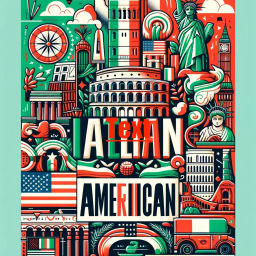
Italian American
<br />The Italian American ethnic group constitutes a vibrant, well-established community that has contributed substantially to American society and culture. The largest subgroup of American immigrants, their legacy in the United States dates back over 150 years. From iconic food and wine to art and architecture, to business and politics, Italian Americans have left an indelible mark across the nation. <br />Origins of Italian Immigration: The great waves of Italian immigration to America occurred in the late 19th and early 20th centuries. Economic hardship plagued Italy during this period, with severe poverty, taxes, droughts, famines and overpopulation presenting stark livelihood challenges. Poor farmers began emigrating overseas in search of land and work. News of plentiful jobs and religious tolerance drew Italians towards America amongst other destinations. These impoverished beginnings characterized most initial Italian immigrants. Ellis Island served as the main port of entry from 1892-1924, processing millions seeking American shores. <br />Early Italian immigrants hailed predominantly from southern Italian regions like Sicily, Campania, Abruzzo, Calabria, and Puglia as well as the Mezzogiorno outskirts. Seeking relief from destitution, they harbored hopes of earning money to support families back home, with plans to eventually return. This first major immigrant wave peaked from 1880 to 1920, with numbers reducing due to emergent immigration quotas. Over 4 million Italians entered America during this key period, laying the bedrock for Italian American communities. <br />Settlement and Population Distribution: Given the agrarian roots of early Italian immigrants, many initial settlements occurred in rural areas requiring farm labor. But Italian populations soon concentrated around major eastern seaboard cities and industrial towns for employment. Prominent settlements arose across New York, New Jersey, Pennsylvania, Connecticut, Rhode Island, Massachusetts and California. Italian immigrants clustered mainly in urban enclaves or "Little Italies" within large cities like New York, Chicago, Boston, Philadelphia and San Francisco. At first, occupying run-down tenement housing, Italian districts often expanded into adjoining areas whilst maintaining cultural cohesion through imported traditions, values, food, language and institutions. <br />Current demographic data estimates the Italian American population at around 18 million nationwide - comprising over 5% of the total U.S. population making them a notably influential bloc. The highest concentration resides still within the northeastern states, most tracing lineage back to the initial turn of the century migrant influx. Italian descent represents the 5th largest self-identified ancestry group across America today. Their long-established presence across generations has enabled Italian Americans to assimilate smoothly into mainstream society over time whilst still preserving distinct cultural customs. <br />Societal Reception and Discrimination: Facing vast cultural differences plus foreign language barriers, early Italian immigrants met considerable discrimination and hostility from the receiving American public. As impoverished, minimally educated manual laborers, they occupied the bottom-most socioeconomic rungs initially. Concentrated in flashy urban enclaves, Italians further triggered negative sentiment and prejudice from Anglo-Saxon locals unaccustomed to their unconventional norms. <br />Unfamiliar religious expressions of Catholicism like Saint worship, ornate icons and exuberant festivals also fueled anti-Italian suspicion amongst America's predominantly Protestant public. Their perceived threat to jobs and wages through accepting low-paying labour stoked working-class resentment. Italian immigrants even confronted blame for elevated crime from the notorious activities of underground mafia offshoots like the Black Hand gang. <br />This anti-Italian bias permeated government policies as well which long classified Italians alongside groups banned from immigrating or gaining citizenship like Asians, Africans and Eastern Europeans. Perceived as impossible to assimilate, they faced restrictions including immigration quotas, marginalization and surveillance. Italians combatted this by establishing insular, self-sufficient communities plus mutual aid societies that countered external hostility. Over generations, their upward mobility in socioeconomic status and cultural assimilation gradually blunted widespread prejudice. But the stigma of criminal stereotypes lingered for decades. America's Italians overcame profound early discrimination to cement their standing in the 20th century. <br />Economic Occupations and Mobility: Most pioneering Italian immigrants endured lives of hardship and poverty. As farmers or unskilled laborers lacking education or assets, early generations faced extensive exclusion and exploitation as disposable manual workers. But some enterprising immigrants capitalized on specialty trades from the old country like stonemasonry, glass-working, textiles, carpentry, shoe repair and more to build businesses. <br />Over time, the Italian American work ethic, family support systems and vocational skills training enabled collective mobility into better occupations and the middle class. First-generation immigrants filled industrial jobs in construction, factories, transportation, sanitation, infrastructure and urban renewal projects. By the mid-century, increasing numbers owned businesses or joined white-collar ranks as teachers, clerks, accountants, lawyers, doctors, engineers, journalists and government workers - attaining decent incomes plus socioeconomic security. <br />The close-knit Italian family unit provided essential financial and motivational support facilitating advancement. Parents and relatives assisted young Italian Americans in accessing higher education - a precursor to prestigious careers. Solid work ethic combined with family safety nets and community guidance networks propelled multigenerational mobility. Today's Italian Americans enjoy high average levels of education, income and white-collar professional achievement. From humble early struggles, they triumphed through enterprise and unity. <br />Cultural Contributions and Achievements: Italian Americans have enriched America tremendously through pop culture, customs, cuisine, innovations and trailblazing leadership. Their cultural gifts are woven into the nation's social fabric. <br />Food & Wine: Pizza and pasta define Italian culinary fame - now beloved dietary staples for Americans. Beyond these flagships, Italian Americans revolutionized how America dines through specialty dishes like calzones, paninis, tiramisu, cannoli, and signature cheeses like mozzarella, parmesan, ricotta and provolone. Favorite restaurant concepts like the pizzeria, trattoria and caffé owe Italian immigrant origins. So too do specialty food terms like antipasto, bruschetta, panini and more. <br />Wine equally remains an Italian forte - they established prominent American viticulture regions in New York, California and beyond. Blockbuster wine varieties such as Chianti, Lambrusco, Verdicchio, Nero D’Avola and Primitivo were imported by Italian vintners, restaurant owners and families - becoming household favorites. Culturally, the Italian passion for quality cuisine has profoundly shaped the modern American appetite. <br />Entertainment & The Arts: Italian Americans enjoy a towering influence across film, television, music, comedy and stage entertainment unmatched by any immigrant group. Legendary Italian American movie stars include Frank Sinatra, Robert De Niro, Al Pacino, John Travolta, Sylvester Stallone and Annette Funicello. Iconic directors like Francis Ford Coppola, Brian De Palma and Martin Scorsese drove some of Hollywood’s greatest classics skewing heavily Italian. Frank Capra directed the beloved It’s a Wonderful Life. James Gandolfini played mobster patriarch Tony Soprano in the record-breaking HBO drama The Sopranos examining Italian immigrant themes. The Godfather trilogy remains one of cinema’s most celebrated franchises exploring Italian American stories. <br />This star power extended across other entertainment too. Singer Frank Sinatra, classic crooner Dean Martin and rock star Bruce Springsteen boast partial Italian descent. Even pioneers like Leonardo DaVinci and Marco Polo represent Italian history adopted into American culture. From Broadway theatre to bestselling authors like Mario Puzo, Joseph Girzone and Gay Talese - artistic contributions run deep. Their creativity and showmanship seeped into America’s entertainment DNA. <br />Sports Icons: On the sports front, Italian Americans occupy an equally commanding status thanks to trailblazers like baseball legends Joe DiMaggio, Yogi Berra and Joe Torre or NFL gridiron greats Vince Lombardi and John Sciarra. Coaches Don Shula and Bill Parcells plus female golfing pioneer Nancy Lopez all trace Italian roots. The boxing world met immense fame through Rocky Marciano and Jake LaMotta - their compelling immigrant underdog narrative transposed into Hollywood lore through hit movies too. Recent stars like major league sluggers Kobe Bryant, Mike Piazza and Jason Giambi upheld athletic glory for new generations. Through sporting achievement from backlots to stadiums, Italian Americans claimed enduring pop culture celebrity. <br />Innovation & Business: Beyond entertainment stages, Italian American ingenuity fueled scientific progress too. Prolific inventor Antonio Meucci developed an essential prototype telephone over a decade before Alexander Graham Bell patented his influential design. Physicist Enrico Fermi aided America's atomic research while Guglielmo Marconi’s contributions to long-distance radio technology enabled modern wireless communication systems. <br />Enginee