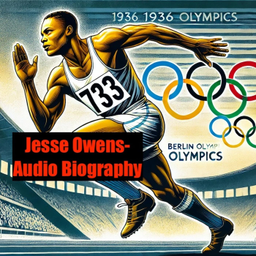
Podcast thumbnail for Jesse Owens - Audio Biography

Jesse Owens - Audio Biography

Claim This Podcast

by Inception Point AI

1 episodes
Updated Weekly
Accepts GuestsHas SponsorsLocation 🇺🇸

Podcast Overview

Jesse Owens: The Triumph of an American Hero Jesse Owens, born James Cleveland Owens on September 12, 1913, in Oakville, Alabama, would go on to become one of the most iconic athletes in American history. His life story is a testament to perseverance, talent, and the power of sports to transcend social and political boundaries. Born into a family of sharecroppers, Owens was the youngest of ten children. His early years were marked by poverty and the harsh realities of racial segregation in the American South. When Owens was nine years old, his family moved to Cleveland, Ohio, as part of the Great Migration of African Americans seeking better opportunities in the North. It was in Cleveland that Owens' athletic talents began to flourish. At East Technical High School, he caught the attention of track and field coach Charles Riley. Riley recognized Owens' potential and began training him before school, as Owens worked various jobs after classes to help support his family. Under Riley's guidance, Owens' natural speed and form were honed into extraordinary skill. Owens' high school career was nothing short of spectacular. He tied the world record for the 100-yard dash and set new high school world records in the long jump and 220-yard dash. His performances at the national high school championship meet in Chicago in 1933 caught the nation's attention, with Owens tying the world record in the 100-yard dash and setting a new high school world record in the 220-yard dash. These achievements earned Owens numerous scholarship offers, and he chose to attend Ohio State University. However, life at Ohio State was far from easy for Owens. Despite his athletic prowess, he faced racial discrimination on campus. He wasn't allowed to live in the on-campus dormitories and had to live off-campus with other African-American athletes. When traveling with the team, he often had to eat at separate restaurants and stay in different hotels from his white teammates. Despite these challenges, Owens' athletic performances continued to astound. On May 25, 1935, at the Big Ten meet in Ann Arbor, Michigan, Owens set three world records and tied a fourth, all within a span of 45 minutes. This remarkable achievement became known as "the greatest 45 minutes ever in sport." He set new world records in the long jump, 220-yard dash, and 220-yard low hurdles, and tied the world record in the 100-yard dash. These performances set the stage for Owens' crowning achievement: the 1936 Olympic Games in Berlin. The Berlin Olympics were highly politicized, with Adolf Hitler intending to use the Games to showcase Nazi ideology and the supposed superiority of the Aryan race. Owens' participation and success at these Games would become a powerful counter-narrative to Hitler's propaganda. In Berlin, Owens won four gold medals: in the 100 meters, the long jump, the 200 meters, and as part of the 4x100 meter relay team. His dominance was a direct challenge to Nazi racial theories and a source of p This content was created in partnership and with the help of Artificial Intelligence AI.

Language

🇺🇲

Publishing Since

7/15/2024

2 verified contact emails on file for Jesse Owens - Audio Biography

Pitch yourself as a guest, propose sponsorships, or reach out directly to the host.

Recent Episodes

Episode thumbnail for Jesse Owens - Audio Biography

July 15, 2024

Jesse Owens - Audio Biography

Jesse Owens: The Triumph of an American Hero <br />Jesse Owens, born James Cleveland Owens on September 12, 1913, in Oakville, Alabama, would go on to become one of the most iconic athletes in American history. His life story is a testament to perseverance, talent, and the power of sports to transcend social and political boundaries. Born into a family of sharecroppers, Owens was the youngest of ten children. His early years were marked by poverty and the harsh realities of racial segregation in the American South. When Owens was nine years old, his family moved to Cleveland, Ohio, as part of the Great Migration of African Americans seeking better opportunities in the North. It was in Cleveland that Owens' athletic talents began to flourish. At East Technical High School, he caught the attention of track and field coach Charles Riley. Riley recognized Owens' potential and began training him before school, as Owens worked various jobs after classes to help support his family. Under Riley's guidance, Owens' natural speed and form were honed into extraordinary skill. Owens' high school career was nothing short of spectacular. He tied the world record for the 100-yard dash and set new high school world records in the long jump and 220-yard dash. His performances at the national high school championship meet in Chicago in 1933 caught the nation's attention, with Owens tying the world record in the 100-yard dash and setting a new high school world record in the 220-yard dash. These achievements earned Owens numerous scholarship offers, and he chose to attend Ohio State University. However, life at Ohio State was far from easy for Owens. Despite his athletic prowess, he faced racial discrimination on campus. He wasn't allowed to live in the on-campus dormitories and had to live off-campus with other African-American athletes. When traveling with the team, he often had to eat at separate restaurants and stay in different hotels from his white teammates. Despite these challenges, Owens' athletic performances continued to astound. On May 25, 1935, at the Big Ten meet in Ann Arbor, Michigan, Owens set three world records and tied a fourth, all within a span of 45 minutes. This remarkable achievement became known as "the greatest 45 minutes ever in sport." He set new world records in the long jump, 220-yard dash, and 220-yard low hurdles, and tied the world record in the 100-yard dash. These performances set the stage for Owens' crowning achievement: the 1936 Olympic Games in Berlin. The Berlin Olympics were highly politicized, with Adolf Hitler intending to use the Games to showcase Nazi ideology and the supposed superiority of the Aryan race. Owens' participation and success at these Games would become a powerful counter-narrative to Hitler's propaganda. In Berlin, Owens won four gold medals: in the 100 meters, the long jump, the 200 meters, and as part of the 4x100 meter relay team. His dominance was a direct challenge to Nazi racial theories and a source of pride for Americans, particularly African Americans. The sight of an African American athlete standing atop the podium, with the American flag raised and the national anthem playing, was a powerful image that resonated around the world. Owens' victory in the long jump came with an interesting twist. German long jumper Luz Long, his main competitor, gave Owens advice after he fouled on his first two qualifying jumps, risking disqualification. Owens took the advice, qualified, and went on to win the gold medal. This act of sportsmanship between Owens and Long, captured in a photograph of the two walking arm-in-arm after the competition, became a symbol of Olympic spirit transcending politics and race. Despite his Olympic triumphs, Owens returned to a United States still deeply divided by racial segregation. President Franklin D. Roosevelt never congratulated Owens or invited him to the White House, an honor typically extended to Olympic champions. Owens famously remarked, "I...

1 total episodes available

Deep-dive analytics for Jesse Owens - Audio Biography

Frequently asked questions

Have a different question and can't find the answer you're looking for? Reach out to our support team by sending us an email and we'll get back to you as soon as we can.

What is Jesse Owens - Audio Biography?

Jesse Owens: The Triumph of an American Hero Jesse Owens, born James Cleveland Owens on September 12, 1913, in Oakville, Alabama, would go on to become one of the most iconic athletes in American history. His life story is a testament to perseverance, talent, and the power of sports to transcend social and political boundaries. Born into a family of sharecroppers, Owens was the youngest of ten children. His early years were marked by poverty and the harsh realities of racial segregation in the American South. When Owens was nine years old, his family moved to Cleveland, Ohio, as part of the Great Migration of African Americans seeking better opportunities in the North. It was in Cleveland that Owens' athletic talents began to flourish. At East Technical High School, he caught the attention of track and field coach Charles Riley. Riley recognized Owens' potential and began training him before school, as Owens worked various jobs after classes to help support his family. Under Riley's guidance, Owens' natural speed and form were honed into extraordinary skill. Owens' high school career was nothing short of spectacular. He tied the world record for the 100-yard dash and set new high school world records in the long jump and 220-yard dash. His performances at the national high school championship meet in Chicago in 1933 caught the nation's attention, with Owens tying the world record in the 100-yard dash and setting a new high school world record in the 220-yard dash. These achievements earned Owens numerous scholarship offers, and he chose to attend Ohio State University. However, life at Ohio State was far from easy for Owens. Despite his athletic prowess, he faced racial discrimination on campus. He wasn't allowed to live in the on-campus dormitories and had to live off-campus with other African-American athletes. When traveling with the team, he often had to eat at separate restaurants and stay in different hotels from his white teammates. Despite these challenges, Owens' athletic performances continued to astound. On May 25, 1935, at the Big Ten meet in Ann Arbor, Michigan, Owens set three world records and tied a fourth, all within a span of 45 minutes. This remarkable achievement became known as "the greatest 45 minutes ever in sport." He set new world records in the long jump, 220-yard dash, and 220-yard low hurdles, and tied the world record in the 100-yard dash. These performances set the stage for Owens' crowning achievement: the 1936 Olympic Games in Berlin. The Berlin Olympics were highly politicized, with Adolf Hitler intending to use the Games to showcase Nazi ideology and the supposed superiority of the Aryan race. Owens' participation and success at these Games would become a powerful counter-narrative to Hitler's propaganda. In Berlin, Owens won four gold medals: in the 100 meters, the long jump, the 200 meters, and as part of the 4x100 meter relay team. His dominance was a direct challenge to Nazi racial theories and a source of p

This content was created in partnership and with the help of Artificial Intelligence AI.

How often does this podcast release new episodes?

This podcast updates weekly.

Where can I listen to this podcast?

This podcast is available on 4 platforms including Apple Podcasts, Spotify, and more. You can also use the RSS feed directly.

Does this podcast accept guests?

Information about guest appearances is not available.

Legal Disclaimer

Pod Engine is not affiliated with, endorsed by, or officially connected with any of the podcasts displayed on this platform. We operate independently as a podcast discovery and analytics service.

All podcast artwork, thumbnails, and content displayed on this page are the property of their respective owners and are protected by applicable copyright laws. This includes, but is not limited to, podcast cover art, episode artwork, show descriptions, episode titles, transcripts, audio snippets, and any other content originating from the podcast creators or their licensors.

We display this content under fair use principles and/or implied license for the purpose of podcast discovery, information, and commentary. We make no claim of ownership over any podcast content, artwork, or related materials shown on this platform. All trademarks, service marks, and trade names are the property of their respective owners.

While we strive to ensure all content usage is properly authorized, if you are a rights holder and believe your content is being used inappropriately or without proper authorization, please contact us immediately at hey@podengine.ai for prompt review and appropriate action, which may include content removal or proper attribution.

By accessing and using this platform, you acknowledge and agree to respect all applicable copyright laws and intellectual property rights of content owners. Any unauthorized reproduction, distribution, or commercial use of the content displayed on this platform is strictly prohibited.