- 53
- Episodes
- Weekly
- Cadence
- 2022
- First episode
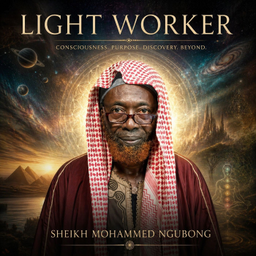
About Light worker. Sheikh Mohammed Ngubong
Description:* This is a scholarly reflection on slavery in all its forms — and why Islam’s core message is the complete liberation of the human being, not just the body. Most people think slavery ended when the chains came off in 1865. But walk through the world today and you’ll see different chains. Chains on the mind through education. Chains on the identity through culture and language. Chains on the economy through debt and currency control. Chains on the spirit through intermediaries and inherited fear. In this article, Sheikh Mohammed Ngubong argues that Islam, from the Qur’an down, never limited its fight to physical slavery. It targets domination itself. Any system where a person’s freedom, dignity, autonomy, or identity is controlled or manipulated by another force — that is slavery. And Islam stands against it. We break it down into 3 parts: *1. What Slavery Really Is* Physical slavery is the most visible: ownership, forced labor, trade in human beings. But the article shows 10 other forms that are often more powerful because they’re invisible: - *Mental Slavery*: Control of thought and perception through curriculum, media, and religion. When you control what people learn, you control what they think is possible. - *Psychological Slavery*: Internalized inferiority and fear, where the oppressed begin to defend their chains. - *Economic and Financial Slavery*: Debt dependency, exploitative monetary systems like the CFA franc, interest payments on money that never entered the country. - *Cultural and Linguistic Slavery*: The replacement of indigenous identity and language, where success is measured by how well you imitate Europe, America, or Arabia. - *Academic and Media Slavery*: Controlled narratives in education and information systems that define what is “civilized” and what is “backward.” - *Spiritual and Pharmaceutical Slavery*: Dependence on intermediaries instead of direct connection with God, and over-reliance on external substances that treat symptoms but not causes. *2. What the Qur’an Actually Says* The Qur’an repeats “Afalaa tatafaqqaruun? — Do you not reflect?” over 87 times. That’s not accidental. Reflection and questioning are obligations, not optional extras. Key verses establish 3 principles: - Human dignity is universal: “We have certainly honored the children of Adam.” Q 17:70 - Oppression must be resisted: “Why do you not fight in the cause of God and for the oppressed?” Q 4:75 - No human is equal to another in status before God: Q 16:75-76 contrasts the enslaved and the free to show the injustice of domination. Historically, Islam did not abolish slavery overnight in 7th century Arabia — because doing so would have caused societal collapse. Instead, it implemented a gradual dismantling: freeing slaves became a major act of righteousness and expiation for sins, abuse was prohibited, and freed people were integrated fully into society. The trajectory was clear: from normalization to elimination. *3. Modern Systems of Control and the Way Out* Physical slavery is outlawed, but new systems replaced it. Control of education shapes how people see themselves and their history. Control of media defines what is desirable and inferior. Control of currency and debt creates dependency, especially in Africa through mechanisms like the CFA franc. Cultural exportation replaces local identity with foreign ideals. Language hierarchies make people ashamed of their mother tongue. Africa’s experience shows this clearly: transatlantic and Arab slave trade, colonial rule, post-colonial economic dependency and political meddling. These disrupted governance, culture, language, and economic independence. But the article refuses a victim-only narrative. Africa is also a continent of resilience, innovation, and deep civilizational history. The original inhabitants of the planet were Black, and all humans carry that DNA. Islam’s response is radical in its simplicity: “No human being has the right to dominate another.” Because ultimate authority belongs to God alone, all humans are equal in origin, and accountability is individual. This opposes tyranny, blind imitation/taqlid, intellectual submission, and cultural erasure. Even worship in Islam is liberating — it removes intermediaries and establishes a direct relationship between the individual and the Creator. The most dangerous slavery is when the enslaved defend their chains. That happens through internalized inferiority, the desire to imitate “superior” cultures, and loss of historical memory. Islam combats this by reminding every human of their dignity, encouraging knowledge and reflection, and condemning arrogance based on race or status. So what’s the path forward? - *Intellectual Awakening*: Question inherited narratives. Study history from multiple perspectives. - *Spiritual Independence*: Develop a direct relationship with God. Avoid blind following. - *Cultural Reconnection*: Learn and preserve indigenous languages. Value local knowledge. - *Economic Empowerment*: Build local industries. Reduce dependency. - *Educational Reform*: Decide your own curriculum. Question the origin of training data and algorithms in the AI age. If AI is trained only on foreign data, those biases get implanted locally. - *Media Awareness*: Consume information critically. Support authentic voices. The final reflection is blunt: Islam is not just a ritual religion. It’s a framework for total human liberation. It seeks to free the human being from other humans, from systems of domination, from ignorance, and from fear. As Surah Baqarah 2:268 says, “Satan threatens you with poverty and orders you to immorality, while Allah promises you forgiveness and bounty.” Slavery has evolved. So has human awareness. The Qur’anic call is as relevant now as ever: Reflect. Resist oppression. Uphold dignity. Seek truth. True liberation is not given — it is realized through knowledge, consciousness, and courage. As Muammar Gaddafi said: “If you are enslaved and you fight and free yourself, but then you find yourself worshiping the God of the enslavers, then you are still a slave.” --- *Author*: Sheikh Mohammed Ngubong Imam, light worker, promoter of raising consciousness. Contact: +237699917339 / +237678856211 ---
- Publisher
- Sheikh Mohammed Ngubong
- Category
- religion & spirituality · religion & spirituality · technology
- Language
- en
- Explicit
- No
- First episode
- 3 Jul 2022
- Latest episode
- 11 Oct 2026
Latest episodes
53 episodes in the feed.
11 Oct 2026
The Conscious Universe: Birds Glorify Allah and He is Closer Than Your Jugular Vein
11 Oct 2026
The Universal Consciousness Explained — Body, Questions & Answers
9 Oct 2026
Drogas, Peligros Ocultos y Crímenes Silenciosos: Cómo Romper las Cadenas de la Esclavitud | Podcast del Trabajador de la Luz del Sheikh Moha
Host of Light worker. Sheikh Mohammed Ngubong?
Claim your podcast to manage its listing and keep your show details accurate.
Pod Engine is an independent podcast discovery and analytics service and is not affiliated with or endorsed by this podcast. Artwork and show content belong to their owners. Full legal notice.