- 22
- Episodes
- 2021
- First episode
About Lighthouse the podcast
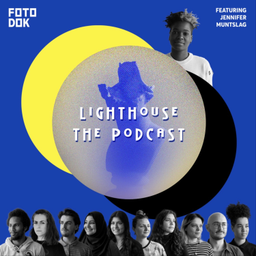
Welkom bij de podcast serie van Lighthouse. Lighthouse is een talentontwikkelingsprogramma van FOTODOK waar 10 opkomende fotografen hebben gewerkt aan een nieuw project. De deelnemers zijn kunstenaars die zich verhouden tot het medium fotografie en allemaal een nieuw perspectief bieden op urgente onderwerpen in de samenleving. ENG: Lighthouse is a talent development program of FOTODOK where 10 emerging photographers have worked on a new project. The participants are artists who relate to the medium of photography and all offer a new perspective on urgent topics in society.
- Publisher
- FOTODOK
- Category
- arts
- Language
- nl
- Explicit
- No
- First episode
- 14 Jun 2021
- Latest episode
- 14 Jun 2021
Latest episodes
22 episodes in the feed.
14 Jun 2021
#10 [trailer]: Zoë Zandwijken & Roy Zandwijken
Een taal staat in verband met een gevoel van verbondenheid en is intrinsiek verwant aan cultuur. Zoë Zandwijken (opgegroeid in Nederland met een Nederlandse moeder en een Arubaanse vader) heeft haar vader Roy Zandwijken uitgenodigd om de impact van taal op culturele identiteit te bespreken. Het Papiaments, de taal die gesproken wordt op Aruba, is een taal die hij spreekt, maar zij niet. Waarom heeft hij de taal niet doorgegeven? In welke taal voelen zij zich het meeste thuis? Wat heeft het verhuizen naar een ander land gedaan met zijn identiteit? Wat zegt de taal die zij spreken over hen? En welke rol speelt hun familiegeschiedenis hierin? Tijdens deze aflevering bespreken zij ook de impact die haar werk op hun relatie heeft gehad, en hoe hij erover denkt dat zij het onderzoek naar hun familiegeschiedenis wat hij ooit is begonnen, voortzet. Luister mee naar dit open en eerlijke gesprek tussen vader en dochter. [English] A language refers to a sense of belonging and connection with others and is intrinsically bound to culture. Zoë Zandwijken (raised in the Netherlands by a Dutch mom and an Aruban dad) invited her father Roy Zandwijken to discuss the impact of language on cultural identity. Papiamento, the language they speak on Aruba, is a language that he speaks, but she does not. Why didn’t he pass the language on? What language feels most like home to them? What did moving to another country do to his identity? What does the language they speak say about them? And how does their family history play a role in this? During the episode, they also comment on the impact her work has had on their relationship, and how he feels about her continuing the research into their family history that he once started. Listen in and witness this open and honest conversation between father and daughter. Wil je meer zien over het werk van Zoë Zandwijken of de andere Lighthouse deelnemers? Check www.fotodok.org/lighthouse (//www.fotodok.org/lighthouse)
14 Jun 2021
#9 [trailer]: Walter Costa & Khaled Hiatlih
How does the demand for archaeological artefacts in the Global North end up fuelling an illegal supply of looted antiquities, stealing and destroying the cultural heritage of the Global South? Visual artist Walter Costa invited Syrian-Palestinian archaeologist Khaled Hiatlih to talk about how this colonial siphoning of material culture is far from over... thanks to Facebook. Dr. Hiatlih is part of the ATHAR Project –a research initiative dedicated to monitoring social media groups where looters and traffickers from the Middle East and North Africa meet and engage in illegal business with ruthless dealers and collectors. Moving from Costa's research –ranging from Facebook to field investigations in famous galleries and auction houses in Europe– this podcast discusses the ambivalent role of photography in the trafficking of antiquities, as both a facilitator and a primary source of visual evidence for those who are fighting it. From the armed groups that have found a source of income in this trafficking to the struggles of the region's inhabitants to survive amidst conflict and poverty; the fate of material culture is deeply entangled with that of people. While peace in the region is sadly not on the horizon, Costa proposes a provocation that uses the images posted on Facebook to create 3D "replicas" of the disappeared artefacts as a way to address responsibility and raise awareness among the players in the Western art market. [Nederlands] Hoe voedt de vraag naar archeologische artefacten in het mondiale Noorden een illegale handel van archeologische objecten; gestolen en vernietigd cultureel erfgoed uit het mondiale Zuiden? Beeldend kunstenaar Walter Costa nodigt de Syrisch-Palestijnse archeoloog Khaled Hjatlih uit om te praten over het voortdurende proces van het koloniale wegsluizen van materiële cultuur … dankzij Facebook. Dr Hiatlih is onderdeel van het ATHAR project - een onderzoeksinitiatief toegewijd aan het monitoren van sociale media groepen waar illegale handelaren uit het Midden Oosten en Afrika elkaar ontmoeten om hun voorwerpen te verhandelen met dealers en verzamelaars. Vanuit Costa’s onderzoek - dat zich uitstrekt van Facebook groepen tot veldonderzoek naar beroemde galerieën en veilinghuizen in Europa - bespreekt deze podcast de ambivalente rol van fotografie in het verhandelen van antieke objecten, als facilitator en als een primaire bron van visueel bewijs voor diegene die hier tegen strijden. In een context van de bewapende groepen die een inkomstenbron hebben gevonden, tot de strijd van regionale inwoners die proberen te overleven temidden van armoede en conflict, is het lot van de materiële cultuur sterk verbonden met dat van mensen. Vrede is helaas nog niet te zien aan de horizon, in de tussentijd kaart Costa het probleem aan met een provocatie door 3D replica’s te maken van de op Facebook geplaatste objecten. Op deze manier roept hij op tot verantwoordelijkheid en bewustzijn van de spelers op de Westerse kunstmarkt. Want to see more work of Walter Costa or the other Lighthouse participants? Check www.fotodok.org/lighthouse (//www.fotodok.org/lighthouse)
14 Jun 2021
#8 [trailer]: Pippilotta Yerna & Vasiliki Belia
Are mothers the actors on the stage of patriarchy? Pippilotta Yerna invited Vasso (Vasiliki) Belia to have a conversation about the mother-daughter relationship as a metaphor within feminism. Motherhood through feminism, feminism through motherhood. Yerna’s projects are typically derived from an observation that evolves into a question. What is it like to lose a parent? How do we visually express grief in the 21st century? Can you buy an organ online? Existing visual codes and languages related to thesequestions become extremely influential in her workingprocess. They bring about a impulse to gather found footage, such as forensic documentation or iconic symbols, and combine these into new photographic discoveries. Vasiliki, studies contemporary graphic novels, or else comic books, that engage with the history of feminism and negotiate its meaning in the present. On the one hand, she asks what are the characteristics of comics make it an apt tool for telling feminist stories. On the other hand, she examines how historical feminist figures, debates, and events are imagined, and which role they play in the construction of feminism as a political movement in the present. These questions evolved into a central question for this conversation: What does feminism through motherhood look like?Belia introduces the use of the mother-daughter metaphor and its pros and cons to Yerna. She explains that those people who say I'm the daughter of a feminist, have a sense of authority and a location from which they speak. This provides bothsimilarities but also comes with differences in the location of space and time. How can this be translated into the photograph and what is the important role of imagery in the construction of the identity of the feminist movement? [Nederlands] Zijn moeders de acteurs op het podium van het patriarchaat? Pippilotta Yerna nodigt Vasso (Vasiliki) Belia uit om in gesprek te gaan over moeder-dochter relaties als metafoor in het feminisme. Moederschap in feminisme, feminisme in moederschap. Yerna’s projecten zijn vaak afgeleid van een observatie die zich ontwikkeld tot een vraag. Hoe voelt het om een ouder te verliezen? Hoe drukken we rouw visueel uit in de 21ste eeuw? Kan je een orgaan online kopen? Bestaande visuele codes en talen gerelateerd aan deze vragen worden extreem belangrijk in haar werkproces. Ze leiden tot een impuls om gevonden materiaal, zoals forensische documentatie en iconische symbolen te verzamelen en deze bij elkaar te brengen in nieuwe fotografische ontdekkingen. Vasiliki bestudeert hedendaagse graphic novels, of stripverhalen, over de geschiedenis van het feminisme en hun betekenis in het heden. Aan de ene hand vraagt zij welke eigenschappen een strip tot een goed handvat maken voor het vertellen van feministische verhalen. Aan de andere hand, onderzoekt ze hoe historische feministische figuren, debatten en evenementen verbeeld worden, en welke rol deze spelen in de constructie van het feminisme als een politieke beweging vandaag de dag. Deze vragen hebben ons gebracht tot de centrale vraag in dit gesprek: Hoe ziet het feminisme door de lens van het moederschap eruit? Belia introduceert het gebruik van de moeder dochter metafoor aan de hand van verschillende voor- en tegen-argumenten voor diens gebruik. Ze legt uit dat mensen die kunnen stellen dat hun moeder een feminist is, een gevoel van autoriteit hebben, evenals een locatie van waar ze over het onderwerp spreken. Dit biedt overeenkomsten maar komt ook met verschillen vanuit plaats en tijd. Hoe kunnen deze vertaald worden naar een foto, en wat is het belang van beeld in het construeren van een identiteit voor de feministische beweging? Want to see more work of Puppilotta Yerna or the other Lighthouse participants? Check www.fotodok.org/lighthouse (//www.fotodok.org/lighthouse)
Host of Lighthouse the podcast?
Claim your podcast to manage its listing and keep your show details accurate.
Pod Engine is an independent podcast discovery and analytics service and is not affiliated with or endorsed by this podcast. Artwork and show content belong to their owners. Full legal notice.