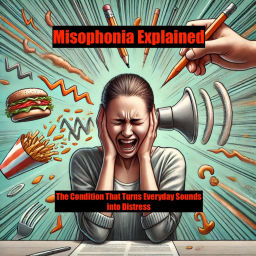
Podcast thumbnail for Misophonia Explained

Misophonia Explained

Claim This Podcast

by Inception Point AI

4.5(2 reviews)
1 episodes
Updated Weekly
Accepts GuestsHas SponsorsLocation 🇺🇸

Podcast Overview

Misophonia, literally meaning "hatred of sound," is a condition characterized by strong negative emotions, thoughts, and physical reactions triggered by specific sounds. For individuals with misophonia, everyday noises that most people would barely notice or find only mildly irritating can provoke intense feelings of anger, disgust, or anxiety, often leading to an overwhelming urge to escape or stop the sound. The term "misophonia" was coined in 2001 by audiologists Pawel and Margaret Jastreboff, who first recognized it as a distinct condition. Since then, awareness of misophonia has grown, though it remains a relatively under-researched and often misunderstood disorder. The complex nature of misophonia often leads to misunderstandings, with some people dismissing it as mere irritability or oversensitivity. However, for those who experience it, misophonia is far more than just being annoyed by sounds; it's a visceral, often uncontrollable reaction that can significantly impact their quality of life. The hallmark of misophonia is an extreme emotional and physiological response to specific sounds. These responses can vary in intensity but often include intense anger or rage, disgust or revulsion, anxiety or panic, irritation or frustration, a strong desire to flee or escape the situation, and difficulty concentrating or focusing on tasks. The intensity of these reactions can be surprising even to the individuals experiencing them, often feeling disproportionate to the triggering sound. For example, the soft sound of someone chewing gum might trigger a fight-or-flight response as intense as if they were facing a physical threat. This extreme reaction can be confusing and distressing for both the individual with misophonia and those around them. Physical symptoms may also accompany these emotional responses, such as increased heart rate, elevated blood pressure, muscle tension, sweating, and difficulty breathing. Some individuals report feeling a tightness in their chest, a churning sensation in their stomach, or even physical pain in response to their trigger sounds. It's important to note that the severity of these reactions often far exceeds what would be considered a typical response to an annoying sound. For individuals with misophonia, these reactions can be automatic and feel uncontrollable, often leading to feelings of guilt, shame, or frustration at their inability to manage their responses. This internal struggle can contribute to the development of anxiety and depression in some individuals with misophonia. While trigger sounds can vary from person to person, some of the most commonly reported include eating sounds (chewing, crunching, slurping), breathing or nose sounds (heavy breathing, sniffling, nose whistling), mouth sounds (lip smacking, teeth sucking), repetitive sounds (tapping, clicking pens, typing), and environmental sounds (clocks ticking, air conditioners humming). The specific nature of these trigger sounds can be highly indi This content was created in partnership and with the help of Artificial Intelligence AI.

Language

🇺🇲

Publishing Since

8/22/2024

2 verified contact emails on file for Misophonia Explained

Pitch yourself as a guest, propose sponsorships, or reach out directly to the host.

Recent Episodes

Episode thumbnail for Misophonia Explained-The Condition That Turns Everyday Sounds into Distress

August 22, 2024

Misophonia Explained-The Condition That Turns Everyday Sounds into Distress

Misophonia, literally meaning "hatred of sound," is a condition characterized by strong negative emotions, thoughts, and physical reactions triggered by specific sounds. For individuals with misophonia, everyday noises that most people would barely notice or find only mildly irritating can provoke intense feelings of anger, disgust, or anxiety, often leading to an overwhelming urge to escape or stop the sound. The term "misophonia" was coined in 2001 by audiologists Pawel and Margaret Jastreboff, who first recognized it as a distinct condition. Since then, awareness of misophonia has grown, though it remains a relatively under-researched and often misunderstood disorder. The complex nature of misophonia often leads to misunderstandings, with some people dismissing it as mere irritability or oversensitivity. However, for those who experience it, misophonia is far more than just being annoyed by sounds; it's a visceral, often uncontrollable reaction that can significantly impact their quality of life. The hallmark of misophonia is an extreme emotional and physiological response to specific sounds. These responses can vary in intensity but often include intense anger or rage, disgust or revulsion, anxiety or panic, irritation or frustration, a strong desire to flee or escape the situation, and difficulty concentrating or focusing on tasks. The intensity of these reactions can be surprising even to the individuals experiencing them, often feeling disproportionate to the triggering sound. For example, the soft sound of someone chewing gum might trigger a fight-or-flight response as intense as if they were facing a physical threat. This extreme reaction can be confusing and distressing for both the individual with misophonia and those around them. Physical symptoms may also accompany these emotional responses, such as increased heart rate, elevated blood pressure, muscle tension, sweating, and difficulty breathing. Some individuals report feeling a tightness in their chest, a churning sensation in their stomach, or even physical pain in response to their trigger sounds. It's important to note that the severity of these reactions often far exceeds what would be considered a typical response to an annoying sound. For individuals with misophonia, these reactions can be automatic and feel uncontrollable, often leading to feelings of guilt, shame, or frustration at their inability to manage their responses. This internal struggle can contribute to the development of anxiety and depression in some individuals with misophonia. While trigger sounds can vary from person to person, some of the most commonly reported include eating sounds (chewing, crunching, slurping), breathing or nose sounds (heavy breathing, sniffling, nose whistling), mouth sounds (lip smacking, teeth sucking), repetitive sounds (tapping, clicking pens, typing), and environmental sounds (clocks ticking, air conditioners humming). The specific nature of these trigger sounds can be highly individual. For instance, one person might be triggered by the sound of chewing, but only when it's loud or open-mouthed, while another might be triggered by any eating sound, no matter how quiet. Some individuals find that their trigger sounds evolve over time, with new sounds becoming problematic as they get older or as they become more aware of their condition. Interestingly, some individuals with misophonia also report being triggered by visual stimuli associated with these sounds, such as seeing someone chew with their mouth open or watching someone's leg bouncing repeatedly. This visual component of misophonia is not as well-studied as the auditory aspect, but it suggests that the condition may involve more complex sensory processing than initially thought. For those living with misophonia, the condition can have a profound impact on various aspects of their lives. Many individuals with misophonia find it challenging to participate in social activities, especially those involving...

1 total episodes available

Similar Podcasts

Discover related shows you might enjoy

Deep-dive analytics for Misophonia Explained

Frequently asked questions

Have a different question and can't find the answer you're looking for? Reach out to our support team by sending us an email and we'll get back to you as soon as we can.

What is Misophonia Explained?

Misophonia, literally meaning "hatred of sound," is a condition characterized by strong negative emotions, thoughts, and physical reactions triggered by specific sounds. For individuals with misophonia, everyday noises that most people would barely notice or find only mildly irritating can provoke intense feelings of anger, disgust, or anxiety, often leading to an overwhelming urge to escape or stop the sound. The term "misophonia" was coined in 2001 by audiologists Pawel and Margaret Jastreboff, who first recognized it as a distinct condition. Since then, awareness of misophonia has grown, though it remains a relatively under-researched and often misunderstood disorder. The complex nature of misophonia often leads to misunderstandings, with some people dismissing it as mere irritability or oversensitivity. However, for those who experience it, misophonia is far more than just being annoyed by sounds; it's a visceral, often uncontrollable reaction that can significantly impact their quality of life. The hallmark of misophonia is an extreme emotional and physiological response to specific sounds. These responses can vary in intensity but often include intense anger or rage, disgust or revulsion, anxiety or panic, irritation or frustration, a strong desire to flee or escape the situation, and difficulty concentrating or focusing on tasks. The intensity of these reactions can be surprising even to the individuals experiencing them, often feeling disproportionate to the triggering sound. For example, the soft sound of someone chewing gum might trigger a fight-or-flight response as intense as if they were facing a physical threat. This extreme reaction can be confusing and distressing for both the individual with misophonia and those around them. Physical symptoms may also accompany these emotional responses, such as increased heart rate, elevated blood pressure, muscle tension, sweating, and difficulty breathing. Some individuals report feeling a tightness in their chest, a churning sensation in their stomach, or even physical pain in response to their trigger sounds. It's important to note that the severity of these reactions often far exceeds what would be considered a typical response to an annoying sound. For individuals with misophonia, these reactions can be automatic and feel uncontrollable, often leading to feelings of guilt, shame, or frustration at their inability to manage their responses. This internal struggle can contribute to the development of anxiety and depression in some individuals with misophonia. While trigger sounds can vary from person to person, some of the most commonly reported include eating sounds (chewing, crunching, slurping), breathing or nose sounds (heavy breathing, sniffling, nose whistling), mouth sounds (lip smacking, teeth sucking), repetitive sounds (tapping, clicking pens, typing), and environmental sounds (clocks ticking, air conditioners humming). The specific nature of these trigger sounds can be highly indi

This content was created in partnership and with the help of Artificial Intelligence AI.

How often does this podcast release new episodes?

This podcast updates weekly.

Where can I listen to this podcast?

This podcast is available on 8 platforms including Apple Podcasts, Spotify, and more. You can also use the RSS feed directly.

Does this podcast accept guests?

Yes, this podcast regularly features guests.

Legal Disclaimer

Pod Engine is not affiliated with, endorsed by, or officially connected with any of the podcasts displayed on this platform. We operate independently as a podcast discovery and analytics service.

All podcast artwork, thumbnails, and content displayed on this page are the property of their respective owners and are protected by applicable copyright laws. This includes, but is not limited to, podcast cover art, episode artwork, show descriptions, episode titles, transcripts, audio snippets, and any other content originating from the podcast creators or their licensors.

We display this content under fair use principles and/or implied license for the purpose of podcast discovery, information, and commentary. We make no claim of ownership over any podcast content, artwork, or related materials shown on this platform. All trademarks, service marks, and trade names are the property of their respective owners.

While we strive to ensure all content usage is properly authorized, if you are a rights holder and believe your content is being used inappropriately or without proper authorization, please contact us immediately at hey@podengine.ai for prompt review and appropriate action, which may include content removal or proper attribution.

By accessing and using this platform, you acknowledge and agree to respect all applicable copyright laws and intellectual property rights of content owners. Any unauthorized reproduction, distribution, or commercial use of the content displayed on this platform is strictly prohibited.