
Episode created for UP 504: Urban History and Theory at the University of Illinois at Urbana-Champaign
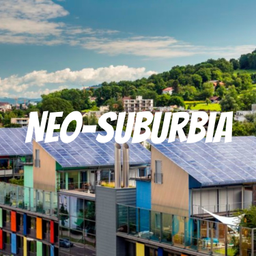
Neo-suburbia
Claim This Podcastby Sam Ihm
1 episodes
Updated Daily
Accepts GuestsHas SponsorsLocation 🇺🇸
Podcast Overview
Episode created for UP 504: Urban History and Theory at the University of Illinois at Urbana-Champaign
Language
🇺🇲
Publishing Since
5/2/2021
1 verified contact email on file for Neo-suburbia
Pitch yourself as a guest, propose sponsorships, or reach out directly to the host.
Recent Episodes
May 2, 2021
Neo-Suburbia: Germany's model suburbs address our need for nature
<p>Urbanization is driving planetary destruction, but you've probably heard enough about that. In this episode, I talk about what that really means. What are we giving up when we trade our evolutionary habitats -- and those of bugs, plants, and animals -- for concrete? </p> <p>Science is only beginning to understand nature's healing power. Here, I discuss the evidence that exposure to nature can relieve depression and even lessen obesity. Residents of greener neighborhoods tend to be healthier in way more ways than there is time to cover in these fifteen minutes, but these two markers of mental and physical health tell a lot of the story by themselves.</p> <p>As the world urbanizes -- I'm sure you've heard something like three-quarters will live in a "city" by 2050 -- we should consider the impact this might have on health. Scientific reviews have found urbanization, which includes suburbanization, is making us sicker. If this is true, what can we do to change our trajectory?</p> <p>I present the city of Freiburg, Germany, and two of its neighborhoods, or "model suburbs," Rieselfeld and Vauban. Freiburg is an old German city at the southern edge of the Black Forest. Within the city limits, 47% is forested land. In developing its model suburbs, at least 70% of the existing landscape was preserved. This model of preserving nature forced the areas to develop densely, which citizens prefer, because their neighborhoods are walkable, bikeable, and transit-friendly. In a suburbanizing world with a need for green, how might we be able to adapt this model?</p> <p>Freiburg benefits from an active citizenry. They've worked alongside city council since the 1970s to have a hand in their city's development. One example of their engagement has been the baugruppen, cooperatively built and owned housing developments which diversify architecture, bring down housing costs, and give citizens unique purchase over their city.</p> <p>What might Americans be able to take away from Freiburg's example? With hope, I discuss how planning and planners can be more future-friendly.</p> <p><br></p> <p>REFERENCES (partial)</p> <p>Photo by Michael Spiegelhalter from <strong>FWTM Spiegelhalter</strong></p> <p><a href="https://www.sciencedirect.com/science/article/pii/S1353829209000987?via%3Dihub"><strong>https://www.sciencedirect.com/science/article/pii/S1353829209000987?via%3Dihub</strong></a></p> <p><strong>https://www.nber.org/system/files/working_papers/w15436/w15436.pdf</strong></p> <p><a href="https://www.researchgate.net/publication/5551516_Ethnicityrace_and_the_diagnosis_of_depression_and_use_of_antidepressants_by_adults_in_the_United_States"><strong>https://www.researchgate.net/publication/5551516_Ethnicityrace_and_the_diagnosis_of_depression_and_use_of_antidepressants_by_adults_in_the_United_States</strong></a></p> <p><a href="https://www.ncbi.nlm.nih.gov/pmc/articles/PMC3799240/"><strong>https://www.ncbi.nlm.nih.gov/pmc/articles/PMC3799240/</strong></a></p> <p><a href="https://www.semanticscholar.org/paper/Urbanicity-and-Mental-Health-in-Europe%3A-A-Review-Penkalla-Kohler/f7fc8c13d660ff02bc34b626b7cf66f35bcd199a?p2df"><strong>https://www.semanticscholar.org/paper/Urbanicity-and-Mental-Health-in-Europe%3A-A-Review-Penkalla-Kohler/f7fc8c13d660ff02bc34b626b7cf66f35bcd199a?p2df</strong></a></p> <p><strong>https://pubmed.ncbi.nlm.nih.gov/22670416/</strong></p> <p><a href="https://www.instarem.com/blog/are-you-working-more-than-you-should/"><strong>https://www.instarem.com/blog/are-you-working-more-than-you-should/</strong></a></p> <p><a href="https://onlinelibrary.wiley.com/doi/full/10.1111/j.1467-789X.2010.00827.x"><strong>https://onlinelibrary.wiley.com/doi/full/10.1111/j.1467-789X.2010.00827.x</strong></a><strong> </strong></p> <p><a href="https://www.ncbi.nlm.nih.gov/pmc/articles/PMC4256701/"><strong>https://www.ncbi.nlm.nih.gov/pmc/articles/PMC4256701/</strong></a></p>
1 total episodes available
Deep-dive analytics for Neo-suburbia
Frequently asked questions
Have a different question and can't find the answer you're looking for? Reach out to our support team by sending us an email and we'll get back to you as soon as we can.
- What is Neo-suburbia?
- How often does this podcast release new episodes?
This podcast updates daily.
- Where can I listen to this podcast?
This podcast is available on 4 platforms including Apple Podcasts, Spotify, and more. You can also use the RSS feed directly.
- Does this podcast accept guests?
No, this podcast does not typically feature guests.
Legal Disclaimer
Pod Engine is not affiliated with, endorsed by, or officially connected with any of the podcasts displayed on this platform. We operate independently as a podcast discovery and analytics service.
All podcast artwork, thumbnails, and content displayed on this page are the property of their respective owners and are protected by applicable copyright laws. This includes, but is not limited to, podcast cover art, episode artwork, show descriptions, episode titles, transcripts, audio snippets, and any other content originating from the podcast creators or their licensors.
We display this content under fair use principles and/or implied license for the purpose of podcast discovery, information, and commentary. We make no claim of ownership over any podcast content, artwork, or related materials shown on this platform. All trademarks, service marks, and trade names are the property of their respective owners.
While we strive to ensure all content usage is properly authorized, if you are a rights holder and believe your content is being used inappropriately or without proper authorization, please contact us immediately at hey@podengine.ai for prompt review and appropriate action, which may include content removal or proper attribution.
By accessing and using this platform, you acknowledge and agree to respect all applicable copyright laws and intellectual property rights of content owners. Any unauthorized reproduction, distribution, or commercial use of the content displayed on this platform is strictly prohibited.