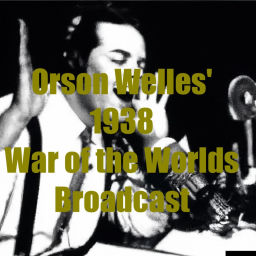
Podcast thumbnail for Orson Welles' 1938 War of the Worlds

Orson Welles' 1938 War of the Worlds

Claim This Podcast

by Inception Point AI

4.5(17 reviews)
2 episodes
Updated Inactive
Accepts GuestsHas SponsorsLocation 🇺🇸

Podcast Overview

Orson Welles' 1938 "War of the Worlds" broadcast is a historic radio drama that gained widespread attention and notoriety for its innovative format and the panic it allegedly incited among some of its listeners. This content was created in partnership and with the help of Artificial Intelligence AI.

Language

🇺🇲

Publishing Since

11/3/2023

2 verified contact emails on file for Orson Welles' 1938 War of the Worlds

Pitch yourself as a guest, propose sponsorships, or reach out directly to the host.

Recent Episodes

Episode thumbnail for Orson Welles' 1938 War of the Worlds - Side B

November 3, 2023

Orson Welles' 1938 War of the Worlds - Side B

Orson Welles' 1938 "War of the Worlds" broadcast is a historic radio drama that gained widespread attention and notoriety for its innovative format and the panic it allegedly incited among some of its listeners. "The War of the Worlds" Date: October 30, 1938. The broadcast was presented as a special Halloween episode of the CBS radio series "Mercury Theatre on the Air," which was directed and narrated by the talented actor and director Orson Welles. The program was an adaptation of H.G. Wells' 1898 science fiction novel "The War of the Worlds."Content: The broadcast was presented in a series of news bulletins, interviews, and realistic-sounding radio reports. It started with a fictional musical program but was soon interrupted by breaking news reports about strange occurrences on the planet Mars, such as explosions and strange gas emissions. As the broadcast continued, the story shifted its focus to an alien invasion of Earth, with Martians landing in the fictional town of Grover's Mill, New Jersey. Listeners were led to believe that the events were happening in real-time.Realism: What made the broadcast particularly impactful was its realistic presentation. The actors and sound effects created a convincing atmosphere, making it easy for listeners to suspend disbelief and think that they were hearing genuine news reports. Some listeners who tuned in late or missed the initial disclaimer mistook the broadcast for an actual news event, which contributed to the panic that ensued.Panic and Controversy: The broadcast generated significant controversy, as it was reported that some listeners believed the events described were real and panicked. There were stories of people fleeing their homes, calling the police, or attempting to take shelter. However, the extent of the panic has been debated, with some questioning the accuracy of the reports.Aftermath: Orson Welles and the Mercury Theatre on the Air faced backlash and criticism for potentially causing fear and confusion. In response, CBS issued a statement clarifying that the broadcast was a work of fiction and apologizing for any misunderstanding. Welles himself expressed regret for the unintended panic but also defended the program as a creative endeavor.Legacy: The "War of the Worlds" broadcast remains a famous and enduring example of the power of radio storytelling and the potential for media to influence public perception. It is often cited in discussions of media responsibility and the impact of mass communication. Orson Welles' adaptation of H.G. Wells' story continues to be celebrated as a landmark moment in the history of radio and entertainment.

Episode thumbnail for Orson Welles' 1938 War of the Worlds - Side A

November 3, 2023

Orson Welles' 1938 War of the Worlds - Side A

"The War of the Worlds"Date: October 30, 1938 The broadcast was presented as a special Halloween episode of the CBS radio series "Mercury Theatre on the Air," which was directed and narrated by the talented actor and director Orson Welles. The program was an adaptation of H.G. Wells' 1898 science fiction novel "The War of the Worlds."Content: The broadcast was presented in a series of news bulletins, interviews, and realistic-sounding radio reports. It started with a fictional musical program but was soon interrupted by breaking news reports about strange occurrences on the planet Mars, such as explosions and strange gas emissions. As the broadcast continued, the story shifted its focus to an alien invasion of Earth, with Martians landing in the fictional town of Grover's Mill, New Jersey. Listeners were led to believe that the events were happening in real-time.Realism: What made the broadcast particularly impactful was its realistic presentation. The actors and sound effects created a convincing atmosphere, making it easy for listeners to suspend disbelief and think that they were hearing genuine news reports. Some listeners who tuned in late or missed the initial disclaimer mistook the broadcast for an actual news event, which contributed to the panic that ensued.Panic and Controversy: The broadcast generated significant controversy, as it was reported that some listeners believed the events described were real and panicked. There were stories of people fleeing their homes, calling the police, or attempting to take shelter. However, the extent of the panic has been debated, with some questioning the accuracy of the reports.Aftermath: Orson Welles and the Mercury Theatre on the Air faced backlash and criticism for potentially causing fear and confusion. In response, CBS issued a statement clarifying that the broadcast was a work of fiction and apologizing for any misunderstanding. Welles himself expressed regret for the unintended panic but also defended the program as a creative endeavor.Legacy: The "War of the Worlds" broadcast remains a famous and enduring example of the power of radio storytelling and the potential for media to influence public perception. It is often cited in discussions of media responsibility and the impact of mass communication. Orson Welles' adaptation of H.G. Wells' story continues to be celebrated as a landmark moment in the history of radio and entertainment.

2 total episodes available

Deep-dive analytics for Orson Welles' 1938 War of the Worlds

Frequently asked questions

Have a different question and can't find the answer you're looking for? Reach out to our support team by sending us an email and we'll get back to you as soon as we can.

What is Orson Welles' 1938 War of the Worlds?

Orson Welles' 1938 "War of the Worlds" broadcast is a historic radio drama that gained widespread attention and notoriety for its innovative format and the panic it allegedly incited among some of its listeners.

This content was created in partnership and with the help of Artificial Intelligence AI.

How often does this podcast release new episodes?

This podcast updates inactive.

Where can I listen to this podcast?

This podcast is available on 4 platforms including Apple Podcasts, Spotify, and more. You can also use the RSS feed directly.

Does this podcast accept guests?

Yes, this podcast regularly features guests.

Legal Disclaimer

Pod Engine is not affiliated with, endorsed by, or officially connected with any of the podcasts displayed on this platform. We operate independently as a podcast discovery and analytics service.

All podcast artwork, thumbnails, and content displayed on this page are the property of their respective owners and are protected by applicable copyright laws. This includes, but is not limited to, podcast cover art, episode artwork, show descriptions, episode titles, transcripts, audio snippets, and any other content originating from the podcast creators or their licensors.

We display this content under fair use principles and/or implied license for the purpose of podcast discovery, information, and commentary. We make no claim of ownership over any podcast content, artwork, or related materials shown on this platform. All trademarks, service marks, and trade names are the property of their respective owners.

While we strive to ensure all content usage is properly authorized, if you are a rights holder and believe your content is being used inappropriately or without proper authorization, please contact us immediately at hey@podengine.ai for prompt review and appropriate action, which may include content removal or proper attribution.

By accessing and using this platform, you acknowledge and agree to respect all applicable copyright laws and intellectual property rights of content owners. Any unauthorized reproduction, distribution, or commercial use of the content displayed on this platform is strictly prohibited.