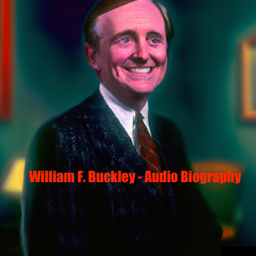
Podcast thumbnail for William F. Buckley - Audio Biography

William F. Buckley - Audio Biography

Claim This Podcast

by Inception Point AI

5.0(2 reviews)
1 episodes
Updated Inactive
Accepts GuestsHas SponsorsLocation 🇺🇸

Podcast Overview

William F. Buckley Jr: Godfather of Modern Conservatism With razor wit, exhaustive vocabulary and staunch advantage for free markets, William Frank Buckley Jr crafted both persona and platform cementing the powerhouse emergence of late 20th century American conservative ideology. As a prolific author, columnist and television personality, Buckley reconstituted right-wing politics from the post-war wilderness toward the mainstream - cementing economic, social and religious traditionalism as a moral counterweight to liberal doctrine through persuasive rhetoric aligning passion with reasoned intelligence. His lifetime advancing conservative values and candidates culminated in monumental influence still shaping political legacy decades hence. Patrician Upbringing Born November 24, 1925, in New York City suburbs, William Frank Buckley Jr’s wealthy Catholic family groomed him for leadership early at elite private schools. His lawyer father cultivated dinner table intellectual sparring encouraging debate mastery. After military service, Buckley attended Yale where campus culture’s dominant liberal ethos offended young Republican Club president Buckley as stifling freedom of thought contrary to academic inquiry. This perceived hostility against non-progressive ideas he viewed as an insidious threat Chris would catalyze his crusade protecting dissenting perspectives, especially nascent conservative voices. After graduating from Yale in 1950, Buckley penned a blistering critique of his alma mater “God and Man at Yale” accusing liberal secularism of subverting education and faith. The instant controversy set the stage for a career battling perceived growing tyranny against tradition. Before age 30 with inherited fortune subsidizing risks, Buckley also exhibited activist mettle helping controversial Senator Joseph McCarthy aiming to expose Communists from government posts. Such early skirmishes shaped Buckley’s persona as a sharp-tongued moral watchdog. National Review Legacy In 1955, at only 29 years old, Buckley demonstrated an audacious vision rallying the right’s best minds to launch the magazine National Review setting sail when the conservative tide seemed lost. As a pioneering editor-in-chief with free market devotion, Catholic faith and zealous anti-Communism unified under an umbrella advancing Republican small government ethos. National Review provided a clubhouse through lively clashes of contributing editors including Ronald Reagan acolytes and libertarian critics of welfare systems. Doe-eyed ingenue vocabulary belying pugilistic instincts in the political ring, Buckley nurtured pluralistic dialogue while guarding orthodoxy. Ascent as Movement Galvanizer Over 15 years of growing readership and influence, National Review represented the salon where conservatism rediscovered coherent identity and honed rhetorical impact to counter the dominant liberal narrative framing big government intervention as society’s moral savior. Buckley’s magazine e This content was created in partnership and with the help of Artificial Intelligence AI.

Language

🇺🇲

Publishing Since

12/27/2023

2 verified contact emails on file for William F. Buckley - Audio Biography

Pitch yourself as a guest, propose sponsorships, or reach out directly to the host.

Recent Episodes

Episode thumbnail for William F. Buckley - Audio Biography

December 27, 2023

William F. Buckley - Audio Biography

<br />William F. Buckley Jr: Godfather of Modern Conservatism <br />With razor wit, exhaustive vocabulary and staunch advantage for free markets, William Frank Buckley Jr crafted both persona and platform cementing the powerhouse emergence of late 20th century American conservative ideology. As a prolific author, columnist and television personality, Buckley reconstituted right-wing politics from the post-war wilderness toward the mainstream - cementing economic, social and religious traditionalism as a moral counterweight to liberal doctrine through persuasive rhetoric aligning passion with reasoned intelligence. His lifetime advancing conservative values and candidates culminated in monumental influence still shaping political legacy decades hence. <br />Patrician Upbringing <br />Born November 24, 1925, in New York City suburbs, William Frank Buckley Jr’s wealthy Catholic family groomed him for leadership early at elite private schools. His lawyer father cultivated dinner table intellectual sparring encouraging debate mastery. After military service, Buckley attended Yale where campus culture’s dominant liberal ethos offended young Republican Club president Buckley as stifling freedom of thought contrary to academic inquiry. This perceived hostility against non-progressive ideas he viewed as an insidious threat Chris would catalyze his crusade protecting dissenting perspectives, especially nascent conservative voices. <br />After graduating from Yale in 1950, Buckley penned a blistering critique of his alma mater “God and Man at Yale” accusing liberal secularism of subverting education and faith. The instant controversy set the stage for a career battling perceived growing tyranny against tradition. Before age 30 with inherited fortune subsidizing risks, Buckley also exhibited activist mettle helping controversial Senator Joseph McCarthy aiming to expose Communists from government posts. Such early skirmishes shaped Buckley’s persona as a sharp-tongued moral watchdog. <br />National Review Legacy In 1955, at only 29 years old, Buckley demonstrated an audacious vision rallying the right’s best minds to launch the magazine National Review setting sail when the conservative tide seemed lost. As a pioneering editor-in-chief with free market devotion, Catholic faith and zealous anti-Communism unified under an umbrella advancing Republican small government ethos. National Review provided a clubhouse through lively clashes of contributing editors including Ronald Reagan acolytes and libertarian critics of welfare systems. Doe-eyed ingenue vocabulary belying pugilistic instincts in the political ring, Buckley nurtured pluralistic dialogue while guarding orthodoxy. <br />Ascent as Movement Galvanizer Over 15 years of growing readership and influence, National Review represented the salon where conservatism rediscovered coherent identity and honed rhetorical impact to counter the dominant liberal narrative framing big government intervention as society’s moral savior. Buckley’s magazine emboldened Barry Goldwater’s 1964 Republican presidential primary upset signaling grassroots hunger for doctrinaire platforms. Though Johnson trounced Goldwater that November, vision emerged from wilderness years. Astutely assessing historical ripeness, National Review prepared to steer coming realignment rightward. <br />By 1965 WFB evolved into a celebrity role as a public intellectual and moral commentator. Newspaper column writings amplified through frequent television appearances on news programs and as host of the public debate show “Firing Line” educated mainstream on conservative talking points and charismatic personalities. Always sharply attired in tailored suits with Orchestra Leader hand gestures Buckley came across as both a patrician playboy reveling in mastery of repartee while communicating clear causes. Over 3000 episodes across 33 years Buckley elevated discourse against top thought leaders discussing urgent issues of the age...

1 total episodes available

Deep-dive analytics for William F. Buckley - Audio Biography

Frequently asked questions

Have a different question and can't find the answer you're looking for? Reach out to our support team by sending us an email and we'll get back to you as soon as we can.

What is William F. Buckley - Audio Biography?

William F. Buckley Jr: Godfather of Modern Conservatism With razor wit, exhaustive vocabulary and staunch advantage for free markets, William Frank Buckley Jr crafted both persona and platform cementing the powerhouse emergence of late 20th century American conservative ideology. As a prolific author, columnist and television personality, Buckley reconstituted right-wing politics from the post-war wilderness toward the mainstream - cementing economic, social and religious traditionalism as a moral counterweight to liberal doctrine through persuasive rhetoric aligning passion with reasoned intelligence. His lifetime advancing conservative values and candidates culminated in monumental influence still shaping political legacy decades hence. Patrician Upbringing Born November 24, 1925, in New York City suburbs, William Frank Buckley Jr’s wealthy Catholic family groomed him for leadership early at elite private schools. His lawyer father cultivated dinner table intellectual sparring encouraging debate mastery. After military service, Buckley attended Yale where campus culture’s dominant liberal ethos offended young Republican Club president Buckley as stifling freedom of thought contrary to academic inquiry. This perceived hostility against non-progressive ideas he viewed as an insidious threat Chris would catalyze his crusade protecting dissenting perspectives, especially nascent conservative voices. After graduating from Yale in 1950, Buckley penned a blistering critique of his alma mater “God and Man at Yale” accusing liberal secularism of subverting education and faith. The instant controversy set the stage for a career battling perceived growing tyranny against tradition. Before age 30 with inherited fortune subsidizing risks, Buckley also exhibited activist mettle helping controversial Senator Joseph McCarthy aiming to expose Communists from government posts. Such early skirmishes shaped Buckley’s persona as a sharp-tongued moral watchdog. National Review Legacy In 1955, at only 29 years old, Buckley demonstrated an audacious vision rallying the right’s best minds to launch the magazine National Review setting sail when the conservative tide seemed lost. As a pioneering editor-in-chief with free market devotion, Catholic faith and zealous anti-Communism unified under an umbrella advancing Republican small government ethos. National Review provided a clubhouse through lively clashes of contributing editors including Ronald Reagan acolytes and libertarian critics of welfare systems. Doe-eyed ingenue vocabulary belying pugilistic instincts in the political ring, Buckley nurtured pluralistic dialogue while guarding orthodoxy. Ascent as Movement Galvanizer Over 15 years of growing readership and influence, National Review represented the salon where conservatism rediscovered coherent identity and honed rhetorical impact to counter the dominant liberal narrative framing big government intervention as society’s moral savior. Buckley’s magazine e

This content was created in partnership and with the help of Artificial Intelligence AI.

How often does this podcast release new episodes?

This podcast updates inactive.

Where can I listen to this podcast?

This podcast is available on 4 platforms including Apple Podcasts, Spotify, and more. You can also use the RSS feed directly.

Does this podcast accept guests?

No, this podcast does not typically feature guests.

Legal Disclaimer

Pod Engine is not affiliated with, endorsed by, or officially connected with any of the podcasts displayed on this platform. We operate independently as a podcast discovery and analytics service.

All podcast artwork, thumbnails, and content displayed on this page are the property of their respective owners and are protected by applicable copyright laws. This includes, but is not limited to, podcast cover art, episode artwork, show descriptions, episode titles, transcripts, audio snippets, and any other content originating from the podcast creators or their licensors.

We display this content under fair use principles and/or implied license for the purpose of podcast discovery, information, and commentary. We make no claim of ownership over any podcast content, artwork, or related materials shown on this platform. All trademarks, service marks, and trade names are the property of their respective owners.

While we strive to ensure all content usage is properly authorized, if you are a rights holder and believe your content is being used inappropriately or without proper authorization, please contact us immediately at hey@podengine.ai for prompt review and appropriate action, which may include content removal or proper attribution.

By accessing and using this platform, you acknowledge and agree to respect all applicable copyright laws and intellectual property rights of content owners. Any unauthorized reproduction, distribution, or commercial use of the content displayed on this platform is strictly prohibited.