
The phrase “you are what you eat” literally extends through centuries and generations. Modern day Native Americans have an overall higher rate of diabetes than the general population.
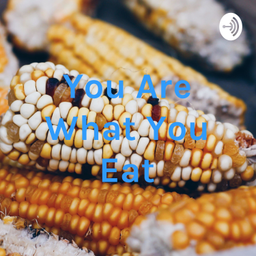
You Are What You Eat
Claim This Podcastby Ellie Landis
1 episodes
Updated Daily
Accepts GuestsHas SponsorsLocation 🇺🇸
Podcast Overview
The phrase “you are what you eat” literally extends through centuries and generations. Modern day Native Americans have an overall higher rate of diabetes than the general population.
Language
🇺🇲
Publishing Since
2/26/2020
1 verified contact email on file for You Are What You Eat
Pitch yourself as a guest, propose sponsorships, or reach out directly to the host.
Recent Episodes
February 26, 2020
You Are What You Eat
<p>Transcript:</p> <p>This is Ellie Landis & Jonas Brock for 60 Second Science.</p> <p>The phrase “you are what you eat” literally extends through centuries and generations. Modern day Native Americans have an overall higher rate of diabetes than the general population. According to the National Research Council, “The age-adjusted rate of diagnosed diabetes among all Indian Health Service patients was 6.9 percent—2.8 times the U.S. all-races rate.”</p> <p>The overwhelming consensus among scientists is that the cause has evolutionary origins, but the driving mechanisms behind these evolutionary adaptations is still unclear. However, a study has been published in the journal Current Anthropology where Karl Reinhard and his team of researchers from University of Nebraska-Lincoln performed human coprolite analysis on samples found in Antelope Cave, Arizona. Coprolite is a fancy scientific word for fossilized poop.</p> <p> The ancestral native population of the southwestern United States were known for their cultivation of domesticated maize, beans, and squash. The researchers found that the prehistoric diet, in addition to the aforementioned, was supplemented with wild foods that they found foraging; such as sunflower seeds, prickly pear, grasses, and amaranth. All these foods are known to be extremely high in fiber, but more importantly, these foods have quite low glycemic indices, or GI’s.</p> <p> The GI is an indicator of a carbohydrate’s ability to raise blood sugar levels, which means that these foods have indexes so low, they are metabolized too slowly to effectively raise blood sugar. According to the study, “[Prickly pear cactus]... is the lowest recorded for southwestern plant foods and one of the lowest values for any recorded human food” with an index of 7. This suggests that these types of high fiber, low fat diets predisposed native populations to living with an overall lower blood sugar level than average.</p> <p> The introduction of the modern American diet of high fat, high carb, and high sugar, has left natives with a difficulty in coping with the excess blood sugar, in turn causing the higher percentage of diabetes. </p> <p> Beware digging into your next doughnut - evolution can be tricky and fascinating.</p> <p><br></p>
1 total episodes available
Deep-dive analytics for You Are What You Eat
Frequently asked questions
Have a different question and can't find the answer you're looking for? Reach out to our support team by sending us an email and we'll get back to you as soon as we can.
- What is You Are What You Eat?
- How often does this podcast release new episodes?
This podcast updates daily.
- Where can I listen to this podcast?
This podcast is available on 4 platforms including Apple Podcasts, Spotify, and more. You can also use the RSS feed directly.
- Does this podcast accept guests?
No, this podcast does not typically feature guests.
Legal Disclaimer
Pod Engine is not affiliated with, endorsed by, or officially connected with any of the podcasts displayed on this platform. We operate independently as a podcast discovery and analytics service.
All podcast artwork, thumbnails, and content displayed on this page are the property of their respective owners and are protected by applicable copyright laws. This includes, but is not limited to, podcast cover art, episode artwork, show descriptions, episode titles, transcripts, audio snippets, and any other content originating from the podcast creators or their licensors.
We display this content under fair use principles and/or implied license for the purpose of podcast discovery, information, and commentary. We make no claim of ownership over any podcast content, artwork, or related materials shown on this platform. All trademarks, service marks, and trade names are the property of their respective owners.
While we strive to ensure all content usage is properly authorized, if you are a rights holder and believe your content is being used inappropriately or without proper authorization, please contact us immediately at hey@podengine.ai for prompt review and appropriate action, which may include content removal or proper attribution.
By accessing and using this platform, you acknowledge and agree to respect all applicable copyright laws and intellectual property rights of content owners. Any unauthorized reproduction, distribution, or commercial use of the content displayed on this platform is strictly prohibited.