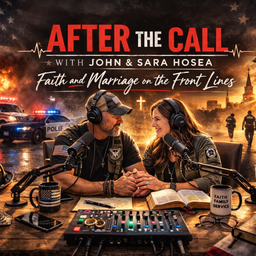
After The Call with John and Sara Hosea
John and Sara Hosea
3.7from 3 ratings
- 15
- Episodes
- 3
- Ratings
- Monthly
- Cadence
- 2026
- First episode
About After The Call with John and Sara Hosea
The After the Call Podcast exists to support veterans and first responders by creating a place for honest conversations about the realities of service, trauma, faith, resilience, and family. Those who answer the call to protect others often carry unseen burdens long after the sirens fade and the uniform comes off. Our mission is to break the silence surrounding those struggles by sharing stories, practical wisdom, and encouragement that helps warriors heal, grow, and lead healthy lives both on duty and at home.
- Publisher
- John and Sara Hosea
- Category
- health & fitness
- Language
- en
- Explicit
- Yes
- First episode
- 12 Mar 2026
- Latest episode
- 16 Jul 2026
Latest episodes
15 episodes in the feed.
16 Jul 2026
Episode 15: Tough Men & Women Need Therapy Too
🎙️ After the Call with John & Sara Hosea Episode Title: Tough Men & Women Need Therapy Too What does it really mean to be tough? For first responders, military veterans, dispatchers, corrections officers, and those who serve on the front lines, toughness is often measured by how much pain you can carry without anyone noticing. The culture teaches us to push through, stay silent, and keep showing up no matter what. But what happens when the calls don't stay at work? What happens when the uniform comes off, but the stress, trauma, anxiety, and sleepless nights remain? In this powerful episode of After the Call, John and Sara Hosea tackle one of the biggest myths in public safety and military culture: that asking for help is a sign of weakness. Drawing from John's experience as a combat veteran, licensed professional counselor, sheriff's chaplain, and crisis negotiator, alongside Sara's perspective as a spouse who has walked through trauma and recovery, they have an honest conversation about what true strength really looks like. Together, they discuss why so many strong men and women wait until they're in crisis before reaching out, how untreated trauma can affect marriages, families, careers, and physical health, and why therapy should be viewed the same way we view physical rehabilitation after an injury. They also explain how counseling, peer support, and evidence-based treatments such as EMDR can help people recover—not by erasing difficult experiences, but by helping them regain control over their lives. Whether you're wearing a badge, serving in the military, working in healthcare, or simply carrying burdens that no one else can see, this episode is a reminder that strength isn't found in suffering alone. Real courage is having the humility to say, "I need help," and taking the first step toward healing. Because tough people don't need less support—they often need it the most. 🎧 After the Call with John & Sara Hosea — Real Stories. Real Struggles. Real Hope.
27 Jun 2026
Episode 14: Hypervigilance at Home When Survival Mode Follows You Through the Front Door
What happens when the mission ends—but your mind never gets the message? For military personnel, law enforcement officers, firefighters, EMS professionals, dispatchers, corrections officers, and other first responders, hypervigilance is often praised on the job. It keeps people alive during traffic stops, tactical operations, structure fires, combat deployments, hostage negotiations, and countless critical incidents. Remaining constantly alert is a professional necessity in environments where hesitation can cost lives. The challenge begins when that same survival mindset follows you home. In this episode of After The Call™, John and Sara Hosea explore one of the most common yet least understood consequences of operational service: hypervigilance outside the mission. They discuss how a nervous system conditioned for danger can struggle to recognize safety, leaving protectors feeling as though they are always "on duty," even in the presence of the people they love most. Together, they examine how hypervigilance affects marriages, parenting, friendships, sleep, emotional intimacy, and overall well-being. Listeners will hear why many first responders sit facing restaurant doors, repeatedly check locks and windows, wake at the slightest noise, scan every room they enter, or become easily startled or irritable—not because they want to, but because their brains have been trained to anticipate threats. John shares both professional insight as a mental health counselor and personal experience as a combat veteran, crisis negotiator, and law enforcement chaplain, while Sara offers the perspective of a spouse who has lived alongside the realities of operational stress. Together, they discuss how hypervigilance can create emotional distance, misunderstandings, and isolation within families, while also providing practical ways to begin rebuilding trust, connection, and a sense of safety at home. This conversation also introduces concepts from the Tactical Jenga™ Performance Recovery Doctrine, explaining how chronic hypervigilance becomes one of the hidden blocks carrying excessive weight inside the tower. Left unaddressed, that weight can contribute to burnout, emotional exhaustion, relationship strain, compassion fatigue, anxiety, depression, and loss of purpose. Recovery begins by recognizing those overloaded blocks before the tower begins to collapse. Whether you wear a badge, served in the military, answer emergency calls, support someone who does, or simply want to better understand the hidden cost of a life spent protecting others, this episode offers hope and practical insight. Because recovery doesn't begin when the uniform comes off. It begins when we learn that home was never meant to be another battlefield. Join John and Sara Hosea for this honest conversation about healing, relationships, and learning how to leave survival mode behind—one intentional step, one conversation, and one reinforced block at a time.
23 Jun 2026
Episode 13: The Cost of Silence Remembering SPC Nathan Tyler Davis and Det. Justin Terry
After The Call™ Podcast Episode 13: The Cost of Silence Remembering SPC Nathan Tyler Davis and Det. Justin Terry Some names never leave us. Some faces remain frozen in time. Some losses continue to shape who we are long after the funeral ends. In Episode 13 of After The Call™, John and Sara Hosea have one of the most personal and important conversations we've ever recorded as we remember two men who left a lasting impact on countless lives: SPC Nathan Tyler Davis and Detective Justin Terry. Nathan Tyler Davis was killed on June 9, 2012, after a devastating IED strike in Afghanistan. Justin Terry gave his life in service to his community as a law enforcement officer. While their stories come from different battlefields, they share a common thread—a commitment to serving others, protecting those around them, and carrying burdens most people never fully see. This episode is about much more than remembering two heroes. It is about the hidden cost of service. It is about the emotional weight first responders, military personnel, veterans, and their families carry every day. It is about grief. It is about trauma. It is about survivor's guilt. It is about the pressure to remain strong when everything inside is falling apart. Most importantly, it is about what happens when sheepdogs stop asking for help. For generations, tactical professionals have been taught to push through pain, compartmentalize emotions, and carry the weight alone. Many have convinced themselves that asking for help is weakness. The reality is that silence often becomes the most dangerous enemy they face. In this episode, John shares personal reflections about losing Nathan Tyler Davis, the life-changing events surrounding the IED strike that forever altered his own journey, and the lessons learned from years of recovery. We also reflect on the life and legacy of Detective Justin Terry, the impact he had on those who knew him, and the void left behind when a protector is gone too soon. Together, we discuss: • The long-term impact of grief and loss • Survivor's guilt and moral injury • Why first responders and veterans often struggle to ask for help • The hidden effects of trauma on marriages and families • Depression, anxiety, and emotional isolation • The dangers of carrying pain in silence • Faith during tragedy and unanswered questions • Brotherhood, support systems, and recovery • The importance of checking on your people • Why healing is not weakness • How families can support those who serve • What legacy really means This episode is dedicated to the memory of SPC Nathan Tyler Davis and Detective Justin Terry. Their lives mattered. Their service mattered. Their sacrifice mattered. And their stories continue to remind us of an important truth: The strongest warriors are not the ones who never struggle. The strongest warriors are the ones willing to speak when they are hurting, reach for help when they need it, and help others do the same. If you're carrying something heavy today, this conversation is for you. You do not have to carry it alone. "Because the call doesn't end when the sirens stop. We just have to learn how to live after it." — John & Sara Hosea After The Call™ Podcast
8 Jun 2026
Episode 12: Bullying, Wellness, and Why Healing Must Be More Than a Conversation
Episode 11: Bullying, Wellness, and Why Healing Must Be More Than a Conversation In Episode 11 of the Jumpmaster Life Coaches, Counseling, and Wellness Podcast, we tackle two critical issues impacting individuals, families, schools, workplaces, and first responder communities across America: bullying and the launch of the new Jumpmaster Wellness Program. Bullying is often dismissed as a childhood problem, but its effects can last a lifetime. During this episode, we discuss how bullying impacts mental health, self-esteem, confidence, relationships, and overall wellness. We explore the long-term emotional scars that bullying can create, including anxiety, depression, social isolation, trauma responses, and feelings of worthlessness. We also examine the responsibility of parents, educators, administrators, community leaders, and organizations to create environments where people feel safe, respected, and supported. Whether bullying occurs in schools, online, in workplaces, or within professional organizations, silence often allows the problem to continue. We discuss practical ways to recognize bullying, intervene appropriately, support victims, and create cultures that value accountability, kindness, and human dignity. The second half of the episode introduces the new Jumpmaster Wellness Program and explains why we believe wellness must be integrated into mental health recovery rather than treated as a separate service. For years, many counseling and recovery programs have focused primarily on emotional and psychological symptoms while overlooking the physical impact that trauma, stress, burnout, and chronic exposure to adversity place on the body. We discuss how trauma affects the nervous system, sleep, recovery, relationships, physical health, and overall performance. Listeners will learn about the foundation of the Jumpmaster Method and how our wellness program is designed to assess the entire person rather than simply treating symptoms. We explain how counseling, wellness interventions, recovery strategies, resilience training, physical restoration, spiritual wellness, and relationship health work together to create lasting change. We also discuss how services such as therapeutic massage, deep tissue therapy, acupressure, aromatherapy, sports recovery, stress management, and other wellness modalities can support emotional healing by helping regulate the nervous system and reduce the physical burden of stress and trauma. Throughout the episode, we emphasize that true healing requires more than surviving difficult experiences. It requires intentionally rebuilding the mind, body, spirit, relationships, and sense of purpose. The goal is not simply symptom reduction. The goal is restoring operational readiness, emotional resilience, relational health, physical recovery, and overall wellness. If you are a first responder, veteran, dispatcher, healthcare professional, counselor, educator, parent, or someone who has experienced the effects of bullying, stress, trauma, or burnout, this episode provides valuable insight into what holistic recovery truly looks like. Join us as we discuss why healing must be practical, why wellness matters, and why no one should have to fight these battles alone. Listen as we challenge the stigma, discuss real-world solutions, and introduce a new vision for recovery through Jumpmaster Life Coaches, Counseling, and Wellness. Jumpmaster Life Coaches, Counseling, and Wellness Assess the Tower. Integrate the Tools. Heal the Whole Person.
26 May 2026
Episode 11: The Worst Call and How we bounced Back
🎙️ AFTER THE CALL WITH JOHN & SARA HOSEA EPISODE 11: “The Worst Call… and How We Bounced Back” This week, John and Sara sit down with Hood County Sheriff’s Office Investigators Justin Price and George The Zamm for one of the most raw and honest conversations yet. Investigator Justin Price opens up about surviving an officer-involved shooting — the emotional impact, the mental aftermath, the trauma that follows long after the scene is cleared, and what recovery really looks like behind the badge. This is not Hollywood. This is the reality law enforcement officers face when life changes in seconds. Investigator George The Zamm shares the difficult realities of investigating crimes against children — the emotional toll, the darkness investigators are exposed to, and the unseen burden carried by those who work to protect the innocent. He talks about how these cases affect officers mentally, emotionally, spiritually, and at home with their families. Together, the conversation dives into trauma, resilience, brotherhood, marriage, faith, burnout, recovery, and what it truly means to keep moving forward after the worst calls imaginable. This episode is about the human side of law enforcement — the scars nobody sees, the calls that never fully leave you, and how healing is possible even after trauma. ⚠️ Viewer discretion advised due to sensitive topics involving violence, trauma, and crimes against children. 🎧 Join us for one of the most powerful episodes yet on After the Call with John & Sara Hosea. #AfterTheCall #LawEnforcement #OfficerInvolvedShooting #CrimesAgainstChildren #TraumaRecovery #FirstResponders #Brotherhood #MentalHealth #PolicePodcast #HoodCounty #Resilience #TheWorstCall #HealingAfterTrauma
16 May 2026
Episode 10: The Walls That we Build
his week on After the Call with John and Sara Hosea, we took a deep and honest look at The Walls We Build — the emotional armor many first responders, veterans, spouses, and trauma survivors create to survive the weight of life, trauma, stress, and operational pressure. We talked about how walls are often built out of pain, disappointment, betrayal, trauma, burnout, and emotional exhaustion. At first, those walls may help us survive difficult calls, hard seasons, critical incidents, or broken relationships. But over time, the same walls that protect us can also isolate us from the people who love us most. John and Sara discussed the difference between healthy boundaries and emotional shutdown, the impact walls have on marriages and families, why so many first responders struggle with vulnerability, and how unresolved trauma can silently affect communication, intimacy, identity, and faith. The episode also focused heavily on keeping your spirit alive through healthy boundaries, emotional honesty, faith, connection, counseling, and healing. This was a raw conversation about survival, emotional resilience, and learning that strength is not found in isolation — but in facing what’s real and allowing yourself to heal. If you’ve ever felt emotionally numb, disconnected, exhausted, or trapped behind walls you built to survive, this episode is for you. Because eventually, survival mode stops feeling like living. #AfterTheCall #JohnAndSaraHosea #TheWallsWeBuild #FirstResponderMentalHealth #TraumaRecovery #MarriageAfterTrauma #EmotionalHealing #OperationalStress #FaithAndHealing #BoundariesNotWalls #FirstResponderWellness
7 May 2026
Episode 9 Part 2: Burnout and the Calls that Dont Leave you
In this episode of After the Call with John and Sara Hosea, we sat down for a real, unfiltered conversation about burnout, cumulative trauma, and the calls that stay with first responders long after the scene is cleared. Drawing from years of experience in law enforcement, EMS, crisis response, chaplaincy, and frontline service, we explored the emotional and psychological weight carried by those who consistently respond to other people’s worst moments. Burnout in the first responder community rarely happens all at once. It develops slowly over time—through sleepless nights, repeated exposure to trauma, constant hypervigilance, and the pressure to remain strong while internally carrying experiences that were never fully processed. Many first responders are trained to push through pain, compartmentalize emotions, and continue performing no matter the personal cost. But eventually, unresolved stress, grief, and emotional exhaustion begin to surface in ways that affect mental health, relationships, identity, and spiritual well-being. Throughout the episode, we discussed the culture within first responder professions that often discourages vulnerability. Many responders learn early in their careers that admitting emotional struggle can be perceived as weakness, causing them to suppress rather than process what they experience. Over time, that emotional suppression can lead to isolation, numbness, irritability, compassion fatigue, anxiety, depression, and deep emotional burnout. A major focus of this conversation centered on what we called “the calls that don’t leave you.” These are the calls that replay in your mind during quiet moments—the faces you can’t forget, the sounds that stay with you, the moments that altered something inside of you. We talked openly about how cumulative exposure to trauma impacts the nervous system, relationships, sleep, emotional regulation, and even a responder’s sense of identity. Left unaddressed, these experiences can quietly shape behavior, decision-making, marriages, faith, and overall quality of life. Using the Jumpmaster mindset—Check Equipment. Check Yourself. Check Your Buddy.—we broke down the importance of intentional self-awareness and peer accountability within the first responder community. We discussed how burnout recovery requires more than simply “taking time off.” It involves honest conversations, emotional processing, healthy coping strategies, counseling, peer support, spiritual connection, and learning how to transition out of survival mode. We also explored practical tools that can help responders regulate stress and reconnect emotionally, including counseling, peer support teams, faith-based support, nervous system regulation, decompression routines after shifts, and even animal-assisted therapy such as therapy dogs, equine therapy, and donkey therapy. Sometimes healing begins not through words, but through safe connection, stillness, and learning how to slow down enough to feel again. Most importantly, this episode serves as a reminder that no first responder was ever meant to carry these burdens alone. Strength is not found in silence or emotional shutdown. Real strength is found in honesty, connection, and the willingness to acknowledge when the weight has become too heavy to carry by yourself. While the job may expose you to the darkest moments of humanity, those experiences do not have to define you, isolate you, or destroy your life outside the uniform. Healing is possible. Restoration is possible. And asking for help is not weakness—it is wisdom. Episode 9, Part 2 is ultimately about recognizing the weight, breaking the silence, and reminding first responders that they are still human long after the call is over.
1 May 2026
Episode 8: Burnout and the Calls That Don’t Leave You
In this episode, I had the opportunity to sit down with John and Sara Hosea for a real and honest conversation about burnout and the calls that stay with you long after the scene is cleared. From the perspective of those who have served on the front lines—whether in law enforcement, fire, EMS, or as chaplains—we talked about the weight that isn’t always visible. Not every call fades with time. Some attach themselves to your memory, your emotions, and even your identity. We discussed how burnout doesn’t usually happen overnight. It builds slowly—through long hours, repeated exposure to trauma, and the pressure to keep showing up strong for others while quietly carrying your own burden. We also addressed the culture within first responder communities that often discourages vulnerability, leading many to internalize stress rather than process it in a healthy way. A key part of the conversation focused on the “calls that don’t leave you”—the faces, the sounds, the moments that replay when things get quiet. We talked about how these experiences can shape behavior, relationships, and emotional responses if left unaddressed. But we also emphasized that acknowledging those calls isn’t weakness—it’s the first step toward healing. Throughout the episode, we highlighted the importance of connection, faith, and intentional processing. Whether it’s through counseling, peer support, or spiritual guidance, no one is meant to carry this weight alone. Episode 8 is a reminder that while the job may expose you to the worst moments of others’ lives, it doesn’t have to define or destroy your own.
25 Apr 2026
Episode 7: Week of craziness
After the Call This week’s episode, “Week of Craziness,” pulls back the curtain on what it really looks like when everything hits at once—on the job, at home, and internally. This isn’t a highlight reel. It’s a real conversation about the kind of weeks first responders and high-stress professionals know all too well—where the calls stack up, the stress doesn’t let off, and there’s no real reset in between. The episode walks through the reality of back-to-back high-intensity calls, the mental fatigue that builds, and how quickly things can shift from controlled to overwhelming. It also touches on something that often gets overlooked—the carryover. Not just from one call to the next, but from work into home life. Listeners will hear how stress, frustration, and emotional shutdown don’t stay contained to the shift, but follow you through the door. There’s an honest discussion about how easy it is to stay in “go mode,” pushing through without slowing down, and how that eventually starts to show up in your thinking, your reactions, and your relationships. The episode also challenges the mindset of just dealing with it alone and highlights the importance of recognizing when you’re off, even if you’re still functioning. At its core, this episode is about awareness. Recognizing when a week isn’t just busy—it’s building pressure. And understanding that if you don’t find a way to reset, it will catch up to you one way or another. This is a real look at what happens during those weeks—and why what you do after matters just as much as how you get through it.
16 Apr 2026
Episode 6: Hidden Calls: Emotional and Physical Affairs in First Responders PART 2
After the Call – Part 2: Hidden Calls Emotional and Physical Affairs in First Responder Culture In this powerful opening episode, John and Sara Hosea dive into one of the most difficult—and often unspoken—realities in first responder relationships: hidden calls at home. While first responders are trained to handle crises on the front lines, many are silently battling emotional disconnection, trauma, and isolation behind the scenes. These “hidden calls” can create vulnerability that leads to emotional and physical affairs—not as sudden failures, but as gradual drifts fueled by stress, fatigue, and unmet needs. This episode explores: 🚨 What “hidden calls” really are and why they’re so dangerous 💔 How emotional affairs often begin long before anything physical 🧠 The impact of trauma, shift work, and emotional suppression on relationships ⚠️ Warning signs couples often miss until it’s too late 🙏 The role of faith, accountability, and awareness in preventing betrayal John and Sara speak honestly about the culture of first responders—where strength is expected, but vulnerability is often avoided—and how that culture can unintentionally open doors to broken trust. But this isn’t just about the problem… It’s about bringing darkness into the light, starting real conversations, and taking the first step toward healing. Because the truth is: 👉 The most dangerous calls… are the ones no one else hears. afterthecall@jumpmasterlifecoaches.org (mailto:afterthecall@jumpmasterlifecoaches.org) John.hosea@jumpmasterlifecoaches.org (mailto:John.hosea@jumpmasterlifecoaches.org) Sara.hosea@jumpmasterlifecoaches.org (mailto:Sara.hosea@jumpmasterlifecoaches.org) Website@jumpmasterlifecoaches.org (mailto:Website@jumpmasterlifecoaches.org) Donkey Therapy Shirt: https://jumpmasterlifecoaches.myshopify.com/products/donkey-therapy-shirt?variant=48566936404225 (https://jumpmasterlifecoaches.myshopify.com/products/donkey-therapy-shirt?variant=48566936404225) For SOG SHirts: https://jumpmasterlifecoaches.myshopify.com/products/sog-life-saving-org-not-a-life-taking?variant=48282136805633 (https://jumpmasterlifecoaches.myshopify.com/products/sog-life-saving-org-not-a-life-taking?variant=48282136805633) For other After the call Merch: https://jumpmasterlifecoaches.myshopify.com/collections/all (https://jumpmasterlifecoaches.myshopify.com/collections/all)
10 Apr 2026
Episode 5: Hidden Calls: Emotional and Physical Affairs in First Responder Culture Part 1
After the Call – Part 1: Hidden Calls Emotional and Physical Affairs in First Responder Culture In this powerful opening episode, John and Sara Hosea dive into one of the most difficult—and often unspoken—realities in first responder relationships: hidden calls at home. While first responders are trained to handle crises on the front lines, many are silently battling emotional disconnection, trauma, and isolation behind the scenes. These “hidden calls” can create vulnerability that leads to emotional and physical affairs—not as sudden failures, but as gradual drifts fueled by stress, fatigue, and unmet needs. This episode explores: 🚨 What “hidden calls” really are and why they’re so dangerous 💔 How emotional affairs often begin long before anything physical 🧠 The impact of trauma, shift work, and emotional suppression on relationships ⚠️ Warning signs couples often miss until it’s too late 🙏 The role of faith, accountability, and awareness in preventing betrayal John and Sara speak honestly about the culture of first responders—where strength is expected, but vulnerability is often avoided—and how that culture can unintentionally open doors to broken trust. But this isn’t just about the problem… It’s about bringing darkness into the light, starting real conversations, and taking the first step toward healing. Because the truth is: 👉 The most dangerous calls… are the ones no one else hears. afterthecall@jumpmasterlifecoaches.org (mailto:afterthecall@jumpmasterlifecoaches.org) John.hosea@jumpmasterlifecoaches.org (mailto:John.hosea@jumpmasterlifecoaches.org) Sara.hosea@jumpmasterlifecoaches.org (mailto:Sara.hosea@jumpmasterlifecoaches.org) Website@jumpmasterlifecoaches.org (mailto:Website@jumpmasterlifecoaches.org) For SOG SHirts: https://jumpmasterlifecoaches.myshopify.com/products/sog-life-saving-org-not-a-life-taking?variant=48282136805633 (https://jumpmasterlifecoaches.myshopify.com/products/sog-life-saving-org-not-a-life-taking?variant=48282136805633) For other After the call Merch: https://jumpmasterlifecoaches.myshopify.com/collections/all (https://jumpmasterlifecoaches.myshopify.com/collections/all)
2 Apr 2026
Episode 4: Burn out-- When the Shift Follows You Home
The podcast episode discusses the impact of burnout on first responders, veterans, and their families. It emphasizes the importance of recognizing burnout, seeking help, and maintaining healthy communication within relationships. The conversation also delves into the challenges of balancing work and family life, the impact of burnout on children, and the need for mindful presence in family interactions. The conversation covers the importance of setting boundaries, managing work-life balance, and intentional connection with loved ones. It also addresses burnout, communication breakdowns, and the impact on relationships. The hosts emphasize the need for intentional presence and the significance of seeking help and support. Takeaways Recognizing burnout and seeking help is not a sign of weakness. Balancing work and family life is challenging, and the impact of burnout on children can be significant. Setting boundaries is crucial Intentional connection with loved ones is essential Chapters 00:00 Introduction and After The Call Merch 10:27 The Impact of Burnout on Relationships 24:53 The Impact of Burnout on Family and Children 30:17 Survival Mindset at Work 38:19 Addressing Burnout and Seeking Help 51:08 Importance of Intentional Connection
26 Mar 2026
Episode 3: The Lifeline Between You: Why Communication Is Critical in First Responder Relationships
Episode Overview: The Lifeline Between You: Why Communication Is Critical in First Responder Relationships In this powerful and deeply personal episode of After the Call, John and Sara Hosea dive into one of the most vital—and often overlooked—elements of first responder marriages: communication as a lifeline, not just a skill. For couples living the first responder life, communication isn’t simply about talking—it’s about survival, connection, and healing. When one or both spouses regularly face trauma, high stress, unpredictable schedules, and emotional exhaustion, the ability to stay connected can mean the difference between growing together or drifting apart. ❤️ Communication Is the Lifeline At the heart of this episode is a powerful truth: Communication is the lifeline that keeps your relationship breathing when everything else feels overwhelming. Just like a radio connection on a call, if communication breaks down, everything becomes more dangerous—misunderstandings grow, isolation increases, and emotional distance sets in. John and Sara explain how healthy communication: Builds emotional safety Strengthens trust and intimacy Prevents resentment and burnout Creates space for processing trauma together Reinforces the truth: “You’re not alone in this.” 🧠 Why First Responders Struggle to Communicate This episode goes deeper into the psychology behind communication struggles: Hypervigilance and stress response make it hard to “turn off” at home Dark humor and coping mechanisms don’t always translate well in marriage Identity tied to the job can overshadow relational needs Unprocessed trauma can lead to anger, withdrawal, or numbness Sara offers insight from the spouse perspective—what it feels like to love someone who carries so much, and how miscommunication can unintentionally create emotional walls. 🛠️ Practical Tools for Better Communication This episode doesn’t just identify the problem—it equips couples with real, actionable tools: 1. The Transition Talk Create a rhythm after shifts—a simple check-in like: “Do you need to talk, or do you need time?” 2. The 10-Minute Connection Rule Even on the busiest days, commit to 10 uninterrupted minutes of intentional conversation. 3. Speak the Emotion, Not Just the Event Instead of only sharing what happened, share: “This call really stuck with me today. I feel heavy.” 4. Code Words for Tough Days Develop simple phrases that communicate emotional state quickly: “Today was a 10” (meaning high stress, low capacity) 5. Active Listening Over Fixing 🔥 Real Talk: When Communication Breaks Down The episode also addresses what happens when communication has already been damaged: Rebuilding trust after emotional distance Owning your part without defensiveness Seeking counseling without stigma Starting small—even if it feels awkward John and Sara emphasize: It’s never too late to rebuild the lifeline. 💬 Final Encouragement This episode closes with a heartfelt reminder: Your relationship is worth fighting for. Your voice matters. And your connection is stronger than the chaos of the job—when you choose to stay engaged, honest, and present.
20 Mar 2026
Episode 2: Anger
“Anger Isn’t Your Only Emotion” This episode explores how anger often becomes the default emotion—especially for those in high-stress roles like law enforcement, military, and first responders—but rarely reflects what’s truly going on beneath the surface. Sara and John open by highlighting a common struggle: the ability to handle chaos on the job, yet feel easily triggered at home. They explain that anger can feel familiar and even useful because it creates a sense of control, strength, and protection. However, it often masks deeper emotions that feel more vulnerable or difficult to express. Through personal experience, they share how anger created tension in their own marriage. John describes how what felt like internal pressure and overwhelm came out as sharpness and defensiveness, while Sara experienced it as being targeted. This disconnect illustrates how unprocessed emotions can damage communication and connection. The episode emphasizes that anger is often a “bodyguard” emotion—protecting underlying feelings such as stress, exhaustion, hurt, or fear (including fear of failure or not being enough). When couples fail to identify these deeper emotions, anger can create emotional distance, leading to guardedness, loss of safety, and diminished friendship in the relationship. To address this, Sara and John offer practical tools: Pause and identify the real emotion (e.g., “I’m overwhelmed” instead of “I’m mad”) Create space without shutting down (taking a moment without withdrawing) Return and communicate honestly (sharing the deeper feelings) They also tie in a faith perspective, referencing the biblical principle of being “quick to listen, slow to speak, and slow to anger,” emphasizing that God calls us not just to manage anger, but to examine the heart behind it. The episode closes with encouragement: anger isn’t a flaw—it’s a signal. By learning to understand and communicate what’s underneath it, individuals and couples can grow closer rather than drift apart.
12 Mar 2026
Episode 1: The Armor Doesn’t Come Off Automatically
Podcast: After the Call – Faith & Marriage on the Frontline Episode 1: The Armor Doesn’t Come Off Automatically In this first episode, we dive into a reality many first responders and their spouses experience but often struggle to put into words—the armor you wear on the job doesn’t automatically come off when the shift ends. Police officers, firefighters, EMTs, dispatchers, and other first responders are trained to stay alert, guarded, and emotionally controlled. That mindset keeps people alive on the street, but it can create challenges at home. The same emotional armor that protects you during critical incidents can unintentionally create distance in your marriage. In this episode, we talk honestly about what it means to transition from “on duty” to “at home.” We explore why hyper-vigilance, emotional shutdown, and the need for control can follow first responders through the front door—and how spouses often feel the weight of that invisible armor. We discuss: Why the survival mindset from the job doesn’t automatically turn off How stress, trauma, and long shifts affect communication in marriage The difference between protecting yourself on the street and connecting with your spouse at home Practical ways couples can intentionally “set down the armor” together How faith provides a foundation for healing, trust, and reconnection We also introduce the purpose behind After the Call: creating honest conversations about faith, trauma, resilience, and marriage in the first responder community. This podcast is a space where couples can learn how to support each other, grow spiritually, and strengthen their relationship despite the pressures of the job. Episode 1 reminds us of an important truth: You may need armor to do the job—but you were never meant to wear it everywhere. Through faith, communication, and intentional connection, couples can learn how to transition from survival mode to relationship mode—together.
Reach and audience
Public platform figures. Ratings count people who left a rating, not total listeners.
- Apple Podcasts (US)
- 3.7 / 5
- 3 ratings
Contact After The Call with John and Sara Hosea
- Guest appearances
- Books guests
Based on episode analysis; this does not confirm that the show is currently accepting guests.
Host of After The Call with John and Sara Hosea?
Claim your podcast to manage its listing and keep your show details accurate.
Pod Engine is an independent podcast discovery and analytics service and is not affiliated with or endorsed by this podcast. Artwork and show content belong to their owners. Full legal notice.
Explore this show
Podcast research with Pod Engine