- 68
- Episodes
- Daily
- Cadence
- 2017
- First episode
About Ahavas Shalom Shiurim
Recordings of shiurim given at Ahavas Shalom, Ramat Bet Shemesh
- Publisher
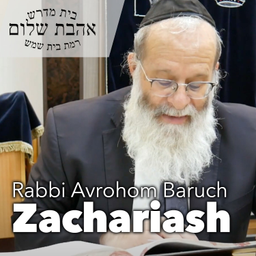
- Rabbi Avrohom Baruch Zachariash
- Category
- religion & spirituality
- Language
- en
- Explicit
- No
- First episode
- 10 Sept 2017
- Latest episode
- 13 Oct 2026
Latest episodes
68 episodes in the feed.
13 Oct 2026
Halachas of Washing Hands 165 - Zachariash (12)
Rabbi Avrohom Baruch Zachariash teaches the halachos of washing hands with the Mishnah Berurah (O.C. 165) AI Summary: Religious Meal and Cleanliness Program The transcript appears to contain fragmented speech and incomplete thoughts, making it difficult to determine a clear topic or conclusion. The discussion seems to touch on a religious or cultural program involving meal practices and spiritual cleanliness, but specific details are unclear due to the disjointed nature of the conversation. Food Handling and Meal Protocols The Rav discussed a halachic concept about touching food after sweating and the importance of maintaining clean hands during meals. He provided an example of a scenario where someone becomes so engrossed in conversation that they lose focus on being present at the meal, leading to potential issues with proper observance of mealtime protocols. Mental Engagement in Family Activities The Rav discussed the phenomenon of people being physically present at meals or activities but mentally disengaged, using examples like reading books during meals or wearing earbuds on family trips. He explained the difference between parents and children's perspectives on family travel, noting that parents value the bonding time of the journey itself while children focus only on reaching the destination. Cognitively Present During Religious Observances The Rav discussed a scenario where someone was using a phone while walking down a hospital aisle, highlighting how technology is becoming more common in everyday situations. He emphasized the importance of being cognizantly present and aware of one's actions, particularly during religious observances like washing hands after certain activities. The Rav stressed that intention alone is not sufficient and that people must be actively aware of their actions and surroundings. Hand-Washing and Hygiene Requirements The Rav discussed the requirements for hand-washing, explaining that touching potentially contaminating objects is problematic, while touching gloves or someone else's hands is not. He asked questions about whether people are aware when they park their shoes or tie them during dancing, suggesting people may not be attentive to these actions. The Rav also shared a personal anecdote about leaving a Shabbos meal early due to disagreeing with conversational topics about cars and travel, choosing instead to learn on the couch. Shabbos Advertisements Permissibility Discussion The Rav discussed the permissibility of looking at advertisements for products in different locations, particularly when considering purchases that would require someone to bring items from another country. He explained that while there is no halachic prohibition against looking at such advertisements, it is not a normal practice and would only be justified in specific circumstances, such as urgent need or significant savings. The Rav clarified that the discussion was about whether it is permissible to engage in such conversations at a Shabbos table, distinguishing between discussing products of interest versus making actual purchases. Shabbos Hosting and Talmudic Debates The Rav discussed strategies for hosting non-religious companies during Shabbos, emphasizing the importance of advance preparation to meet guests' needs. He shared a personal example of preparing specific spiritual support (chizuk) for each of his six children during a Seder. The discussion then shifted to a complex Talmudic debate about how the people of Zion were punished for not performing acts of kindness, with The Rav explaining Rishainim and Ahrainim perspectives on individual versus group avera (transgressions) and the unique severity of legislating against chesed. Rabbi Teaching Qualifications Discussion The Rav discussed a question about whether an unmarried Balestruba could serve as a teacher, sharing a story about how the Rebbe Kovner would have students answer halachic questions in his absence and review them upon his return. The Rav emphasized that every question asked of a rabbi is an opportunity to bring people closer to Hashem, as taught by Rav Okonka, and that the role of a rabbi extends beyond answering halachic questions to spiritual guidance. Handwashing Guidelines for Meals The Rav discussed halachic guidelines about handwashing during meals, focusing on when and how to wash hands properly. He explained that if a person needs to use the bathroom during a meal, they should go immediately rather than delaying, and must wash their hands before making the Asher Yatzar blessing. The discussion covered specific scenarios including wearing hats with leather bands, beards, and sweat considerations, with The Rav providing practical examples and clarifications about proper handwashing procedures.
6 Oct 2026
Halachas of Washing Hands 165 - Zachariash (11)
Rabbi Avrohom Baruch Zachariash teaches the halachos of washing hands with the Mishnah Berurah (O.C. 165) AI Summary: Halachic Hand Washing Requirements The Rav discussed the halachic requirements for hand washing, particularly in the morning and before meals. The Rav explained that while some traditions suggest washing hands once in the morning is sufficient, this may not align with strict halachic requirements, which depend on the timing of meals and proper intention during washing. They also discussed challenges with modern editions of Torah texts lacking comprehensive commentary from earlier authorities, and briefly touched on the concept of washing hands in specific situations like air travel. Bathroom Plumbing and Brachas Discussion The Rav discussed the technical aspects of bathroom plumbing and shared a personal story about davening on a plane. He explained that while davening sitting down is considered a bidieved according to Mishnah Brura, he has done it multiple times on planes when the situation called for it, particularly when standing would attract attention. The Rav also raised a question about making brachas while knowing one will eat later, noting that once out of the parsha, one must eat before making brachas. Halachic Hand Washing Discussion The Rav discussed halachic questions about hand washing for different purposes, explaining that one must wash hands with the specific intention of preparing for a particular activity like davening or eating. He addressed the question of whether prayer rooms in airports or other non-traditional spaces are appropriate for davening, expressing discomfort with certain locations and explaining that the status of a space as a shul depends on consistent use for religious purposes. The discussion also covered practical questions about when hand washing is required, including situations involving food in the mouth and exposure of body parts typically covered by clothing.
22 Sept 2026
Halachas of Sitting in the Sukkah
Rabbi Avrohom Baruch Zachariash teaches the halachos of Sitting in teh Sukkah with the Mishnah Berurah (O.C. 640) AI Summary: Children's Independence and Care Responsibilities The discussion focused on questions about when children can be left alone or start certain responsibilities, with participants debating different age thresholds. The conversation touched on whether a hospital patient should have someone present to monitor their care, with one participant explaining that while a supervisor might be assigned to ensure proper care, they wouldn't handle medical tasks like feeding or administering medication. The discussion also referenced Jewish legal texts regarding obligations for babysitting and care responsibilities. Political Engagement and Responsiveness The speaker discussed the importance of knowing when and how much to be involved in political or community matters, using an anecdote about being called to the hospital to illustrate the point about responding appropriately to different people's requests. They explained that in a political situation involving Nasrin Ali and Bashar Daud, both individuals were needed despite potentially overlapping roles because the way one responds and acts depends on who is making the request. The speaker concluded by referencing a historical filibuster that occurred before an event called Shalia. Guest Hosting and Attention Levels The discussion centered around a story involving a situation where someone was planning to leave but decided to stay after guests arrived. The speaker shared experiences about hosting guests and the appropriate level of attention required, noting that in most situations guests can be comfortable without constant supervision. The conversation also touched on a specific incident involving someone at a hospital who had to stay throughout a designated time period. Sukkot Observance and Requirements The discussion focused on various aspects of Sukkot observance, including sleeping in sukkahs, using air conditioners, and traveling during the holiday. The participants discussed whether people are obligated to sleep in sukkahs and shared personal experiences about sleeping arrangements during Sukkot. They also addressed questions about eating in temporary sukkahs, particularly when traveling, and debated the halachic requirements around wine storage and worker supervision during Sukkot.
Contact Ahavas Shalom Shiurim
- Guest appearances
- Does not typically book guests
Based on episode analysis; this does not confirm that the show is currently accepting guests.
Host of Ahavas Shalom Shiurim?
Claim your podcast to manage its listing and keep your show details accurate.
Pod Engine is an independent podcast discovery and analytics service and is not affiliated with or endorsed by this podcast. Artwork and show content belong to their owners. Full legal notice.
Explore this show
Podcast research with Pod Engine