- 11
- Episodes
- 1
- Ratings
- Daily
- Cadence
- 2026
- First episode
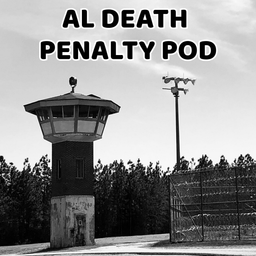
About AL Death Penalty Pod
On this podcast, we discuss the de+th penalty in Alabama. The host is person who does religious volunteer work inside of correctional facilities in Alabama, including the one where the men on death row are housed. Through his journey, Ronald discusses his evolved beliefs about the death penalty and where he lands today on the issue.
- Publisher
- Ronald
- Category
- society & culture · true crime
- Language
- en
- Explicit
- No
- First episode
- 4 Sept 2026
- Latest episode
- 12 Oct 2026
Latest episodes
11 episodes in the feed.
12 Oct 2026
Abe Bonowitz - DPA. From being for the DP to running an organization working against the DP
Summary In this episode, Abraham Bonowitz shares his journey from supporting the death penalty to becoming a leading advocate for its abolition. We explore systemic flaws, racial disparities, and the costs associated with capital punishment, highlighting why reform is essential. Key Topics: Systemic flaws in the death penalty system Racial disparities and bias in sentencing Cost analysis of executions versus life imprisonment Wrongful convictions and wrongful executions Activism and grassroots movements against the death penalty Legal and systemic reforms needed to abolish capital punishment Takeaways: The death penalty is more costly than life imprisonment, often costing around a million dollars per case. Racial bias significantly influences death penalty sentencing, with a high percentage of executions involving white victims. Systemic flaws, including unequal access to quality legal defense, undermine justice in capital cases. Public awareness and education are crucial in changing perceptions and policies around the death penalty. Activism, including protests and media campaigns, plays a vital role in influencing policy and public opinion. Sound Bites "Capital punishment because then without the capital get the punishment" "We do not have equal justice under the law" Chapters: 00:00 Introduction and upcoming documentary screening 00:57 Meet Abraham Bonowitz and the campaign to free Melissa Lucio 02:17 Changing perspectives: From supporting to opposing the death penalty 03:09 Personal journey: From belief in justice to systemic critique 06:40 Systemic issues: Cost, bias, and wrongful convictions 08:39 Racial disparities and the influence of victim's skin color 09:35 The true cost of capital punishment and public opinion 13:31 Founding of death penalty activism and grassroots efforts 16:19 Impact of activism and protests on public awareness 19:40 The federal death penalty and recent executions 21:41 Melissa Lucio's case and systemic failures in justice 22:08 The broken system and the need for reform 23:07 The importance of public awareness and education 24:43 Current state of the death penalty and potential watershed moments 27:48 Final thoughts and call to action Links: DPA and petitions to sign against upcoming executions (https://deathpenaltyaction.org/) Brandon Bernard Federal Execution (https://www.bbc.com/news/world-us-canada-55261224) NYT Op-ed with picture from DPA event Abe referred to (full article behind a pay wall) (https://www.nytimes.com/2026/10/10/us/executions-death-penalty-culture-war.html) Richard Branson op-ed (https://www.independent.co.uk/voices/richard-branson-christa-pike-death-penalty-tennessee-usa-b3064049.html)
2 Oct 2026
Special episode: Christa Pike & failed/botched executions in TN & AL
Christa Pike’s failed execution and what it reveals about capital punishment This unplanned episode breaks down Tennessee’s botched attempt to execute Christa Pike and uses it as a lens for examining how death penalty systems fail in practice. Ronald connects the event to Alabama’s own execution history, arguing that these cases expose serious procedural, ethical, and financial problems. In this episode, we walk through how similar (but short of Ms. Pike's awful situation) failures have played out in Alabama. He also raises a central question: if an execution goes wrong and the state must switch to life-saving care, what is the actual process and does one exist? From all looks, it didn't in TN. Key topics Ronald explains that Tennessee attempted to execute Krista Pike after the Supreme Court lifted a stay, but the execution was abandoned when she did not die from the two drug doses. He describes the chaotic scene afterward, including conflicting reports, an ambulance leaving the facility, and uncertainty about whether Pike was alive. He notes that Pike is reportedly in serious condition at a Nashville hospital after receiving life-saving treatment. He reflects on the possible and likely adverse impact this had on the victim’s mother, May Martinez, who had hoped the execution would take place and bring closure. He argues that closure cannot be delivered by anyone. He revisits Clayton Lockett’s 2014 botched execution in Oklahoma as a parallel example of a failed lethal injection. He surveys Alabama’s execution problems, including John Evans in 1983, Ronald Smith in 2016, Doyle Hamm in 2018, Joe James Jr. in 2022, Kenny Smith in 2022, and Alan Miller in 2022 and Ant Boyd OCT 2025. He questions whether Alabama has any real emergency plan if an execution goes badly and the state must shift from killing to saving a life. He points out the oddity of taxpayer funding covering the entire process, from litigation and execution attempts to emergency medical care and possible settlements. He closes by challenging listeners to rethink whether they can support a system whose failures are so costly, chaotic, and ethically conflicted. Links: Christa Pike documentary Dead Woman Walking on YouTube: Dead Woman Walking (https://youtu.be/SHCRGZDrMRM?si=Jz9RDK9WNnmuUHN3) Video of press conferece outside the Riverbend Correctional Facility as ES rolls in and then and ambulance leaves: Press witnesses and ES (https://youtu.be/7G4GFtcGHn4?si=2ooyBhQt_p4V5_N3) Latest on Christa Pike's condition; more details on the execution: https://www.bbc.com/news/articles/cmn4540d4z87o (https://www.bbc.com/news/articles/cmn4540d4z87o)
28 Sept 2026
THE question...What if someone killed a person that I love?
This episode explores one of the hardest questions in death penalty conversations: What would you (I) want if someone murdered a person you (I) love? Ronald uses his own experience with faith, forgiveness and grief to argue that revenge and justice are not the same thing.He also shares two powerful real-world examples, including victims’ family members who did not want an execution and wanted reconciliation instead. The episode centers on grief, forgiveness, and why the pull toward vengeance feels so human, even when it may not be the path toward healing. Key topics Ronald opens by naming the central death penalty question: What if someone killed someone you loved? He makes clear he is not minimizing victims’ families or speaking from firsthand murder-loss experience. He reflects on losing his father to natural causes and uses that grief to explain why loss is not something people simply “get over.” He argues that grief is not linear and often returns in unexpected moments. He connects faith traditions to forgiveness and says revenge belongs to emotion, not justice. He emphasizes that victims’ families matter and should not be dismissed in any future justice conversation. He describes how he would hope to choose forgiveness if someone harmed a loved one, even though it would be extremely difficult. He shares the case of Will Berry and Geoffery Todd West, where the victim’s son (Berry) wanted a face-to-face meeting and to extend forgiveness, but was denied the chance. He recommends The Science of Revenge by James Kimmel Jr. as a framework for understanding revenge as an addiction. Closes with a quote from Jimmy Barber: “Unforgiveness is a waste of time.” (00:00) Opening the hardest question in death penalty debates(00:29) Respecting victims’ families and Ronald's limits of personal experience(03:12) Faith, forgiveness, and why vengeance is not ours to claim(05:17) Grief as something you get through, not something you get over(07:22) Why love and grief prove a relationship mattered(08:46) Why forgiveness is the best path, even when it is not easy(10:40) Why revenge feels like justice, but is not justice(11:31) Will Wilbury, Jeffrey Todd West, and the denied request to meet(14:55) Why Ronald says revenge needs a better explanation(15:48) The Science of Revenge and the psychology of vengeance(17:12) How revenge mirrors addiction in the brain(20:31) Jimmy Barber’s final words on unforgiveness Links: Nora McInerny Ted Talk on grief: https://youtu.be/khkJkR-ipfw?si=TbIaiDj1FVK6aVzm (https://youtu.be/khkJkR-ipfw?si=TbIaiDj1FVK6aVzm) Will Berry editorial - Sep. 2025 (https://www.al.com/news/2025/09/i-dont-want-alabama-to-execute-my-mothers-killer-i-dont-want-revenge-in-my-name-op-ed.html) AP Story on Will Berry/Geoffery Todd West (https://www.fox8live.com/2025/09/23/son-woman-murdered-by-man-now-death-row-asks-alabama-stop-his-execution/) Doug Battle's family/Sonny Burton: https://davisvanguard.org/2026/02/alabama-execution-plea-mercy/ (https://davisvanguard.org/2026/02/alabama-execution-plea-mercy/) Faith Hall's family / Joe Nathan James, Jr.: https://alabamareflector.com/2025/09/11/i-dont-want-alabama-to-execute-my-mothers-killer-i-dont-want-revenge-in-my-name/ (https://alabamareflector.com/2025/09/11/i-dont-want-alabama-to-execute-my-mothers-killer-i-dont-want-revenge-in-my-name/) "The Science of Revenge" book: https://a.co/d/01wFYSOR (https://a.co/d/01wFYSOR)
25 Sept 2026
J-Love (1976-2026)
Jeffrey Lee reflections This short episode reflects on Jeffrey Lee’s execution, the state’s decision to go back on its agreement, and what that moment means for integrity, grief, and the broader death penalty system in Alabama. Ronald W. also frames the conversation through his faith, shares what Jeffrey’s death row brothers said about him, and looks upstream at poverty and the conditions that feed violence.In this episode: Ronald explains why he wanted to place this episode between earlier coverage of Jeffrey Lee’s case and the next episode on a broader death penalty question. He says Jeffrey Lee was executed by lethal injection after Alabama had agreed it would not seek that method if Jeffrey dropped his litigation. He argues that lethal injection is not as peaceful as it appears, pointing to the use of paralytics and autopsy findings such as heavy, wet lungs. Ronald says the state’s reversal on its court agreement reflects a lack of integrity in government and the justice system. He shares Jeffrey’s final words, including “All is well,” along with Jeffrey’s message of love for his family and brothers on death row. Ronald recounts a recent visit to death row at Holman, where several men described Jeffrey as authentic, nonjudgmental, and someone who “respond[ed] right.” He notes that Jeffrey’s death was painful for his family and also acknowledges the impact on victims’ families and Helen King, who was wounded in the robbery. He reflects on a June visit with Jeffrey on Father’s Day, when Jeffrey offered advice about fatherhood despite being under the trauma of a called off execution Ronald closes by arguing for upstream solutions like addressing extreme poverty, food insecurity, lack of running water, sanitation failures, and structural neglect in Alabama’s Black Belt. Links: Article by media witness Lee Hedgepeth: The Way We Respond (https://www.treadbylee.com/p/the-way-we-respond-the-execution) "Secrets of The Killing State" book by Dr. Lain (not an affiliate link): https://a.co/d/09NC4l32 (https://a.co/d/09NC4l32) Resources DP research: https://docs.google.com/document/d/1HOtDPaI0W40f4LSu_8qCJVdPsCfspDUSpi7VLx5mtMA/edit?usp=sharing (https://docs.google.com/document/d/1HOtDPaI0W40f4LSu_8qCJVdPsCfspDUSpi7VLx5mtMA/edit?usp=sharing)
15 Sept 2026
Episode 6: Jeffery Lee (W/Miriam Bankston of the Federal Defenders)
SummaryThis episode explores the complexities of the death penalty in Alabama, focusing on Jeffrey Lee's case, judicial override, and the broader societal issues that influence justice. Guest Miriam Mangston, Chief Investigator at the Federal Public Defender Office, shares insights into the case, the impact of judicial override, and the importance of compassion and reform. Key Topics Judicial override and its impact on death row cases Jeffrey Lee's background and case history The role of mental health in criminal justice The influence of politics on judicial decisions The importance of compassion and reform in the justice system The significance of community and faith in healing Advocacy efforts to abolish the death penalty The story of Jeffrey Lee's transformation and redemption Takeaways Judicial override was used frequently during election seasons Jeffrey Lee has been on death row for 26 years due to judicial override, despite remorse and mental health issues. Community, faith, and personal transformation play crucial roles in Jeffrey Lee's story. Public advocacy and awareness help bring change Sound Bites "People are hard to hate up close, move in." "Jeffery is here becase the system has failed him" Chapters 00:00 Introduction to the case and guest Miriam Mangston 01:57 Understanding judicial override, and its political motivations 04:02 Jeffrey Lee's background and case history 05:52 The recent legal developments 07:53 The societal failures leading to Jeffrey Lee's incarceration 09:55 Jeffrey Lee's personal transformation and faith journey 11:52 The importance of community and family in Jeffrey Lee's life 13:55 The moral and spiritual questions surrounding justice 15:55 Advocacy, activism, and how to get involved 17:59 Calls to action Documentary: https://youtu.be/TSPK04QBFfw?si=Rpu4f3AYBB8Eny9T (https://youtu.be/TSPK04QBFfw?si=Rpu4f3AYBB8Eny9T) Petition for Jeffery Lee: https://actionnetwork.org/petitions/stop-the-execution-of-jeffery-lee-in-alabama/ (https://actionnetwork.org/petitions/stop-the-execution-of-jeffery-lee-in-alabama/) Life for Jeffery Lee website (steps to take action): https://www.lifeforjefferylee.com/ (https://www.lifeforjefferylee.com/) June execution halted: https://www.waff.com/2026/06/12/alabama-cant-execute-jeffery-lee-by-nitrogen-gas-now-after-supreme-court-denial/ (https://www.waff.com/2026/06/12/alabama-cant-execute-jeffery-lee-by-nitrogen-gas-now-after-supreme-court-denial/) https://www.bbc.com/news/articles/cn4dx72lwn7o (https://www.bbc.com/news/articles/cn4dx72lwn7o) Alabama asks for new date: https://www.alreporter.com/2026/07/31/alabama-resets-jeffery-lees-execution-after-courts-blocked-nitrogen-hypoxia-method/ (https://www.alreporter.com/2026/07/31/alabama-resets-jeffery-lees-execution-after-courts-blocked-nitrogen-hypoxia-method/) For further research about the death penalty: https://docs.google.com/document/d/1HOtDPaI0W40f4LSu_8qCJVdPsCfspDUSpi7VLx5mtMA/edit?usp=sharing (https://docs.google.com/document/d/1HOtDPaI0W40f4LSu_8qCJVdPsCfspDUSpi7VLx5mtMA/edit?usp=sharing)
6 Sept 2026
Episode 3b (the original): Execution Warrant thru execution week
What Happens When Someone Receives an Execution Date? This episode explains the process that follows when an Alabama death row prisoner is issued an execution warrant, using Michael Taylor’s newly set November 5, 2026 date as the immediate example. Ronald walks through what the notification looks like, how “walk alone” works, what family visitation and last meals can look like, and what changes during the final week before execution.He also shares firsthand observations from volunteering inside the prison, giving a rare look at the physical spaces, rules, and emotional reality surrounding execution week. Key topics What happens when a person on Alabama death row receives an execution date? From the moment lawyers are notified to the prisoner being taken to the warden’s office and read the death warrant. He uses Michael Taylor’s November 5, 2026 execution date as the main example and notes that Taylor’s case is similar to other men on death row who opted into nitrogen hypoxia. Alabama’s nitrogen hypoxia protocol, why it was challenged, and why the Eleventh Circuit and Supreme Court rulings made it unconstitutional in practice. Ronald describes “walk alone” status, where the condemned prisoner is isolated from other inmates, moved only when necessary, and cut off from normal group activity and physical contact. Last meal process, including the local restaurant limitation in Atmore, a dollar cap he believes is around $25, and how prisoners sometimes refuse the meal because prison food or vending machine options are more appealing. He details the execution week visitation schedule, including expanded family visitation on Monday through Wednesday and the more limited visitation window on Thursday. Description of the visitation room, including the layout, the vending machines, the physical contact allowed, and the uneasy feeling of sitting with someone who will likely be dead within hours. He explains the final administrative steps, such as writing a will, signing paperwork, arranging spiritual support, and moving to the death watch cell near the execution chamber. He describes how every movement in the death watch cell is logged, including sleep, waking, phone calls, and bathroom use, creating increasing isolation and surveillance. Timestamps: 00:00 - Why Michael Taylor’s execution date matters right now 01:11 - Nitrogen hypoxia and why Alabama’s protocol was ruled unconstitutional 02:35 - Notification day: lawyers, the warden, and being read the death warrant 03:32 - “Walk alone” status and how isolation begins 05:47 - Why execution notices are emotionally heavy for prisoners 07:09 - Last meal rules: local restaurants, cost limits, and common choices 09:16 - Family visitation during execution week 10:31 - Inside the execution-week visitation room 12:55 - Physical contact, room layout, and why the setting feels unusual 14:21 - The strange reality of spending hours with someone who will soon die 16:31 - Why reports often mention refused meals 18:45 - Monday and Tuesday: legal work, family visits, and starting to close the circles 20:11 - Wills, paperwork, and the move to death watch 21:35 - Life in death watch and constant logging of every move 22:41 - Why photos are made during visitation and why that feels ironic 24:34 - Ronald W.’s volunteer work and how it gives him perspective 26:27 - Knowing Michael Taylor and the changing rules around volunteer access 28:50 - “Around the corner”: what prisoners call being taken to the holding cell 29:49 - Closing thoughts on execution week, visitation, and listener questions Notable quotes “He went around the corner” is the prison phrase for being taken toward the holding cell and execution area.
6 Sept 2026
Episode 3: Execution Warrant thru execution week
Summary: This episode explores the detailed process of receiving an execution warrant in Alabama, from legal procedures to the final days on death row, providing insights into the emotional and procedural aspects of the death penalty. Key Topics: The legal process of issuing an execution warrant in Alabama The steps leading up to execution week on death row The role of the Alabama Supreme Court and governor in executions The experience of inmates during the final days Visitation policies and last meal parameters The psychological impact on inmates and families Takeaways: The Alabama Supreme Court and governor play crucial roles in setting execution dates. Inmates are placed on 'walk alone' status to isolate them before execution. Last meals are limited to a specific restaurant and dollar amount. Visitation policies are generous during execution week, but physical contact is limited. Inmates often experience a mix of acceptance, anxiety, and reflection in their final days. Sound Bites: "The governor sets the execution date." "Last meals are limited to a restaurant in Atmore." "It's very strange knowing someone will be dead in hours." Chapters: 00:00 Introduction to Alabama's Death Penalty Process 04:09 How the Execution Warrant is Issued 08:06 The Role of the Governor and Department of Corrections 12:04 The Inmate's Experience Leading Up to Execution 17:47 Visitation, Last Meals, and Final Preparations 22:11 The Emotional and Psychological Aspects of Final Days 23:05 Closing Remarks and Resources Links: Project Hope to Abolish the Death Penalty: https://PHADP.org (https://PHADP.org) Other resources to explore the death penalty: https://docs.google.com/document/d/1HOtDPaI0W40f4LSu_8qCJVdPsCfspDUSpi7VLx5mtMA/edit?usp=sharing (https://docs.google.com/document/d/1HOtDPaI0W40f4LSu_8qCJVdPsCfspDUSpi7VLx5mtMA/edit?usp=sharing) Questions? Email: RonaldALdeathpenaltypod@gmail.com (mailto:RonaldALdeathpenaltypod@gmail.com)
5 Sept 2026
Episode 4: Methods of Execution (Present and Past??)
This episode explores the history and current state of capital punishment in Alabama, including methods of execution, legal challenges, and the controversial nitrogen hypoxia protocol. It provides a detailed look at the evolution of execution methods and the ongoing debates surrounding humane practices. Key Topics: History of Alabama's death penalty Methods of execution: electric chair, lethal injection, nitrogen hypoxia The story of Linda Block and the electric chair Current status and future of nitrogen hypoxia in Alabama Sound Bites: "We need to think about who we are and who we want to be." Chapters: 00:00 Introduction to Alabama's Death Penalty History 02:03 Methods of Execution in Alabama: From Lynching to Electric Chair 04:10 The Last Female Executed in Alabama and Electric Chair History 06:07 Lethal Injection: Protocols and Ethical Concerns 07:54 The Controversy of Nitrogen Hypoxia and Its Legal Challenges 10:00 The Case of Jeffrey Lee and Litigation Against Nitrogen Gassing 11:55 Current Status and Future of Nitrogen Hypoxia in Alabama 14:02 Ethical and Legal Debates on Humane Execution Methods 15:58 What’s Next for Alabama’s Death Penalty Protocols 17:59 Reflections on Humanity and Capital Punishment Links: Dr. Lain's book "Secrets of the Killing State" - NOT an affiliate link: https://a.co/d/02gbo49J (https://a.co/d/02gbo49J) Anthony Boyd execution (Oct. 2025): https://www.treadbylee.com/p/after-justices-warned-of-prolonged (https://www.treadbylee.com/p/after-justices-warned-of-prolonged) Execution of Kenny Smith https://alabamareflector.com/2024/01/25/kenneth-eugene-smith-executed-by-nitrogen-gas-for-1988-murder-for-hire-scheme/ (https://alabamareflector.com/2024/01/25/kenneth-eugene-smith-executed-by-nitrogen-gas-for-1988-murder-for-hire-scheme/) ABA article NOV 23 / nitrogen gas: https://www.americanbar.org/groups/committees/death_penalty_representation/publications/project_blog/alabama-prepares-for-execution-by-nitrogen-gas/ (https://www.americanbar.org/groups/committees/death_penalty_representation/publications/project_blog/alabama-prepares-for-execution-by-nitrogen-gas/) EJI Article following change of drug protocol 2014: https://eji.org/news/alabama-plans-to-use-new-execution-drug/#:~:text=The%20Alabama%20Department%20of%20Corrections,in%20Oklahoma%20earlier%20this%20year (https://eji.org/news/alabama-plans-to-use-new-execution-drug/#:~:text=The%20Alabama%20Department%20of%20Corrections,in%20Oklahoma%20earlier%20this%20year). State by stae (AL at top) execution protocols (lethal injection drugs and history): https://deathpenaltyinfo.org/executions/methods-of-execution/state-by-state-execution-protocols (https://deathpenaltyinfo.org/executions/methods-of-execution/state-by-state-execution-protocols) Picture of electric chair (Yellow Mama): https://digital.archives.alabama.gov/digital/collection/amg/id/59603/ (https://digital.archives.alabama.gov/digital/collection/amg/id/59603/) Other resources to explore the death penalty: https://docs.google.com/document/d/1HOtDPaI0W40f4LSu_8qCJVdPsCfspDUSpi7VLx5mtMA/edit?usp=sharing (https://docs.google.com/document/d/1HOtDPaI0W40f4LSu_8qCJVdPsCfspDUSpi7VLx5mtMA/edit?usp=sharing) Questions? Email: RonaldALdeathpenaltypod@gmail.com (mailto:RonaldALdeathpenaltypod@gmail.com)
5 Sept 2026
Episode 5: Judicial Override
Summary: This episode explains Alabama’s former judicial override system, where a judge could overrule a jury’s sentencing recommendation in a death penalty case. Ronald breaks down how the practice worked, abolishment in 2017, and why it still affects people on Alabama’s death row today.He also connects the history to current commutation efforts and the political realities around death penalty reform in Alabama. Key topics: What judicial override was/is- Judges in Alabama could impose death even when a jury recommended life without parole. The practice also worked in the opposite direction, though most overrides went from life to death. Ronald notes that Alabama judges are elected officials, which may have encouraged harsher sentencing in election years. He points to studies showing judicial overrides rose significantly during election cycles. Since 1976, judges in Alabama overrode jury verdicts 112 times. 91 percent of those overrides were from life without parole to death. Governor Kay Ivey signed law eliminating judicial override in 2017, but the law was not made retroactive, so 25 people sentenced under override still remain on death row and have been and can be executed. He notes that one of those people is a woman. Ronald offers his own theory that officials may have been reluctant to unsettle the work of judges and prosecutors who were still active or still alive. Representative Chris England has repeatedly introduced bills to make the repeal retroactive. Ronald says the bill has never made it out of committee. Current reform efforts- A coalition working to end judicial override retroactively through the campaign Wethejury-AL.com (http://Wethejury-AL.com) The campaign includes action steps Why the issue matters at THIS moment: Ronald says Governor Ivey could still commute the remaining 25 override cases to life without parole. She is not running for reelection & will be finished serving her term in JAN 2027. She wouldn't be directly impacted by negative feedback IF she will chose to act. He suggests her recent commutations may signal a shift in how she thinks about her legacy. 2 Recent commutations Rocky Myers received a commutation in 2025. Sonny Burton was also commuted from death row to life without parole. Ronald notes that Ivey also has a record of more executions than any other governor in state history. Timestamps: 00:00 - What judicial override means in Alabama 00:56 - Why the repeal was not retroactive 02:32 - Alabama’s place among the last states to use override 03:25 - 112 overrides since 1976 and why election years matter 05:25 - Why the law may have been left non-retroactive 06:57 - Chris England’s repeated attempts to make it retroactive 08:23 - The 25 people still on death row because of override 09:19 - Why this remains an active issue today 10:19 - Grassroots efforts to end override retroactively 11:51 - Governor Ivey’s limited time and possible action 13:15 - Rocky Myers, Sonny Burton, and signs of a shift 16:07 - The tension between commutations and executions 16:52 - Closing thoughts and what listeners can do next Links: GET INVOLVED TODAY BY GOING HERE: https://wethejury-al.com/ (https://wethejury-al.com/) Other resources to explore the death penalty: https://docs.google.com/document/d/1HOtDPaI0W40f4LSu_8qCJVdPsCfspDUSpi7VLx5mtMA/edit?usp=sharing (https://docs.google.com/document/d/1HOtDPaI0W40f4LSu_8qCJVdPsCfspDUSpi7VLx5mtMA/edit?usp=sharing) Questions? Email: RonaldALdeathpenaltypod@gmail.com (mailto:RonaldALdeathpenaltypod@gmail.com)
5 Sept 2026
Episode 2: Holman Correctional Facility (with pics)/Make up of death row
Summary: In this episode, Ronald W. provides an in-depth look at Alabama's death row, including the facilities, the process of execution, and the racial and legal complexities involved. He shares insights from his visits and research, highlighting the challenges and controversies surrounding capital punishment. Key Topics: Details of Holman Correctional Facility and death row housing The process and location of executions in Alabama Racial makeup and disparities on death row Legal appeals and innocence claims in death penalty cases The structure and security features of death chambers and execution rooms The impact of legal and procedural delays on death row inmates Nearly 80% of the people on Alabama’s death row have been condemned for crimes involving white victims, despite the fact that 65% of all homicide victims in Alabama are black. - PHADP.org (http://PHADP.org) website Sound Bites: "The execution chamber looks almost like a doctor's office." "Signs in the facility are made to look like license plates." "Seventy-six men are black on Alabama's death row. 71 Men are white. 2 Are classified as 'other'. Yet the state is comprised, according to the 2020 U.S. census of being 26-27% black." Chapters: 00:00 Introduction to Alabama Death Penalty and Facility Overview 02:06 Location and Access to Holman Correctional Facility 04:04 Description of Death Row Housing and Facility Layout 05:49 Inside the Death Row Cells and Security Features 07:51 The Death Chamber and Execution Process 11:59 Outside Facilities and Recreational Areas 13:53 The Last Moments and Death Chamber Setup 17:55 Witness Rooms and the Execution Day Procedure 21:08 Demographics and Racial Makeup of Alabama's Death Row 22:59 Legal Delays, Innocence Claims, and Notable Cases 25:52 Reflections on Justice, Innocence, and the Future of Capital Punishment Pics from Holman: https://www.google.com/search?q=holman+correctional+facility&oq=holman+corr&gs_lcrp=EgZjaHJvbWUqBggAECMYJzIGCAAQIxgnMhIIARAuGEMYrwEYxwEYgAQYigUyBggCEEUYOTIHCAMQABiABDINCAQQABiRAhiABBiKBTIHCAUQABiABDIHCAYQABiABDIHCAcQABiABDIHCAgQABiABDINCAkQABiRAhiABBiKBdIBCDQzNTNqMGo5qAIGsAIB8QX5W7Wrs2XU3Q&sourceid=chrome&source=chrome.ob&ie=UTF-8 (https://www.google.com/search?q=holman+correctional+facility&oq=holman+corr&gs_lcrp=EgZjaHJvbWUqBggAECMYJzIGCAAQIxgnMhIIARAuGEMYrwEYxwEYgAQYigUyBggCEEUYOTIHCAMQABiABDINCAQQABiRAhiABBiKBTIHCAUQABiABDIHCAYQABiABDIHCAcQABiABDIHCAgQABiABDINCAkQABiRAhiABBiKBdIBCDQzNTNqMGo5qAIGsAIB8QX5W7Wrs2XU3Q&sourceid=chrome&source=chrome.ob&ie=UTF-8) Chris Barbour (not his DNA...): https://www.al.com/news/2026/04/alabama-invents-new-arguments-to-explain-away-dna-presses-ahead-with-death-sentence.html (https://www.al.com/news/2026/04/alabama-invents-new-arguments-to-explain-away-dna-presses-ahead-with-death-sentence.html) Other resources to explore the death penalty: https://docs.google.com/document/d/1HOtDPaI0W40f4LSu_8qCJVdPsCfspDUSpi7VLx5mtMA/edit?usp=sharing (https://docs.google.com/document/d/1HOtDPaI0W40f4LSu_8qCJVdPsCfspDUSpi7VLx5mtMA/edit?usp=sharing) Questions? Email: RonaldALdeathpenaltypod@gmail.com (mailto:RonaldALdeathpenaltypod@gmail.com)
4 Sept 2026
Episode 1: Begin here...How it all evolved (for me)
Ronald introduces the podcast by explaining his personal journey from being strongly pro-capital punishment to becoming opposed to the death penalty. He also lays out the lens he brings to the subject, including his Christian faith and years of prison ministry in Alabama. In this episode, he explains why the show will focus on sharing information rather than pushing conversion, and why his experiences inside prisons changed how he sees people on death row. He uses that background to frame the larger moral and practical questions. Key topics: Ronald shares that he once believed people sentenced to death should receive one appeal and be executed as soon as practical. He traces part of his early sensitivity to the death penalty back to Alabama’s modern execution era beginning in 1983 with the execution of John Evans. Johnny Cash’s prison albums shaped Ronald’s early awareness of incarcerated people as human beings. He explains that his Christian faith is a core part of his worldview, but the podcast is not meant to actively convert listeners. Faith and concern for incarcerated people eventually led him into correctional ministry in Alabama.He recounts joining a prison ministry team at Donaldson Correctional Facility and later learning some of those on death row were housed here (at that time). A shift to non-agenda small groups-direct contact with men on death row & changed how he saw them. The more time he spent with them the more he saw people with families & stories. His views changed further as he looked into cases, mitigating circumstances, and the inconsistency of how capital punishment is applied. Ronald closes by arguing that because all people are flawed, he does not believe humans should have the power to decide who lives and who dies. Corrections: John Evans was executed in 1983, not 1982 (as stated in this ep) Links: Doc about John Evans: "Dead Wrong" - Much of the movie is dramatization/acting, However, Starting about the 0:35 mark - that is the actual old death chamber. While still in the same location, the chamber has been updated and reconfigured. I'm not clear if the death watch cell has been changed. Perhaps, due to the bars, that still exists as is. Link to watch: https://www.youtube.com/watch?v=6ADdU2s8vzk&t=295s (https://www.youtube.com/watch?v=6ADdU2s8vzk&t=295s) Resources for reasearch around the DP: https://docs.google.com/document/d/1HOtDPaI0W40f4LSu_8qCJVdPsCfspDUSpi7VLx5mtMA/edit?tab=t.0 (https://docs.google.com/document/d/1HOtDPaI0W40f4LSu_8qCJVdPsCfspDUSpi7VLx5mtMA/edit?tab=t.0) Timestamps: 00:59 - Ronald’s former beliefs on capital punishment 01:55 - Early questions sparked by Alabama resuming executions in 1983 04:19 - Johnny Cash's songs and album covers 06:43 - Why Ronald’s Christian faith will shape the podcast 08:07 - How prison ministry and faith began to converge in his life 11:36 - Meeting the 18 men on death row at Donaldson 14:27 - Sunday night services to Friday morning non-agenda small groups 17:20 - “Where are the monsters?” and why the men stopped fitting a narrative 18:20 - Brene Brown’s line: people are hard to hate up close 19:01 - Why victims’ families and their pain is relevant and must still be taken seriously 20:00 - Looking into cases and finding more questions than answers 21:19 - The inconsistency of who gets a capital case 23:25 - His admission that he has knowingly hurt people and needs forgiveness too 25:06 - The moral problem of condemning others while recognizing his own flaws 26:01 - Why he now believes humans should not possess the power to decide life or death Notable quotes: “People are hard to hate up close, move in.” - Brené Brown “I didn’t see monsters. I just saw people.” - Ronald
Reach and audience
Public platform figures. Ratings count people who left a rating, not total listeners.
- Apple Podcasts (US)
- 5.0 / 5
- 1 ratings
Shows with a similar audience




Host of AL Death Penalty Pod?
Claim your podcast to manage its listing and keep your show details accurate.
Pod Engine is an independent podcast discovery and analytics service and is not affiliated with or endorsed by this podcast. Artwork and show content belong to their owners. Full legal notice.
Explore this show
Podcast research with Pod Engine