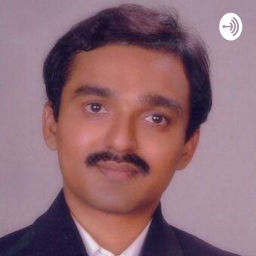
Podcast thumbnail for Antosh Dyade

Antosh Dyade

Claim This Podcast

by Antosh Dyade

4.9(8 reviews)
39 episodes
Updated Inactive
Accepts GuestsHas SponsorsLocation 🇮🇳
45

Podcast Authority

Beta
FairBased on show quality, social media presence, reviews, charts, and more
Pod Engine
Quality53
Social0
YouTube93
Engagement0

Podcast Overview

Discussion on self improvement and Latest Technology

Language

🇺🇲

Publishing Since

7/5/2021

Unlock The Full Podcast Authority Score Report

See how your podcast performs across key metrics

45

Podcast Authority

Beta
FairBased on show quality, social media presence, reviews, charts, and more
Pod Engine
Quality53
Social0
YouTube93
Engagement0
8
Excellent Areas
1
Good Performance
10
Growth Opportunities
excellent
Episode Length
22 minutes
Performing excellently!
good
Show Notes Quality
3.0/5

Recommendations available

Unlock the full report to see detailed tips

poor
Publishing Consistency
Every 49 days

Recommendations available

Unlock the full report to see detailed tips

+16 More Metrics

Unlock comprehensive insights including:

  • • YouTube presence analysis
  • • Social media reach metrics
  • • RSS compliance scoring
  • • Podcast 2.0 features
  • • Technical standards
What's Included in Your Full Report

Detailed Analytics

  • Complete breakdown of all 19 authority metrics
  • Personalized recommendations for each metric
  • Industry benchmarks and comparisons
  • Technical RSS feed analysis and compliance scoring

Growth Strategies

  • Step-by-step action plans for improvement
  • Quick wins to boost your score immediately
  • Pro tips from successful podcasters
Get your free podcast insights report

See how your show performs across every key metric

Instant delivery
No spam
Attract Better Guests

High authority scores make your podcast more attractive to industry leaders and influencers who want to appear on credible shows.

Secure Sponsorships

Sponsors look for podcasts with proven authority and engagement. Your score demonstrates your podcast's value to potential partners.

Grow Your Audience

Understanding your strengths and weaknesses helps you make data-driven decisions to expand your listener base effectively.

1 verified contact email on file for Antosh Dyade

Pitch yourself as a guest, propose sponsorships, or reach out directly to the host.

Recent Episodes

Episode thumbnail for Makar Sankranti 2026: The Science, Rituals, and Spiritual Secrets of Uttarayana

January 14, 2026

Makar Sankranti 2026: The Science, Rituals, and Spiritual Secrets of Uttarayana

<p><strong>Makar Sankranti</strong> is a major Hindu festival celebrated across India and Nepal, marking the transition of the Sun (Surya) into the zodiac sign of <strong>Capricorn (Makara)</strong>. Unlike most Indian festivals based on the lunar calendar, this is a solar event that signifies the end of the winter solstice and the beginning of longer, warmer days.In 2026, Makar Sankranti falls on <strong>Wednesday, January 14</strong>. The Sun enters Capricorn at exactly <strong>3:13 PM IST</strong>, making the afternoon hours highly auspicious for rituals.<strong>Key Muhurat Timings for 2026:</strong>• <strong>Punya Kaal (Auspicious Period):</strong> 3:13 PM to 5:45 PM.• <strong>Maha Punya Kaal (Peak Auspicious Period):</strong> 3:13 PM to 4:58 PM.<strong>The Scientific and Spiritual &quot;Why&quot;:</strong>• <strong>Uttarayana:</strong> This festival marks the commencement of the Sun’s northward journey, symbolizing the <strong>triumph of light over darkness</strong> and knowledge over ignorance.• <strong>Solar Energy:</strong> Scientists and ancient scholars agree that this transition increases solar energy intensity, helping to &quot;refresh&quot; our biological clocks.• <strong>Heliotherapy:</strong> The tradition of <strong>kite flying</strong> is not just for fun; it encourages people to soak in the Sun&#39;s rays, replenishing <strong>Vitamin D</strong> after the cold winter months.• <strong>Thermal Nutrition:</strong> Eating sweets made of <strong>sesame (til) and jaggery (gur)</strong> provides essential healthy fats and internal warmth to protect the nervous system during winter.<strong>Regional Celebrations:</strong> This &quot;Mosaic of Harvest Traditions&quot; is known by many names across the map:• <strong>Pongal (Tamil Nadu):</strong> A four-day thanksgiving to nature, the Sun, and cattle.• <strong>Uttarayan (Gujarat):</strong> A grand festival where the sky becomes a vibrant canvas for thousands of kites.• <strong>Magh Bihu (Assam):</strong> A post-harvest celebration featuring community feasts and the burning of temporary huts called Mejis.• <strong>Lohri (Punjab):</strong> Celebrated on the eve (January 13), featuring bonfires and folk dances.• <strong>Khichdi (UP/Bihar):</strong> A day for holy dips in sacred rivers like the Ganga and donating blankets to the needy.<strong>Mythological Legends:</strong>• <strong>Bhishma Pitamah:</strong> In the Mahabharata, Bhishma chose to leave his mortal body on this day to attain <strong>moksha (liberation)</strong>.• <strong>Surya &amp; Shani:</strong> It is believed that on this day, Lord Surya visits his son, <strong>Lord Shani (Saturn)</strong>, the ruler of Capricorn, symbolizing reconciliation and the healing of strained relationships.<strong>Important Note for 2026:</strong> In 2026, Makar Sankranti overlaps with <strong>Shattila Ekadashi</strong>. Because eating rice is prohibited on Ekadashi, many devotees are advised to observe their fast on January 14 and consume the traditional <strong>khichdi</strong> (rice and lentils) on <strong>January 15</strong>.Join millions in celebrating this &quot;Manifestation Portal&quot; through acts of <strong>Daan (charity)</strong>, holy baths, and spreading sweetness with the traditional Maharashtrian phrase: &quot;Tilgul ghya, goad goad bola&quot; (Accept these sweets and speak sweet words).#MakarSankranti2026 #Uttarayana #KiteFestival #Pongal #Lohri #Bihu #Spirituality #VedicScience #IndianFestivals</p>

Episode thumbnail for The Untold History of the Internet: From ARPANET to Global Privatization

January 14, 2026

The Untold History of the Internet: From ARPANET to Global Privatization

<p>How did a <strong>Cold War-era research project</strong> transform into the global digital infrastructure we use today? This video dives deep into the archives to trace the <strong>evolution of the Internet</strong>, beginning with the <strong>Advanced Research Projects Agency Network (ARPANET)</strong> in 1969.We explore the groundbreaking theories of <strong>packet switching</strong> developed by <strong>Paul Baran and Donald Davies</strong>, which allowed data to travel independently across a distributed network rather than relying on a vulnerable central hub. You’ll learn about the <strong>first node-to-node message</strong> sent from UCLA to SRI—the succinct and prophetic &quot;LO&quot;—which famously crashed the system before the full word &quot;LOGIN&quot; could be completed.<strong>Key Milestones Covered:</strong>• <strong>The Transition to TCP/IP:</strong> Why <strong>January 1, 1983</strong>, is considered the &quot;Flag Day&quot; and official birthday of the modern Internet.• <strong>The Rise of NSFNET:</strong> How the <strong>National Science Foundation</strong> stepped in to provide a high-speed backbone for academic research, connecting supercomputing centers across the U.S.• <strong>The World Wide Web:</strong> The revolutionary impact of <strong>Tim Berners-Lee</strong> at CERN and the release of the <strong>Mosaic browser</strong>, which brought a graphical interface to the general public.• <strong>The Privatization Era:</strong> A look at the controversial 1995 decommissioning of the <strong>NSFNET backbone</strong> and the handoff of control to private commercial providers.We also analyze the <strong>implications of privatization</strong>, including the emergence of a <strong>concentrated backbone industry</strong>, the lack of &quot;must-carry&quot; regulations, and the lost opportunity for the government to bake <strong>security and societal values</strong> into the Internet&#39;s fundamental design.<strong>Featured Pioneers:</strong> <strong>Vinton Cerf and Robert Kahn</strong> (Co-creators of TCP/IP), <strong>J.C.R. Licklider</strong> (The Visionary), <strong>Larry Roberts</strong> (ARPANET Leader), and <strong>Jon Postel</strong> (The Internet’s Editor).<strong>Sources referenced in this video:</strong> This deep dive draws directly from historical reports, research papers from <strong>ResearchGate</strong>, DARPA and <strong>NSF</strong> archives, and the collaborative work of <strong>Internet Hall of Fame</strong> inductees.#InternetHistory #ARPANET #NSFNET #TCPIP #WebHistory #ComputerScience #TechDocumentary<br></p>

Episode thumbnail for The Nobel Prize of Computing: Inside the ACM A.M. Turing Award (Hindi)

January 14, 2026

The Nobel Prize of Computing: Inside the ACM A.M. Turing Award (Hindi)

<p>The ACM A.M. Turing Award is universally recognized as the &quot;Nobel Prize of Computing&quot; and stands as the highest distinction in the field of computer science. Presented annually by the Association for Computing Machinery, it honors individuals whose technical contributions have had a lasting and major importance to the digital world.The award is named in honor of Alan Mathison Turing, the British mathematician and &quot;Father of Computer Science&quot;. Turing provided the formal foundations for computation with the Universal Turing Machine and played a pivotal role in the Allied victory during World War II by leading the effort to decrypt the Enigma cipher.The most recent recipients (2024) are Andrew Barto and Richard Sutton, recognized for their groundbreaking work in reinforcement learning. Their research allows machines to learn through trial and error, serving as a central pillar for the modern AI boom and powering massive breakthroughs like AlphaGo and ChatGPT.Turing Award Fast Facts:• The Prize: Winners receive $1 million, with current financial support provided by Google, Inc..• The First: The inaugural award was given to Alan Perlis in 1966 for his influence on advanced programming and compilers.• Women in Computing: Only three women have ever received the honor: Frances Allen (2006), Barbara Liskov (2008), and Shafi Goldwasser (2012).• The Elite Network: Turing Laureates are exceptionally well-connected; on average, a winner is separated from another laureate or von Neumann Medal winner by only 1.4 co-authorship steps.• Academic Foundations: Approximately 61% of laureates hold degrees in mathematics, reflecting the discipline&#39;s deep roots in mathematical logic.• Age Trends: While the youngest winner, Donald Knuth, was only 36, the average age of recipients has trended upward toward 70 in recent years.From the invention of the World Wide Web and the C programming language to the foundations of Artificial Intelligence, the Turing Award documents the history of the information age.#TuringAward #ComputerScience #AI #AlanTuring #TechHistory #ReinforcementLearning #ChatGPT #Innovation #Coding #STEM</p>

39 total episodes available

Deep-dive analytics for Antosh Dyade

Frequently asked questions

Have a different question and can't find the answer you're looking for? Reach out to our support team by sending us an email and we'll get back to you as soon as we can.

What is Antosh Dyade?

Discussion on self improvement and Latest Technology

How often does this podcast release new episodes?

This podcast updates inactive.

Where can I listen to this podcast?

This podcast is available on 2 platforms including Apple Podcasts, Spotify, and more. You can also use the RSS feed directly.

Does this podcast accept guests?

Yes, this podcast regularly features guests.

Legal Disclaimer

Pod Engine is not affiliated with, endorsed by, or officially connected with any of the podcasts displayed on this platform. We operate independently as a podcast discovery and analytics service.

All podcast artwork, thumbnails, and content displayed on this page are the property of their respective owners and are protected by applicable copyright laws. This includes, but is not limited to, podcast cover art, episode artwork, show descriptions, episode titles, transcripts, audio snippets, and any other content originating from the podcast creators or their licensors.

We display this content under fair use principles and/or implied license for the purpose of podcast discovery, information, and commentary. We make no claim of ownership over any podcast content, artwork, or related materials shown on this platform. All trademarks, service marks, and trade names are the property of their respective owners.

While we strive to ensure all content usage is properly authorized, if you are a rights holder and believe your content is being used inappropriately or without proper authorization, please contact us immediately at hey@podengine.ai for prompt review and appropriate action, which may include content removal or proper attribution.

By accessing and using this platform, you acknowledge and agree to respect all applicable copyright laws and intellectual property rights of content owners. Any unauthorized reproduction, distribution, or commercial use of the content displayed on this platform is strictly prohibited.