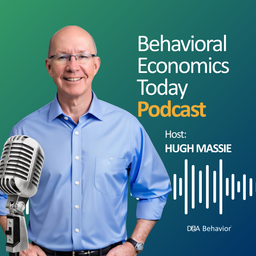
Hugh Massie is the Executive Chairman & Founder of DNA Behavior, a Behavioral Solutions Architect, and a Money Energy Pioneer, known for orchestrating high-stakes decisions with clarity and impact. A two-time Titan 100 awardee, Hugh is also a mentor to Boys Without Fathers, an award-winning author, a devoted dad, and a keen golfer—blending personal passion with professional expertise to guide leaders in unlocking potential, navigating complexity, and living with purpose.
Episode 23: Leadership Traps: How Our Natural Behavior Shapes the Decisions We Make
In the latest episode of Behavioral Economics Today, Hugh Massie had a conversation with Malcolm Le Lievre, Managing Director and Founder of Peak Output, about leadership behavior, decision-making biases, and the traps that can influence leaders under pressure.
They explore:
• How leadership strengths can become blind spots in decision making
• Why self-awareness is essential for recognizing behavioral biases
• How authority and overconfidence can affect a leader's ability to receive feedback and be challenged
• Why psychological safety is important for creating an environment where people can speak up
• How diverse perspectives and different behavioral styles can strengthen decision making
• The impact of risk aversion and the fear of making the wrong decision
• How sunk cost bias can cause leaders to continue investing in decisions that are no longer working
• Why leaders need to understand the strengths, struggles, and biases of their teams
• How reframing a challenge can open up new perspectives and possibilities
• Why good data, constructive challenge, and collaboration are essential for better decisions
Leadership decisions can have a significant impact on people, teams, and organizations. Understanding the behavioral biases that influence those decisions can help leaders recognize blind spots, create space for challenge, and make more intentional choices.
Tune in to discover how greater self-awareness, psychological safety, diverse perspectives, and a better understanding of behavioral biases can help leaders avoid decision traps and create stronger outcomes for their teams and organizations.
17 Sept 2026
Episode 22: The Quiet Pressure: Why Financial Stress Is a Behavioral Challenge
In the latest episode of Behavioral Economics Today, Hugh Massie had a conversation with Dr. Frances Rahaim, Founder of Hug Your Money, about the behavioral side of financial well-being and the quiet pressure that money can create in our lives.
Drawing from her personal experiences and professional journey, Frances shares how our emotions, beliefs, habits, and life experiences can influence the way we think about and manage money.
In this episode, they explore:
• Why money is about more than financial knowledge and numbers
• How financial stress can affect decision-making, relationships, productivity, and well-being
• How childhood experiences can shape financial behaviors and beliefs
• Why personalized guidance, accountability, and positive reinforcement can support lasting behavioral change
• How conversations around purpose, values, and life goals can create a healthier relationship with money
• Why financial well-being should go beyond education and tools to include practical support and human connection
• The role of AI and human guidance in the future of financial well-being
This conversation highlights why understanding the behavioral side of money is essential to helping people make better financial decisions and build greater financial well-being.
1 Sept 2026
Episode 21: The Psychology of High-Stakes Disputes: How to Stay in Control
In this episode of the Behavioral Economics Today Podcast, Hugh Massie has a conversation with Arthur Psaltis, Managing Director of VMG Capital, about the complex human, commercial, financial, and behavioral decisions involved in navigating high-stakes legal disputes.
Drawing on their own professional and personal experiences, they discuss what can happen when individuals and businesses enter complex legal processes and why the decisions surrounding a dispute can be just as important as the legal case itself.
They explore:
• The human and emotional impact of high-stakes legal disputes
• Why commercial and financial considerations can be overlooked during legal proceedings
• The importance of maintaining control over decision-making throughout the process
• How sunk cost bias, overconfidence, and emotions can influence critical decisions
• Why decision mapping and clear decision gates should be established early
• The risks and consequences that can emerge when a legal dispute continues for years
• The importance of considering the broader impact on businesses, families, relationships, and personal wellbeing
A key message from the conversation is that navigating a legal dispute requires more than a strong legal strategy. Individuals and business leaders also need to understand the commercial realities, financial risks, behavioral biases, and human consequences involved in every major decision.
Tune in to discover why staying in the decision room, maintaining perspective, and understanding the full consequences of each choice can make a meaningful difference when navigating high-stakes disputes.
Reach and audience
Public platform figures. Ratings count people who left a rating, not total listeners.
Apple Podcasts (US)
5.0 / 5
1 ratings
Spotify
4.5 / 5
2 ratings
Contact Behavioral Economics Today Podcast
Guest appearances
Books guests
Based on episode analysis; this does not confirm that the show is currently accepting guests.
Host of Behavioral Economics Today Podcast?
Claim your podcast to manage its listing and keep your show details accurate.
Pod Engine is an independent podcast discovery and analytics service and is not affiliated with or endorsed by this podcast. Artwork and show content belong to their owners. Full legal notice.
Explore this show Podcast research with Pod Engine