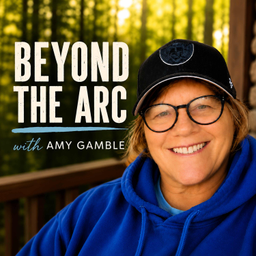
Beyond the Arc: Reflections on Resilience, Identity, & Life Podcast
Amy Gamble
- 12
- Episodes
- Weekly
- Cadence
- 2026
- First episode
About Beyond the Arc: Reflections on Resilience, Identity, & Life Podcast
Personal essays about resilience, identity, women's sports, culture, and the complicated business of being human. Written and read by Olympian and writer Amy Gamble. byamygamble.substack.com (https://byamygamble.substack.com?utm_medium=podcast)
- Publisher
- Amy Gamble
- Category
- society & culture · sports
- Language
- en
- Explicit
- No
- First episode
- 18 Aug 2026
- Latest episode
- 25 Oct 2026
Latest episodes
12 episodes in the feed.
25 Oct 2026
The Closer I Am to Me, The Better I Can Celebrate We
This is perhaps more of a reflective piece of my writing. I hope you find one thing you can take away from it. I’ve been a competitor most of my life. But the highest level of my competitive spirit has not been directed outwardly, it’s been directed toward myself. Asking questions of myself, such as, how can I get better? How can I improve? What goals do I want to set? Can I allow myself to dream again? When you are trying to do your best in life, our culture rewards those who pursue excellence, sometimes. Other times, people quietly live their lives doing amazing things that never get anywhere near a spotlight. Maybe it’s the person who donates to a cause anonymously. Maybe it’s the person who is loved by friends and family. Maybe it’s the person who sits quietly in nature and enjoys every day to the fullest. Maybe that person is you. Comfortable in your own skin. Trudging along in life doing the best you can. Not competing with anyone other than yourself. When we learn to celebrate our own accomplishments, challenge our cynicism, and appreciate the gift of every day, it becomes much easier to lift others up. My success doesn’t diminish yours. My accomplishments, skills, or experiences aren’t a measuring stick for anyone else. If we learn how to allow others to help us, life gets much easier. I admit asking for help has never been one of my strengths. Because quite honestly, asking for help means we must be vulnerable. And vulnerability is uncomfortable. Looking in the mirror and giving ourselves an honest assessment of where we’ve traveled in life and where we’d still like to go gives us the freedom to move forward. With each step along the way, we encounter people walking their own paths. Each one has some kind of lesson to teach us. You don’t have to spend hours every day reflecting on your life, but I’ve noticed when I’ve taken time to really dig in deep, the rewards have been tremendous. The insights I’ve gained by looking at the light side of my life, as well as the dark side, have given me more strength than I could have gained by comparing my life to someone else’s. Comparison is the death of joy. It steals from us the very essence of who we are. It doesn’t matter what other people have or what they don’t. It only matters what we have and what we don’t. And I don’t mean material things. To me, material things are only as valuable as they are contributing to my safety, security, and overall well-being. I’ve lived enough life and had enough experiences to understand the bigger house, the numerous cars in the driveway, the toys we collect, may bring a moment of happiness, but enduring peace and happiness will never come from something outside ourselves. Enduring peace and happiness come from within. Can we find beauty in everyday things? Can we appreciate the little things in life that make big differences? Can we put aside our opinions and judgments and really see our fellow man as someone else walking their own journey? On this Sunday morning as the sun rises over the horizon, and the birds drop by my feeders, I’m reminded that life isn’t a race. It’s not intended to teach me how to beat anyone else. It’s intended for me to learn and grow and be exactly who I am meant to be. Nothing more. Nothing less. The question I ask myself is not whether I’ve got enough accomplishments to check off my list, but rather, how can I be in the world my most authentic self? And how can I walk freely and confidently without being tempted by comparison tropes? If I’m living my best life, I’m lifting myself up, but I’m also reaching outward and lifting others up too. I’m celebrating their gifts and talents and recognizing that I’m not competing with anyone. I’m just being me. The closer I am to me. The better I can celebrate we. Here’s to a beautiful day! Thank you for reading Beyond the Arc. If something I said resonated with you please feel free to share this post or encourage others to subscribe. Thanks for reading Beyond the Arc: Reflections on Resilience, Identity, & Life! Subscribe for free to receive new posts and support my work. This is a public episode. If you would like to discuss this with other subscribers or get access to bonus episodes, visit byamygamble.substack.com (https://byamygamble.substack.com?utm_medium=podcast&utm_campaign=CTA_1)
22 Oct 2026
The Heart Heals When We Stop Resisting
As the sun’s rays shine through my kitchen window, I am reminded of something I learned on my very long journey of healing and recovery. The heart heals when we stop resisting. It came to me this morning as an aha moment while I was creating content for my Amazon listing for Driving My Way Through Grief (https://www.amazon.com/dp/B0HFVQXN89?utm_source=chatgpt.com). I’m an independently published author, which is also code for DIY (do it yourself). DIY is awesome when you’re doing the things you love. But when it comes to publishing a book, there are so many facets involved. To tell you the truth, writing is the easiest part for me. I absolutely love stringing words together, as my mom’s friend Jack used to say. It’s so much fun to see your thoughts come alive on a page. The sentences might not be perfect prose. The narrative pacing may be too fast. The sequencing in an essay collection might need another look. The scenes may need more showing and less telling. But at the end of the day, it’s not perfection that matters. And this has been an important lesson for me. So many people become paralyzed by perfection that their contributions never get seen. And that’s a shame. Because there are brilliant writers out there, along with people who have tremendous value to add to the world, who never put their work out there. It’s scary to be vulnerable. At least at first. And it’s not trite to say the first step is often the hardest. That’s why an essay I wrote about a sticky note I created nearly a year ago keeps resonating so loudly with me this morning. Two simple words. Just Try. I’ll share something with you. I wanted to create videos, do podcasting, write books, and stand on stages again. Yet I was afraid. I was limiting myself because I kept thinking: When I lose 40 pounds, then I’ll feel comfortable speaking on stages again. When I build up my subscribers, then I’ll feel better about spending all this time writing. When I get to... (fill in the blank). Sometimes in life, the arrival of when I get to never comes. We can keep trying, seeking knowledge, and improving our skills, but life doesn’t fit into a nice, neat, perfect box. It’s not linear. As humans, we don’t fit particularly well into geometric equations of if this, then that. And I’ve come to understand something else. Sometimes the very things we’re resisting are the things that could help us grow. We resist vulnerability because we’re afraid of being judged. We resist trying something new because we’re afraid of failing. We resist putting ourselves into the world because we don’t believe we’re quite ready. And sometimes, without even realizing it, we resist our own possibilities. Thanks for reading Beyond the Arc: Reflections on Resilience, Identity, & Life! Subscribe for free to receive new posts and support my work. Last October, I set an intention to dip my toe in the water and create some content. I was shocked by how it was received. But I did something interesting for me. I stopped looking at metrics so obsessively. I stopped criticizing my own writing. And most importantly, I began to trust myself and my own judgment, knowing full well there will be people who look at my body of work and find my mistakes. Of course they will. I’m human. And I understand the tendency to critique and criticize very well because I’ve spent plenty of time doing it to myself. That internal critic can be relentless. She can identify every flaw, every possible failure, and every reason something might not work before I’ve even begun. But there’s a difference between evaluating our work so we can improve and criticizing ourselves so harshly that we never get started. One helps us grow. The other keeps us standing still. It reminds me of Theodore Roosevelt’s famous Man in the Arena speech, delivered in Paris in 1910. He said, “It is not the critic who counts; not the man who points out how the strong man stumbles.” And later, he praised the person “who is actually in the arena, whose face is marred by dust and sweat and blood.” I’ve always loved the spirit of that speech. Because it’s so easy to sit on the sidelines and evaluate what someone else is doing. It’s another thing entirely to step into the arena, put yourself on the line, and let the chips fall where they may. And as an athlete, I understand this very well. Imagine being in the starting blocks at a track meet. The race official says, “On your mark... get set...” And suddenly you stop him. “Oh, wait a minute. I should have different shoes. My shorts are too tight. My shirt doesn’t match. My hair is a mess. I should have lost ten pounds. I’m not going to win anyhow.” And then you just walk right off the track. You never even give yourself the chance to run. I’ve done this in life. More than once. But I’ve also stayed in those blocks and started the race. I’ve fallen down and gotten back up. I’ve also won. A lot. And the older I get, the more I realize that winning isn’t always about crossing the finish line first. Sometimes winning is simply having the courage to start. So what does all of this have to do with the heart healing when we stop resisting? Well, I think it has everything to do with it. Because that internal critic who keeps us from reaching for our dreams is often the very part of us that’s hurting. The part that needs compassion instead of condemnation. The part that needs encouragement instead of another lecture about everything we’ve done wrong. The part that needs us to speak to ourselves with the same kindness we would offer someone we love. And as I’ve reflected this morning on my grief journey after losing my mom and best friend, I’ve come to recognize how deeply this lesson applies to sorrow, too. Grief doesn’t follow a predictable path. It doesn’t operate on a schedule. And it certainly doesn’t respond to our demands that it hurry up and leave us alone. For a long time, I wanted to find my way out of the pain. I wanted to understand it, make sense of it, and somehow get to the other side. But somewhere along those 60,000 miles of driving, I began to understand something. I didn’t have to stop missing my mother to appreciate a beautiful sunrise. I didn’t have to stop feeling sadness to laugh at something ridiculous. And I didn’t have to wait until I was completely healed to begin living again. Joy and sorrow can exist at the same time. So can laughter and tears. So can gratitude and heartbreak. One of the most important lessons I’ve learned has been the power of peacefulness. And peacefulness, for me, has not meant the absence of difficult emotions. It has meant learning to quiet the inner critic. Learning to stop fighting every uncomfortable feeling. Learning that I don’t have to solve everything, understand everything, or control everything before I can experience a moment of peace. Once that critical voice became a little quieter, I found myself more willing to step into the arena. I may still be scared. I may have doubts. I may stumble, make mistakes, or discover that something I tried didn’t work. But I keep going. And when sorrow comes, as it inevitably does, I’m learning that I don’t have to push it away. I can let it come. I can miss my mother. I can cry. I can remember. And I can still find something beautiful in the day. That’s what I mean when I say the heart heals when we stop resisting. Not that we stop experiencing sorrow, sadness, pain, or suffering. But that we stop demanding that those feelings disappear before we give ourselves permission to live. We allow them to flow through us rather than spending all our energy trying to hold them back. We make room for what hurts. And we make room for what heals. There are so many gifts along the pathway when we choose to live more freely. Some arrive as spectacular sunrises. Others come through unexpected conversations, moments of laughter, or the simple courage to try something we’ve been afraid to do. And sometimes the gift is discovering that we are capable of carrying sorrow and joy in the very same heart. My hope is that you’ll find one way to take a step forward in your own journey. You don’t have to be perfectly prepared. You don’t have to have all the answers. And you certainly don’t have to wait until everything in your life falls neatly into place. Maybe all you need to do is give yourself permission to begin. Just try. Thanks for reading Beyond the Arc. If my writing resonated with you today, might you share this essay with a friend? Thanks for reading Beyond the Arc: Reflections on Resilience, Identity, & Life! This post is public so feel free to share it. This is a public episode. If you would like to discuss this with other subscribers or get access to bonus episodes, visit byamygamble.substack.com (https://byamygamble.substack.com?utm_medium=podcast&utm_campaign=CTA_1)
18 Oct 2026
When an Olympian Stops Keeping Score
I’ve spent most of my life competing. You don’t become an Olympian without developing a rather intimate relationship with winning, losing, and striving to be better. What I didn’t realize was that decades after my athletic career ended, I was still competing. Only this time, the competition was interfering with something I loved. Writing. There’s something ingrained in the mind, body, and spirit when you’re a competitor. It doesn’t matter what level you competed at or what you competed in. Once you have that competitive spirit, you always have it. I don’t know if I ever fully realized the depth of my own competitive nature. Well, let’s just say it was a minor detail about myself that I never spent much time thinking about. Being a competitor doesn’t necessarily mean we spend all our time figuring out how to beat someone else. In fact, the best competitors realize that winning has more to do with ourselves than it does with anyone else. But somewhere along the way, the desire to improve can become tangled up with the need to prove something. I’ve heard it said that comparison is the death of joy. It’s really so true. Take a stroll through social media and see how other people are living their lives, whether it’s the truth or some carefully edited version of it, and it’s easy to begin questioning the validity of our own lives. Why didn’t I think of that? Why haven’t I traveled there? Why did I have to experience so many challenges when other people seem to have it so easy? Or you can simply scroll through, dish out a few likes or comments, and move on with your day. No comparison. No pity party. Just a focus on the present moment and where you are today. Thanks for reading Beyond the Arc: Reflections on Resilience, Identity, & Life! Subscribe for free to receive new posts and support my work. After spending so much time in self-reflection, I’ve come to realize that the whole idea of striving for something can get completely out of whack. Striving inherently isn’t a bad thing. If you want to improve your craft, develop your skills, or strengthen your financial position, you need goals. You need to apply some level of discipline. But things get twisted when we allow the pursuit of a goal to determine whether or not we give ourselves permission to be happy. When I get to a certain number of subscribers, then I’ll be a legitimate writer. If I get a traditional publishing deal, then I’ll consider myself a real author. If enough people read what I write, then maybe I’ll finally believe I’m good at it. There’s always another milestone waiting somewhere down the road. What I’ve learned over the past few years is that my competitive drive was pushing me so hard that I sometimes forgot to enjoy what I was doing. I forgot to appreciate the simple act of sitting down at my computer and putting words on a page. And that wasn’t always easy. I spent much of my life learning how to win. Now I’m learning how to enjoy what I’m doing, whether I win or not. What makes me a writer isn’t whether I have an agent, a publishing contract, or industry-wide praise for my work. I’m a writer because I write. I recognize that everything I put on the page isn’t going to be beautiful prose. Not every essay will go viral, find its way into a literary magazine, or resonate with hundreds of readers. But none of those things answers the question I was asking myself in the first place. Am I really a writer? Of course I am. Things get a bit twisted when we try to do something we love at the pace or according to the standards of someone else. I think examples are helpful. We can learn from people who have mastered their craft. We can study techniques, experiment with different approaches, and become better at what we do. But at the end of the day, we can be no one other than ourselves. Take this essay, for example. Some would say I’m doing way more telling than showing. In writing language, that means I’m not using the five senses to help you experience what I’m feeling, seeing, hearing, or remembering. And you know what? They’re probably right. But sometimes I simply want to share my thoughts. My thoughts aren’t always dominated by the beautiful, glowing yellow sunshine rising over the horizon. Sometimes I’m just sitting at my computer trying to figure out how I feel about something. Or what I think about a particular circumstance. Or maybe I’m discovering something about myself that I hadn’t quite understood before. Sometimes the writing itself is how I figure things out. I love writing scenes that transport readers into a particular moment. I enjoy discovering the right words to describe an experience. And I believe learning the craft of writing has tremendous value. But I don’t believe every thought worth sharing has to be wrapped in beautiful literary prose. Sometimes a conversation is enough. I’ve also come to realize that I may never be a widely known or critically acclaimed writer. I’m okay with that. I’m not dismissing my skills or talents, nor am I suggesting that I shouldn’t continue improving. I’ve simply decided that I don’t want someone else’s definition of success to determine how I feel about my own work. If I sit down at my computer to put my thoughts on a page, I’m not thinking about how I can manipulate an algorithm to attract the greatest number of readers. I’m not searching for some controversial subject that will manufacture outrage and send people racing to the comment section. Quite honestly, that doesn’t interest me. I’m far more satisfied when I feel as though I’ve written something that might make one person think. If more than one person is touched by something I’ve been willing to share, that’s wonderful. And if something I write reaches thousands of people? Well, I’m certainly not going to complain about that! I still enjoy seeing something I’ve created find its way into the world. I still get excited when people respond to my stories. And yes, there’s probably always going to be a little part of me that wants to see how far something can go. After all, you don’t spend a lifetime competing and suddenly wake up without a competitive bone in your body. But there’s a difference between celebrating an accomplishment and needing that accomplishment to validate your existence. That’s the distinction I’m finally beginning to understand. If I want to enjoy the act of writing, I have to throw away the arbitrary measuring stick. I have to put my competitive instincts in check and allow my mind the freedom to explore whatever happens to be on it. At this stage in my life, I prefer freedom over worrying about whether someone else thinks I’m good at something. And freedom is perhaps worth more to me than any external validation I could receive. Does that make me a rebel? Probably. Because choosing not to conform, fall in line, or follow what other people have deemed the proper pathway to success is, in its own way, going against the grain. So I can’t guarantee you’re always going to get beautiful scenes, perfectly crafted prose, or something particularly literary when you read Beyond the Arc. But I can guarantee you’re going to get a real, authentic voice that’s my own. I’m not writing for algorithms, agents, or publishers. I’m writing for you. My readers. And if you take one small thing from something I’ve written and it helps you, I’m thrilled. Writing is one gift I’d like to keep pure. And the way I do that is by staying as close to myself and what I believe as possible, without allowing metrics, views, likes, comments, or shares to determine its worth. It doesn’t mean I’ve stopped caring about excellence. It means I’m learning that excellence and external recognition aren’t the same thing. Maybe the greatest victory isn’t always about winning. Maybe sometimes it’s about finding enough joy in what you’re doing that you no longer need to keep score. That’s a new mindset for an old Olympian. And honestly, I kind of like it this way! Thanks for reading! I’ll be releasing the audio for Driving My Way Through Grief on Beyond the Arc in November. Subscribe so you don’t miss it. Have a wonderful day! Amy Gamble Thanks for reading Beyond the Arc: Reflections on Resilience, Identity, & Life! Subscribe for free to receive new posts and support my work. This is a public episode. If you would like to discuss this with other subscribers or get access to bonus episodes, visit byamygamble.substack.com (https://byamygamble.substack.com?utm_medium=podcast&utm_campaign=CTA_1)
14 Oct 2026
What’s Your Banana Photo?
Standing next to a banana tree on the island of Maui with my mom was one of the first pictures I stumbled upon in my camera roll. You know those evenings when you’re not really interested in binge-watching anything, but you’re not quite ready to fall asleep? That’s when I tend to take a stroll down memory lane. Truthfully, my strolls have become more intentional since I began an all-out effort to recover and heal from experiences that took me far longer to work through than I ever imagined. Setbacks have a way of, well…setting you back. Not necessarily sending you all the way back to GO, but sometimes making you take three steps backward. Recently, I noticed something about my writing process that I wanted to share. Much of my writing has focused on one dimension of my life. I call it the struggle focus. In reality, there’s an entire reservoir of experiences that includes far more joy and adventure than suffering. But here’s what happens. When we’re going through difficult times, whether it’s losing a loved one, a pet, a job, or something else that turns our world upside down, much of our energy goes toward simply getting through it. What I’ve sometimes overlooked is that even during the worst periods of my life, there were moments of joy. Things to laugh about. People to love. Experiences to be grateful for. So I’ve begun asking myself a question. What stories am I choosing to tell? Have you ever noticed this in your own life? Do you focus on sharing only the positive stories? Do you find yourself dwelling on unfortunate events? Or do you revisit happier times because your present circumstances feel overwhelming? Our brains are wired to protect us. The fight-or-flight response prepares us to respond to perceived danger. Sometimes that response includes freezing or trying to appease a threat. Learning about trauma and the language associated with it helped me make sense of experiences I couldn’t previously explain. Having the right words allowed me to assign meaning to what happened and begin healing. Not that I didn’t spend some time wallowing in self-pity. There was plenty of that, too. But something else happened along the way. I became so accustomed to examining the difficulties that I sometimes overlooked the extraordinary amount of good I’d experienced. I’ve traveled to more than 25 countries. I’ve had adventures I could never have imagined as a little girl growing up in West Virginia. I’ve known far more beautiful souls than people I’ve eventually concluded were better off without me, and I without them. And yet, so many of those wonderful experiences have remained tucked away in photo albums and camera rolls. Until that banana tree caught my attention. Suddenly, my system got a jolt of positivity. I’d almost forgotten the numerous trips I’d taken to Maui. The time my mom and I took a boat to the island of Lānaʻi, where we spent a relaxing day away from the crowds. Back then, it felt like a peaceful escape. Today, parts of the island have been transformed by luxury resorts. Not sure if the banana plants survived. I can’t remember whether I ate one of those bananas, either. But I do remember staying in a five-star hotel that had recently opened. We’d booked the trip through an all-inclusive Delta Airlines vacation package. The breakfast buffet was probably the healthiest seven days of eating I’d ever experienced. Towers of kiwi, pineapple, oranges, strawberries, and yes, fresh bananas were stacked on one table after another. I remember lying on a blue floating raft in one of the elevated pools, reading a book while overlooking the ocean. There wasn’t much room to walk along the beach in front of the resorts, but there was enough space to stand in the sand and let the waves wash against my legs. One day, Mom and I rented a blue convertible Mustang and drove the winding road up Haleakalā, Maui’s famous volcano. It was fabulous. The sun was shining, the breeze was blowing through our hair, and the road could have challenged the West Virginia hills for the most twists and turns. We reached the top, walked around, and took pictures. But on our way down, we came upon an accident. A car had seemingly taken a turn too quickly and overturned. We were among the first to arrive at the scene. Other people were already helping, but there were definitely injuries. We were safe. We continued down the mountain, passing multiple ambulances racing uphill with their sirens blaring. I could have allowed that accident to define my memory of the entire day. I could have focused on how dangerous those winding roads were. How easily something could go wrong. How quickly a beautiful day could turn tragic. Maybe I’d have become afraid to travel that road again. Maybe those fears would have found their way into other parts of my life. But that’s not what I remember most. I remember the sunshine. The blue Mustang. The fresh fruit. My mom. And those bananas. Isn’t it interesting how our minds can hold both the frightening and the beautiful, yet the stories we choose to revisit can shape how we see our lives? Maybe you’ve had a bad encounter with someone and suddenly found yourself believing the world is filled with horrible people. Maybe you’ve become so immersed in negative news and social media that your view of humanity has become tainted. Or maybe political divisiveness has strained friendships and relationships that once meant a great deal to you. Rhetoric that spreads hate is like poison. It seeps into our hearts and minds, changing the filter through which we view the world. I don’t want that filter determining how I remember my life. Because when I look through my camera roll and old photo albums, I see a much more complete picture of my reality. I see a woman who has experienced tremendous challenges, yes. But I also see a woman who has lived an absolutely fabulous life. A life filled with adventures, laughter, friendships, love, and moments of sheer wonder. I don’t think I could have survived some of my darkest days without that foundation of goodness beneath me. Perhaps part of healing is learning to recognize that the painful experiences were never the whole story. They were chapters. Important chapters. But not the entire book. So here’s my question for you. What’s your banana photo? That picture tucked away in your camera roll that reminds you of a beautiful day, a wonderful adventure, or someone you loved. Maybe you’ve forgotten about it. Maybe it’s time to find it again. As for me, I’m going to keep looking. Because somewhere among thousands of photographs are stories I’ve yet to tell. And I have a feeling there’s a whole lot more sunshine waiting to be remembered. Thanks for reading! Have a wonderful day! Amy Gamble Thanks for reading Beyond the Arc: Reflections on Resilience, Identity, & Life! Subscribe for free to receive new posts and support my work. This is a public episode. If you would like to discuss this with other subscribers or get access to bonus episodes, visit byamygamble.substack.com (https://byamygamble.substack.com?utm_medium=podcast&utm_campaign=CTA_1)
13 Oct 2026
When the Breadcrumbs Disappear
Did you ever get a chill you just couldn’t shake? Like the kind where your teeth are chattering, you pile on blankets and you still can’t stop shaking. It happened to me on Sunday. I’d been sitting at my writing perch all weekend, as I had the opportunity to participate in Cheryl Strayed’s Wild Awakening Writer’s Workshop. I did the online version, although several were actually in the room with her on the campus of Omega Institute. As I sat at the table, I was so enthralled with everything I was learning, I forgot to pay attention to the temperature in the house. The dark clouds, rain making splattered marks on the sidewalk, and the wind pushing tree limbs on their sides, should have been my first clue. Fall has arrived Amy. Time to check the thermostat. Didn’t happen. Instead, the two and half day class ended promptly at noon and I had been shivering. My feet felt like I’d been outside in a foot of snow and my boots took on the overfill. That’s what happens to me when I get so focused on something. I block out everything and everyone around me. I don’t feel my body. Extreme, intense focus. Clearly there’s a benefit to that. And as you know, there’s a downside to every benefit. Not being able to shake a chill might be one of the more uncomfortable physical sensations. I am the person who pulled out my electric blanket when it was 90 degrees outside. Got a chill. Couldn’t shake it. At any rate, I meandered down the steps to the basement and decided to build a fire. Put a few logs on, a cheater starter, and lit a match. Struck out twice. Had to try again. Finally, the fire began to burn nicely. I sat with my dog Brownie and couldn’t help but think about how little I’ve burned a fire in three years. After so much intellectual stimulation in a few days, I was ready to chill out. Instead, I daydreamed. My mind wandered to how fortunate I am. How wonderful it’s been to cross paths with so many beautiful souls in the past three years. I imagine if I was walking a path and someone dribbled breadcrumbs every few inches to guide me along, that it might illuminate my way. But the truth is I didn’t get illumination. That’s like a gigantic spotlight shining on a pathway. Breadcrumbs are small. You must be paying attention to notice. But when you follow them, they have an additive effect. Sometimes it’s following the path and then all of the sudden the breadcrumbs stop. Then, you’re standing there about dusk, and you realize some animal has eaten all the bread crumbs in front of you and behind you. Whoever put those helpful hints there for you, well they’re not there anymore. At that point, you have two choices: 1) to keep going forward or 2) to turn around and go back. Seems straightforward. It’s not. There are forks in the pathway and when I followed the breadcrumbs I wasn’t paying any attention to when I turned left or right. To go back may in fact mean I’d get more lost than if I kept going forward. As the fire began to put off a lot of heat, my chills went away. The sun had broken through the clouds and was shining in through the thick, privacy window. Didn’t smell any smoke. Just a fire. And that is what happened to me this weekend. I found my way to a writer’s workshop by continuing to move forward. And I was pleasantly surprised to confirm things I already knew and learn things I didn’t know. Watching a fire is about as mesmerizing to me, as driving thousands of miles. I think the learning for me is I have a brain without a switch. It sleeps. Sometimes it dreams. But once awake, it fires up. No smoke. Just a steady burn. When a fellow classmate wrote a text in the group chat. My brain got a little fired up. Here’s the context of the chat. They were talking about opening your mind up and allowing your thoughts to just make their way to the page without judgement. I came to realize how much I truly disliked the mental illness tropes of intelligence or the ability to have creative energy being the reason why some writers can open their imaginations and put words on the page, seemingly effortlessly. One workshop attendee wrote in the group chat the following, “like LSD and mental illness the mind opens up like a Niagara falls. It gives the writer an “unfair advantage.” My reaction….Really? Unfair? OMG…Pull up a chair and let’s talk. Yes, I took a photo of that chat comment. And I refrained from typing a lengthy shaming comment back. What would I have said to the poor soul who didn’t know anyone would snap a photo of his text? I would have said, “Buddy, you have no idea what you’re talking about. I’ve never tripped on LSD, but I’ve tripped on mental illness. It doesn’t make my mind open, it makes my mind run so fast even I can’t keep up with it.” Or a more eloquent comment like, “Not all people with mental illness are writers.” Or a more advocate response like, “1 in 5 people live with mental illness. Odds are good you may have offended 20% of the entire workshop.” But really when I sat and thought about it, I was like, “whatever. He has no idea what he’s talking about.” Still, I kept the text! Gonna look good on a slide presentation one day. I’m not freezing cold tonight. I still have refused to turn on the heat. Likely because I have a fire lit inside of me. I can thank Cheryl Strayed for that… And I can thank the ones who left all the breadcrumbs for me…I didn’t turn around. I kept moving forward. That’s what Driving My Way Through Grief (https://www.amazon.com/dp/B0HLVS29F8/) taught me. I’ve always kept moving forward. As tempting as it is to stop when the crumbs stop and turn around and run backwards all the way home. Turns out, home has moved. Thanks for reading! Amy Gamble Thanks for reading Beyond the Arc: Reflections on Resilience, Identity, & Life! Subscribe for free to receive new posts and support my work. This is a public episode. If you would like to discuss this with other subscribers or get access to bonus episodes, visit byamygamble.substack.com (https://byamygamble.substack.com?utm_medium=podcast&utm_campaign=CTA_1)
7 Oct 2026
60,000 Miles & A Cafe Mocha
Blue skies without a marshmallow cloud anywhere to be seen. The sun warmed my face as I pulled into the Starbucks parking lot. I figured I’d celebrate the launch of Driving My Way Through Grief with a sugary café mocha. I don’t believe in two and a half years of DoorDash driving I bought one café mocha. I was always too busy picking up someone else’s order to worry about my own. The beauty of independently publishing a book is the author has 100% control over everything—things like cover design, formatting, pricing, and launch day. The problem with a one-person show is sometimes it gets a little hectic. I had what’s called a writer’s burst. Some kind of phenomenon where a writer who’s been thinking about a particular book suddenly has an epiphany, and the words flow out so quickly it all seems easy. I wrote over 30,000 words in three weeks. However, I’d been thinking about Driving My Way Through Grief for much longer. I pulled into the McDonald’s parking lot on a mission to find Dillon, one of the assistant managers. He also worked at Petco, so in my DoorDash days I ran into him frequently. I had told Dillon I was going to write a book a couple of years ago, and in the Petco aisle I asked him for permission to use his name. He was the first person I saw as I walked into McDonald’s this morning. “Hey, Dillon!” I called out to him. He stopped and turned around, grinning when he saw me. “Remember that book I told you about? Here it is.” I held up my author proof copy for him. “No way! That’s awesome,” he said with genuine interest. He took the book out of my hands, turned it over, and started to read the back cover. “I wrote about you. When I get my books in, I’ll bring you one and mark the page.” “Cool!” Dillon looked up from the book and then at me. I thanked him and gave him a high five. “Thanks, Dillon! You’re awesome!” “No, you’re awesome!” He handed me my book back and smiled as he walked away. I walked out the door with my heart filled up. The book launch is great. I’m thrilled. But what matters most to me is the connections with other people. Although I was tempted to turn on the DoorDash app for one final delivery, the Nissan Sentra talked me out of it. She had enough miles on pavement, taking me safely what amounted to the equivalent of circling the world nearly two and a half times. When I realized that’s how far 60,000 miles was, I said to myself, “Well, Amy, I’d say extreme times call for extreme measures.” Then I took one final drink of my café mocha and laughed at myself. Humor. One key to my resilience. “You gotta keep going,” Esther would always tell me. And so I do. This is a public episode. If you would like to discuss this with other subscribers or get access to bonus episodes, visit byamygamble.substack.com (https://byamygamble.substack.com?utm_medium=podcast&utm_campaign=CTA_1)
22 Sept 2026
He Made Good on His Life
He Made Good on His Life After losing part of his hand and a chance at professional baseball, Frank Pramesa spent the next 72 years proving a dream can end without ending a life. We sat comfortably in a booth at the local Panera Bread, sharing a late lunch. It was kind of ironic that we both shared the same first name. Amy Pramesa and I connected through my speaking and writing. She was especially drawn to my latest book, Everyday Resilience, where I share essays and reflection questions about identity, grief, and the relentless pursuit of never giving up. Amy P. and I were meeting so I could learn the details of her father Frank’s inspiring story—one I’m honored to share with you today. Frank Pramesa was not an ordinary man. He was an extraordinary man living an ordinary life. I’m grateful to have been given permission to share exactly how special he was and why his story resonated so deeply with me. Like so many people who dared to dream, Frank imagined a life like his older brother John, who played eight years of professional baseball for the Cincinnati Reds and the Chicago Cubs. And for all of John’s success, most people said Frank was even more talented at baseball. Frank, in his humble and modest way, always said John was the better athlete. After graduating from Wheeling Central Catholic High School, Frank was drafted to play professional baseball. He was well on his way to realizing his dream when, a little over a month before he was to join the team, a press fell on his right hand and crushed his fingers and part of his hand while he was working in the steel mill. Frank was rushed to the hospital, where his sister Betty , who was studying to be a nurse, met him in the emergency room. Frank’s parents didn’t have a car, and according to Amy P., his father was in shock after learning about the accident. Betty’s nursing background came in extremely handy that day. The surgeon told her they needed permission to amputate Frank’s hand at the wrist. Betty said, “You can cut the rest of his fingers off and cut off part of his hand, but leave the thumb. He will make use of it.” Even though doctors back then didn’t take kindly to being challenged, for some reason they listened to Betty. On that day in 1950, they removed Frank’s fingers and part of his hand. And with them went a dream he had spent years earning the opportunity to pursue. When Amy P. first told me her father’s story, I immediately became curious about how he managed to recover—not only from losing part of a limb, but from losing a life-changing opportunity that few people ever get the chance to experience. I hadn’t experienced the loss of a limb, but I had experienced the complete disruption of my life. I understood deeply what it was like to dare to dream and then have your life completely blown up with little warning. So I asked Amy, “How did your dad handle this devastation?” Frank’s father, known as Pap, was a coal miner. He was tough and resilient himself—a trait that seems to have permeated generations of the Premesa family. Amy answered, “Pap told my dad you have two choices. Number one—you can lay down and die. Or number two—you can make good of yourself.” After everyone’s initial shock, there was no pity party for Frank. And throughout his life, he embraced the notion that no one should feel sorry for him. As someone who speaks and writes about resilience, I couldn’t help but recognize in Frank the same principles I’ve come to describe through my resilience C.A.P. framework: Continue. Adapt. Perspective. Frank continued by enrolling at West Liberty and completing two years before deciding college wasn’t for him. He adapted by learning how to play baseball with his left hand and played for the Warwood Reds. And perhaps most remarkably, he found perspective. People asked him on multiple occasions, “Were you mad at the world?” Frank would reply, “Why be mad at the world? It’s not the world’s fault. It was an accident.” Frank had the sheer determination to do exactly what Pap had offered as the alternative. He made good on his life. He married his sweetheart, Marilyn, and they had three children. According to Amy, Frank treated Marilyn like a queen. Frank lived his life as a highly principled man. “My dad had high morals, was positive, competitive, and always for the underdog,” Amy told me. She followed that with something even more telling: “If everyone treated spouses like my dad, there would be no problems.” Frank coached baseball for years. He learned how to play golf—and regularly beat guys with two hands. His message to them was simple: “You guys can’t beat a one-handed golfer.” Frank was pretty proud of that fact. I asked Amy where she saw her dad in her own life. “His positivity and competitiveness,” she replied. After learning more about Amy, I saw his morals, values, and incredible resilience in her as well. Frank’s philosophy was something of a master class in resilience. He believed that regardless of what was thrown at you, you could succeed. There was always a solution to a problem, although sometimes you had to look hard to find it. He believed in giving something your all or not doing it at all. And he often said, “The cream is always gonna rise to the top.” As I sat there listening to Amy P., I told her, “I really wish I could have met your father. But his spirit definitely lives on in you.” We both had tears in our eyes. It was a moment of shared grief. Frank once told his family, “When I’m 90, I’ll close my eyes.” Frank turned 90 years old on February 1, 2022. He died six days later, on February 7. Marilyn told her family she would die within a year of Frank. She died the following year, in 2023. Frank’s story is an extraordinary story of resilience, acceptance, faith, and the relentless proof that even when life hands us incredibly difficult blows, if we persist, we may discover that our lives can still be full despite the obstacles we face. I do wish I’d met Frank. But after hearing his story, I see that his life and legacy live on in his daughter Amy P. and, from everything she shared with me, in his grandson Owen. Amy P. and I first connected when I learned that Owen, who is nine years old at the time of this writing, is an avid baseball fan. He wants to be like his Pap. I happened to have a collection of baseball cards from the 1970s that I had kept since I was a kid. They needed a home. They found Owen. Owen’s mom, Brittany—Amy’s daughter—recently took him to a Chicago Cubs baseball game. Owen looked out at the field and asked, “Do you think that’s the same home plate Uncle John played with?” His question gave me chills. Maybe that’s part of the proof that our loved ones who have passed live on in the stories we tell, the moments we share with one another, and the connections we make—often unexpectedly. Amy P. and I ended our conversation with both of us a little choked up as we shared a moment of grief, missing our parents and missing their love. I told her I’m still driving my way through grief. Just not literally anymore. Thanks for reading! If you enjoyed Beyond the Arc today, might you consider subscribing? Thanks for reading Beyond the Arc: Reflections on Resilience, Identity, & Life! Subscribe for free to receive new posts and support my work. This is a public episode. If you would like to discuss this with other subscribers or get access to bonus episodes, visit byamygamble.substack.com (https://byamygamble.substack.com?utm_medium=podcast&utm_campaign=CTA_1)
18 Sept 2026
Who Decided Empathy Was a Bad Thing?
As I sat in my favorite chair thinking about an upcoming workshop I’m about to deliver, I homed in on one slide, and it was as if the expansiveness of its meaning grew living threads. The workshop is called Caring for Yourself While Caring for Others. Without getting into all the details, I’ll give you one phrase from one slide: Empathy ≠ Ownership Before I knew it, I was sitting in my living room as if I were in a brainstorming session. Except Brownie, my dog, and Mr. Kitty, my cat, aren’t the best at answering me back. Or allowing me to practice some iteration of what I’m going to say on Saturday. This is when I really miss my mother. She’d sit in her chair and listen to me practice my speeches, transitions, and one-liners. Sometimes, she’d even clap. As you know if you’ve been reading along, no more Esther. Instead, I decided to take my simple phrase, write about it, and share with you some of my thoughts. What I’m going to say when I get to that slide. In context, if we love someone, we are, to some degree, a caregiver. Some people have made it their lifelong profession to care for others. Some have provided, or continue to provide, direct care to aging parents, ill spouses, or partners. When you are in a caregiving role, I believe empathy is perhaps one of the most important gifts you can offer another person. And to take that a step further, I believe empathy is a great strength in a person’s character. However, having been in public and private roles where caring was an absolute necessity, I learned the hard way that empathy and ownership are two completely different things. I can offer understanding and compassion without owning the emotions of someone who is suffering. That’s an important distinction when it comes to caring for ourselves, particularly with the fire hose of information that travels in a nanosecond about any number of disturbing circumstances or situations. I’m 99% certain you’ve seen, heard, or learned about at least one thing today that bothered you. That’s, of course, if you haven’t subscribed to the somewhat annoying view that empathy is a weakness. Normally, I reserve judgment on most things. Of course, I have my opinions on many topics. Some stronger and more informed than others. But truthfully, when I heard some politician go down a pathway of there being too many feminine traits in our system, empathy being one of them, I was like, “What kind of b******t are you trying to sell?” Really, ask yourself the question I did: Why would anyone who cares about humanity and other people claim empathy is a bad quality to have? To imply that it’s a female trait that has somehow infiltrated our systems and institutions as if it were some kind of disease. I’d argue the real problem is not giving a s**t about other people. Seems to me, over the course of history, when people start not caring about their fellow man—or woman—trouble is usually somewhere on the horizon. Perhaps it’s a good time to remember what Maya Angelou once said: “When people tell you who they are, believe them.” ~sigh~ Sometimes there’s nothing we can do to help someone or change a situation. Sometimes we have little to no control over what is happening in front of us. But there’s an important distinction between having no control over something and deciding we don’t want to feel uncomfortable because of it. Feeling someone else’s pain doesn’t mean we have to own it. And being unable to fix their pain doesn’t mean we have to look away. When I look eye to eye with someone, I want them to see my empathy coming through strongly. I want them to know they are seen. They are not invisible. Isn’t this what we all want anyhow? Don’t you appreciate when someone acknowledges you in a way that makes you feel seen and heard? They may not have a solution to your problem, but their presence—holding space and offering a human connection—may change the entire course of your whole day. There are many other threads Empathy ≠ Ownership went down as I sat in my chair thinking about that one slide. But I’ll leave you with this reminder. Something I learned in Mrs. Blake’s kindergarten class and probably Sunday school too: Treat people the way you’d like to be treated. For me, someone who is empathetic is worth their weight in gold. They don’t have to own my feelings or my pain to let me know I’ve been seen. I’ll leave you with this small exercise. Turn to the person you love and tell them, “You matter.” Then say to yourself: “I matter too.” By Amy Gamble Thanks for reading Beyond the Arc: Reflections on Resilience, Identity, & Life! Subscribe for free to receive new posts and support my work. This is a public episode. If you would like to discuss this with other subscribers or get access to bonus episodes, visit byamygamble.substack.com (https://byamygamble.substack.com?utm_medium=podcast&utm_campaign=CTA_1)
13 Sept 2026
I Had the Magical Shoes All Along
Driving My Way Through Grief A Continuing Series I Had the Magical Shoes All Along Sitting in the front row of the balcony, I leaned a little forward to snap a photo of the gigantic fans. And as Dorothy ran outside with her suitcase, a massive tornado on the horizon, I grabbed onto my hat to keep it from blowing off my head. The tornado graced the front of the screen and roared like an out-of-control Mother Nature event. Leaves blew around the thousands of people sitting inside one of the most technologically advanced venues in the world. I’ve never actually been standing in the distance of a tornado. But last week it sure felt like it as I found myself fully immersed in The Wizard of Oz at the Las Vegas Sphere. It’s always been one of my all-time favorite movies. To see it in such a grand fashion left me awestruck. We left for Vegas the day after the third anniversary of my mother’s passing. Funny thing is, my sister Shelley and I always find a memory to share or a story to tell about our Esther. My mom would have absolutely loved seeing the Wicked Witch light up the screen at the Sphere. Of course, she wouldn’t have enjoyed paying $24 for a cocktail, but if she really wanted a drink, she’d have paid the price. She taught us to buy what we wanted, do fun things, and enjoy life. Because in Esther’s words, “Life’s short, Amy. You have to enjoy it while you can.” I especially enjoyed the life lesson reminder of Dorothy and all her friends. In fact, I’ve kind of felt like Dorothy plenty of times in my life. Lost. Trying to get home. And some wicked witch chasing me. I’ve also felt like the Scarecrow, Tin Man, and Lion too. All three of them always had what they needed inside of them. This is a lesson that hit me kind of hard. It took me most of my life to figure out that everything I needed, I always had. And there really wasn’t much to prove to anyone else. It was myself who had to believe in me. Did you ever chase that insatiable gotta-prove-yourself ghost? You know, the one where you just have to get one more certification or degree, or finish one more project before the sun sets, and then you’ll feel as if you accomplished something. Then and only then will you know you’re a hard worker, valuable, smart, or fill in the blank. The profound lesson of watching a tornado barrel down on Dorothy, while she had absolutely no control over stopping it, made me realize how little we actually control. And certainly not what others think of us. Is it feeling worthy? Qualified? Proud? Good enough? It’s all in the same family of seeking external validation. Proving to others we are worth something. What I’ve learned in the years since my mother passed away has been life-changing for me. In a strange way, grief has been the ultimate school of excellence for me. The power, resources, skills, and talents have always been within my reach and sometimes even in my grasp. The key difference has been that I was so busy trying to prove myself, I hadn’t stopped to reflect on who I actually was. What experience had taught me. And no matter the speed of my life’s tornadoes, the fact is I am still standing after all. Hat on head. I learned that when I began believing in myself, I no longer had any reason to try to prove myself to someone else. What an absolutely freeing feeling. So simple in concept, and yet so difficult to grasp. Like Dorothy, I’ve hoped there was some Wizard out there who could help me get where I was trying to go. And then I stopped moving and realized I had the magical shoes on my feet all along. Funny how when we seek answers or solutions outside ourselves, we find the real magic lies within. Intuition. Wisdom. Experience. There’s no place like home. Amy Gamble Thanks for reading Beyond the Arc: Reflections on Resilience, Identity, & Life! Subscribe for free to receive new posts and support my work. This is a public episode. If you would like to discuss this with other subscribers or get access to bonus episodes, visit byamygamble.substack.com (https://byamygamble.substack.com?utm_medium=podcast&utm_campaign=CTA_1)
5 Sept 2026
I Used to Wonder Why Her Illness Got Empathy and Mine Got Shame
There’s no greater feeling to me than being loved unconditionally. I thought about love a lot over the past week, after I was lucky enough to see Bruno Mars’ Romantic Tour concert. As Bruno sang one song after another about love, I was truly moved by his passion for sharing his musical talents with the world. I’m getting ready to go on vacation, so I wasn’t sure I’d write one more essay before taking a break from my everyday life. But I was so moved by an old friend’s video that I decided to take to the page and express my overwhelming gratitude to the pets and people who have loved me. Let me begin by telling you a story. This friend of mine and I were both taken down by illness over twenty years ago. At the time, I was hurt by all the outpouring of support people showed her, while I was relinquished to the shame-and-blame routine that often accompanies someone with serious mental health issues. People were going out and holding fundraising events for her cause. For mine, I was abandoned by more people from my past life. They weren’t sure how to deal with me anymore. They weren’t sure they could trust me as they once did. And this was long before doing a NAMI (National Alliance on Mental Illness) walk was acceptable and cool. She was actively shown empathy, while I experienced tremendous grief over losing the life I’d once known and the friends who came with it. If there was a black sheep, I was it. Or at least it felt like it at the time. The people who didn’t abandon me during my worst times were my family. Namely, my mother, father, Aunt Mary Francis, Uncle Sam, Ashley, Natalie, Shelley, Bob, Sherry, and Gary. Of the long list of people I know, those are the ones who stood by me through the darkest times in my life. I could feel their enduring love and support, even when I wasn’t capable of returning it or appreciating it. It was true love. The kind where, no matter what happens, you know you can rely on that person to show up for you. No matter the circumstance or situation. And boy did I have some dark times. But the truth is, I’ve always had light amongst the darkness. I may have struggled. Cried ugly tears. Asked why God cursed me. Wished that all my friends would have treated me like they treated my friend with the physical illness. Today, I almost feel guilty for having those thoughts. Because after my hard times, I’ve been blessed with a rich and fulfilling life. Not perfect. Not always easy. But I’m capable and able to care for myself, the land, and my pets. Capable of writing books and essays, coaching others, and giving of myself with my time, talent, and treasures. My friend? Well, she’s in a wheelchair. One hundred percent reliant on caregivers and her partner to help her. Struck with a physically disabling condition that is relentless in deteriorating the mind and body. And yet, she persists. She keeps trying. Her video was about the wonderful caregiving organization she relies on to help her, along with her partner. Her radiant spirit continues to thrive. Lives running parallel with little more in common than similar dates of onset and the life-altering nature of illness. But very different in terms of how one illness continued to devastate while the other went into remission. Very similar, though, in terms of the love we’ve been given. You see, when life hands us difficult challenges and throws us off our path, the natural tendency is to think, “Why me?” I admit I spent two solid weeks lying in my bed during a depressive episode and medication adjustment period, crying to God to take my life. My suffering was immense. Emotionally painful. And there weren’t a lot of outside answers or explanations for what the hell had happened to me. And then, I learned how to take one day at a time. I came to realize that when someone is diagnosed with an illness of any kind, there’s a grieving process that comes with it. Something no one had ever told me. Something I discovered on my own. I allowed myself to grieve for the identity I once had. I allowed myself to mourn all the friendships lost. I learned to forgive myself and others. I learned to appreciate the little things in life in ways that filled up my heart. And every little thing helped me heal. But the one non-negotiable piece of the puzzle was the fact that, like my friend, I needed help too. More than anything, I needed love. I needed people to look me in the eye and treat me with the same dignity and respect they did before I had an official diagnosis. And so it is love that moved me to the page today. I’m grateful for all that I have and for the short list of people who have made this journey with me. Last night, my cat Mr. Kitty jumped on my chest while I was lying down. He wanted me to pet him. He wanted his love time. I reflected on the fact that this pet has been part of my life’s journey for 18 years. That’s a lot of sunrises and sunsets. I remembered that the last thing my brother-in-law did before leaving my house for the last time ever was come back inside so he could say goodbye to Mr. Kitty. He stood in my kitchen talking to him, petting him, and, well…loving on him. You don’t even have to like cats to appreciate the impact one special pet had on a man’s man. A tough guy on the exterior, but filled with love in his heart. My heart is saddened by the difficult journey my friend continues to endure. And at the same time, it’s filled up with gratitude for the way my life has turned out. Love doesn’t take away pain and sorrow and suffering, but it sure does heal the spirit. As far as I’m concerned, Bruno can keep on singing about love forever. His voice and passion as he sings Die With a Smile moves me to tears. The kind of tears you have when your heart fills up with love, joy, sadness, and gratitude all at once. To all my readers and listeners, I’m sending you lots of love today. I hope you feel it in the cosmos. If you’ve enjoyed reading my essays, please consider subscribing. The next one will be delivered directly to your inbox. Thanks for reading Beyond the Arc: Reflections on Resilience, Identity, & Life! Subscribe for free to receive new posts and support my work. This is a public episode. If you would like to discuss this with other subscribers or get access to bonus episodes, visit byamygamble.substack.com (https://byamygamble.substack.com?utm_medium=podcast&utm_campaign=CTA_1)
27 Aug 2026
My Body Remembered the Grief Before I Did
A few days ago, I sat in the living room with the sun shining in the window, looking out at my peaceful view of sprawling chestnut trees. I was feeling down in the dumps for no apparent reason. I was fatigued, without having moved much. I was sad without really knowing why. In my never-ending quest to understand myself, what’s going on with me emotionally, and, for heaven’s sake, to not want to feel bad, I dug into all the reasons I might be despondent. Was it the medication? Was it the interrupted sleep? Was it the rainy days layered back to back to back? Surely it wasn’t the weather. Because for two days straight, the sun was shining and the skies were blue. The rain hangover was over. No. It wasn’t any of those things. And, of course, right as I begin to write about where my down mood came from, a beautiful red cardinal appears at my bird feeder. Some may know that there are those of us who believe the red cardinal is a sign of our lost loved ones looking over us. Paying us a visit. Reminding us we are loved. And as if it were magic or divine intervention—or, for all the doubters, pure coincidence—the red cardinal is currently hopping along the green grass, picking seeds off the ground. Obviously feeling safe in the little bird haven I created earlier in the year. Back to the depressing mood I couldn’t shake. It turns out I’d not consciously thought about a significant anniversary date. In August 2023, my mother took a turn for the worse. She lost consciousness. And just like that, the woman who was my best friend, mother, and confidant was taken away from me. The person I went to with everything. The one who had my back when many turned theirs. Loyal all the way until she could no longer interact with me anymore. Her spirit had left. Only her tired, worn-out body remained for a few days longer. After a few nights of solid sleep, my natural inclination for reflection returned. I realized my grief journey had taken me back to that nursing home room. The tears welled up in my eyes. Not a devastating feeling, simply an acknowledgment of loss. Admission of sadness. All the while, I realized my body had remembered long before my mind caught up. Have you ever had that happen? You’re going along living life and then suddenly an anniversary date of some sort comes up and interrupts, maybe even displaces, the mood. The energy. The motivation to move freely. I’ve learned something significant in the past three years. The impact of people we love who are no longer available to us still remains in spirit. But when it sinks into your bones and you feel loss in your body, mind, and spirit, it strikes a chord. Hits a nerve. And if you’re like me, you might not be expecting it. Grief is a lifelong journey. It has no endpoint. I think that’s one of the biggest disservices to people—attempting to put a word into a box, package it up, and hand it back to us all nice, neat, and tidy. Grief is not nice, neat, and tidy. It doesn’t fit into a box. It doesn’t travel on a linear line with timelines for this healing and endpoints for that one. And now, quite honestly, as I embody this silent revelation, so many other things in my life have a much deeper meaning. Grief is almost an all-encompassing word without borders. In the past, that might have made me uncomfortable. As a goal-driven person practicing an action-oriented life with timelines, telling me grief is infinite and beyond might not have sat well with me. As I sat here typing these words, I remembered my bird feeder hadn’t received the normal allotment of seed. I stepped outside and looked down at the ground underneath the feeder. And there was a feather. A cardinal and a feather. I wasn’t seeking signs or thinking about them. My heart was sharing with you how I came to understand why I wasn’t feeling so great. Wow! Now two cardinals. Beautiful red cardinals. Red. My mother’s favorite color. She always told me she’d be with me in spirit. I suppose I’m like most people. When you don’t feel well, there’s only so much inspiration or motivation you have. After all these years, I’ve finally learned to give myself a break. To rest when my body calls for it. To allow my mind to drip in the tears of sadness. To let my spirit resist pushing aside the uncomfortable feelings. All my friends are coming today. One right after the other. Now the dove. I take that as a message of peace. The feather a message of protection. The cardinal a message of presence. And all of nature a message of love. What started as an essay about grief gently turned into an overwhelming message of gratitude. Grateful for the way a simple act of feeding the birds has turned into love, joy, peace, and yes, even sadness. All those emotions can coexist. And while I don’t wish for loss of any kind, I can appreciate the infinite emotions grief can bring about. The question is: Am I silent enough to hear them and brave enough to embrace them with honesty? Thanks for reading Beyond the Arc: Reflections on resilience, identify and life. A warm welcome to my new subscribers. No matter how you landed here, I’m grateful you’re here. You’ll notice sometimes I do venture off clearly Beyond the Arc into sports and culture wars, but that’s not my main focus. I prefer writing and sharing about the lessons life has taught me, teaches me, or the wisdom I find in reflecting. If you’re new here, I hope you’ll subscribe. Amy Gamble Thanks for reading Beyond the Arc: Reflections on Resilience, Identity, & Life! Subscribe for free to receive new posts and support my work. This is a public episode. If you would like to discuss this with other subscribers or get access to bonus episodes, visit byamygamble.substack.com (https://byamygamble.substack.com?utm_medium=podcast&utm_campaign=CTA_1)
18 Aug 2026
Everybody Wants Resilience Until It Stops Looking Polite
How many of us love a great comeback story? I know I’m drawn into hearing the story of how someone overcame a disability, setback, or failure and then turned their life around. It’s as if the resilience pathway had a start, middle, and finish. The truth? Most stories of resilience get lost because they aren’t linear comebacks. They’re not neat, dramatic happy endings. In fact, I’d argue it’s the continuation that really matters. What if I were to tell you my greatest personal story of resilience isn’t about surviving near-death experiences? It isn’t about recovering from mental illness. It isn’t about fighting my way through injuries to make the 1988 Olympic Team Handball Team. My greatest story begins when I lost my mother. After she passed away, I truly felt lost. My biggest encourager, supporter, best friend, and confidant….gone. It would take thousands of words to explain all the ways she impacted my life. So removing this monumental, dependable, loving human being from my life took a toll on me. It forced me to turn inward and focus on my own ability to validate myself. Everyone has different relationships with their parents. But almost everyone has lost someone who played an outsized, important role in their lives. Whether that was a sudden loss or simply relationships drifting apart that could no longer be maintained for whatever reason. Resilience showed up for me in ways I didn’t think possible. I began to lean on all the skills, experiences, and events that shaped me into the person I’d become. I analyzed the parts of myself I liked and the more shadow parts of me. Because no matter who we are, we have lightness and we have darkness. I wanted to learn how I could shine my light in ways I hadn’t thought possible. But first I had to conjure up the courage to address the parts of me I didn’t want to look at. What about all the people I may have hurt in my life along the way? Even if I didn’t intend to cause pain, it still happened. Instead of beating myself up about my perceived mistakes, I tapped into my ability to accept the things I couldn’t change and forgive myself for my perceived shortcomings. That’s resilience in action. One day I woke up without a sense of purpose. Without goals. Without drive. I just woke up and realized what my mother always said: “Life goes on, Amy. You have to keep going.” And so part of my resilience in practice was learning, number one, to protect myself. Not only from other people, but from the internal critic inside of me that was notoriously hard on me. I always wanted to be good, do good, be perceived as being good. But what exactly is good? It’s certainly not allowing yourself to be so vulnerable that some people take advantage of your generosity. It’s definitely not allowing yourself to be in the company of people who discount, dismiss, or constantly put you down. The kind of resilience I’m most proud of is the kind where you dig deep and set boundaries. The kind where you learn it’s okay to disappoint people. The kind where you quit something shortly after you started. We applaud the person who perseveres. But what about the person whose resilience tells her to quit? We admire someone who gives endlessly. But what happens when resilience tells her to stop giving? We celebrate vulnerability. But what about when resilience says, you don’t get access to me anymore? We love the comeback story. But what if the comeback is simply deciding, I’m going to live differently now? And sometimes resilience is the kind where you say, “Today, the heck with it all.” There’s something about changing my focus and making one of the most important things in my life having peace of mind. It doesn’t mean I sit in my home with my head in the sand, ignoring all the things going on in the world. It means I pay attention to what I allow into my mind. Part of my resilience strategy is leaning hard on the skills elite athleticism taught me about getting your mind right. I call it monitoring my thoughts. Performance thought leaders call it mindset. If all of the world around me feels unstable, unpredictable, mean, divided, hateful, and yes, even to some degree “crazy,” then it’s really time for me to pay close attention to what I’m internalizing. That means putting limits on what I’m going to allow myself to get upset or fired up about. Some people find great solace in religion or spiritual practices. I think when your spirit gets into alignment with your mind and body, there’s no greater way to lean on that energy source. It’s powerful. My resilience toolkit is built to last my lifetime. One of the most important things in it is keeping my fears and worries in a contained box. I can take the box out from under the bed on occasion and look at it. Move it around. But I must put it back into the box and place it under the bed. Since I’ve been focused on protecting my peace, my stress response system has quietly shrunk. When I feel fear begin to signal that response is coming, I know to take a deep breath and immediately ask myself what I’m thinking about. Why am I thinking about it? Maybe sometimes I need a good night’s sleep to clear the slate. Maybe I need to figure out what I’m putting into my mind, whether that’s reading, interacting with others, or picking up on an occasional doom scroll on social media. Shifting the mind is like shifting gears in an old standard transmission. If you don’t put the clutch down far enough and try to shift, it’s gonna grind. And so sometimes the mind does grind a little before we get settled and grounded again. There’s no magic wand to getting through the challenges of life. It’s a journey. Sometimes it’s harder than others. Maybe resilience isn’t really the dramatic comeback we’ve made it out to be. Maybe it’s a practice. Maybe it’s learning when to push and when to quit. When to give and when to stop giving. When to let someone in and when to close the door. When to worry and when to put the box back under the bed. And maybe it’s simply getting up one more morning and remembering what my mother once told me: “Life goes on, Amy. You gotta keep going.” One incremental step at a time. About the Author Amy Gamble, OLY, is a writer, life coach, and 1988 Olympian in team handball. A former collegiate basketball player at Tennessee and Arizona, she writes about resilience, identity, women’s sports, and the complicated business of being human. If you enjoyed today’s essay and haven’t subscribed, get the next essay delivered right to your inbox. Thanks for reading Beyond the Arc: Reflections on Resilience, Identity, & Life! Subscribe for free to receive new posts and support my work. This is a public episode. If you would like to discuss this with other subscribers or get access to bonus episodes, visit byamygamble.substack.com (https://byamygamble.substack.com?utm_medium=podcast&utm_campaign=CTA_1)
Contact Beyond the Arc: Reflections on Resilience, Identity, & Life Podcast
- Guest appearances
- Does not typically book guests
Based on episode analysis; this does not confirm that the show is currently accepting guests.
Host of Beyond the Arc: Reflections on Resilience, Identity, & Life Podcast?
Claim your podcast to manage its listing and keep your show details accurate.
Pod Engine is an independent podcast discovery and analytics service and is not affiliated with or endorsed by this podcast. Artwork and show content belong to their owners. Full legal notice.
Explore this show
Podcast research with Pod Engine