- 27
- Episodes
- 2020
- First episode
About Building Bridges
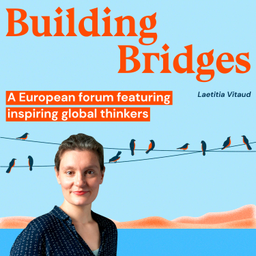
A European forum featuring inspiring global thinkers buildingbridges.substack.com (https://buildingbridges.substack.com?utm_medium=podcast)
- Publisher
- Nicolas Colin
- Category
- history · news
- Language
- en
- Explicit
- No
- First episode
- 23 Oct 2020
- Latest episode
- 30 Sept 2021
Latest episodes
27 episodes in the feed.
30 Sept 2021
Let's Bridge the Exponential Gap!
For this new episode of the Building Bridges podcast, I’m delighted to share my interview of Azeem Azhar, tech investor and creator of the successful Exponential View (https://www.exponentialview.co/posts/) newsletter (https://www.exponentialview.co/posts/) and Harvard Business Review (https://hbr.org/2019/04/podcast-exponential-view) podcast (https://hbr.org/2019/04/podcast-exponential-view) (of which I was one of the lucky guests (https://hbr.org/podcast/2019/11/technology-and-the-new-world-of-work) nearly two years ago). In a new book titled Exponential: Is Leaving Us Behind and What to Do About It (https://www.penguin.com.au/books/exponential-9781847942913), he explains that while technology continues to develop at an exponential rate, our institutions (norms, policies, organisations) only change slowly, incrementally (if at all), which results in an exponential gap that can explain many of society’s problems. Azeem and I talked about his life story, his EV newsletter, the process of writing a book, the exponential gap, tech pessimism, the winner-take-all mindset, the future of work, the skills of the future and much more. On the one hand, there are technologies that develop at an exponential pace—and the companies, institutions and communities that adapt to or harness them. On the other, there are the ideas and norms of the old world. The companies, institutions and communities that can only adapt at an incremental pace. They get left behind—and fast. The emergence of this gap is a consequence of exponential technology (…) For all the visibility of exponential change, most of the institutions that make up our society follow a linear trajectory. Codified laws and unspoken social norms; legacy companies and NGOs; political systems and intergovernmental bodies—all have only ever known how to adapt incrementally. Stability is an important force within institutions. In fact, it’s built into them (…) The gap leads to extreme tension. In the Exponential Age, the divergence is ongoing—and it is everywhere. (Exponential) 👉 I also shared some thoughts inspired by Azeem’s book in my newsletter Laetitia@Work: Mind the Exponential Gap. Laetitia@Work (https://laetitiaatwork.substack.com/p/mind-the-exponential-gap) 👉 And I recommend Azeem’s book Exponential (https://www.exponential-book.com/) 🚀 📚 I hope you enjoy this podcast! Do not forget to share it with people who might be interested 👇 Follow Building Bridges (https://twitter.com/Bldg_Bridges) on Twitter (https://twitter.com/Bldg_Bridges)! You can listen to all our podcasts on Apple Podcasts (https://podcasts.apple.com/fr/podcast/building-bridges/id1542088264) and Spotify. (Credit: Franz Liszt, Angelus ! Prière Aux Anges Gardiens—extrait du disque (https://www.youtube.com/watch?v=_mn5i3b30jU&ab_channel=Ayden434)Miroirs (https://www.youtube.com/watch?v=_mn5i3b30jU&ab_channel=Ayden434) de Jonas Vitaud (https://www.youtube.com/watch?v=_mn5i3b30jU&ab_channel=Ayden434), NoMadMusic.) This is a public episode. If you would like to discuss this with other subscribers or get access to bonus episodes, visit buildingbridges.substack.com (https://buildingbridges.substack.com?utm_medium=podcast&utm_campaign=CTA_1)
16 Sept 2021
What We Can Learn From the Dutch Cycling Model
For this new episode of the Building Bridges podcast, I’m thrilled to share my interview with Chris Bruntlett (https://www.linkedin.com/in/cbruntlett/?originalSubdomain=nl), Marketing Manager at the Dutch Cycling Embassy (https://www.dutchcycling.nl/en/). He and I talked about the impact of the pandemic on urban mobility, the Dutch model and its genesis, Paris, London, Berlin, and many other things. I found Bruntlett’s case for more bike lanes very convincing. Urban mobility is not a zero-sum game! We should focus on positive externalities. Chris and his wife (https://twitter.com/modacitylife) Melissa (https://twitter.com/modacitylife) are urban mobility activists who wrote two great books about cycling: Building the Cycling City (http://www.modacitylife.com/cycling-city) and Curbing Traffic (https://islandpress.org/books/curbing-traffic). Two years ago they moved from Vancouver, Canada to Delft in the Netherlands to experience the joys of the cycling lifestyle. Chris even made it his day job to champion cycling around the world! Working at the Dutch Cycling Embassy (https://www.dutchcycling.nl/en/), he spreads the word about the Dutch model, sharing his new country’s “expertise on building what supports the Dutch cycling culture to those interested”, thus building (cycling) bridges between cities, countries and cultures. 👉 I also wrote about it in this newsletter Laetitia@Work (https://laetitiaatwork.substack.com/): Why the future of work needs bike lanes (https://laetitiaatwork.substack.com/p/why-the-future-of-work-needs-bike): When you look at the infrastructure decisions made in the Netherlands in the 1970s, you see that they were designed as very democratic and inclusive infrastructures: the old use them, people with disabilities use them, so do families with children. Cycling is cheap. And it has the potential to transform our (work) lives for the better. 👉 For more on the subject, I do recommend their latest book Curbing Traffic (https://islandpress.org/books/curbing-traffic) which I’m currently reading and enjoying very much 🚴♂️ 📚 In the planning field, little attention is given to the effects that a “low-car” city can have on the human experience at a psychological and sociological level. Studies are beginning to surface that indicate the impact that external factors—such as sound—can have on our stress and anxiety levels. Or how the systematic dismantling of freedom and autonomy for children and the elderly to travel through their cities is causing isolation and dependency. I hope you enjoy this podcast! Do not forget to share it with people who might be interested 👇 Follow Building Bridges (https://twitter.com/Bldg_Bridges) on Twitter (https://twitter.com/Bldg_Bridges)! You can listen to all our podcasts on Apple Podcasts (https://podcasts.apple.com/fr/podcast/building-bridges/id1542088264) and Spotify. (Credit: Franz Liszt, Angelus ! Prière Aux Anges Gardiens—extrait du disque (https://www.youtube.com/watch?v=_mn5i3b30jU&ab_channel=Ayden434)Miroirs (https://www.youtube.com/watch?v=_mn5i3b30jU&ab_channel=Ayden434) de Jonas Vitaud (https://www.youtube.com/watch?v=_mn5i3b30jU&ab_channel=Ayden434), NoMadMusic.) This is a public episode. If you would like to discuss this with other subscribers or get access to bonus episodes, visit buildingbridges.substack.com (https://buildingbridges.substack.com?utm_medium=podcast&utm_campaign=CTA_1)
24 Jun 2021
How Do We Make Work Better?
For this new episode of the Building Bridges podcast, I’m excited to share my interview with Roy Bahat (https://www.linkedin.com/in/roybahat/), who as the Head of Bloomberg Beta (https://www.bloombergbeta.com/) has been “obsessed with how we make work—the thing we do with more waking hours than any other—better”. He’s been an inspiration for me at least since I watched this video (https://www.ted.com/talks/roy_bahat_and_bryn_freedman_how_do_we_find_dignity_at_work?language=en#t-377583) in which he speaks about two key drivers for workers: “stability and dignity”. Roy is used to making short, insightful and actionable pieces of content about work, careers, entrepreneurship and personal development. I recommend his series of to-the-point #thisisnotadvice interviews (https://twitter.com/search?q=%23thisisnotadvice&lang=en) which you can watch on Twitter (https://twitter.com/roybahat). They cover a wide range of topics like “Should I mentor someone and, if so, how do I do it?” (https://twitter.com/roybahat/status/1283202517015212033) or “How can I be the type of founders that VCs want to fund?” (https://www.pscp.tv/w/1yNGaWWAerbxj). But I confess I wanted more time with him. I wanted to hear him in a longer format so he could tell his career story, what it means to be a VC specialised in the future of work and so we’d still have time left to speak about the future of work and how we can prepare for it. I’m so grateful he accepted! As he explains in this podcast, he hadn’t planned to become a VC, let alone one who focuses on the future of work! But after doing tons of reading, talked to thousands of people and given the subject a lot of thought, you could say he’s become quite the expert. (More exactly, he’s reached that level of expertise where you become humble again. It’s a bit like Japanese martial arts: when you reach the highest level, you can wear a white belt again like a beginner!) I simply love how he adresses the most simple yet profound questions. Here’s how he sums it all up neatly on his LinkedIn profile (https://www.linkedin.com/in/roybahat/): I've had a messy, hand-wringy career (in non-profit, professional services, city government, big media, video games, academia, day-zero startup, investing), where I was never hired for any job for which I was qualified (including starting a company, where I guess I sort of co-hired myself and was still unqualified). Only later did I realize the one thread that tied it all together -- making work better. In 2013, Bloomberg L.P. gave me the opportunity to turn my obsession with the future of work into my job when we created Bloomberg Beta. I believe the fastest way to make change is to build extraordinary technology companies (and, these days, machine intelligence companies in particular). We talked about a lot of things, including feminism and why it’s important to embrace it. Among the many themes covered were also the skills of the future. How do you make yourself “futureproof” in a fast-changing world? I asked him because in his book Futureproof, NYT journalist Kevin Roose thanks Roy profusely for the inspiring conversations he had with him. (Check out this article I wrote about the book (https://www.welcometothejungle.com/en/articles/9-rules-for-humans-in-the-age-of-automation).) Here’s Roy’s conclusion: How do we prepare? Most of the past thinking about preparation for the future that I learned growing up what “point preparation”—”here’s what the world’s going to be like: prepare yourself for it” (…) But if you believe that the pace of change is going to be more rapid, then learning is the most essential skill, rapid reinvention… In the tech world, I call this being the CIO of your own life… constantly looking for new tools and trying to integrate them and experiment with them. Another one is setting your own priorities. We don’t learn in school that this is a skill. The third one is the scientific method applied to everything around us. If the world is going to keep changing, scientific method is our best way of understanding how. I hope you enjoy listening to this podcast! Do not forget to share it with people who might be interested 👇 Follow Building Bridges (https://twitter.com/Bldg_Bridges) on Twitter (https://twitter.com/Bldg_Bridges)! You can listen to all our podcasts on Apple Podcasts (https://podcasts.apple.com/fr/podcast/building-bridges/id1542088264) and Spotify. * Also Building Bridges is part of a network of Substack newsletters, which you may want to discover: there’s Laetitia’s Laetitia@Work (https://laetitiaatwork.substack.com/) (about the future of work, with a feminist perspective), and my own European Straits (about the Entrepreneurial Age, viewed from Europe). (Credit: Franz Liszt, Angelus ! Prière Aux Anges Gardiens—extrait du disque (https://www.youtube.com/watch?v=_mn5i3b30jU&ab_channel=Ayden434)Miroirs (https://www.youtube.com/watch?v=_mn5i3b30jU&ab_channel=Ayden434) de Jonas Vitaud (https://www.youtube.com/watch?v=_mn5i3b30jU&ab_channel=Ayden434), NoMadMusic.) This is a public episode. If you would like to discuss this with other subscribers or get access to bonus episodes, visit buildingbridges.substack.com (https://buildingbridges.substack.com?utm_medium=podcast&utm_campaign=CTA_1)
Contact Building Bridges
- Guest appearances
- Books guests
Based on episode analysis; this does not confirm that the show is currently accepting guests.
Host of Building Bridges?
Claim your podcast to manage its listing and keep your show details accurate.
Pod Engine is an independent podcast discovery and analytics service and is not affiliated with or endorsed by this podcast. Artwork and show content belong to their owners. Full legal notice.
Explore this show
Podcast research with Pod Engine