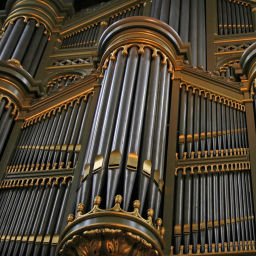
Everything around Sacred Music and liturgy, an independent view from Aurelio Porfiri <br/><br/><a href="https://cantus.substack.com?utm_medium=podcast">cantus.substack.com</a>

Cantus Podcast
Claim This Podcastby Aurelio Porfiri’s newsletters
Podcast Overview
Everything around Sacred Music and liturgy, an independent view from Aurelio Porfiri <br/><br/><a href="https://cantus.substack.com?utm_medium=podcast">cantus.substack.com</a>
Language
🇺🇲
Publishing Since
1/21/2022
1 verified contact email on file for Cantus Podcast
Pitch yourself as a guest, propose sponsorships, or reach out directly to the host.
Recent Episodes

January 13, 2026
From the Jordan to Our Time: The Silent Strength of Christian Humility
<p>With the Feast of the Baptism of the Lord, the Christmas season comes to a close, yet one of the most profound revelations of Jesus’ identity is opened to us. In the homily delivered on January 11, 2026, at the church of Santa Maria in Cappella, Deacon Massimiliano Floridi leads the faithful into the mystery of a God who chooses humility as the path of salvation.</p><p>Why does Jesus—sinless and the Son of God—accept John’s baptism, a rite of purification meant for sinners? The answer is not theoretical but deeply existential: Jesus chooses to share the human condition to the very end, to “fulfill all righteousness” by adhering to the Father’s plan together with humanity, not above it.</p><p>The baptism in the Jordan thus becomes a luminous manifestation of a God who does not impose Himself, but serves; who does not exalt Himself, but humbles Himself; who does not dominate, but accompanies. In a world marked by violence, arrogance, wars, and new forms of supremacism, this feast profoundly challenges the personal, communal, and even social conscience of Christians.</p><p>The homily concludes with a strong call to witness: if Christ chose the way of humility and service, all the more are we called to recognize our limits and to make visible—each in our own role—the discreet yet powerful light of the Gospel.</p><p>The video of the homily is available with English subtitles.</p><p></p> <br/><br/>This is a public episode. If you'd like to discuss this with other subscribers or get access to bonus episodes, visit <a href="https://cantus.substack.com/subscribe?utm_medium=podcast&utm_campaign=CTA_2">cantus.substack.com/subscribe</a>

January 5, 2026
Three Fundamental Paths: An Homily by Father Roberto Spataro, SDB
<p><strong>“God Has Made His Dwelling Among Us” – Homily by Fr. Roberto Spataro, SDB</strong>Santa Maria in Cappella, 4 January 2026 – Second Sunday after Christmas</p><p>In the homily delivered at the church of <strong>Santa Maria in Cappella</strong> on the occasion of the Mass for the <strong>Second Sunday after Christmas</strong>, Fr. <strong>Roberto Spataro</strong>, Salesian, guided the faithful to rediscover the profound and ever-relevant meaning of the mystery of the Nativity.</p><p>Christmas, the preacher reminded us, is not merely an event of the past, but the revelation of a presence: <strong>the Son of God has come to dwell among us</strong>, becoming—through a striking image—“a co-tenant of our existence.” This presence did not end with the Ascension, but continues, as Christ Himself promised: “I am with you always, until the end of time.”</p><p>How can we recognize today this presence of the Lord, whom we no longer perceive visibly? Fr. Spataro pointed to <strong>three fundamental paths</strong>, entrusted to us by the living tradition of the Church:</p><p>* <strong>The path of the sacraments</strong>, in which Christ’s own action continues: in the Holy Mass it is He who offers Himself, in Confession it is His blood that purifies and heals.</p><p>* <strong>The mystical path</strong>, the interior dwelling of God in the soul of the one who loves Him and keeps His commandments, according to the promise Jesus made in the Upper Room.</p><p>* <strong>The path of charity</strong>, through which Christ identifies Himself with every man and woman in need: “Whatever you did for one of these least brothers of mine, you did for me.”</p><p>The message is clear and demanding: <strong>the Lord dwells in our midst and we cannot ignore His presence</strong>, a presence that saves, that grants eternal life, and that also enlightens our prayer for our deceased brothers and sisters.</p><p>A simple yet profound homily, inviting each of us to live the Christmas season as a permanent reality: <strong>God with us, today.</strong></p><p></p> <br/><br/>This is a public episode. If you'd like to discuss this with other subscribers or get access to bonus episodes, visit <a href="https://cantus.substack.com/subscribe?utm_medium=podcast&utm_campaign=CTA_2">cantus.substack.com/subscribe</a>

December 2, 2025
Public and Private Prayer
<p>In a recent conversation between Mº Aurelio Porfiri and Abbot Philip Anderson, an important question emerged—one that many listeners and subscribers may often ponder: What is the right balance between public prayer, expressed in the liturgy, and private, interior prayer? Abbot Anderson offers a thoughtful reflection that brings clarity to this perennial issue.</p><p>He reminds us that the liturgy is not merely a series of external actions, chants, and ceremonies. Rather, these elements form a sacred language through which we express what is most intimate within us—our interior religion, the deep movements of the heart and conscience. Human beings are not disembodied spirits; we live, perceive, and communicate through our bodies. For this reason, we cannot reduce our relationship with God to ideas or silent thoughts. We must sing, kneel, move, and participate through the bodily expressions that the liturgy offers. These gestures do not replace interior prayer; they manifest and support it.</p><p>Abbot Anderson also warns against the temptation—found in certain spiritual movements or even in some Protestant approaches—to reject external forms in favor of a purely interior spirituality. Such a view, he says, is a kind of “sin of the angel,” the illusion of being able to transcend our human condition. But when one tries to pray like an angel, he paradoxically risks losing the authenticity of both spirit and flesh. To be human is to unite interior devotion with its exterior expression.</p><p>Public prayer, however, is not without challenges. Distractions are inevitable: a crying baby, movements in the pews, unexpected noises. Yet even these moments, the Abbot suggests, can become reminders of our shared humanity. He remarks with simplicity and humor that when he hears a baby cry during Mass, he sometimes feels the same way—but unlike the child, he cannot cry aloud. This insight captures the essence of the balance: prayer is both deeply personal and beautifully communal, rooted in who we are as embodied souls seeking God together.</p><p></p> <br/><br/>This is a public episode. If you'd like to discuss this with other subscribers or get access to bonus episodes, visit <a href="https://cantus.substack.com/subscribe?utm_medium=podcast&utm_campaign=CTA_2">cantus.substack.com/subscribe</a>
48 total episodes available
Deep-dive analytics for Cantus Podcast
Frequently asked questions
Have a different question and can't find the answer you're looking for? Reach out to our support team by sending us an email and we'll get back to you as soon as we can.
- What is Cantus Podcast?
- How often does this podcast release new episodes?
This podcast updates monthly.
- Where can I listen to this podcast?
This podcast is available on 8 platforms including Apple Podcasts, Spotify, and more. You can also use the RSS feed directly.
- Does this podcast accept guests?
No, this podcast does not typically feature guests.
Legal Disclaimer
Pod Engine is not affiliated with, endorsed by, or officially connected with any of the podcasts displayed on this platform. We operate independently as a podcast discovery and analytics service.
All podcast artwork, thumbnails, and content displayed on this page are the property of their respective owners and are protected by applicable copyright laws. This includes, but is not limited to, podcast cover art, episode artwork, show descriptions, episode titles, transcripts, audio snippets, and any other content originating from the podcast creators or their licensors.
We display this content under fair use principles and/or implied license for the purpose of podcast discovery, information, and commentary. We make no claim of ownership over any podcast content, artwork, or related materials shown on this platform. All trademarks, service marks, and trade names are the property of their respective owners.
While we strive to ensure all content usage is properly authorized, if you are a rights holder and believe your content is being used inappropriately or without proper authorization, please contact us immediately at hey@podengine.ai for prompt review and appropriate action, which may include content removal or proper attribution.
By accessing and using this platform, you acknowledge and agree to respect all applicable copyright laws and intellectual property rights of content owners. Any unauthorized reproduction, distribution, or commercial use of the content displayed on this platform is strictly prohibited.
