- 8
- Episodes
- 8
- Ratings
- Weekly
- Cadence
- 2026
- First episode
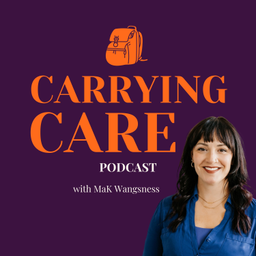
About Carrying Care
A podcast about the systems failing working families — and the woman calling them out from experience. From food stamps as a kid, to zero paid leave as a new mom, to a career spent discovering what good policies, systems, and support can actually look like.
- Publisher
- MaKenzie Wangsness
- Category
- business · kids & family
- Language
- en
- Explicit
- Yes
- First episode
- 15 Sept 2026
- Latest episode
- 10 Nov 2026
Latest episodes
8 episodes in the feed.
10 Nov 2026
5. Working Parents, Burnout, & the Case for 10-Minute Coaching with Emily Gallagher of Mother Brand
Eight weeks after a C-section, MaK was back at her desk, pumping in a freezing server room on a cardboard box. Twelve years later, working parents are still carrying too much, and many are walking away from workplaces that don’t fit. Economists call it the “mom-cession,” but that label misses the dads, the caregivers, and the parents who love their jobs and want to stay. MaK talks with Emily Gallagher, founder of Mother Brand. Emily left corporate PR and marketing, paused her career with no set plan, and ended up coaching mothers. What she found was endless resources for kids and almost nothing for the mother as a person. Now she runs 10-minute “surgery” check-ins inside companies that give parents a moment to be heard and give employers honest, anonymous data on what’s not working. In this episode: Why “mothers are leaving the workforce” doesn’t tell the whole story The skills working parents bring to work, from staying calm under pressure to knowing what’s actually urgent Why we’ll pay for a baby chiropractor but not an hour of coaching for ourselves Why Emily hears “surrender” and “acceptance” more than lost ambition How the wheel of life turns “everything is chaos” into one workable change Why culture and manager behavior matter more than the policy on paper Where returning to work breaks down, from keeping-in-touch days to lactation rooms to deactivated badges Dads, single parents, and the sandwich generation How to make the business case, and how an ERG or manager can start small Timestamps 00:00 Welcome and intro 01:55 Emily’s career pause and pivot to coaching 05:02 What the “moms leaving the workforce” story misses 08:39 The skills working parents bring 15:40 Why investing in ourselves feels so hard 22:51 Ambition, promotions, and the Lean In/McKinsey report 27:58 The 10-minute “surgery” model 33:46 Recognition and retention 36:30 Dads and the future Father Brand 41:32 The sandwich generation 42:54 Returning to work in the UK 49:09 Making the business case 53:43 Managers and leaders who say it out loud 1:01:03 One small thing to try this week 1:04:10 Where employers can start One small thing to try: Put something back into you. Fill your water bottle, sit in the car for three breaths before pickup, or read for 20 minutes with a timer. Resources mentioned Mother Brand: https://motherbrand.me (https://motherbrand.me/) Mother Brand on Instagram: https://www.instagram.com/motherbrand.me (https://www.instagram.com/motherbrand.me) Emily Gallagher on LinkedIn: search “Emily Gallagher” (Mother Brand) Milk Mate (lactation rooms designed by people who’ve been there): https://milkmate.com/ (https://milkmate.com/) Paige Connell: https://sheisapaigeturner.substack.com/ (https://sheisapaigeturner.substack.com/) Abby Eckel: https://www.abbyeckel.com/ (https://www.abbyeckel.com/) Zach Watson (mental load): https://zachmentalloadcoach.com/ (https://zachmentalloadcoach.com/) Alex Trippier: https://www.youtube.com/@alexindadland (https://www.youtube.com/@alexindadland) Paul Sullivan, Company of Dads: https://thecompanyofdads.com/about-the-founder/ (https://thecompanyofdads.com/about-the-founder/) What’s on Her Mind by Allison Daminger Join The Carrying Care Community, our private Slack community for working caregivers. Contact for the link! Music licensed through Soundstripe. Code: UEBYCCFVDXURSJXR
30 Oct 2026
Before You Vote: Shaping Child Care Infrastructure in MN
What does Minnesota child care have riding on 2027? Before Election Day, MaK talks with Annell Velasco Nelson of Childcare for All MN about costs, access, and what to listen for from candidates. Awareness, not endorsements. Get involved: childcareforallmn.com (http://www.childcareforallmn.com) Before You Vote: What Minnesota Child Care Has Riding on 2027 When MaK went back to work after eight weeks of leave, she couldn’t find a child care spot within their budget, and handing her baby to a stranger felt like too much. Her sister, who had just had her own third baby, stepped in instead. Twelve years later, many Minnesota families are still working through the same tangle of cost, availability, and trust. In this short pre-election mini episode, MaK talks with Annell Velasco Nelson, an attorney and lead parent organizer for the South Metro with Childcare for All MN. They cover why child care is an economic and workforce issue, why it takes a statewide solution, and what voters can listen for from candidates before Election Day on Nov 3. This episode is about awareness, not endorsements. Childcare for All MN is an advocacy campaign (an initiative of Faith in Minnesota), and we’re sharing their perspective to help you make an informed choice. In this episode 01:44 Welcome and what Childcare for All MN is 02:55 Annell’s own child care story, from corporate centers to a six-week nanny 04:20 Why “child care for all” doesn’t mean every child in care 05:19 What families and providers are saying 06:20 Costs, closures, and rural impact 07:35 The 2023 investment and the gap families still fall through 10:23 The grandparent squeeze 11:16 Why the solution has to happen at the state level 13:11 Why the 2027 budget makes this election matter 14:09 Where there’s common ground across parties 15:24 What to listen for when candidates talk about child care 16:20 How to check your registration and vote early 17:02 How parents, providers, and employers can get involved 17:33 Annell’s one takeaway Key points: Center-based infant care averages about $22,500 a year, the third highest in the nation. More than one in four Minnesotans live in an area with limited or no child care access. Early educator turnover is estimated at about 30% a year. Many families earn too much for assistance but not enough to afford care. Voters should listen for specifics: lower out-of-pocket costs, more supply (especially in rural areas), better educator pay without higher tuition, and how it will be paid for. Resources: Childcare for All MN, to sign the petition, join your local team, and find events (in person and virtual): https://www.childcareforallmn.com (https://www.childcareforallmn.com/) Minnesota voter info, to check your registration, find early voting and polling locations, and see ID rules: https://mnvotes.sos.mn.gov (https://mnvotes.sos.mn.gov/) and https://www.sos.mn.gov/elections-voting/ (https://www.sos.mn.gov/elections-voting/) No Country for Mothers, a Moms First documentary: https://momsfirst.us/doc/ (https://momsfirst.us/doc/) AAUW, The Motherhood Penalty: https://www.aauw.org/issues/economic-security/motherhood/ (https://www.aauw.org/issues/economic-security/motherhood/) Music licensed through Soundstripe. Code: UEBYCCFVDXURSJXR Keywords: childcare, Minnesota, affordable childcare, childcare assistance, early childhood education, childcare providers, 2027 legislature, working families, midterm election, Childcare for All MN
27 Oct 2026
4. No One Hands You a Map: Caring for a Mom With Huntington’s
Huntington's disease is a rare, inherited brain disorder, often compared (loosely, not medically) to having Alzheimer's, Parkinson's, and ALS at the same time. Most people have never heard much about it, including the families who suddenly have to navigate it. In this episode, host MaKenzie Wangsness talks with a college friend who is a working caregiver for her mom, who has Huntington's. She explains what it looked like when two sisters took over their mother's care, and why the paperwork, benefits, and facility searches can wear a family down as much as the disease itself. Topics include: • Caring for a parent who isn't ready to give up the parent role • Qualifying for benefits through a county Aging and Disability Resource Center (ADRC), including Medicare vs. Medicaid and asset limits • Why few memory care facilities accept Huntington's, and how one family found a place that does • How staffing shortages and policy changes land on families • Planning ahead with a 50-50 chance of carrying the gene, including insurance roadblocks • Building a care team with shared power of attorney and steady communication • Why caregivers need support of their own Know someone caring for a loved one with a rare or progressive illness? Send them this episode. RESOURCE Huntington's Disease Society of America (HDSA): hdsa.org Local chapters, free caregiver support groups, a list of care facilities that accept Huntington's patients, and an annual state education day with HD specialists. PRACTICAL TIP Custom iron-on name labels hold up better than writing on every item of clothing with a Sharpie. MUSIC RIGHTS Music licensed through Soundstripe. Code: UEBYCCFVDXURSJXR Keywords: caregiving, working caregiver, Huntington's disease, caregiver support, memory care, disability benefits, Medicaid, family caregiving, caregiver burnout
13 Oct 2026
3. Who Pays, Who Benefits: The Case for School Lunch as Infrastructure with Stephanie Noto
Who Pays, Who Benefits: The Case for School Lunch as Infrastructure with Stephanie Noto Nobody stands at the end of their driveway after a Minnesota snowstorm and asks why they’re paying for the plow. So why do we look at a school lunch tray and see charity? MaK admits she did. She was the mom packing every lunch from scratch, with strong opinions about whatever was on that tray. Then she got curious and learned the tray is a lesson in independence, a health equity issue, and one of the hardest businesses to run in America, all at once. MaK talks with Stephanie Noto, a registered dietitian and former national menu developer with nearly two decades in school food, about the “taxpayer handout” debate, the stigma of the separate lunch line, and why cheap, ultra-processed food is often the more expensive choice. IN THIS EPISODE Why lunch is part of a child’s education, not a break from it How universal free meals remove stigma Why “we can’t afford better food” is usually a waste and inventory problem Plating, pairing, and presentation tricks that get kids to eat the vegetables Why school meal programs need to turn a profit, and why the regulations aren’t the real problem TIMESTAMPS 00:00 The plow, the lunch tray, and why this episode 03:09 Early motherhood and building a business 08:32 From dietetic internship to national menu developer 13:27 The turning point: one district at a time 23:04 Autonomy and what kids learn in the cafeteria 28:23 The “taxpayer handout” framing and universal school meals 36:39 Why the stigma of the separate lunch line matters 39:14 Regulations vs. reality on the serving line 43:09 The cheap-food fallacy 47:12 Getting kids to eat the vegetables 56:14 Checking the box vs. building a great program 1:02:12 The book and how to reach Stephanie CONNECT WITH STEPHANIE Noto Nutrition Consulting: notonutrition.com Email: info@notonutrition.com (mailto:info@notonutrition.com) RESOURCES Minnesota Free School Meals: https://education.mn.gov/mde/dse/fns/snp/free/ (https://education.mn.gov/mde/dse/fns/snp/free/) MDE program data (PDF): https://education.mn.gov/mdeprod/idcplg?IdcService=GET_FILE&dDocName=PROD085180&RevisionSelectionMethod=latestReleased&Rendition=primary (https://education.mn.gov/mdeprod/idcplg?IdcService=GET_FILE&dDocName=PROD085180&RevisionSelectionMethod=latestReleased&Rendition=primary) MUSIC RIGHTS Music licensed through Soundstripe. Code: UEBYCCFVDXURSJXR
29 Sept 2026
2. The Next Wave of Care: What Happens When Childcare and Eldercare Collide? with Nicole Hilgenkamp
When MaK's father-in-law had a couple of strokes, she and her husband started asking the hard questions about downsizing and safety. Before they got answers, he passed away unexpectedly — and the family ended up sorting through a sea of paper that included electric bills from 1978. He had a will. Nothing else. The family couldn't touch his accounts, and his funeral ended up on a credit card. Nicole Hilgenkamp's story started from the other direction. Her mom didn't die suddenly — she landed in the hospital, and that's when the paperwork crisis started. With no plan, Nicole picked a rehab facility off online reviews. Her mom ended up moving three times. Nicole spent 30 years in corporate change management. None of it prepared her for this. Now she's the founder of Your Parents Keeper, helping adult children plan for elder care before the emergency forces the education. In this episode, MaK and Nicole cover the documents most families don't have ready, the difference between being "observed" vs. "admitted" at the hospital (which can cost thousands of dollars), why a will only covers what happens aftersomeone dies, and what employers can do this quarter to support caregiving employees — beyond FMLA and a list of facilities in your zip code. In this episode Nicole's story: her father's sudden death, her mother's 11-year refusal to plan, and the dementia diagnosis that changed everything Why corporate skills don't transfer to navigating healthcare, legal, and family dynamics at once The "silver tsunami": why 1 in 4 Americans are caregiving right now, and why employers still don't have a plan Why people hide caregiving from managers — and what it costs companies in retention The sandwich generation's double load: caregiving for parents while still parenting your own kids Home safety red flags families miss (Nicole didn't know her mom hadn't bathed in 10 years) Why you need a Plan A, B, and C for care facilities — not just a Plan A Documents families need beyond a will: financial POA, healthcare directives, HIPAA authorization, Medicare authorization, funeral directive, and more Why a beneficiary designation overrides your will "Observed" vs. "admitted": the hospital status that can cost $10,000+ out of pocket Building a "go file" so medical info doesn't have to be re-explained at every hospital and facility Nicole's biggest regret: time lost to logistics she could've spent with her mom and her own daughter Concrete steps employers can take this quarter — beyond FMLA Guest Nicole Hilgenkamp, founder of Your Parents Keeper and elder care strategist. After 30 years in corporate change management, Nicole became the designated caregiver for her own parents and now helps adult children plan, manage, and survive caring for aging parents. Website: yourparentskeeper.com Instagram & Substack: @yourparentskeeper (https://www.instagram.com/yourparentskeeper/) Follow Carrying Care Follow along on Instagram and leave a rating wherever you listen — it helps other working families find the show. Music licensed through Soundstripe. Code: ILOMMV97N8FBN1WK The Carrying Care Podcast: The Voice of Working Families
15 Sept 2026
What is Ambiguous Grief & Connection-Based Parenting? with Kelly Tronstad
In this episode, MaK Wangsness interviews Kelly Tronstad, executive director of Bellis, about supporting parents, understanding temperament, and navigating the systemic challenges in child welfare. Kelly shares her journey from parenting educator to advocate for disenfranchised parents and discusses how compassion and connection can transform parent-child relationships. Resources: Bellis Website - Supporting Parents and Families (https://www.mybellis.org/) Raising Your Spirited Child by Mary Sheedy Kurcinka (https://bookshop.org/p/books/raising-your-spirited-child-a-guide-for-parents-whose-child-is-more-intense-sensitive-perceptive-persistent-and-energetic-mary-sheedy-kurcinka/1bab9b513bdee9ac?ean=9780063413771&utm_source=google&utm_medium=cpc&utm_campaign=dsa_nonbrand&utm_content=%7Badgroupname%7D&utm_term=dsa-19959388920&gad_source=1&gad_campaignid=12440232635&gbraid=0AAAAACfld41O5u3l1uGkRHyOIXIGXBMtf&gclid=CjwKCAjwy5rUBhB5EiwAIoAtCofmaCH1iw9aUnUqgcStC1B_SfZy-YkKC3bffV6Nr_wdxt7cNsTZiBoC_Q0QAvD_BwE) The Concept of Ambiguous Loss - Pauline Boss (https://www.ambiguousloss.com/) The Concept of Disenfranchised Grief - Psychology Today (https://www.psychologytoday.com/us/blog/lifetime-connections/202103/disenfranchised-grief-mourning-events-never-were) Guest links: Bellis Website (https://www.mybellis.org/) Support Bellis (https://secure.givelively.org/donate/bellis/bellis-website-donations) Kelly Tronstad on LinkedIn (https://www.linkedin.com/in/kelly-tronstad-05934b198/) MaK Wangsness on LinkedIn (https://www.linkedin.com/in/makenzie-wangsness/)
15 Sept 2026
The Story Behind Carrying Care
You are not failing at family life—the system is failing you. MaK Wangsness, a marketer and mom who has lived through food insecurity, financial aid, and parenthood with zero paid leave, launches Carrying Care with a clear mission: expose what caregiving in America really costs and why so many families are left holding everything together alone.Drawing on six years leading a workplace community for parents and caregivers, MaK has heard hundreds of stories from new parents, school-age parents, people caring for aging relatives, and families supporting kids with special needs. That experience shapes a podcast and community built to examine the policies, workplace norms, and benefit structures that affect daily life—and to center the real families living inside those decisions.You (http://decisions.You)’ll hear why the mental math of PTO, daycare pickup, doctor appointments, and deadlines is not a personal failure, but a design problem. MaK makes the case that caregiving stress is not about doing it wrong—it’s about operating inside systems that were never built for the people doing the caring.You (http://caring.You)’ll discover: Why paid leave, childcare, and workplace culture are inseparable from family well-being How support systems can either stabilize working families or quietly break them What MaK learned from years of listening to caregivers across every stage of family life Why the conversation has to move from individual guilt to structural change This podcast is for parents, caregivers -- anyone who has ever felt like they’re barely keeping up without a village -- and the people who are building and creating those villages. It’s also for listeners who want to understand the bigger picture behind family policy and what it actually takes to build a world that supports caregiving instead of punishing it. Carrying Care launches September 15th. If you care about families, workplace reality, and the systems shaping both, this is the episode to start with.
15 Sept 2026
Trailer: What Keeps You Up at Night?
You are not falling behind. You are not doing it wrong. You are just trying to hold it all together in a system that wasn’t designed for you. If you’ve ever found yourself lying awake at night doing impossible math—balancing PTO, daycare pickups, camp registrations, doctor appointments, work deadlines, and taking meetings from the school pickup line —you know the feeling of the "care gap" that exists in the United States. But here is the truth nobody tells you: this isn’t a "you" problem. It’s a systems problem. Carrying Care is a podcast for anyone holding it together without a village, and for anyone ready to help build one. Hosted by MaK Wangsness, who has navigated these gaps from childhood to parenthood, this show digs into the policies shaping caregiving in America—leave, childcare, and workplace culture—and shares real stories of families living inside their impact. Whether you’re a parent, a caregiver for aging family members, or simply trying to navigate life in a system that often fails us, this spa
Reach and audience
Public platform figures. Ratings count people who left a rating, not total listeners.
- Apple Podcasts (US)
- 5.0 / 5
- 6 ratings
- Spotify
- 5.0 / 5
- 2 ratings
Contact Carrying Care
- Guest appearances
- Books guests
Based on episode analysis; this does not confirm that the show is currently accepting guests.
Shows with a similar audience





Host of Carrying Care?
Claim your podcast to manage its listing and keep your show details accurate.
Pod Engine is an independent podcast discovery and analytics service and is not affiliated with or endorsed by this podcast. Artwork and show content belong to their owners. Full legal notice.
Explore this show
Podcast research with Pod Engine