- 18
- Episodes
- 1
- Ratings
- Daily
- Cadence
- 2026
- First episode
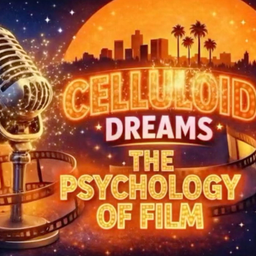
About Celluloid Dreams: The Psychology of Film
Join Matt & Mike as they discuss the psychological underpinnings of films from the beginning of film as an art form to the present. Subject matter includes discussion of films addressing psychological issues, whether it be mental illness or a psychological or spiritual exploration with more universal applicability, the techniques used to create an emotional or intellectual reaction when watching a film, and the ultimate psychological impact of a film.
- Publisher
- Michael
- Category
- tv & film
- Language
- en
- Explicit
- No
- First episode
- 1 Mar 2026
- Latest episode
- 11 Oct 2026
Latest episodes
18 episodes in the feed.
11 Oct 2026
Episode 18: The Year in Film: 1979 - Top Ten Lists & Honorable Mentions
Matt & Mike count down their Top Ten Films from 1979, and discuss their Honorable Mentions, as well as films from 1979 they missed that they still want to see. This episode also includes a focused discussion of Francis Ford Coppola's Apocalypse Now, though the featured film for 1979, Ridley Scott's Alien, will be analyzed in a much more detailed fashion in the next episode, coming soon...
27 Sept 2026
Episode 17: Celluloid Dreams Film School Part 10: Drama Elements & Tropes 2: Featuring - Obsession
Mike & Matt complete their discussion about some of the most common situational archetypes and story tropes in dramatic narratives, as well some common story beats. In the course of discussing the Ill-Fated Romance archetype, an in depth discussion of Curry Barker's 2026 smash release "Obsession" ensues, in which Mike and Matt break down how Barker takes a classic wish fulfillment plot line and makes it fresh by infusing it with ill-fated romance story elements. Episode topics are as follows: Good vs Evil situational archetype Ill-Fated Romance situational archetype Analysis of "Obsession" The Tragic Misunderstanding story trope The Point of No Return story beat The Underdog Struggle situational archetype The Rags-to-Riches offshoot of the Underdog Struggle The Secret Legacy story trope The Broken Pedestal story trope The Fish Out of Water situational archetype The Enemies to Allies situational archetype The Ticking Clock story trope The False Victory story beat
14 Sept 2026
Episode 16: The Year in Film: 1975 - Featuring: Jaws
Matt & Mike count down their top 10 films and honorable mentions from the year 1975, with a focused discussion on Steven Spielberg's masterpiece, Jaws. When discussing the film, the duo analyze the many aspects that make Jaws one of the quintessential American films, as well as being one of the greatest films of all time. If you question whether Jaws is more than just the film that spawned the modern blockbuster, listen in to find out why it is gaining increasing attention as an artistic triumph that speaks more about American society in the present day than just about any other film. Matt & Mike also discuss how the film explores the psychology of the three main characters in particular, in addition to addressing the filmmaking techniques that affect the viewer psychologically.
31 Aug 2026
Episode 15: Celluloid Dreams Film School Part 9: Drama Elements & Tropes - Featuring: The Odyssey
Mike and Matt discuss the various elements that are characteristic to the dramatic form of storytelling, including standard character archetypes and narrative tropes. In particular, Matt & Mike focus on some of the most common thematic situational archetypes that are related to rites of passage storylines, such as Coming of Age, Midlife Crisis, Existential Crisis and Death & Rebirth. Throughout the episode, various aspects of Christopher Nolan's The Odyssey will be analyzed, particularly how Odysseus exemplifies the epic hero archetype, as well as how The Odyssey fits into a Midlife / Existential Crisis situational archetype, utliizes the Sins of the Father & Atonement / Redemption narrative tropes, and explores themes of death and rebirth. Additionally, Matt & Mike will discuss some of the controversies surrounding The Odyssey and how Christopher Nolan uses many of the cinematic tools discussed in prior episodes of the film school to make The Odyssey an immersive experience. With so much to discuss in regard to situational archetypes, this episode is part 1 of 2, with the forthcoming Episode 17 wrapping up the exploration of that topic.
17 Aug 2026
The Year in Film: 1972 - Featuring: The Godfather
Mike and Matt begin their exploration of the last 100 years of film, one year at a time. First up is a year very early in their own upbringing, with a focus on a film generally considered to be the most culturally prominent film in American cinema, The Godfather. Universally loved by filmgoers and critics alike, The Godfather is the perfect starting point for this filmic exploration. For each episode in the "Year in Film" series, Mike and Matt will provide a list of their top films of that year, before diving into the primary subject of the episode. Following analysis of the featured film, a brief discussion of the impact of that film on subsequent related works wraps up the episode.
3 Aug 2026
Episode 13: Celluloid Dreams Film School Part 8: Comedy Subgenre Elements & Tropes
Matt & Mike continue their discussion of various comedy subgenres, including Slapstick, Spoofs, Teen Comedies, Mockumentaries, Satire, and Dark Comedy. For each subgenre, tropes and subversions of those tropes are discussed, citing numerous examples for each category, including the following: Classic Slapstick - Safety Last!, City Lights, The General Modern Slapstick - Blazing Saddles, Airplane!, The Naked Gun Slapstick Subversion - Life is Beautiful Spoofs - Young Frankenstein, Scary Movie, Don't Look Up Spoof Subversion - Scream Teen Comedies - The Breakfast Club, Clueless, Superbad Teen Comedy Subversions - Fast Times at Ridgemont High, Election Mockumentaries - This Is Spinal Tap, Waiting for Guffman, Best in Show Mockumentary Subversion - District 9 Satire - Sullivan's Travels, The Producers, Network Satire Subversions - The Truman Show, One Battle After Another Bureaucratic Satire - Brazil, Robocop, Starship Troopers Menippean Satire - Dr. Strangelove, M.A.S.H., Don't Look Up Dark Comedy - Harold & Maude, The Ref, Pulp Fiction Dark Comedy Subversions - Funny Games, The Banshees of Inishirin Dark Satires - Fargo, The Big Lebowski, Heathers Dark Satire Subversions - Inglorious Basterds, Parasite
19 Jul 2026
Episode 12: Celluloid Dreams Film School Part 8: Comedy & Musical Film Elements
Matt & Mike discuss the elements of comedy and musical films, including tropes used in those types of narratives as well as subversions of those tropes. Topics include the following for comedy: *Standard elements of a comedy include humorous situations typically established by either exaggerating a situation or character qualities depicted in the narrative. *Some character archetypes in comedies include tricksters, lovable losers, the straight man, the man-child, deadpan eccentrics, fish out of water and the everyman. *Common comedy narrative tropes include misunderstandings between characters that cause conflict, a lovable loser that ends up a winner, odd couples with opposite qualities, physical humor, and one-liners. *This episode addresses the romantic comedy and screwball comedy in detail, with other genres to be discussed in the next episode. *Romantic comedy tropes include either enemies to friends or meet cute introduction of characters, opposites attract, a makeover scene, and a final grand gesture to support a love conquers all theme. *Screwball films include many of the same tropes as standard romantic comedies, but typically also include rapid fire dialogue. At times, screwball plotlines explore the remarriage trope as opposed to the initial phase of a relationship that is standard in the modern rom-com. *Notable subversions of the romantic comedy include Annie Hall, (500) Days of Summer, Anora and Jerry Maguire. *Notable subversions of the screwball comedy include Arsenic and Old Lace, Raising Arizona, and War of the Roses. Topics include the following for musicals: *Musicals often use frame stories or fantasy/dream sequences to justify breaking into song within the narrative. *Animated films incorporate many of the same elements as live action musical films, while musical biopics are typically dramas with musical sequences that are explained within the world of the story. *Character archetypes in musicals include the ingenue/dreamer, tortured visionary, cynic, diva, icon, ringmaster and comic sidekick. *Notable musical subversions include The Red Shoes, The Umbrellas of Cherbourg, Dancer in the Dark, Cabaret, All That Jazz, Black Swan, Pink Floyd: The Wall, and musical biopics generally. *Musical song tropes include the Opening Song, I Want Song, Villain Song, Reprise, 11 O'Clock Song, Showstopper, and Grand Finale. Please join us for the second part of the Comedy discussion, in which slapstick, spoofs, mockumentaries, teen comedies, satires, and dark comedy will be explored in our next episode.
5 Jul 2026
Episode 11: Celluloid Dreams Film School Part 7: First Person Mindscape Narratives
Matt & Mike discuss first person story elements that place the audience into the mindscape of either a protagonist or a group of characters within a narrative. Topics include the following: Indications of a standard first person narrative structure include use of narration and/or point of view shots. However, in many instances, a third person limited perspective that shows only the environment the protagonist sees throughout a story is the format for conveying a specific character's perspective. Voiceover can take the form of either a character relaying information directly to the audience through narration or in the form of a flow of consciousness voiceover within the character's mind. Some films use voiceover by multiple characters to either convey competing views of the characters ("Casino") or a collective consciousness of the characters ('The Thin Red Line"). Some meta films that address the filmmaking process work as first person narratives by personifying the filmmaker within the film with either minimal voiceover exposition ("8 1/2") or explicit narration detailing the creative process ("Adaptation"). Some unreliable first person narrative structures, such as "Rashomon," are designed to convey the subjective nature of reality, while others convey the warping of reality by mental illness. Dream sequences can be used to reveal the inner world of the protagonist visually, or otherwise serve as internal catalysts for actions they take. Hallucinations can be used in storytelling to either project the warped perspective a character experiences or reveal aspects of a greater reality not normally perceived by the character. Flashbacks are typically used to convey how a character subjectively experienced events that happened in the past, but also can be used to convey how a listener perceives a version of events conveyed to them by that character. Flashforwards raise the issue of whether the future is predetermined or if there is free will to change what has been prophesized. Ultimately, all of these narrative devices enable filmmakers to address subjective reality and emotional truth, which is at the heart of storytelling.
22 Jun 2026
Episode 10: Celluloid Dreams Film School Part 6: Narrative Structure & the Origins of Story
Matt & Mike explore sources of inspiration for films, as well as the various narrative structures through which those storylines are conveyed. Even though plot details may differ between narratives, universal themes are often explored through storylines that long predate the existence of film. Additionally, other sources of inspiration can influence various aspects of a film, including its visual expression of ideas and tone. Examples of sources of inspiration include the following: Oral storytelling history Religious and mythological stories Stage Plays - both classic and modern Short Stories & Novels - both classic and modern Graphic Novels & Comic Books Videogames Artwork & Music Radio, newsreels & newspapers Other Films - both foreign & domestic The Entertainment Industry itself Actual Life Events and Non-Fiction materials based upon such events The Collective Unconscious (assuming Carl Jung is correct) Some examples of Themes explored in film and its source material include the following: Good vs Evil Coming of Age Search for Identity Death & Rebirth Archetypal characters depicted in films and its source materials include the following: Hero Shadow Mentor Trickster Shapeshifter Herald Narrative structures for storytelling discussed within this video include the following: Linear - including backward linear Nonlinear / Fractured Circular - including repeating time loop, time paradox, and thematic circular structures. Bookends Mythical Hero storylines that include a call to adventure Further exploration of narrative structures and devices to be continued over the next few episodes...
7 Jun 2026
Episode 9: Celluloid Dreams Film School Part 5: Cinematography & Rhythms of Performance
In this episode, Matt & Mike revisit filmmaking elements addressed in prior episodes of the film school to discuss the following: Techniques used when filming the performance of actors. Editing techniques for dialogue scenes. Establishing character through action. How dialogue styles and rhythms either elevate or ground the execution of a film. Primary takeaways are as follows: Distance, framing and motion of cinematography can be used to balance between establishing geography and highlighting key emotional moments that a filmmaker seeks to accentuate. The most important aspect of editing character interaction is to capture the emotion of a scene, with other key aspects being maintaining essential elements of the plot and not disorienting the audience with a bad cut. Elevated dialogue creates a more poetic version of reality, while naturalistic dialogue grounds a film in a less stylized manner to resemble the real world. Voiceover narration can at times be straightforward to bring to light additional plot details or provide insight into a character's inner world. However, narration can also be unreliable to make the audience believe something other than what actually transpired in the story.
29 May 2026
Episode 8: Celluloid Dreams Films School Part 4: The Psychology of Mise-en-Scene & Performance
Matt & Mike return to discuss the elements that "set the stage" for performance, which make up the Mise-en-Scene of the film. Aspects which comprise Mise-en-Scene include the following: 1) Locations - whether it be a soundstage or a natural location. 2) Costumes - past, present, or future all require authenticity. 3) Props - what are the props that either make the film feel lived in or define character. 4) Makeup - especially that which fully transforms the actor into the character he or she assumes. 5) Visual effects - to either enhance the setting or character transformation, including motion capture. Once the setting is established for the actor, the primary aspect required to bring the scene to life is performance. A few aspects regarding performance explored in the episode include the following: 1) Casting - whether to typecast or cast against type. 2) Exterior vs interior acting - stagecraft to play to the back row in comparison to the Method taught by Lee Strasberg or the Adler technique attributed to Stella Adler. 3) Non-professional actors - under certain circumstances, is it better for a person to simply be who they are before the camera? 4) What is the future for AI characters in film?
15 May 2026
Episode 7: Celluloid Dreams Film School Part 3: Synched Sound & Music
Hosts Matt & Mike continue their journey through the process of filmmaking from a psychological perspective, along with special guest, Nick, a podcaster in his own right, who happens to also be Mike's nephew. The reason for Nick's inclusion in this particular episode is his musical background as an experienced drummer, as well as his knowledge of film and film scores. The first portion of the episode concerns the impact on film by the addition of synchronized sound, as well as how sound is mixed to add psychological resonance to a film. The second portion dives into film scoring and use of needle drops to promote associations to particular songs. Some of the composers and their important works discussed in this episode include masters like John Williams, Jerry Goldsmith, John Barry, James Horner, Hans Zimmer, Wendy Carlos, Tangerine Dream and Angelo Badalamenti.
1 May 2026
Episode 6: Celluloid Dreams Film School Part 2: The Psychology of Editing
Hosts Matt & Mike continue their journey through the process of filmmaking through a psychological perspective. This episode delves into the art of editing, including discussion of the various types of montage, parallel editing, surrealism and the psychological impact of extended continuous shots. Examples illustrating each aspect of editing include discussion of landmark montage set pieces from Battleship Potemkin and Citizen Kane to The Untouchables and Inception; the power of parallel editing in such masterpieces as The Godfather, Magnolia and Requiem for a Dream; and jaw dropping, seemingly continuous shots as seen in such films as Alfred Hitchcock's Rope, Children of Men and Sinners. Surreal cinema from Maya Deren's Meshes of the Afternoon to David Lynch's Mulholland Drive are also discussed. Takeaways: * The art of picture editing is to juxtapose images in such a manner as to either create seamless action for storytelling purposes or convey complex ideas that go beyond the surface level plot of a film. * Montage is the art of using picture editing to make the assembled pieces have value that is greater than the sum of the individual parts, either intellectually or emotionally. * Montage strategy can either be as objective as following the number of frames between each cut or as subjective as determining how one image juxtaposed against another should create an emotional reaction in the viewer. * Surrealism is the juxtaposition of seemingly unrelated elements that when combined create a kind of dream logic that may not be rationally explainable as much as felt emotionally.
17 Apr 2026
Episode 5 - Celluloid Dreams Film School Part 1: The Psychology of Cinematography
Delves into the art of cinematography, including such topics as the elegance of slow-motion, use of natural light, impact of color versus black & white, and role of framing and different aspect ratios. The conversation covers the evolution of film formats, strategies for utilizing point of view shots, lens choice and lighting, and the contribution of Steadicam on tracking shots. Takeaways Cinematography is a complex aspect of filmmaking that directly affects the psychological impact of a film. Understanding the historical evolution of film formats provides insight into the development of cinematographic techniques. Cinematographic perspective, including the use of point of view shots and camera movement, plays a crucial role in creating a compelling cinematic experience. Choices of lenses, angles, lighting and filming speed can convey a skewed world view to alter the psychological landscape of a film.
5 Apr 2026
Episode 4 - The Conclusion of 30 Film Favorites with Matt & Mike plus Honorable Mentions
Matt and Mike complete discussion of their 30 Film Favorites. The final lists are as follows: Matt's 30 Favorites: 2001: A Space Odyssey Alien Apocalypse Now Blade Runner Chinatown The Dark Knight The Empire Strikes Back The French Connection The Godfather Goodfellas Goldfinger Heat Inception Jaws King Kong (1933) L.A. Confidential Lawrence of Arabia LOTR: The Fellowship of the Ring The Nightmare Before Christmas Psycho Raiders of the Lost Ark Road to Perdition Robocop The Right Stuff Scarface Seven The Shawshank Redemption Star Wars Superman - The Movie Videodrome Mike's 30 Favorites: Alien The Godfather Jaws Blade Runner The Terminator All the President's Men The Shining Marathon Man Memento Goodfellas Chinatown Requiem for a Dream Halloween Raiders of the Lost Ark M*A*S*H Inception Die Hard Gladiator Seven Mulholland Dr. Videodrome The Tree of Life Abre Los Ojos (Open Your Eyes) Manhunter Gravity Interstellar Citizen Kane Carrie Don't Look Now A Nightmare on Elm St. Matt's Honorable Mentions: The Abyss Aliens American Graffiti Back to the Future Bride of Frankenstein Casino Royale Citizen Kane Close Encounters of the Third Kind Creature from the Black Lagoon The Dead Zone Dracula (1931) The Exorcist Fantasia Frankenstein (1931) Gladiator The Good, the Bad, & the Ugly The Godfather - Part 2 Halloween Interstellar Pan's Labyrinth Pulp Fiction Saving Private Ryan Scarface (1983) Schindler's List Skyfall The Spy Who Loved Me The Terminator Terminator 2: Judgment Day Touch of Evil Toy Story Zodiac Mike's Honorable Mentions: The Dark Knight The Lion King The Godfather - Part 2 Casablanca All About Eve On the Waterfront Heat Black Narcissus Persona The Big Lebowski Sex, Lies, & Videotape Pi The Fog Tootsie Wall Street The Virgin Suicides Up Sunrise Dangerous Liaisons Dressed to Kill Dune - Part 2 Blazing Saddles 8 1/2 Apocalypse Now Aliens La La Land Amelie Witness The Insider In a Lonely Place
27 Mar 2026
Episode 3 - Favorites Films of Intrigue & the Criminal Underworld
Matt & Mike resume their discussion of their favorite films, this time focusing on stories touching upon the criminal underworld or the world of intrigue. The list of films this time out is as follows: Chinatown LA Confidential The French Connection Die Hard Goldfinger Marathon Man Heat Manhunter Goodfellas Scarface Road to Perdition The Shawshank Redemption Requiem for a Dream SPOILER ALERT: Again, all elements of a film are fair game for discussion, so if you haven't seen all of these films and you don't want to know the ending, skip past that film and listen to the next entry.
14 Mar 2026
Episode 2 - More of Matt & Mike's Favorites
For their second episode, Matt & Mike continue with their filmic "Rorschach Test" in describing the films that have meaning to them and the personal reasons why. Once they reach the end of this short series of episodes, the hope is that the audience will understand the psychological prism through which Mike & Matt view movies as they break down the elements of individual films in future episodes. In particular, Matt shares his family connection to "The Right Stuff" due to his father's lifetime of military service and flight experience. Mike relates how Christopher Nolan keeps making films he wishes he had the chance to make, with "Interstellar" having particular personal meaning for its exploration of the boundary between the scientific and the spiritual that has fascinated Mike since he was in high school. Other films discussed range from the political, such as the journalistic "All the President's Men" and wickedly satirical "Robocop," to the darkly thrilling, like "The Shining" and "Seven." And there's much more to come in future episodes... SPOILER ALERT: Discussion of all time great films at times must include mention of a film's ending or key twists in the story, so be forewarned that all aspects of a film are fair game for discussion!
1 Mar 2026
An Introduction to Matt & Mike
In this first episode, Matt & Mike provide their bios to familiarize the listening audience with their backgrounds in order to convey the perspective through which they analyze films. They also begin the process of listing their top 30 favorite films, to share why those films are important to them, and reveal why listeners should follow along as Matt & Mike explore the psychological elements that drive the narratives of the greatest films of all time.
Reach and audience
Public platform figures. Ratings count people who left a rating, not total listeners.
- Apple Podcasts (US)
- 5.0 / 5
- 1 ratings
Host of Celluloid Dreams: The Psychology of Film?
Claim your podcast to manage its listing and keep your show details accurate.
Pod Engine is an independent podcast discovery and analytics service and is not affiliated with or endorsed by this podcast. Artwork and show content belong to their owners. Full legal notice.
Explore this show
Podcast research with Pod Engine