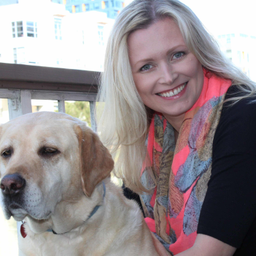
Podcast thumbnail for Changemakers’ Handbook with Elena Bondareva

Changemakers’ Handbook with Elena Bondareva

Claim This Podcast

by Elena Bondareva

5.0(5 reviews)
62 episodes
Updated Daily
Accepts GuestsHas Sponsors

Podcast Overview

Your front-row seat to PhD findings into change-making and no-holds-barred insight into my experience across 6 continents. Join me in fueling dialogue on the why, the how, the how not to, and the personal toll of creating regenerative transformation. <br/><br/><a href="https://changemakershandbook.substack.com?utm_medium=podcast">changemakershandbook.substack.com</a>

Language

🇺🇲

Publishing Since

8/2/2024

1 verified contact email on file for Changemakers’ Handbook with Elena Bondareva

Pitch yourself as a guest, propose sponsorships, or reach out directly to the host.

Recent Episodes

Episode thumbnail for Art is water for changemaking

July 30, 2026

Art is water for changemaking

<p>I may have been bullying artists recently.</p><p>Or, perhaps, I have been excessively compelling changemakers who are capable of making art to do so. Either way, a poet, a satirist, a couple of painters, and an occasional dancer have been subjected to fervent appeals that their therapists may eventually hear about.</p><p>Please make art. Please do not underestimate what it does the world.</p><p>The longer I study changemaking, the more convinced I become that art is one of civilization’s oldest changemaking technologies — and one whose powers we have persistently underestimated.</p><p>Changemaking demands strategy, competency, meticulous process, and masterful execution. These reshape the conditions around people: institutions, incentives, relationships, resources, and systems. They matter enormously. However, meaningful change also expects something of the people moving through it. It asks us to loosen identities, certainties, loyalties, fears, griefs, and hopes. It asks us to become capable of inhabiting a future that does not yet exist.</p><p>This journey cannot be engineered. It must be imagined and experienced. And that is where art comes in.</p><p><strong>A private place to meet ourselves</strong></p><p>Art changes the conditions within people, but not by issuing instructions, winning arguments, or demanding agreement.</p><p>When societies know who they are, art celebrates. When societies know what they are fighting, art mobilizes. But when people can no longer make sense of themselves —when decent people are unsure whether to take pride or shame in their private thoughts — art becomes something else entirely. It becomes a kind place for an unmasked meeting with ourselves.</p><p>Public life has become remarkably poor at holding such encounters. It demands conclusions before we have woven an understanding. It rewards declarations and treats uncertainty as weakness, guilt, or evasion.</p><p>Art asks something quieter of us. It asks us to stay. To remain by an unfolding idea. With an authentic moment. Inside a paradox. Despite the urge to run.</p><p>A poem, a song, a dance, a painting, a novel, or a satirical sketch may quietly ask: Is this what you want? Is this who you want to be? The gift of art is that no one ever has to hear our answers.</p><p>The artist creates the work, but the decisive conversation occurs in private between the work and the person encountering it. Away from applause and outrage, we can notice what frightens, attracts, disgusts, consoles, implicates, or awakens us. We can mourn what we cannot explain. We can reconcile envy, tenderness, prejudice, delight, resentment, hope, and love within the human heart.</p><p>Art gives us permission to confront ourselves before confronting one another. This privilege is one of art’s greatest kindnesses.</p><p><strong>Practicing paradox</strong></p><p>In my last essay, I argued that one of the defining competencies of changemakers is the capacity to remain inside paradox: to resist resolving complexity too quickly and to tolerate uncertainty long enough for better judgment to emerge.</p><p>LINK: <a target="_blank" href="https://changemakershandbook.substack.com/p/can-changemaking-be-taught">https://changemakershandbook.substack.com/p/can-changemaking-be-taught</a></p><p>Art is one of the places where we practice that competency. It can suspend judgment without abolishing discernment. It can loosen shame without excusing harm. It can delay action without surrendering responsibility. This suspension matters because <strong>action taken too quickly may be little more than fear dressed as moral courage.</strong></p><p>Art does not tell us what to think or who to become. It challenges us to question, imagine, and remain present long enough to encounter truths that cannot be marketed, legislated, or argued into existence.</p><p>Art gives wisdom room to form.</p><p><strong>Refusing collective self-deception</strong></p><p>For the artist, creation can be an act of defiance: pointing to what everyone else pretends not to see. The declaration that the emperor has no clothes is not reserved for governments. Art exposes the delusions of markets, institutions, ideologies, movements, communities, and individuals. It reveals where certainty has become performance, where language has outrun humanity, and where the stories we tell have locked us out of possibility. It invites us to consider where we, too, might disappoint ourselves.</p><p>This is why authoritarian movements have so often feared artists. Not every artist is politically radical, but art itself resists reduction. It refuses to collapse a human being into a caricature, demographic, diagnosis, voting bloc, algorithm, market segment, or enemy. Art insists that human experience is always larger than the systems attempting to explain or control it.</p><p>Long before investigative journalism, peer review, decentralized governance, or social media, artists were helping civilizations fulfil one of their most important responsibilities: refusing collective self-deception. Artists have risked ridicule, censorship, exile, imprisonment, and obscurity to insist on questions capable of disturbing complacency.</p><p>Art allows the artist to remain truthful. It allows the rest of us to discover whether we are.</p><p><strong>Changemaking changes the changemaker</strong></p><p>Yes, this is a mouthful. It also feels increasingly important to me.</p><p>Planning matters. Action matters. Power matters. Connection matters. But for any of these to be exercised wisely, changemakers must attend to transformation within people, including within themselves.</p><p>Art helps us notice where conviction has calcified into identity, where fear has disguised itself as certainty, where shame has hardened into cruelty, and where hope remains alive beneath the rubble. It reminds us that the people affected by change are not merely components of a system and that changemakers, too, are frightened, contradictory, grieving, and sometimes giddy with excitement.</p><p><strong>Art softens what argument often hardens. Without it, changemaking risks becoming technocratic.</strong> People become obstacles to move, audiences to persuade, populations to manage, behaviours to modify, or instruments of somebody else’s vision. <strong>Art tethers transformation to our humanity.</strong></p><p><strong>Art is water</strong></p><p>Perhaps this is why I keep returning to water as a metaphor.</p><p>Water does not command a seed to grow. It changes the condition of the ground to make growth possible. It softens what has hardened, carries nourishment, restores what drought has made brittle, and awakens life that appeared to be gone but was merely dormant.</p><p>Similarly, art breaks through the baked-on residue of ignorance and injury. It rehydrates our capacity for imagination. It welcomes contradiction without spectacle. It restores compassion and delight, because human beings cannot live indefinitely on urgency, duty, and outrage.</p><p>Water also offers hospitality. To hand someone a glass of water is to honor them. Art offers a respite to parts of us that public life rarely welcomes. It enables humility without humiliation. It allows for trust.</p><p>Art does not force transformation. It creates conditions in which transformation can live.</p><p><strong>If you are an artist, please do not mistake your work for decoration, indulgence, or retreat.</strong></p><p>You are wielding one of humanity’s oldest transformational technologies. You create places where we can look ourselves in the eye. You give truth a place to hatch and imagination — somewhere to soar. You expose the invisible and restore life to what grief, fear, and certainty have made brittle.</p><p>Please write, paint, compose, carve, print, dance, perform, and fashion matter into meaning. Please make visible what the rest of us have stopped noticing. Please keep reminding us that no movement is worth building if it requires us to abandon our humanity.</p><p><strong>I would love to know how art has changed what you see, feel, imagine, or do. Please share!</strong></p><p><strong>* * *</strong></p><p>Changemakers’ Handbook is an audience-supported publication focused on professionalizing chaangemaking in a post-solutions world. Consider subscribing to invest in this work, join future live conversations and to access all posts.</p><p>Image credit: <a target="_blank" href="https://pixabay.com/users/whitedaemon-1982503/?utm_source=link-attribution&#38;utm_medium=referral&#38;utm_campaign=image&#38;utm_content=2696947">Alexandr Ivanov</a> from <a target="_blank" href="https://pixabay.com//?utm_source=link-attribution&#38;utm_medium=referral&#38;utm_campaign=image&#38;utm_content=2696947">Pixabay</a>.</p> <br/><br/>This is a public episode. If you'd like to discuss this with other subscribers or get access to bonus episodes, visit <a href="https://changemakershandbook.substack.com/subscribe?utm_medium=podcast&#38;utm_campaign=CTA_2">changemakershandbook.substack.com/subscribe</a>

Episode thumbnail for Can changemaking be taught?

July 23, 2026

Can changemaking be taught?

<p>Approximately 70% of transformational efforts fail. We often blame strategy, leadership, culture, funding, politics, or bad luck. Increasingly, my research suggests another explanation: we have never treated changemaking as a profession.</p><p>Architects, teachers, engineers, surgeons, firefighters, pilots, and musicians all develop explicit competencies. We expect them to practise, improve, receive feedback, and continue learning throughout their careers. Changemakers, by contrast, are largely expected to figure it out as they go.</p><p>That has left generations of extraordinary people underprepared, unsupported, and far more dependent on talent and perseverance than any serious profession should tolerate.</p><p><strong>One of the central questions driving my PhD is deceptively simple: if changemaking is a profession, what are its competencies? This post offers an early answer.</strong></p><p>If you listened to my Q2 Field Notes (LINK: <a target="_blank" href="https://changemakershandbook.substack.com/p/field-notes-on-changemaking-q2-2026?r=1i4aw7">https://changemakershandbook.substack.com/p/field-notes-on-changemaking-q2-2026?r=1i4aw7</a>), you'll recognize this as one of the biggest shifts in my thinking. Increasingly, I suspect that successful transformation depends not only on good methods but on the abilities of changemakers. If that's true, understanding the competencies they can develop becomes just as important as understanding the tools they use.</p><p><strong>While my recent writing has focused on the predispositions that may draw someone toward changemaking, today's post turns to a different question: once someone is drawn to this work, what can they deliberately learn to become most effective?</strong></p><p><strong>Changemakers have largely learned through improvisation. We apprentice ourselves to problems, borrow techniques from adjacent professions, accumulate scars, and hope that experience eventually resembles expertise. No mature profession would deem that sufficient.</strong></p><p><strong>If we can articulate the competencies of changemaking, we can begin to do what every mature profession eventually learns to do:</strong></p><p>* recruit people whose natural predispositions fit the work,</p><p>* develop them intentionally rather than accidentally,</p><p>* coach them through increasingly complex challenges,</p><p>* recognize excellence,</p><p>* and sustain meaningful impact over an entire career.</p><p><strong>My research suggests 9 core and 6 situational competencies.</strong></p><p>While most of the competencies below emerge from my own research and practice, they are also informed by the work of others who have shaped my thinking. In particular, futurist <a target="_blank" href="https://www.iftf.org/people/bob-johansen/"><strong>Bob Johansen</strong></a>'s work on future leadership skills has influenced several of the situational competencies, including dilemma flipping, bio-engaging, human calming, and what he calls "smart-mob swarming." His work has been an important companion as I develop a competency framework specifically for changemakers.</p><p>LINK TO BIO: www.iftf.org/people/bob-johansen/</p><p>LINK TO BOOK: <a target="_blank" href="https://www.iftf.org/insights/navigating-the-age-of-chaos-a-sense-making-guide-to-a-bani-world-that-doesnt-make-sense/">https://www.iftf.org/insights/navigating-the-age-of-chaos-a-sense-making-guide-to-a-bani-world-that-doesnt-make-sense/</a></p><p><strong>The 9 Core Competencies of Changemakers</strong></p><p>These are the competencies all effective changemakers demonstrate. Some emerge naturally. Others require years of deliberate practice. Together, they form the professional foundation of changemaking.</p><p>* <strong>Curiosity</strong> — Embracing uncertainty; actively seeking and enjoying new perspectives and experiences.</p><p>* <strong>Systems Thinking</strong> — Building on the predisposition of systems sensitivity, this competency involves analysing interdependence, feedback loops, leverage points, and unintended consequences in order to design more effective interventions. Detailed in <a target="_blank" href="https://changemakershandbook.substack.com/p/want-to-change-the-world-master-systems?r=1i4aw7">my earlier post</a>: <a target="_blank" href="https://changemakershandbook.substack.com/p/want-to-change-the-world-master-systems?r=1i4aw7">https://changemakershandbook.substack.com/p/want-to-change-the-world-master-systems?r=1i4aw7</a></p><p>* <strong>Empathy</strong> — Understanding and responding to the lived experience of others when designing and leading change.</p><p>* <strong>Strategy</strong> — Stripped of rigidity, effectively coordinating action across all spheres of influence. Related to Bob Johansen's concept of "clarity."</p><p>* <strong>Facilitation & Collaboration</strong> — With humility and vulnerability, guiding groups toward possibility that is unlocked through cooperation.</p><p>* <strong>Intentionality</strong> — Translating conviction into deliberate action.</p><p>* <strong>Influence</strong> — Enlisting others, whether through charisma, story, or orchestration. Closely related to Bob Johansen's "smart-mob swarming."</p><p>* <strong>Impact Assessment</strong> — Defining and communicating success; indispensable for legitimacy and scale. Detailed in <a target="_blank" href="https://changemakershandbook.substack.com/p/are-you-impactful-how-you-can-know?r=1i4aw7">my earlier post</a>: <a target="_blank" href="https://changemakershandbook.substack.com/p/are-you-impactful-how-you-can-know?r=1i4aw7">https://changemakershandbook.substack.com/p/are-you-impactful-how-you-can-know?r=1i4aw7</a></p><p>* <strong>Sense of Purpose</strong> — Knowing your “why”; the compass and stamina behind changemaking. Detailed in <a target="_blank" href="https://changemakershandbook.substack.com/p/playlist-purpose-is-fuel-for-changemaking?r=1i4aw7">my earlier series</a>: <a target="_blank" href="https://changemakershandbook.substack.com/p/playlist-purpose-is-fuel-for-changemaking?r=1i4aw7">https://changemakershandbook.substack.com/p/playlist-purpose-is-fuel-for-changemaking?r=1i4aw7</a></p><p><strong>Situational Competencies</strong></p><p>While not universal, these competencies can give changemakers the edge to navigate crises, build resilience, and turn intractable problems into breakthroughs. Think of them as the extra gear. You can ride without it, but if the journey challenges you, you’ll be glad it’s there.</p><p><strong>1. Self-Awareness </strong>Knowing yourself: your motivations, blind spots, and triggers. This isn’t indulgence — it’s essential for trust, clarity, and the power of conviction. Leaders at peace with both their ego and trauma — who know how they come across — are better able to mobilize others.</p><p><strong>2. Self-Care & Resilience </strong>Effective changemakers burn bright, and that takes stamina. In some, it may mean cultivating stoicism: staying grounded under pressure. For others, it means implementing habits that allow for renewal. Either way, resilience is non-negotiable for a lifetime of impact.</p><p></p><p><strong>Human Calming -- </strong>“Developing a sense of centeredness that cultivates inner focus, maintains composure under pressure, and guides others with steady grounded presence in a brittle, anxious, nonlinear, and incomprehensive world.” — Bob Johansen</p><p></p><p><strong>3. Decisiveness </strong>Consensus has its place. But when the moment demands action, indecision can sink a movement. Decisiveness is the courage to make the hard call when it matters most.</p><p><strong>4. Dilemma Flipping (after Bob Johansen) </strong>The toughest problems present as unsolvable paradoxes — until someone reframes them into opportunities. It’s a skill of foresight, timing, judgment, and creativity: resisting premature conclusions while avoiding endless delay.</p><p><strong>5. Bio-Engaging (after Bob Johansen) </strong>Nature holds wisdom, and <a target="_blank" href="https://biomimicry.org/inspiration/what-is-biomimicry/">biomimicry</a> has rightfully been pushing its way into mainstream decision-making. Changemakers who draw on ecological principles — interdependence, resilience, regeneration — design solutions better suited for today’s crises.</p><p><strong>6. Gameful Mindset </strong>Play is not frivolous. It’s an adaptive, experimental, and engaging approach to solving problems. Changemakers who approach transformation with a playful mindset — testing, iterating, inviting collaboration — create momentum and possibility.</p><p><strong>Why the distinction matters</strong></p><p>Core competencies are universal. Without them, transformation doesn’t stand a chance.</p><p>Situational competencies are amplifiers. They mark the difference between good and great practice.</p><p>Core skills let you survive the terrain of change. Situational skills let you thrive in its steepest climbs. They don’t replace the core ones. They extend them.</p><p><strong>Cultivating changemaker competencies</strong></p><p>For more than twenty years and across six continents, I have been helping leaders, executive teams, coalitions, and mission-driven organizations build these competencies — long before I had language for the framework emerging through my PhD.</p><p>I increasingly see my work as professional development for changemakers. Sometimes that means coaching individual changemakers or executive teams through an especially complex or ambitious transformation. Sometimes it involves diagnosing why transformational efforts stall or derail. I often develop transformational strategy, build collaborative processes, recalibrate systems, or help groups develop the confidence and judgment required to lead meaningful change together.</p><p>If your organization is navigating significant change — or if you're a leader who wants to become a more capable changemaker — I offer executive coaching, team development, facilitation, and strategic advisory grounded in this work.</p><p>Contact: Elena@vivitworldwide.com</p><p><strong>The bigger picture</strong></p><p>My work in defining changemaking isn’t about narrowing the field to an elite few. It’s about professionalizing the craft so that we can recruit, equip, and sustain more changemakers for the long haul.</p><p>Competencies are not the whole story. My research increasingly suggests that changemakers also share certain recurring predispositions—ways of seeing and relating to the world that make some people more likely to step toward transformation in the first place. LINK: <a target="_blank" href="https://changemakershandbook.substack.com/p/how-to-spot-a-change-maker-signs?r=1i4aw7">https://changemakershandbook.substack.com/p/how-to-spot-a-change-maker-signs?r=1i4aw7</a></p><p>Predispositions may influence who becomes a changemaker. Competencies shape how effective they become. That distinction has become one of the central questions of my research — and, increasingly, the reason this publication exists. </p><p>_ _ _</p><p>Changemakers’ Handbook is an audience-supported publication focused on professionalizing chaangemaking in a post-solutions world. Consider subscribing to invest in this work, join future live conversations and to access all posts.</p><p>Cover image credit: <a target="_blank" href="https://pixabay.com/users/pexels-2286921/?utm_source=link-attribution&#38;utm_medium=referral&#38;utm_campaign=image&#38;utm_content=1838390">Pexels</a> from <a target="_blank" href="https://pixabay.com//?utm_source=link-attribution&#38;utm_medium=referral&#38;utm_campaign=image&#38;utm_content=1838390">Pixabay</a></p> <br/><br/>This is a public episode. If you'd like to discuss this with other subscribers or get access to bonus episodes, visit <a href="https://changemakershandbook.substack.com/subscribe?utm_medium=podcast&#38;utm_campaign=CTA_2">changemakershandbook.substack.com/subscribe</a>

Episode thumbnail for Field Notes on Changemaking (Q2 2026)

July 5, 2026

Field Notes on Changemaking (Q2 2026)

<p>In this second installment of Field Notes on Changemaking, I again step back after a quarter of essays and conversations to reflect, synthesize, and help build shared memory for an emerging profession.</p><p>These field notes serve two purposes. First, they provide an overview of the content generated during the quarter, helping you decide what source material is most worth your time.</p><p>Second, they offer my reflection across that material to identify emerging patterns, refine working hypotheses, pose the next set of questions, and invite you to shape the coming quarter of inquiry.</p><p>One unexpected gift of writing these notes is that they force me to examine not only what I published, but how my own thinking has changed.</p><p><strong>What has changed in how I understand changemaking?</strong></p><p>LINK to Notes from Q1: <a target="_blank" href="https://changemakershandbook.substack.com/p/field-notes-on-changemaking-q1-2026?r=1i4aw7">https://changemakershandbook.substack.com/p/field-notes-on-changemaking-q1-2026?r=1i4aw7</a></p><p>Q1 ended with eight questions that I believed would shape the next phase of my work. They remain the living research agenda behind The Changemaker’s Handbook, my doctoral research, and the conversations within this growing global community.</p><p>* What builds legitimacy at scale?</p><p>* Can we create transformation without social movements?</p><p>* How does power actually move?</p><p>* How do we design for impact—not merely moral correctness or agreement?</p><p>* Why do changemakers continue to serve, against all odds?</p><p>* What would it mean to professionalize changemaking without flattening it?</p><p>* How do we build the infrastructure this emerging profession lacks?</p><p>* And how do we reduce the unequal cost of change?</p><p>Q2 certainly advanced some of those questions. More surprisingly, it reorganized them.</p><p>Regardless of whether I was speaking with Dr. Laura Mae Lindo about public service, Dr. Whitney Austin Gray about public health, Andrew MacLeod about trafficking and institutional courage, Dr. Dominique Hes about regenerative design and story, or reflecting on gender, mothering, fathering, and invisible work, I found myself pulled further upstream.</p><p>Questions about legitimacy became questions about trust, standards, and story. Questions about social movements became questions about adoption. Questions about power became questions about relationships, institutions, and narrative. Even my longstanding interest in transformation infrastructure began to feel incomplete. Infrastructure, I realized, is itself dependent on something more fundamental: the conditions under which it can emerge, be maintained, and ultimately become ordinary.</p><p><strong>Rather than asking how we create change, these conversations probed what makes change possible. If we better understand the conditions that allow transformation to spark, spread, and endure, perhaps legitimacy, adoption, professionalization, and even power become more intelligible as consequences rather than starting points.</strong></p><p>That, I now believe, was the central discovery of the quarter. Q1 questions were pointing toward a more fundamental one.</p><p><strong>The quarter in review</strong></p><p><strong>The quarter opened with a milestone in my doctoral research into changemaking: three essays that captured some of my findings. </strong><strong>What are changemakers for?</strong> <strong>Are all people changemakers?</strong> and <strong>How can we recognize one — or know that we’re “it”?</strong> introduce the function changemakers serve in society, the six attributes they appear to share, and why the world benefits from a diversity of contribution — not merely a diversity of people.</p><p>LINK: <a target="_blank" href="https://changemakershandbook.substack.com/p/how-to-spot-a-change-maker-signs?r=1i4aw7">https://changemakershandbook.substack.com/p/how-to-spot-a-change-maker-signs?r=1i4aw7</a></p><p>LINK: <a target="_blank" href="https://changemakershandbook.substack.com/p/most-people-are-not-changemakers?r=1i4aw7">https://changemakershandbook.substack.com/p/most-people-are-not-changemakers?r=1i4aw7</a></p><p>LINK: <a target="_blank" href="https://changemakershandbook.substack.com/p/what-are-changemakers-for?r=1i4aw7">https://changemakershandbook.substack.com/p/what-are-changemakers-for?r=1i4aw7</a></p><p>I also revisited the origin story of my own work. Rather than recounting a biography, <strong>Why I Care</strong> explores why I have spent two decades trying to professionalize changemaking, and what experiences convinced me that the world needed better transformation infrastructure.</p><p>LINK: <a target="_blank" href="https://changemakershandbook.substack.com/p/why-i-care-10e?r=1i4aw7">https://changemakershandbook.substack.com/p/why-i-care-10e?r=1i4aw7</a></p><p>For Mothers’ Day and Fathers’ Day, I stepped outside my usual territory to explore two forms of contribution that get trapped in biology and gender.</p><p>To <strong>All Who Choose to Mother the World</strong> argued that mothering is best understood as a choice: caring for what is vulnerable.</p><p>LINK: <a target="_blank" href="https://changemakershandbook.substack.com/p/to-all-who-choose-to-mother-the-world?r=1i4aw7">https://changemakershandbook.substack.com/p/to-all-who-choose-to-mother-the-world?r=1i4aw7</a></p><p><strong>What Are Fathers For?</strong> drew on my global audience and 50+ answers to what fathering had contributed to your lives. Your responses suggested that fathering may be less a category of person than a category of care: helping people trust themselves, understand the world, and participate in it with integrity.</p><p>LINK: <a target="_blank" href="https://changemakershandbook.substack.com/p/what-are-fathers-for?r=1i4aw7">https://changemakershandbook.substack.com/p/what-are-fathers-for?r=1i4aw7</a></p><p>The LIVE conversations extended those themes in unexpected directions.</p><p><strong>Dr. Laura Mae Lindo</strong> challenged the way we educate changemakers for public service, arguing that we devote disproportionate attention to methods over the formation of the practitioner. If changemakers themselves are one of the variables shaping outcomes, that imbalance matters.</p><p>LINK: <a target="_blank" href="https://changemakershandbook.substack.com/p/we-are-teaching-changemakers-wrong?r=1i4aw7">https://changemakershandbook.substack.com/p/we-are-teaching-changemakers-wrong?r=1i4aw7</a></p><p><strong>Dr. Whitney Austin Gray</strong> showed how public health increasingly succeeds not by persuading people to make better choices, but by making healthier conditions inevitable. Standards, buildings, and environments become forms of invisible changemaking when they make flourishing easier than harm.</p><p>LINK: <a target="_blank" href="https://changemakershandbook.substack.com/p/on-making-change-stick-interview?r=1i4aw7">https://changemakershandbook.substack.com/p/on-making-change-stick-interview?r=1i4aw7</a></p><p>Drawing on decades of international humanitarian work, <strong>Andrew MacLeod</strong> took us into some of society’s most difficult territory: human trafficking, gender-based violence, untenable social norms, and institutional failure. My subsequent reflection explored a question that stayed with me long after the recording ended: what happens when a problem is not merely difficult, but socially and psychologically avoided?</p><p>LINK: <a target="_blank" href="https://changemakershandbook.substack.com/p/post-live-reflection-what-happens?r=1i4aw7">https://changemakershandbook.substack.com/p/post-live-reflection-what-happens?r=1i4aw7</a></p><p>LINK: <a target="_blank" href="https://changemakershandbook.substack.com/p/changemaking-on-unspeakable-territory?r=1i4aw7">https://changemakershandbook.substack.com/p/changemaking-on-unspeakable-territory?r=1i4aw7</a></p><p>Finally, <strong>Dr. Dominique Hes</strong> brought many of the quarter’s themes together. We discussed regenerative design, story as infrastructure, representing Nature on fiduciary boards, and why she increasingly believes our greatest challenges are no longer technical, but narrative.</p><p>LINK: <a target="_blank" href="https://changemakershandbook.substack.com/p/beyond-solutions-our-story-problem?r=1i4aw7">https://changemakershandbook.substack.com/p/beyond-solutions-our-story-problem?r=1i4aw7</a></p><p><strong>This conversation changed something in my own thinking. I now see story not primarily as communication but increasingly as infrastructure.</strong></p><p>6 working hypothesis</p><p>Here are the arguments occupying me after this exceptional quarter of learning:</p><p>1. T<strong>he world is not short on solutions; it is short on transformation infrastructure</strong></p><p>This has been a recurring argument in my work for several years, but the conversations this quarter have refined what I mean by it. Again and again, I encountered fields rife with technical knowledge: we know how to build healthier buildings, reduce suffering, and restore ecosystems. We know a great deal about learning, leadership, and human flourishing. Yet the existence of good ideas remains a remarkably poor predictor of their adoption.</p><p>The bottleneck, increasingly, appears to lie elsewhere. Transformation requires far more than evidence. It requires legitimacy, coordination, institutions, incentives, governance, relationships, and people willing to sustain difficult work long after novelty has faded. In other words, it requires infrastructure. This quarter has strengthened my conviction that changemakers are often less in the business of generating solutions than of building the social architecture through which transformational solutions become ordinary.</p><p><strong>2. Stories are transformation infrastructure</strong></p><p>Dr. Dominique Hes offered that our greatest challenges may no longer be technical but narrative. While at first glance, that can sound like a call for better communication, it is much deeper.</p><p>Economics is a story. Leadership is a story. Organizations are stories. Even many of the systems we experience as fixed are, ultimately, stories that have become institutionalized over time. They shape what we notice, what we value, what we consider possible, and which futures appear legitimate before a single decision has been made. Stories do not merely describe reality. They determine what reality becomes thinkable.</p><p>If that is true, stories are not decorations around change. They are part of the infrastructure through which change becomes possible. They determine which solutions feel inevitable, which feel threatening, and which remain invisible altogether. I increasingly suspect that one of the changemaker’s most important responsibilities is not merely to tell better stories, but to help societies inhabit stories capable of supporting the futures they hope to build.</p><p><strong>3. Invisible work remains our greatest blind spot</strong></p><p>One pattern reappeared across remarkably different conversations: we consistently celebrate visible achievements while overlooking the quieter work that makes those achievements possible.</p><p>Dr. Laura Mae Lindo spoke about the formation of practitioners rather than simply the methods they use. Dominique described herself as “mycelium,” quietly connecting people and ideas beneath the surface. My Father’s Day inquiry revealed that what people most remembered were rarely grand gestures. They remembered someone who believed in them before there was evidence, helped them trust themselves, or quietly expanded what they thought was possible.</p><p>Perhaps invisible work feels difficult to value precisely because, when done well, it dissolves into the success of others. It leaves stronger institutions, healthier cultures, more capable people, and better decisions, but rarely obvious credit. If changemaking is to become a profession, we may need far better language — and ultimately better infrastructure — for recognising, supporting, and rewarding the forms of contribution that currently remain almost impossible to see.</p><p><strong>4. Safety may be a prerequisite for transformation</strong></p><p>I did not begin the quarter intending to think about safety. Yet by the end of it, I could no longer ignore how often it appeared.</p><p>Healthy buildings create conditions in which people flourish. Good educators create conditions in which people can experiment and learn. Difficult conversations require conditions in which people can speak honestly without punishment. Father figures, in many of the responses I received, were honored for empowering us to venture into the world with confidence.</p><p>Even outside my formal work, a doe chose to raise twin fawns on my land. Watching frightened creatures repeatedly choose my space has made me wonder whether safety itself deserves more attention within changemaking.</p><p>Safety not as the absence of challenge but as the presence of conditions that afford presence, experimentation, growth.</p><p>If transformation requires people to leave behind familiar identities, institutions, and ways of working, perhaps creating safety is not peripheral to changemaking. Perhaps it is one of its core competencies.</p><p><strong>5. Roles often obscure contribution</strong></p><p>The Mothers’ and Fathers’ Days essays unexpectedly converged on the same insight. We often notice who gets to perform a role while overlooking the contribution itself.</p><p>The responses to my Fathers’ Day question came not only from fathers, but from grandfathers, stepfathers and uncles—as well as mothers, grandmothers, siblings, and aunties. From professors, mentors, coaches, advisors, and people entirely unrelated by blood. The same pattern appeared elsewhere this quarter. Meaning-makers, translators, conveners, standards developers, and even someone formally representing Nature on a board all contributed in ways that conventional leadership language struggles to recognise.</p><p>Professionalising changemaking may therefore require us to become less attached to titles and more attentive to impact. What contribution is being made? What conditions does it create? What becomes possible because someone chose to play that role, regardless of whether society has an established name for it? I increasingly suspect that understanding contribution may ultimately prove more useful than refining categories.</p><p><strong>6. I am ever more willing to let my own life serve as data</strong></p><p>This is perhaps the most personal shift of the quarter, although not for autobiographical reasons. Having long viewed my life as an ongoing experiment, I find myself increasingly treating my experiences as data rather than something separate from the work.</p><p>Writing about mothering and fathering, observing wildlife in my space, reflecting publicly on fear, interviewing practitioners whose work has shaped my own, and paying closer attention to what repeatedly captures my curiosity have all become ways of testing ideas against lived experience. Rather than weakening the rigor of the inquiry, I suspect this strengthens it. Theories are easier to hold when they remain abstract. They become more trustworthy when they survive contact with life.</p><p>Field Notes have become part of that process. They document not only what I think, but how my thinking changes. In time, I suspect that evolution may prove just as valuable as any individual conclusion I reach.</p><p>While I argue that the world is not short on solutions, I also increasingly suspect it is not merely short on transformation infrastructure—it is short on the conditions from which transformation infrastructure itself grows.</p><p>I offer these not as conclusions, but as working hypotheses. My hope is that they become more robust—or are proven wrong—through the conversations, experiments and practice we share in the coming quarter.</p><p><strong>The questions I start Q3 with:</strong></p><p>* What conditions reliably precede transformation?</p><p>* Which stories have quietly become infrastructure?</p><p>* What competencies allow changemakers to steward those conditions?</p><p>* Which forms of invisible work deserve recognition, support, and professional infrastructure?</p><p>* How do we create conditions without becoming controlling?</p><p>* If changemaking is a profession, what exactly are we stewarding?</p><p>Perhaps the legacy of changemakers lies not only in the interventions they make, but in the conditions they leave behind.</p><p><strong>What questions should we pursue together in Q3?</strong></p><p>Changemakers’ Handbook is an audience-supported publication focused on professionalizing chaangemaking in a post-solutions world. Consider subscribing to join future live conversations and to access all posts.</p> <br/><br/>This is a public episode. If you'd like to discuss this with other subscribers or get access to bonus episodes, visit <a href="https://changemakershandbook.substack.com/subscribe?utm_medium=podcast&#38;utm_campaign=CTA_2">changemakershandbook.substack.com/subscribe</a>

62 total episodes available

Similar Podcasts

Discover related shows you might enjoy

Deep-dive analytics for Changemakers’ Handbook with Elena Bondareva

Frequently asked questions

Have a different question and can't find the answer you're looking for? Reach out to our support team by sending us an email and we'll get back to you as soon as we can.

What is Changemakers’ Handbook with Elena Bondareva?

Your front-row seat to PhD findings into change-making and no-holds-barred insight into my experience across 6 continents. Join me in fueling dialogue on the why, the how, the how not to, and the personal toll of creating regenerative transformation. <br/><br/><a href="https://changemakershandbook.substack.com?utm_medium=podcast">changemakershandbook.substack.com</a>

How often does this podcast release new episodes?

This podcast updates daily.

Where can I listen to this podcast?

This podcast is available on 4 platforms including Apple Podcasts, Spotify, and more. You can also use the RSS feed directly.

Does this podcast accept guests?

Yes, this podcast regularly features guests.

Legal Disclaimer

Pod Engine is not affiliated with, endorsed by, or officially connected with any of the podcasts displayed on this platform. We operate independently as a podcast discovery and analytics service.

All podcast artwork, thumbnails, and content displayed on this page are the property of their respective owners and are protected by applicable copyright laws. This includes, but is not limited to, podcast cover art, episode artwork, show descriptions, episode titles, transcripts, audio snippets, and any other content originating from the podcast creators or their licensors.

We display this content under fair use principles and/or implied license for the purpose of podcast discovery, information, and commentary. We make no claim of ownership over any podcast content, artwork, or related materials shown on this platform. All trademarks, service marks, and trade names are the property of their respective owners.

While we strive to ensure all content usage is properly authorized, if you are a rights holder and believe your content is being used inappropriately or without proper authorization, please contact us immediately at hey@podengine.ai for prompt review and appropriate action, which may include content removal or proper attribution.

By accessing and using this platform, you acknowledge and agree to respect all applicable copyright laws and intellectual property rights of content owners. Any unauthorized reproduction, distribution, or commercial use of the content displayed on this platform is strictly prohibited.