- 23
- Episodes
- Bi-weekly
- Cadence
- 2025
- First episode
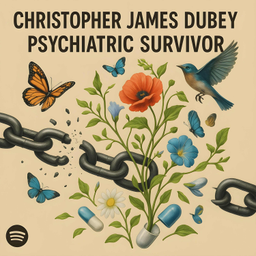
About Christopher James Dubey, Psychiatric Survivor
Christopher James Dubey (Chris) is a disabled psychiatric survivor, writer, activist, and independent scholar. Keywords: psychiatric survivors, Mad Pride, antipsychiatry, critical psychiatry, prescribed harm, iatrogenic harm, informed consent, trauma-informed, pharmacovigilance, pharmaceutical adverse effects. chrisjamesdubey.substack.com (https://chrisjamesdubey.substack.com?utm_medium=podcast)
- Publisher
- Chris James Dubey
- Category
- health & fitness · health & fitness
- Language
- en
- Explicit
- Yes
- First episode
- 12 May 2025
- Latest episode
- 27 Aug 2026
Latest episodes
23 episodes in the feed.
27 Aug 2026
Comments on the Lindsay Clancy Case
Note: I drafted this with help from Grok, Google Gemini, and Claude to quickly elaborate on my thoughts before the trial concludes. Voiceover by Luvvoice. Much of the public debate around the Lindsay Clancy trial has been squeezed into an artificial binary: either she was in acute, detached-from-reality psychosis, or she was entirely calculating and malice-driven. It is entirely possible she was aware of what she was doing, and even that she exaggerated or misrepresented certain details—such as claiming she was experiencing command hallucinations ordering her to kill. But even if that claim is false, it does not disprove the severe impairment caused by the cascade of medications she was prescribed—effects that don’t simply vanish once a pill is stopped. She was acting out of character for months, and that downward spiral coincided with when the prescriptions began and were changed. Before she began taking the new medications in mid-October 2022, she was already dealing with postpartum anxiety, insomnia, low mood, and racing thoughts after the birth of her third child—symptoms that were real but still in a range many mothers manage without a rapid succession of psychiatric drugs. Family members consistently confirmed the behavioral changes she reported. Her lawsuit against providers also points to earlier episodes—after her second and third children—that some argue looked like hypomania and should have prompted a bipolar workup. If anything, that history cuts the other way: a person with undiagnosed bipolar vulnerability is more susceptible to exactly the kind of destabilization that rapid antidepressant and benzodiazepine cycling can cause, not less. A person does not need command hallucinations or complete detachment from reality to be significantly impaired. She received a large number of prescriptions from multiple providers over a few months—antidepressants, benzodiazepines, an antipsychotic, and others—with frequent starts, stops, and overlaps. She was not taking 13 medications simultaneously, but the rapid cycling itself created the kind of neurochemical instability that can persist even after individual drugs are discontinued. Neuronal receptor destabilization, acute withdrawal, and medication-induced akathisia can leave someone agitated, emotionally blunted, and cognitively impaired—even while basic functioning appears superficially intact. None of this minimizes the horrific tragedy or excuses the loss of three children’s lives. This case simply isn’t cut and dried. It is also an urgent reminder of what the pharmaceutical industry has known for decades: rapid medication changes and polypharmacy carry grave risks for vulnerable patients. Pharmaceutical companies have routinely downplayed adverse effects, misleading clinicians, medical schools, regulatory agencies, and the public. While a legal reckoning in court is warranted, the pharmaceutical industry shares culpability for fostering inadequate informed consent and leaving patients and clinicians unprepared for severe drug-induced crises. For insights on this case with Dr. David Healy, who has testified in major litigation regarding antidepressant adverse effects, see this episode of The HighWire (https://thehighwire.com/) with Jefferey Jaxen: https://thehighwire.com/ark-videos/the-download-ca-attacks-journalism-the-clancy-controversy-mrnas-cancer-cure/ (https://thehighwire.com/ark-videos/the-download-ca-attacks-journalism-the-clancy-controversy-mrnas-cancer-cure/) This is a public episode. If you would like to discuss this with other subscribers or get access to bonus episodes, visit chrisjamesdubey.substack.com (https://chrisjamesdubey.substack.com?utm_medium=podcast&utm_campaign=CTA_1)
11 Apr 2026
From Paxil to Forced Electroshock: My Prescribed Harm Story — and a New Website to Share Yours
Edited with Claude. Voiceover by Aurora at Evernote. Image by vidIQ. Mikhaila Peterson Fuller (https://www.instagram.com/mikhailapeterson/) — podcaster and daughter of psychologist Jordan Peterson (https://www.jordanbpeterson.com/about/) — recently launched a website called Prescribed Harm (https://prescribed-harm.com/), dedicated to educating patients and physicians about medication risks and pushing for regulatory reform around informed consent and patient safety. I submitted my personal story, and it has now been published on their Stories page (https://prescribed-harm.com/blog) under both the SSRIs and Benzodiazepines sections. I also submitted it for the Stolen Lives page at AntidepressantRisks.org (https://www.antidepressantrisks.org). You can read a copy of my personal story below, a succinct summary of 1,029 words. It summarizes my life from my first Paxil prescription at 19 through my forced electroshock treatment, to over two decades of medication dependence, before withdrawing from my last psychiatric drug in 2024. To read more stories like mine and find helpful resources for dealing with medication adverse effects, visit the Prescribed Harm (https://prescribed-harm.com/) website. Content note: discusses medication-induced suicide attempts, psychiatric abuse, and forced medical treatment. My Story of Prescribed Harm As a teenager in the 1990s, I was very shy and my mood was often low. I struggled emotionally in high school but became academically ambitious in my first year of college — still mostly isolated, with hardly any friends. My parents kept sending me to a psychiatrist. Although I initially refused her suggestion to start Paxil after she diagnosed me with depression, near the end of freshman year in 2002, I decided to try it. I gained a lot of weight, became sleepy and lethargic, and my personality was subtly changed. By the end of college in 2005, I decided the Paxil hadn’t really helped and I didn’t like not feeling like myself. My primary care physician said I could taper off by halving the dose a few times over a few weeks. I did, and things seemed fine at first. A few months after graduation, under stress from employment and family pressures, I reached a breaking point. Verbal abuse from an aunt I was living with triggered feelings of total failure and suicidal thoughts. I attempted suicide by overdose, went into cardiac arrest and nearly died, and was hospitalized at San Francisco General Hospital. After recovering, I was placed on Celexa and returned to my parents in Connecticut — but I still felt agitated and suicidal. I jumped off an overpass, breaking my feet, lower legs, and fracturing my spine and skull. I was hospitalized at Hartford Hospital’s Institute of Living, put on lithium and Seroquel (mainly for insomnia I hadn’t had before — which, in hindsight, was likely triggered by Celexa). I still wanted to die and was declared to have “treatment-resistant depression.” Not once was it suggested that I might be suffering from Paxil withdrawal syndrome, or that SSRIs could be causing suicidal ideation in someone my age. The doctors became threatening, saying ECT was my last resort, and obtained a probate court order to force it on me. They did it 16 times. It was the most traumatic experience of my life. It cognitively impaired me significantly — I had been an English major and voracious reader, but afterward it was difficult to get through a single page of text. Following conversations and watching TV became difficult. I also had memory loss. I resisted at points, screaming, even swallowing a napkin in front of nurses to try to stop the procedure — because eating before anesthesia is forbidden. They did it anyway. I aspirated and had to be taken to the emergency room to have my breathing corrected. At one point I said it felt like being raped. Each time, they treated me like a crazy person who shouldn’t be taken seriously. Eventually I started lying — pretending the ECT had helped, that I no longer wanted to die — and only then did they agree to stop. I continued taking lithium, Seroquel, and Celexa because I genuinely believed I was severely mentally ill. I got off lithium after a few years, but every time I tried to stop Seroquel or my antidepressant, I developed overwhelming insomnia, anxiety, and suicidal thoughts. I interpreted this as proof I had severe depression that required medication. Briefly I also tried Abilify and developed restless akathisia for 1-2 weeks but was able to recognize it and stopped it quickly, and it went away. For a few years, I took the benzodiazepine Klonopin, developed tolerance and dependence-related panic attacks I never had before, and had to be weaned off of it in a hospital. I lived on disability benefits, food stamps, subsidized housing, and other welfare programs — despite having been a high-achieving college student with excellent grades and several academic awards. In 2018, a severe flu and neurological disorder forced me to stop Seroquel because I had become oversensitive to it, and it made me so drowsy I couldn’t get out of bed until the late afternoon. The withdrawal was brutal — I couldn’t sleep for about three days, and my sleep remained very poor. In 2021, still on Lexapro, I learned about antidepressant dependence and withdrawal syndromes. It became clear that back in 2005, what I had suffered was Paxil withdrawal — and that it’s unlikely I would have become suicidal from ordinary life stressors alone, had my nervous system not been in that state. I learned about hyperbolic tapering and began a taper that took about three years, finishing near the end of 2024. It was still difficult — triggering anxiety and insomnia — but far more manageable than my previous attempts. Coming off the medication felt like emerging from a fog and a time machine. I had lost myself at around age 19 when I first took Paxil. As my baseline emotions and former personality slowly returned, I found myself in my 40s, mentally in many ways still catching up from where I had been as a teenager, but physically feeling decades older from everything my body had been through. Over months, my emotions became more grounded. An underlying nervous agitation that had seemed chronic slowly dissipated, probably a residual symptom from medication that I didn’t even recognize before. I have had to come to terms with the profound injustice of what the mental healthcare system did to me — turning a formerly healthy, high-functioning teenager into a physically and cognitively disabled adult who never got to develop socially and emotionally the way most people do. I feel half-alive. I was betrayed and abused by psychiatry, and there is little legal or financial recourse available: statutes of limitations, the difficulty of proving adverse effects in court, and attorneys who generally won’t take mental health cases. I remain dependent on government welfare to survive. I now know that the study used to get Paxil approved for adolescent depression was fraudulent. Psychiatry is deeply corrupted by pharmaceutical companies that minimize adverse effects and attribute them to patients’ alleged mental illnesses. When I think back to how much healthier I was as a teenager — and how the psychiatrist rolled her eyes when I said I was angry at the world’s injustices — I feel a bitter recognition: my teenage self was right, the world is even more unjust than I understood then, and psychiatry is one of the worst parts of it. This is a public episode. If you would like to discuss this with other subscribers or get access to bonus episodes, visit chrisjamesdubey.substack.com (https://chrisjamesdubey.substack.com?utm_medium=podcast&utm_campaign=CTA_1)
6 Apr 2026
Updates: Forced ECT in the Media, My Memoir, New Medication Documentary, Human Rights Complaint to the UN
Edited with Google Gemini and Claude. Voiceover by Lyra at Evernote. Content note: Discusses forced medical treatment, torture, medication-induced suicide and murder. It’s been a while since I’ve shared any updates, and I have several to share. At a Glance * Media Coverage: In response to Jim Flannery’s report about increasing petitions for involuntary ECT, I've been interviewed by several reporters. * Memoir: I’m now writing it myself, at my own pace, to ensure accuracy. * CCHR Documentary: A new film on psychiatric drugs and violence is worth watching, with caveats. * Activism: The Stop ECT campaign and the Written Informed Consent Act both warrant attention. * UN Complaint: I formally submitted a human rights report to the United Nations Human Rights Council. Media Coverage Over the last several months, I had the honor of being interviewed by five reporters about my experience with forced electroshock treatment — commonly known by the medical euphemism “electroconvulsive therapy” or ECT. For an in-depth discussion of my experiences as a psychiatric patient and what I’ve learned about psychiatry, see my written testimony for a Connecticut state bill in 2025 (https://www.madinamerica.com/2025/02/ect-legislation/). The articles published so far: * Mad in America (Dec. 6): (https://www.madinamerica.com/2025/12/connecticuts-forced-electroshock-problem/) Fellow psychiatric survivor Jim Flannery obtained official state data on forced ECT petitions filed to Connecticut probate courts from 2012 to 2024, graphed it, and published his analysis. The numbers are startling: a huge jump in petitions beginning in 2015, with an increasing trend through 2024. * CCHR (Dec.): (https://www.cchr.ie/newsletter/volume9/issue2/a-life-shocked-into-darkness.html) The first interview of me, by the Citizens Commission on Human Rights International — more on CCHR below. * Connecticut Examiner (Feb. 8): (https://ctexaminer.com/2026/02/08/trend-toward-involuntary-electroshock-therapy-spurs-difficult-debate/) Reporter Amy Wu interviewed me and my mother, as well as Dr. Javeed Sukhera (current chief of psychiatry at the Institute of Living), history professor Jonathan Sandowsky, Kathy Flaherty of the Connecticut Legal Rights Project, and Jim Flannery. * Freedom (Feb. 16): (https://www.freedommag.org/news/involuntary-ect-on-the-rise-in-connecticut-as-patient-alleges-forced-electroshock-destroyed-his-life-af09a5) An article by John Blosser in Scientology’s magazine. * Inside Investigator (March 1): (https://insideinvestigator.org/last-resort-court-petitions-for-electroshock-treatment-increase/) Marc Fitch’s piece for this nonprofit investigative newsroom, also drawing on Flannery’s data. One more reporter’s story is still pending release. I’m grateful to all the reporters for their time and effort. That said, all the published articles contain minor inaccuracies or misleading statements — nothing too important, but worth noting. I also wish Amy Wu and Marc Fitch had given more space to some related issues I tried to raise in my interviews: psychiatry’s diagnostic unreliability, prescribing cascades, and why psychiatric diagnoses are flawed — specifically, how adverse psychiatric drug effects have often been misinterpreted by mental health professionals as worsening of underlying disorders (https://www.jcu.edu.au/news/releases/2024/december/jcu-first-to-teach-safe-deprescribing-of-psychiatric-medications). These fundamental flaws in mental healthcare have led to unwarranted prescribing and increased use of more invasive interventions like ECT. I understand that professional journalists are constrained by deadlines, word limits, and the breadth of what they’re covering. I’m still grateful. The CCHR and Scientology’s Freedom magazine articles also contain minor inaccuracies, but they provide the fullest descriptions of what I experienced and allude to the dangers of psychiatric medications, which were pivotal in my suicide attempts. Traditional psychiatry, based on faulty biomedical reductionism, often pathologizes normal and healthy mental states. Beyond overdiagnosis and overprescription, it also overlooks and misdiagnoses valid physical disorders that present with psychological symptoms. The best discussion I’ve seen of why traditional psychiatric diagnosis is flawed — though long and highly technical — is the 2019 report by Belgium’s Superior Health Council: DSM (5): The use and status of diagnosis and classification of mental health problems (https://www.hgr-css.be/en/report/9360/dsm-5). Status of My Memoir I stopped working with the professional writer who had been hired to help me with a memoir of my experiences with ECT. I’m now working on a rough outline on my own. Writing it myself at my own pace seems the only way to accurately describe what I went through — no one else really knows all of it, and it’s so easy to misinterpret or fail to understand another person’s experiences without having lived through them. But it’s not currently my top priority. I have significant personal issues I’ve been dealing with: continuous pain from my neurological disorder since 2018, getting ready to move back to my hometown of Middletown by May, and being tired of having this body and this life. But the outline continues. CCHR’s New Documentary on Psychiatric Drugs and Violence In December, CCHR (https://www.cchr.org/) released a new documentary: Prescription for Violence: Psychiatry’s Deadly Side Effects. It’s unlikely to interest people who support traditional mental healthcare, but I found it very good and highly recommend it — with the warning that it discusses (with some graphic detail) suicides, murders, and mass murders. You can watch it at CCHR’s website (https://www.cchr.org/prescription-for-violence/watch/prescription-for-violence.html) or on the Scientology Network (https://www.scientology.tv/series/cchr-documentaries/prescription-for-violence.html). The documentary contains disturbing revelations by attorneys, healthcare professionals, and doctors working for government and the pharmaceutical industry, including Dr. Alastair Benbow of pharmaceutical company GlaxoSmithKline, Dr. Thomas Laughren who oversaw psychotropic drug approval at the FDA, and Dr. Thomas Insel, former Director of the National Institute of Mental Health (NIMH). While it can be difficult for some people to believe that psychiatric drugs cause suicides and murders, I was already familiar with several of the suicide cases, and they are quite credible. These are people who were dealing with relatively ordinary or mild-to-moderate stressors, who were pathologized as “mentally ill” and prescribed psychotropic drugs with devastating results — including Natalie Gehrki (https://www.antidepressantrisks.org/stolen-lives/natalie-1), Richard Fee (https://www.madinamerica.com/2025/03/dad-something-not-right-richard-fee-dangers-of-adderall/), Candace Downing (https://mynbc15.com/news/reality-check/at-twelve-she-took-her-life), Stewart Dolin (https://www.cbsnews.com/chicago/news/jury-awards-3m-to-widow-who-sued-drug-firm-over-husbands-suicide/), and Woody Witczak (https://www.wisnerbaum.com/blog/2004/may/widow-sues-maker-of-zoloft-blames-husband-s-suic/), whose widow Kim I met at the 2025 Inner Compass Initiative conference (https://www.theinnercompass.org/conference) in West Hartford. As for the documentary’s claims that mass murders have been caused by psychiatric drugs — I think those claims are more speculative. But I know traditional psychiatry and mainstream media (also corrupted by pharmaceutical money (https://reformpharmanow.substack.com/p/big-pharma-media-public-perception)) have been overly dismissive of the possibility that psych drugs have contributed to mass violence. For some other credible examples of individual cases of medication-induced psychotic violence, see the cases of David Carmichael (https://lfpress.com/news/local-news/man-who-killed-son-in-london-hotel-cant-sue-drug-maker-ontarios-top-court-rules), who killed his son while in Paxil-induced psychosis, and Corey Baadsgaard (https://www.latimes.com/archives/la-xpm-2004-mar-21-na-violent21-story.html), who held his high school classmates at gunpoint while in Effexor-induced psychosis. What Do I Think About CCHR and Scientology? CCHR is controversial because of its affiliation with the Church of Scientology, by which it was co-founded, and because it is largely anti-psychiatry. I first learned about CCHR around 2006, not long after I was released from my torturous stay at the Institute of Living. I made a decision then — which I still don’t regret — to seek help from CCHR. What I went through was horrific and my eyes had begun to open to how much darkness existed in psychiatry. Although Scientology was controversial and strange, I decided to take a chance and see if they could help me. The director of a small local Connecticut branch met with me and, though she determined no lawsuit could be made in my case, was very professional and kind. Years later, I formally joined CCHR with a small donation. In 2018, I was interviewed for an electroshock documentary (https://www.cchr.org/ban-ect/watch/therapy-or-torture-the-truth-about-electroshock.html) by a CCHR filmmaker and by psychologist Linda Lagemann, who appears in the recent documentary, also professional and kind. A few years ago, I did online meetings with a director from the Florida branch, and most recently I was interviewed for the December CCHR article and for the Freedom magazine piece. I’m not a Scientologist and becoming one doesn’t really interest me. I’m not a fan of religion in general, though I respect religious freedom. As for the allegations of abuse by people working for the Church, I won’t deny them, and I think they should be investigated with legal redress and apologies issued if true. But I don’t see Scientology in black-and-white terms. Just as major abuses committed by people working in the Catholic Church don’t mean everyone in the Church is corrupt, or that the Church is incapable of reform, the same applies here. CCHR’s activism to expose psychiatric abuse is genuinely good, and I’m grateful for it. I don’t know of any other organization doing this work with comparable funding and organization. Scientology does have aspects that fit the definition of a cult — but the same can be said of most organized religions, and of psychiatry. In fact, I consider psychiatry, with all its dogma and corruption causing widespread iatrogenic harm (https://scienceinsights.org/what-is-iatrogenic-harm-and-how-does-it-happen/), to be the most dangerous cult of all. I recognize that psychiatry sometimes helps people, sometimes enormously. But the scale of harm psychiatry has caused and continues to cause is much greater than all the allegations against Scientology, even if all of those allegations are true. And despite having a few celebrity members like Tom Cruise, psychiatry is far better funded, more influential, and more powerful than Scientology. It is the greater danger — and I’m thankful CCHR exists to take it on. Activism Updates A few months ago, a campaign website called Stop ECT (https://stopect.com/) was released by a coalition of survivors, advocates, and organizations, including CCHR (https://www.cchr.org/), Global Wellness Forum (https://globalwellnessforum.org/), Stand for Health Freedom (https://standforhealthfreedom.com/), and World Council for Health (https://www.worldcouncilforhealth.org/). The campaign’s goal is to ban ECT, and it includes a detailed, well-referenced white paper. Personally, I stopped calling for a total ban a while ago — but the material is worth reading for anyone interested in ECT debates. (Note: the buttons inviting people to email U.S. Congress have been removed without explanation, and no contact information is provided for the site’s creators, though the individual coalition organizations can be found easily online.) On psychiatric medications: there has been a push to pass the Written Informed Consent Act, with versions introduced in both the U.S. House (H.R.4837 (https://www.congress.gov/bill/119th-congress/house-bill/4837)) and Senate (S.3314 (https://www.congress.gov/bill/119th-congress/senate-bill/3314)). I created a Change.org petition in support (https://www.change.org/p/save-veteran-lives-%EF%B8%8F-support-hr-4837-s-3314-written-informed-consent-act). The bills haven’t gained enough traction to pass through congressional committees, but you can view their statuses and find contact info for the bills’ sponsors at MAHA Action (HR 4837 (https://www.mahaaction.org/legislative-tracker/bills/us/119/hr4837) | S 3314 (https://www.mahaaction.org/legislative-tracker/bills/us/119/s3314)). The Senate bill page still has a form to easily message U.S. Senators in support of it. Sponsors of the bills include Rep. Thomas Massie of Kentucky, and Democratic sponsor Rep. Cleo Fields of Louisiana. If you want to support the bills: 1. Sign the petition (https://www.change.org/p/save-veteran-lives-%EF%B8%8F-support-hr-4837-s-3314-written-informed-consent-act). 2. Message your Senator using the form on the MAHA Action website (https://www.mahaaction.org/legislative-tracker/bills/us/119/s3314). Human Rights Complaint to the UN I don’t expect to ever receive a legal victory or financial compensation for the forced electroshock I endured at Hartford Hospital’s Institute of Living more than 20 years ago — “treatment” that was both psychologically traumatizing and left me more cognitively disabled. But in March, I was moved to make an online submission (https://1drv.ms/b/c/cb574fb149d91ba0/IQDoq-oeLm_ATZd8Mmif5PxTASbUsIZs5zNbQDdibnC0AGg?e=7Vkit0) reporting my human rights violations to the Human Rights Council of the United Nations (https://www.ohchr.org/en/hrbodies/hrc/home). The UN has little direct power over U.S. law or regulations, but it can apply international pressure for legislative and regulatory change. For example, in 2019 and 2022, the UN Committee against Torture concluded that involuntary ECT used on children at New Zealand’s Lake Alice psychiatric facility — combined with failure to investigate or provide redress — constituted violations of the UN Convention against Torture (https://juris.ohchr.org/casedetails/3756/en-US). I was inspired by one of the Lake Alice survivors, my friend Malcolm Richards, who is still seeking compensation and rehabilitation from the New Zealand government (https://newsroom.co.nz/2025/05/05/lake-alice-survivor-takes-govt-to-court-over-redress-scheme/). It’s worth noting that CCHR helped bring about official investigations into the abuse at Lake Alice (https://www.cchrint.org/2022/12/30/lake-alice-psychiatric-hospital-children-were-tortured/). Yet there are clear differences between the Lake Alice cases and mine: ECT was used on children there in clearly abusive ways inconsistent with medical treatment standards, while the doctors who orchestrated my forced ECT (mostly) followed common standards of care — despite how barbaric it still was, and no one should be treated like that. So, I’m not confident the UN will conclude my case constitutes torture under international law, even though it functionally was, by any common definition. Still, I’m encouraged by progressive reports from UN Special Rapporteurs in the last fifteen years, including declarations that mental healthcare has been plagued by outdated practices and human rights violations (https://www.ohchr.org/en/press-releases/2017/06/world-needs-revolution-mental-health-care-un-rights-expert), and that involuntary medical treatment alone may constitute torture (https://digitallibrary.un.org/record/745862?v=pdf). I also emailed attorneys connected to Carol Levesque, an elderly patient at Connecticut Valley Hospital who was forced to have ECT approximately 500 times and was mentioned in Marc Fitch’s article, as well as an article by Michael Simonson for (https://reason.com/2020/02/11/psychiatric-hospitals-can-still-force-patients-to-accept-shock-treatment-one-connecuticut-patient-has-been-shocked-500-times-in-five-years/)Reason (https://reason.com/2020/02/11/psychiatric-hospitals-can-still-force-patients-to-accept-shock-treatment-one-connecuticut-patient-has-been-shocked-500-times-in-five-years/) magazine (https://reason.com/2020/02/11/psychiatric-hospitals-can-still-force-patients-to-accept-shock-treatment-one-connecuticut-patient-has-been-shocked-500-times-in-five-years/). I encouraged those attorneys to consider making a human rights report to the UN on Carol’s behalf. Closing Although I continue to struggle personally, it’s remarkable how far activism has come in fighting back against incompetence, corruption, and abuse in psychiatry. I look forward to having a mental healthcare system in the future that is no longer dominated by pharmaceutical and medical device funding, the dogma of biomedical reductionism, and disregard for human rights. This is a public episode. If you would like to discuss this with other subscribers or get access to bonus episodes, visit chrisjamesdubey.substack.com (https://chrisjamesdubey.substack.com?utm_medium=podcast&utm_campaign=CTA_1)
Podcast Authority Score: 3 / 100
A composite of feed quality, social presence, YouTube performance and engagement. Read the methodology.
- Quality
- 6
- Social presence
- 0
- YouTube
- 0
- Engagement
- 0
Host of Christopher James Dubey, Psychiatric Survivor?
Claim your podcast to manage its listing and keep your show details accurate.
Pod Engine is an independent podcast discovery and analytics service and is not affiliated with or endorsed by this podcast. Artwork and show content belong to their owners. Full legal notice.
Explore this show
Podcast research with Pod Engine