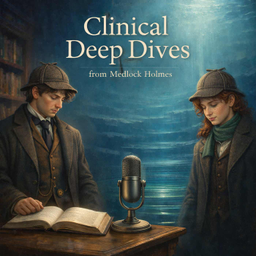
Clinical Deep Dives
Med School Audio - Medical Knowledge Reimagined & Learning Made Memorable.
3.5from 6 ratings
- 724
- Episodes
- 6
- Ratings
- Daily
- Cadence
- 2026
- First episode
About Clinical Deep Dives
Clinical Deep Dives is a Medlock Holmes podcast for clinicians and learners who want understanding, not just information. Using classic medical and surgical texts as a guide and the generative power of AI, each episode explores ideas with curiosity and clarity, designed for learning on the move and knowledge that actually sticks. drmanaankarray.substack.com (https://drmanaankarray.substack.com?utm_medium=podcast)
- Publisher
- Med School Audio - Medical Knowledge Reimagined & Learning Made Memorable.
- Category
- education · health & fitness
- Language
- en
- Explicit
- No
- First episode
- 9 Jan 2026
- Latest episode
- 21 Oct 2026
Latest episodes
724 episodes in the feed.
21 Oct 2026
PSYCH 159: Borderline Intellectual Functioning and Academic or Educational Problems
The Mystery of the Invisible Barrier Medlock Holmes enters The Academy of Hidden Potential, where a puzzling pattern has emerged. Some students struggle despite enormous effort. Others appear articulate yet cannot manage everyday responsibilities. A few have been labelled inattentive, oppositional or unmotivated, although repeated treatments have failed. Holmes discovers that the difficulty may lie not in willingness, but in the interaction between intellectual capacity, adaptive functioning and environmental expectations. His investigation reveals borderline intellectual functioning: a frequently overlooked condition associated with below-average cognitive abilities and, in some individuals, significant difficulties with practical and social adaptation. Yet an intelligence quotient tells only part of the story. Holmes examines three interconnected domains: CONCEPTUAL SKILLS ↔ SOCIAL SKILLS ↔ PRACTICAL SKILLS A student may struggle with abstract reasoning yet excel at practical tasks. Another may communicate fluently while finding planning, problem-solving and independent living unexpectedly difficult. The Diagnostic Labyrinth Holmes follows the clues through ADHD, specific learning disorders, autism, intellectual developmental disorder, trauma and emotional difficulties. He discovers that similar outward behaviours can arise from very different underlying problems. Poor performance is not necessarily poor motivation. The investigation then moves beyond the individual to the classroom and home. Bullying, family adversity, educational disadvantage, inaccessible teaching, substance use and psychiatric illness can all interfere with academic achievement. The Pathway to Potential In the final chamber, Holmes finds no miraculous treatment that transforms intellectual capacity overnight. Instead, he discovers something more useful: carefully matched educational support, adapted communication, practical skills training, family involvement, emotional support and vocational preparation. The goal is not to make everyone learn identically. It is to help each person develop their abilities and participate meaningfully in life. Holmes closes his notebook: “The measure of intelligence is not merely what a person knows, but what they can accomplish when the world provides the right opportunities and support.” Key Takeaways 1. Understanding Borderline Intellectual Functioning 1. Borderline intellectual functioning (BIF) describes intellectual abilities substantially below the population average but generally above the range associated with intellectual developmental disorder. 2. Traditionally, BIF has been associated with IQ scores of approximately 70–85, although this range should not be treated as a rigid diagnostic boundary. 3. The chapter argues that the broader concept of borderline intellectual and adaptive functioning (BIAF) better captures the clinical difficulties experienced by affected individuals. 4. Intellectual ability and adaptive functioning are related but distinct. 5. Intellectual ability concerns reasoning, learning, problem-solving and understanding information. 6. Adaptive functioning concerns how effectively an individual manages the demands of everyday life. 7. Some people with borderline-range IQ scores function well independently, whereas others require substantial support. 8. Therefore, a borderline IQ score alone does not establish clinically significant impairment. 9. BIF is not classified as a formal mental disorder in DSM-5-TR; it is a condition that may warrant clinical attention. 10. Nevertheless, it can have substantial implications for mental health, education, employment and independent living. 11. BIF is frequently underrecognised because difficulties may be subtle or attributed to other diagnoses. 12. Its identification is particularly important when repeated educational or psychiatric interventions have been unsuccessful. 13. A major challenge is that people with BIF may experience significant difficulties without meeting eligibility criteria for disability services. 14. The chapter advocates earlier identification and more flexible approaches to support. 15. The fundamental principle is that clinical need should not be determined by an IQ threshold alone. 2. Intelligence Is More Than IQ 16. Intelligence is a multidimensional capacity rather than a single, uniformly expressed ability. 17. Traditional theories emphasised general intelligence, often represented by the factor g. 18. Contemporary models recognise multiple cognitive abilities, including verbal comprehension, fluid reasoning, working memory and processing speed. 19. The Cattell–Horn–Carroll model provides an influential framework for understanding these different abilities. 20. IQ tests estimate aspects of intellectual functioning but do not capture every dimension of real-world competence. 21. A full-scale IQ score summarises performance across several cognitive domains. 22. Important strengths and weaknesses can be obscured by relying exclusively on this composite score. 23. A person may have relatively strong verbal skills but marked difficulties with non-verbal reasoning. 24. Working memory limitations may interfere with following instructions and retaining information. 25. Reduced processing speed may cause difficulty completing tasks within expected timeframes. 26. Fluid reasoning difficulties may impair problem-solving in unfamiliar situations. 27. Executive functioning contributes to planning, organisation, inhibition and flexible adaptation. 28. Language facilitates conceptual understanding and the development of abstract thinking. 29. Emotional regulation and motivation influence how cognitive abilities are expressed. 30. Cognitive performance is affected by fatigue, anxiety, medication, educational opportunity and environmental demands. 31. Intelligence is therefore best understood as the interaction between underlying abilities and the circumstances in which they are used. 32. A useful distinction is COGNITIVE CAPACITY ≠ EVERYDAY PERFORMANCE. 3. Adaptive Functioning: The Three Domains 33. Adaptive functioning describes the practical application of abilities in everyday environments. 34. Assessment generally considers three domains: conceptual, social and practical. 35. The conceptual domain includes language, literacy, numeracy, memory, reasoning and understanding time and money. 36. Conceptual difficulties may manifest as problems reading instructions, calculating change or managing appointments. 37. The social domain includes interpersonal communication, social judgement, understanding relationships and recognising risk. 38. Social difficulties may include naivety, vulnerability to manipulation or difficulty interpreting complex social situations. 39. The practical domain includes personal care, household activities, transport, shopping, employment and money management. 40. Practical functioning may be relatively preserved for familiar tasks but impaired when situations become unfamiliar. 41. Adaptive functioning must be interpreted in relation to age and cultural expectations. 42. A child requiring help with money management is different from an adult who cannot independently manage essential financial responsibilities. 43. Some individuals compensate for weaknesses through repetition, routines and learned procedures. 44. Procedural learning may be a relative strength even when abstract reasoning is limited. 45. Adaptive abilities can improve through education, experience and appropriate support. 46. The degree of assistance required is often more clinically meaningful than a single IQ score. 47. Assessment should examine what the individual can do independently, what they can do with support and what remains difficult. 48. The clinical model is ABILITY + ENVIRONMENT + SUPPORT → FUNCTIONAL OUTCOME. 4. Diagnostic Boundaries and Intellectual Developmental Disorder 49. BIF and intellectual developmental disorder exist along overlapping dimensions of cognitive and adaptive functioning. 50. Intellectual developmental disorder involves significant limitations in intellectual functioning and adaptive behaviour beginning during the developmental period. 51. BIF generally describes a less severe degree of intellectual limitation. 52. The distinction between BIF and mild intellectual developmental disorder can be difficult in borderline cases. 53. IQ scores contain measurement error and should not be interpreted as exact measures of ability. 54. Contemporary diagnostic approaches place substantial emphasis on adaptive functioning. 55. Intellectual developmental disorder severity is determined primarily by adaptive functioning rather than IQ score alone. 56. The need for support may overlap between individuals with BIF and mild intellectual developmental disorder. 57. Diagnostic thresholds are useful for classification but do not represent sharp biological boundaries. 58. Classification systems have historically changed their terminology and conceptualisation of borderline intellectual abilities. 59. Earlier terminology associated with intellectual disability is now recognised as outdated and potentially stigmatising. 60. Current clinical practice should use respectful, person-centred language. 61. Diagnostic uncertainty should encourage comprehensive assessment rather than premature categorisation. 62. Eligibility for educational or social support should ideally reflect functional need. 5. Epidemiology and Causes 63. Intelligence test scores are conventionally standardised around a mean of 100 and a standard deviation of approximately 15. 64. The approximate IQ range of 70–85 encompasses a substantial proportion of the population. 65. However, the proportion of people with clinically significant BIF is smaller and depends on how adaptive difficulties are defined. 66. No single cause explains all cases of BIF. 67. Genetic influences may contribute to intellectual development. 68. Prenatal and perinatal complications can affect cognitive outcomes. 69. Neurological illness, developmental conditions and environmental exposures may influence intellectual functioning. 70. Early childhood adversity can interfere with developmental opportunities. 71. Poor nutrition, inadequate educational access and socioeconomic disadvantage may contribute to functional difficulties. 72. Genetic and environmental influences often interact throughout development. 73. Epigenetic mechanisms are among the biological processes through which environmental experiences may influence gene regulation. 74. Such mechanisms do not establish a simple causal pathway from adversity to BIF. 75. The chapter emphasises developmental variability and the possibility of improvement through supportive environments. 76. Etiological assessment should consider both potentially modifiable influences and enduring developmental vulnerabilities. 6. Clinical Features of Borderline Intellectual Functioning 77. Individuals with BIF may present with generalised learning difficulties that are less severe than those seen in intellectual developmental disorder. 78. Comprehension may be slower than expected for chronological age. 79. Abstract concepts can be particularly difficult to understand. 80. Concrete explanations are often more effective than abstract discussions. 81. Working memory limitations may interfere with learning new material. 82. Attention and concentration difficulties may occur, although these do not automatically establish ADHD. 83. Organising and sequencing unfamiliar tasks may be challenging. 84. Transferring previously learned knowledge to new situations may be difficult. 85. A person may perform a familiar task competently yet struggle when the circumstances change. 86. Academic performance may be uneven across subjects. 87. Low frustration tolerance may develop when repeated effort produces limited success. 88. Some individuals become discouraged by comparisons with peers. 89. Emotional reactions may include irritability, sadness, embarrassment and low self-esteem. 90. Social naivety can increase vulnerability to bullying and exploitation. 91. Greater-than-average guidance may be required for unfamiliar responsibilities. 92. Some individuals develop compensatory strengths in verbal communication, physical activities or practical skills. 93. These strengths may conceal underlying difficulties. 94. The clinician should assess how a person reasons and solves problems, not merely whether they can converse fluently. 95. An important clue is the discrepancy between apparent verbal competence and actual adaptive performance. 7. Psychological and Social Consequences 96. Repeated academic failure can contribute to feelings of inadequacy. 97. Individuals may internalise difficulties as evidence of laziness or personal failure. 98. Persistent negative feedback may undermine motivation. 99. Low self-esteem can become both a consequence of difficulty and an additional barrier to learning. 100. Social comparison may intensify shame and resentment. 101. Some individuals respond to frustration through withdrawal or avoidance. 102. Others may express distress through anger, oppositional behaviour or emotional outbursts. 103. Such behaviours should not automatically be interpreted as deliberate defiance. 104. Loneliness and difficulties with social participation may increase vulnerability to psychiatric symptoms. 105. Anxiety and depression may coexist with BIF. 106. Individuals may be vulnerable to manipulation, exploitation and victimisation. 107. Difficulty understanding complex social consequences can create additional risks. 108. Substance misuse and offending behaviours have been identified as concerns in some studied populations, particularly where other adversities coexist. 109. These associations do not imply that BIF inevitably leads to antisocial behaviour. 110. Clinicians should identify both vulnerabilities and protective strengths. 111. A supportive environment can reduce the secondary psychological burden of intellectual limitations. 8. Differential Diagnosis: ADHD 112. ADHD and BIF can produce superficially similar academic and behavioural presentations. 113. Both may involve poor concentration, incomplete work and organisational difficulties. 114. In ADHD, attention regulation and behavioural inhibition are central problems. 115. In BIF, difficulty understanding and processing information may be more fundamental. 116. A child with ADHD may understand a task but struggle to sustain attention long enough to complete it. 117. A child with BIF may remain attentive yet have difficulty understanding the task itself. 118. BIF may be associated with reduced performance on novel reasoning tasks. 119. ADHD and BIF can coexist. 120. The presence of one should not automatically exclude the other. 121. Persistent learning difficulties despite adequate ADHD treatment should prompt reconsideration of the formulation. 122. Neuropsychological testing may help distinguish attentional limitations from broader intellectual difficulties. 123. Collateral educational history is particularly valuable. 124. The central question is whether the problem is predominantly ATTENDING TO INFORMATION or UNDERSTANDING INFORMATION. 9. Differential Diagnosis: Specific Learning Disorders 125. Specific learning disorders affect particular academic skills, such as reading, written expression or mathematics. 126. BIF more commonly involves broad limitations across several cognitive and academic domains. 127. Dyslexia may produce substantial reading difficulty despite otherwise average intellectual abilities. 128. Dyscalculia may disproportionately impair mathematical learning. 129. BIF may cause generalised difficulties across multiple subjects. 130. Nevertheless, BIF and specific learning disorders may coexist. 131. A detailed profile of academic strengths and weaknesses is more informative than overall grades alone. 132. Assessment should consider educational exposure, language proficiency and cultural background. 133. A student who has not received adequate instruction should not automatically be diagnosed with a learning disorder. 134. Intervention must address the actual source of difficulty rather than rely solely on a diagnostic label. 10. Differential Diagnosis: Other Developmental and Psychiatric Conditions 135. Autism spectrum disorder may involve social communication differences and restricted or repetitive patterns of behaviour. 136. BIF may involve social difficulties arising primarily from limited comprehension or social judgement. 137. Autism and BIF can coexist. 138. Language disorders can affect understanding and academic performance. 139. Anxiety may interfere with attention, working memory and classroom participation. 140. Depression can impair concentration, motivation and processing efficiency. 141. Trauma-related disorders may produce hypervigilance, avoidance and behavioural dysregulation. 142. Conduct problems may emerge secondarily when a child experiences persistent frustration or adversity. 143. Substance use may contribute to declining educational performance. 144. Neurological and medical conditions must be considered where clinically indicated. 145. Medication adverse effects can mimic or aggravate cognitive and behavioural difficulties. 146. Comprehensive assessment is essential before attributing all symptoms to one diagnosis. 147. Diagnostic overshadowing occurs when one label prevents clinicians from recognising additional or alternative difficulties. 148. The chapter repeatedly illustrates the importance of revisiting diagnoses that do not adequately explain the clinical presentation. 11. Assessment Principles 149. Assessment should begin with a detailed developmental history. 150. Early language, learning and adaptive milestones may provide important clues. 151. Educational records can reveal longstanding patterns of difficulty. 152. Previous psychological assessments should be reviewed where available. 153. Standardised intelligence testing provides information about cognitive strengths and limitations. 154. Adaptive behaviour assessment evaluates functioning across everyday settings. 155. Collateral information from parents, carers, teachers and other relevant people can improve accuracy. 156. Clinical observation should include the person’s understanding, response speed and approach to problem-solving. 157. A culturally informed assessment is essential. 158. Language barriers and educational disadvantage can distort test interpretation. 159. Motivation, fatigue, distress and medication effects may influence assessment performance. 160. Testing should not be treated as a substitute for clinical judgement. 161. The clinician should identify the individual’s abilities, limitations and support needs. 162. Assessment should culminate in a functional formulation that guides intervention. 12. The Principles of Treatment 163. There is no medication that specifically treats BIF itself. 164. Management should focus on improving functioning, reducing distress and preventing avoidable complications. 165. A multimodal approach is generally preferable. 166. Interventions should involve the individual, family, educational environment and relevant support services. 167. Treatment goals should be realistic, measurable and personally meaningful. 168. Educational support should be matched to the individual’s learning profile. 169. Strengths should be identified and actively developed. 170. Repeated experiences of success can improve motivation and self-confidence. 171. Support should aim to increase autonomy rather than create unnecessary dependence. 172. Progress may be gradual and requires sustained reinforcement. 173. The effectiveness of interventions should be reviewed over time. 174. A person-centred approach recognises that quality of life extends beyond academic achievement. 13. Educational Interventions 175. Individualised educational planning is a central component of management. 176. Teaching should use clear, concrete and developmentally appropriate language. 177. Complex tasks may be divided into smaller, manageable steps. 178. Repetition can consolidate learning. 179. Visual aids and practical demonstrations may improve understanding. 180. Hands-on learning can be particularly helpful when abstract reasoning is difficult. 181. Students may benefit from additional processing time. 182. Instructions should be checked for comprehension rather than merely repeated. 183. Familiar routines can reduce cognitive demands. 184. New skills should be practised across different situations to promote generalisation. 185. Educational accommodations adjust the learning environment without necessarily changing learning objectives. 186. Curriculum modifications alter expected learning goals or performance requirements. 187. These approaches serve different purposes and should be selected according to individual need. 188. Assistive technology may support communication, organisation and learning. 189. A trusted teacher, mentor or support worker can provide continuity and guidance. 190. School interventions should address social participation as well as academic performance. 191. Parents and carers should be involved in educational planning where appropriate. 192. The ultimate aim is functional learning that transfers into everyday life. 14. Psychotherapy and Emotional Development 193. Psychotherapy can address the emotional consequences of repeated failure and social exclusion. 194. Therapeutic communication should be adapted to the person’s comprehension and developmental level. 195. Concrete examples are often more useful than lengthy abstract explanations. 196. The therapist should regularly check understanding. 197. Emotional literacy can help individuals identify and describe feelings. 198. Behavioural approaches can support emotional regulation and problem-solving. 199. Cognitive behavioural techniques may be simplified and adapted to the person’s abilities. 200. Rehearsal, modelling and repetition can improve the acquisition of coping skills. 201. Social skills training may improve communication and interpersonal confidence. 202. Counselling can address shame, loneliness and negative self-beliefs. 203. Treatment should help individuals recognise and appreciate their strengths. 204. Emotional understanding may improve behavioural regulation and adaptive functioning. 205. Mindfulness and breathing exercises may be used as optional adjuncts when accessible and acceptable. 206. Psychological interventions should be evaluated according to individual benefit rather than assumed effectiveness. 15. Family Interventions 207. Families may experience confusion and frustration when a child’s difficulties remain unexplained. 208. Psychoeducation can help carers understand the relationship between cognitive limitations and behaviour. 209. Clear explanations may reduce blame and unrealistic expectations. 210. Parenting strategies should combine warmth, consistency and practical guidance. 211. Positive reinforcement can encourage skill development. 212. Family interventions may help reduce conflict arising from repeated misunderstandings. 213. Parent management approaches can support predictable routines and constructive behavioural responses. 214. Carers should be encouraged to recognise effort as well as achievement. 215. Family members may require assistance navigating educational and social support systems. 216. The individual should participate in planning and decisions to the greatest extent possible. 217. Family support should evolve as the person approaches adulthood. 218. A collaborative therapeutic alliance is an important component of effective care. 16. Medication and Iatrogenic Effects 219. Psychotropic medication should be prescribed for a clearly identified psychiatric disorder or target symptom, not simply because a person has BIF. 220. Coexisting ADHD, anxiety, depression or other disorders may require appropriate treatment. 221. Medication benefits must be weighed against potential adverse effects. 222. Sedation and cognitive dulling can further impair learning. 223. Stimulants may cause appetite suppression, insomnia, irritability or other adverse effects in susceptible individuals. 224. Antipsychotics may cause metabolic and neurological adverse effects. 225. Polypharmacy can complicate diagnostic assessment. 226. Medication reviews should examine whether treatment itself contributes to behavioural or cognitive difficulties. 227. Clinically supervised dose adjustment or deprescribing may be appropriate when risks outweigh benefits. 228. The chapter’s clinical cases demonstrate that reconsidering longstanding diagnoses and medication regimens can be valuable. 229. Pharmacological treatment should support, not replace, educational and psychosocial intervention. 17. Transition to Adult Life 230. Educational planning should include preparation for adult responsibilities. 231. Life skills training may begin well before school completion. 232. Financial literacy and money management are important targets. 233. Independent travel and community navigation may require structured teaching. 234. Employment preparation should consider individual interests and practical strengths. 235. Vocational programmes can develop workplace communication, organisation and time-management skills. 236. Supported employment may help some individuals achieve greater independence. 237. Social relationships and community participation are important aspects of adult functioning. 238. Practical learning opportunities may reveal abilities not captured by conventional academic testing. 239. Transition planning should address changes in service eligibility and support arrangements. 240. Long-term outcomes can improve when support continues across developmental transitions. 18. Academic or Educational Problems 241. Academic or educational problems can warrant clinical attention even when they do not constitute a psychiatric disorder. 242. These problems may include persistent underachievement, failing grades or difficulties accessing education. 243. Literacy difficulties are an important component of educational functioning. 244. Conflict with teachers, school staff or peers may interfere with learning. 245. Bullying and victimisation can contribute to school avoidance and academic decline. 246. Inadequate teaching or insufficient educational resources may produce significant difficulties. 247. Lack of transport, digital access or other resources may prevent meaningful participation in education. 248. Educational problems may occur independently or alongside psychiatric and developmental disorders. 249. An academic problem should not automatically be interpreted as evidence of low intelligence. 250. Clinical assessment should distinguish between limitations in ability and barriers to educational opportunity. 19. Causes and Assessment of Educational Problems 251. Academic decline may result from cognitive, emotional, medical, social or environmental factors. 252. Specific learning disorders should be considered when difficulties affect particular academic skills. 253. BIF and intellectual developmental disorder should be assessed when broader cognitive limitations are suspected. 254. ADHD may impair sustained attention and task completion. 255. Depression may reduce motivation, concentration and participation. 256. Anxiety may contribute to avoidance and poor examination performance. 257. Trauma and abuse may manifest through irritability, withdrawal or falling grades. 258. Substance use can contribute to changes in behaviour and academic achievement. 259. Vision and hearing problems may interfere with learning. 260. Chronic illness, neurological conditions and sleep difficulties should be considered where appropriate. 261. Family conflict, poverty and unstable living circumstances can disrupt educational progress. 262. Bullying should be explored sensitively rather than dismissed. 263. A sudden decline from previously good academic performance should prompt investigation of new or emerging difficulties. 264. Assessment should include the student’s perspective and relevant collateral information. 20. Educational Problems and Trauma 265. Trauma-related distress may resemble ADHD or behavioural disorders. 266. Hypervigilance can appear as distractibility. 267. Irritability and emotional outbursts may reflect fear or unresolved distress. 268. Avoidance may be misinterpreted as oppositional behaviour. 269. The chapter illustrates how sexual abuse can remain concealed behind behavioural and academic difficulties. 270. Safeguarding assessment is essential when abuse is suspected. 271. A trauma-informed approach avoids prematurely attributing behavioural change to a neurodevelopmental diagnosis. 272. Appropriate protection and treatment may substantially improve educational functioning. 273. Psychiatric assessment should consider what may have happened to the child, not only what the child is doing. 21. Treatment of Educational Problems 274. Intervention should address the identified causes of academic difficulty. 275. Environmental barriers may be more important than intrinsic cognitive limitations in some cases. 276. Educational support should be coordinated with the school when appropriate and consented to. 277. Bullying requires active investigation and appropriate safeguarding responses. 278. Psychiatric disorders should receive evidence-based treatment when present. 279. Substance-use difficulties may require targeted interventions. 280. Family conflict and trauma may require psychological and social support. 281. Medication should be reviewed when adverse effects may contribute to academic problems. 282. Teaching strategies should reflect the student’s abilities and circumstances. 283. Educational plans should include realistic academic and social goals. 284. Progress should be monitored across school, home and clinical settings. 285. Effective management requires collaboration between education, healthcare, families and the individual. 22. The Medlock Holmes Synthesis 286. Borderline intellectual functioning is often a hidden source of educational, emotional and adaptive difficulties. 287. Intelligence cannot be adequately represented by a single test score. 288. Assessment must consider cognitive abilities, adaptive skills and the person’s environment. 289. Poor academic performance may reflect intellectual limitations, psychiatric illness, trauma or inadequate educational opportunity. 290. Accurate diagnosis prevents unnecessary treatment and directs attention towards effective support. 291. The goal of intervention is not simply to improve test scores, but to increase independence, participation and quality of life. 292. The overarching model is: INTELLECTUAL ABILITY × ADAPTIVE SKILLS × ENVIRONMENT × SUPPORT → REAL-WORLD FUNCTIONING 293. The final principle: DO NOT DEFINE POTENTIAL BY LIMITATION. IDENTIFY THE BARRIERS, DEVELOP THE STRENGTHS AND PROVIDE THE SUPPORT THAT MAKES PARTICIPATION POSSIBLE. This is a public episode. If you'd like to discuss this with other subscribers or get access to bonus episodes, visit drmanaankarray.substack.com/subscribe (https://drmanaankarray.substack.com/subscribe?utm_medium=podcast&utm_campaign=CTA_2)
20 Oct 2026
PSYCH 158: Adult Antisocial Behavior, Criminality, and Violence
Medlock Holmes enters The Chamber of Violence, where the question is not simply who committed a crime, but why human beings become capable of harming others. His investigation begins with an unexpected contrast: the organised criminal who maintains a stable family life, the corporate executive whose financial decisions destroy thousands of livelihoods, and the impulsively violent offender whose behaviour appears almost beyond conscious control. Holmes discovers that criminality, antisocial behaviour and violence are related but distinct phenomena. Neither criminal behaviour nor violence automatically indicates psychiatric illness. The Anatomy of Violence In the chamber’s centre stands an illuminated brain, its frontal and limbic circuits connected by brass wires. Holmes traces the systems involved in moral judgement, empathy, threat perception, emotional regulation and impulse control. The orbitofrontal and ventromedial prefrontal regions contribute to evaluating consequences and regulating behaviour. The amygdala participates in emotional salience and threat processing. Their interactions help determine whether anger becomes action. But biology is only part of the investigation. Childhood maltreatment, genetic vulnerability, head injury, substance misuse, social deprivation and exposure to violent environments may combine to increase risk. Holmes writes: NEUROBIOLOGY × DEVELOPMENT × TRAUMA × SOCIAL CONTEXT → VIOLENCE VULNERABILITY This is a formulation of interacting risks, not a deterministic prediction. The Three Faces of Criminality Holmes examines three different rooms. In the first, organised crime reveals how loyalty, hierarchy and social reinforcement can sustain criminal behaviour without necessarily implying psychopathy. In the second, white-collar crime demonstrates that deception and exploitation may produce enormous harm without physical confrontation. In the third, interpersonal violence raises questions about impulsivity, psychopathy, psychiatric disorders, substance use and neurological impairment. He recognises that violence cannot be explained by a single criminal personality. The Childhood Archive Holmes opens files documenting early adversity, neglect, physical and sexual abuse, neurological injury and developmental disturbance. Some pathways towards later violence begin long before the offence. Yet most people exposed to adversity do not become violent. The challenge is to understand how vulnerabilities accumulate, how protective factors interrupt harmful pathways and why individuals respond differently to similar experiences. The Courtroom of Responsibility The final chamber contains a courtroom. A defendant may understand that an act is legally wrong yet have substantial difficulties regulating emotion or controlling impulses. Holmes confronts the distinction between knowing what is wrong and being able to regulate one’s behaviour. Neuroscience can inform questions of responsibility, mitigation and treatment, but it cannot independently determine legal culpability. He closes the investigation with a final observation: “To understand violence is not to excuse it. It is to discover the conditions that make it possible, the vulnerabilities that shape it, and the opportunities through which it might be prevented.” Key Takeaways 1. Understanding Antisocial Behaviour, Criminality and Violence 1. Adult antisocial behaviour encompasses a broad range of actions that violate social expectations, laws or the rights of others. 2. Criminality refers to behaviour prohibited by law, whereas violence involves the actual, attempted or threatened use of physical force. 3. These categories overlap but are not interchangeable. 4. Not all criminal behaviour is violent, and not all aggression constitutes a criminal offence. 5. Adult antisocial behaviour may occur without a diagnosable psychiatric disorder. 6. Antisocial personality disorder is a specific psychiatric diagnosis and should not be equated with criminality. 7. Psychopathy is a related but distinct construct involving interpersonal, affective and behavioural traits. 8. A psychiatric diagnosis does not establish that a person is dangerous. 9. Most people with mental illness do not engage in serious violence. 10. Violence emerges from interacting individual, developmental, situational and social influences. 11. Understanding the mechanisms of violence is important for prevention, clinical assessment, rehabilitation and forensic psychiatry. 12. The chapter challenges the historical assumption that criminal acts can always be explained simply as rational, freely chosen wrongdoing. 13. Biological and developmental vulnerabilities may influence judgement and behavioural control without eliminating personal responsibility. 14. The central clinical distinction is between explaining behaviour and excusing behaviour. 2. Organised Crime 15. Organised crime involves coordinated illegal activity conducted through structured groups. 16. Criminal organisations may possess formal hierarchies, rules, loyalties and systems of reward and punishment. 17. Participation in organised crime cannot be explained solely by poverty or impulsivity. 18. Some individuals are socialised into criminal organisations through family relationships and community expectations. 19. Criminal activity may be reinforced by status, belonging, admiration and financial opportunity. 20. Research into the psychiatric characteristics of organised criminals remains limited. 21. The chapter discusses evidence suggesting that some organised criminals score differently on psychopathy measures from other incarcerated offenders. 22. Such findings challenge the assumption that all criminals share a common personality profile. 23. Organised criminal activity may require planning, emotional control and sustained cooperation. 24. Socially effective leadership traits may be used in either legitimate or criminal organisations. 25. The capacity for loyalty or affection towards selected individuals does not preclude exploitation or violence towards others. 26. Criminal behaviour must therefore be understood within its organisational and cultural context. 3. White-Collar Crime 27. White-collar crime generally involves financially motivated illegal activity characterised by deceit, concealment or abuse of trust. 28. Examples include fraud, embezzlement, insider dealing, money laundering and corruption. 29. White-collar crime demonstrates that serious antisocial behaviour need not involve direct physical aggression. 30. Financial crime may cause extensive psychological and social harm. 31. Victims may lose homes, employment, savings, financial security and access to healthcare. 32. The psychological consequences can include anxiety, depression, humiliation, helplessness and family breakdown. 33. White-collar crime may occur among individuals who appear socially successful and professionally respected. 34. Professional status does not guarantee ethical behaviour. 35. Technological developments have expanded opportunities for financial crime. 36. Digital systems can increase the distance between perpetrators and victims. 37. Psychological distance may reduce the immediate emotional impact of witnessing another person’s suffering. 38. Organisational cultures that reward financial success without adequate ethical safeguards may facilitate wrongdoing. 39. Financial incentives can interact with entitlement, rationalisation, peer influence and weak institutional oversight. 40. The chapter examines healthcare fraud as an important example of professional misconduct. 41. Unnecessary procedures, misleading promotion and inappropriate prescribing may expose patients to serious harm. 42. Commercial incentives must not override clinical judgement. 43. Institutional corruption can be sustained by organisational pressures rather than the actions of one unusually antisocial individual. 44. The psychiatric implications extend beyond individual psychopathology to professional ethics and systems of accountability. 4. White-Collar Violence and Institutional Harm 45. Corporate misconduct may produce physical injury and death even when perpetrators do not directly attack victims. 46. Neglecting known safety hazards can have consequences comparable in seriousness to intentional interpersonal violence. 47. Financial calculations that disregard foreseeable harm raise questions about moral judgement and responsibility. 48. Institutional decisions may distribute responsibility across several individuals. 49. This diffusion of responsibility can make harmful actions appear less personally attributable. 50. The absence of direct physical contact does not eliminate the moral significance of causing harm. 51. Psychiatrists should recognise the psychological effects of institutional betrayal, exploitation and preventable injury. 52. Assessing antisocial behaviour requires attention to the consequences of actions, not merely their outward form. 5. Morality and the Brain 53. Moral behaviour requires the integration of emotional, cognitive and social processes. 54. Moral judgement involves recognising another person’s perspective, evaluating consequences and regulating competing impulses. 55. Theory of mind is the capacity to infer other people’s beliefs, intentions and mental states. 56. Empathy involves recognising or responding to another person’s emotional experience. 57. Cognitive empathy and affective empathy are related but distinguishable capacities. 58. Moral reasoning and moral behaviour are not identical. 59. A person may understand ethical principles yet fail to act consistently with them. 60. The prefrontal cortex contributes to planning, decision-making, inhibition and evaluating consequences. 61. The ventromedial prefrontal cortex is involved in integrating emotional information into decision-making. 62. The orbitofrontal cortex contributes to evaluating rewards, punishments and behavioural consequences. 63. The amygdala participates in emotional learning, threat detection and assigning significance to stimuli. 64. Connections between frontal and limbic regions are important for behavioural regulation. 65. Damage to frontal networks can alter social judgement, impulse control and personality. 66. Neurological injury may impair moral behaviour without completely eliminating knowledge of social rules. 67. Neuroimaging research has identified networks associated with moral judgement rather than one isolated moral centre. 68. The trolley problem illustrates how emotional and deliberative processes may compete during moral decisions. 69. Experimental findings about moral reasoning cannot be used directly to determine an individual’s criminal responsibility. 70. Brain activation patterns are associations, not reliable tests of moral character. 71. A structural or functional brain difference does not prove that an individual will behave violently. 72. The central principle is MORAL KNOWLEDGE ≠ MORAL SELF-REGULATION. 6. Epidemiology of Violence 73. Rates of homicide and serious violence vary substantially between countries and regions. 74. Violence is influenced by social inequality, access to weapons, political instability and other contextual factors. 75. Men account for a disproportionate share of homicide perpetrators and victims. 76. Young adulthood is an important period for many forms of violent offending. 77. Homicide risk is not evenly distributed across communities. 78. Historical, economic and social conditions influence the distribution of violent crime. 79. Firearm availability can influence the lethality of violent incidents. 80. Interpersonal violence frequently occurs between people who know one another. 81. Domestic and family violence represent major public health and safeguarding concerns. 82. Violence may increase in some societies following armed conflict. 83. The relationship between war exposure, psychiatric illness and subsequent violence is complex. 84. Population-level statistics cannot establish the dangerousness of a particular individual. 85. Epidemiological associations should inform prevention rather than support stereotyping. 7. Mass Violence and Warning Signs 86. Mass shootings are heterogeneous events with no single established psychiatric explanation. 87. Perpetrators may differ substantially in personality, motivation, developmental history and mental health. 88. Some have identifiable psychiatric disorders, but mental illness alone is an inadequate explanation. 89. Social isolation, grievances, humiliation and perceived persecution may feature in some pathways towards targeted violence. 90. Access to weapons can influence whether violent intent results in mass casualties. 91. Previous threats or communications about violence deserve careful contextual assessment. 92. Such communications should not automatically be dismissed as attention-seeking. 93. Expressed threats must be evaluated for specificity, intent, capability, access to means and escalation. 94. A history of fascination with weapons is not sufficient to predict violence. 95. No single behavioural characteristic reliably identifies future mass attackers. 96. Clinical risk assessment should integrate multiple sources rather than depend on a perpetrator stereotype. 97. The chapter’s case examples illustrate how serious psychiatric and developmental difficulties may be overlooked. 98. They also demonstrate the potential consequences of inadequate assessment and missed opportunities for intervention. 99. Retrospective case analysis is vulnerable to hindsight bias. 100. Prevention requires attention to credible warning behaviours without assuming that every unusual or distressed person is dangerous. 8. Evolutionary Perspectives on Aggression 101. Aggression occurs in many animal species and is not unique to humans. 102. Evolutionary explanations examine the possible adaptive functions of aggression in competition, defence and resource acquisition. 103. Research involving non-human primates demonstrates that coordinated aggression can occur in social groups. 104. Such observations do not establish that human violence is inevitable. 105. Evolutionary predispositions interact with learning, culture and environmental circumstances. 106. Human cognitive capacities permit both sophisticated cooperation and organised violence. 107. The capacity to formulate moral rules does not guarantee adherence to them. 108. Evolutionary explanations should not be used to justify aggression or minimise responsibility. 9. Sex, Hormones and Aggression 109. Serious physical violence is more frequently perpetrated by men than women at a population level. 110. Biological, developmental and social influences contribute to sex-related differences in aggression. 111. Gonadal hormones influence neural development. 112. Testosterone and its metabolites participate in the organisation of neural circuits during development. 113. Hormonal influences on behaviour are complex and context-dependent. 114. Testosterone should not be regarded as a simple chemical cause of violence. 115. Neural circuits associated with threat, reward and social behaviour may be influenced by hormonal development. 116. Sex-related group differences do not reliably predict the behaviour of an individual. 117. There is substantial overlap between individuals across sex groups in psychological and behavioural characteristics. 118. Brain size differences do not establish differences in intelligence or moral capacity. 119. Hormonal and neurobiological findings require careful interpretation to avoid biological determinism. 120. Social expectations and learned behaviour remain important influences on aggression. 10. Genetics and Violence 121. Genetic factors may contribute to variation in aggression-related traits. 122. These influences are generally probabilistic rather than deterministic. 123. Genes may affect temperament, emotional reactivity and behavioural inhibition. 124. The chapter discusses monoamine oxidase A, or MAOA, in relation to aggression research. 125. MAOA participates in the metabolism of monoamine neurotransmitters. 126. Rare genetic variants affecting MAOA function have been associated with behavioural dysregulation in particular families. 127. Such rare findings cannot be generalised to most violent offenders. 128. Research has also examined interactions between genetic variation and childhood maltreatment. 129. Gene–environment interactions suggest that biological vulnerability may have different consequences under different developmental conditions. 130. Genetic associations do not establish individual criminal propensity. 131. Genetic testing cannot reliably determine whether a person will commit violence. 132. Genetic explanations should not displace attention from modifiable environmental risks. 11. Environmental Influences and Childhood Adversity 133. Childhood adversity is an important developmental risk factor for later emotional and behavioural difficulties. 134. Physical abuse, sexual abuse and neglect may disrupt emotional development. 135. Early adversity can influence stress-response systems and neural development. 136. Chronic exposure to threat may increase vigilance and sensitivity to perceived danger. 137. Maltreatment can impair the development of trust, emotional regulation and interpersonal security. 138. Some children exposed to violence may learn aggressive responses through observation and reinforcement. 139. Repeated exposure to aggression may normalise coercion as a method of resolving conflict. 140. Trauma-related dissociation may complicate behavioural assessment and memory. 141. Childhood head injuries and neurodevelopmental difficulties may coexist with psychosocial adversity. 142. These factors can accumulate rather than operate independently. 143. Nevertheless, most people who experience childhood adversity do not become violent offenders. 144. Protective relationships, stable environments and timely intervention may interrupt harmful developmental pathways. 145. The clinician should avoid assuming that trauma automatically produces violence. 146. Understanding adversity can inform treatment and prevention without diminishing the seriousness of harmful behaviour. 12. Social Factors and Violence 147. Social circumstances influence opportunities for violence and the consequences of aggressive behaviour. 148. Poverty, inequality and deprivation may interact with individual vulnerabilities. 149. Social exclusion can contribute to frustration and reduced access to protective resources. 150. Community violence may reinforce expectations that aggression is necessary for survival or status. 151. Peer groups can reward antisocial behaviour. 152. Criminal networks may provide belonging, identity and economic opportunity. 153. Cultural expectations may shape how aggression is expressed and justified. 154. Substance availability and access to weapons may increase situational risk. 155. Institutional failures can permit patterns of exploitation and violence to continue. 156. Social explanations must not be used to stigmatise disadvantaged populations. 157. Most individuals living under difficult socioeconomic circumstances do not commit serious violence. 158. Prevention must address both individual vulnerabilities and environmental conditions. 13. Brain Dysfunction and Violence 159. Brain injury may affect impulse control, emotional regulation and social judgement. 160. Frontal lobe dysfunction is particularly relevant to behavioural disinhibition. 161. Damage involving orbitofrontal networks may impair the ability to adjust behaviour in response to consequences. 162. Temporal and limbic abnormalities may influence emotional processing. 163. Neurological impairment may alter behaviour without producing obvious intellectual disability. 164. Standard cognitive testing may therefore underestimate difficulties with real-world behavioural regulation. 165. Traumatic brain injury should be considered when there is a relevant history of behavioural change. 166. Epilepsy and other neurological conditions may require investigation in selected cases with suggestive clinical features. 167. Violent behaviour should not routinely be attributed to seizures without convincing evidence. 168. Neuropsychological assessment can help identify executive dysfunction, memory impairment and other deficits. 169. Structural imaging may identify clinically significant lesions, but incidental abnormalities require caution. 170. Neuroimaging findings should be integrated with history, examination and functional evidence. 171. The presence of brain pathology does not establish that it caused a particular offence. 172. A defensible formulation considers timing, severity, behavioural change and plausible mechanisms. 14. Psychopathy 173. Psychopathy is a personality construct involving characteristic interpersonal, emotional and behavioural features. 174. Interpersonal features may include superficial charm, manipulation and grandiosity. 175. Affective features may include diminished remorse, shallow affect and reduced concern for others. 176. Behavioural features may include irresponsibility, impulsivity and persistent antisocial conduct. 177. Psychopathy overlaps with antisocial personality disorder but is not synonymous with it. 178. Some people with antisocial personality disorder do not demonstrate pronounced psychopathic traits. 179. Psychopathy should not be inferred from the seriousness of a crime alone. 180. Structured assessment instruments require appropriate training and sufficient collateral information. 181. Psychopathy measures are not stand-alone tests of future violence. 182. Traits associated with psychopathy may influence treatment engagement and risk management. 183. The presence of psychopathic traits does not make every intervention futile. 184. Assessment should remain individualised and evidence-based. 15. Severe Psychiatric Disorders and Violence 185. Severe mental illness and violence have a complex relationship. 186. Most people with schizophrenia, bipolar disorder or other major psychiatric disorders are not violent. 187. People with severe mental illness may themselves be especially vulnerable to victimisation. 188. Certain acute symptoms can contribute to violence risk in particular circumstances. 189. Persecutory beliefs associated with intense fear may occasionally influence aggressive behaviour. 190. Severe agitation, disinhibition or impaired judgement may increase situational risk. 191. Substance misuse is an important co-occurring risk factor. 192. Previous violence is often more informative than diagnosis alone when assessing future risk. 193. Treatment non-adherence may matter when it leads to relapse involving relevant risk symptoms. 194. Risk assessment should examine current mental state, substance use, threats, access to means and environmental stressors. 195. Diagnostic labels should never substitute for an individualised risk formulation. 196. Effective psychiatric treatment may reduce risk when symptoms are contributing to dangerous behaviour. 197. Violence prevention also requires practical support, substance-use treatment and attention to social circumstances. 16. Clinical Assessment of Violence Risk 198. A comprehensive assessment begins with a detailed history of aggressive and violent behaviour. 199. The clinician should establish the nature, frequency, severity and context of previous incidents. 200. The distinction between impulsive and planned aggression can inform formulation. 201. Immediate triggers and longer-term vulnerabilities should be considered separately. 202. Assessment should explore current thoughts of harming others. 203. Specific threats, identified targets, planning and access to weapons require particular attention. 204. Substance intoxication and withdrawal may alter short-term risk. 205. Psychotic symptoms, mood disturbance and cognitive impairment should be assessed where relevant. 206. Collateral information may clarify discrepancies between self-report and observed behaviour. 207. Protective factors should be identified alongside risk factors. 208. Dynamic factors are especially important because they may change with treatment and circumstances. 209. Structured professional judgement can support systematic risk formulation. 210. Risk assessment is not equivalent to certain prediction. 211. Clinical documentation should explain the reasoning behind conclusions and proposed management. 212. Risk management should focus on realistic, proportionate measures to reduce foreseeable harm. 17. Forensic Psychiatry and Criminal Responsibility 213. Forensic psychiatry examines the relationship between mental disorder, behaviour and legal questions. 214. Psychiatric explanation and legal responsibility are separate considerations. 215. A person may have a psychiatric disorder yet remain legally responsible for an offence. 216. Conversely, serious psychiatric or neurological impairment may be relevant to culpability, fitness for trial or sentencing. 217. Legal standards differ between jurisdictions. 218. Traditional insanity tests have often emphasised the ability to understand the nature or wrongfulness of an act. 219. The chapter questions whether purely cognitive legal tests adequately capture disorders of impulse regulation and behavioural control. 220. Knowing that an act is wrong does not necessarily establish intact executive functioning. 221. However, impaired impulse control does not automatically satisfy a legal defence. 222. Forensic opinions must address the applicable legal test rather than substitute a general neuroscientific explanation. 223. Retrospective reconstruction of mental state at the time of an offence is inherently challenging. 224. Clinical records, collateral accounts, contemporaneous behaviour and neurological findings may contribute to an opinion. 225. Experts should distinguish established findings from hypotheses and speculation. 226. The limits of available evidence must be communicated clearly. 227. Neuropsychiatric vulnerability may be relevant to mitigation without establishing legal insanity. 228. The psychiatrist’s responsibility is to provide an impartial, clinically defensible assessment. 18. Ethical Implications 229. Understanding the neurobiology of violence raises difficult questions about autonomy, choice and responsibility. 230. Moral agency involves more than abstract knowledge of right and wrong. 231. The ability to inhibit impulses and regulate behaviour contributes to effective moral decision-making. 232. Neurological and developmental vulnerabilities may constrain these capacities to varying degrees. 233. Such vulnerabilities do not remove the need to protect victims and communities. 234. Ethical assessment must balance individual circumstances with accountability and public safety. 235. Neuroscientific evidence should not be overstated in legal proceedings. 236. A brain abnormality is not equivalent to proof of diminished responsibility. 237. Biological explanations should not reinforce stigma towards people with neurological or psychiatric conditions. 238. The prevention of violence requires investment in early development, trauma-informed care and effective mental health services. 239. Social systems must also address exploitation, institutional misconduct and preventable harm. 240. The ultimate goal is not merely to explain violent behaviour retrospectively, but to identify opportunities to prevent it. 19. The Medlock Holmes Synthesis 241. Violence is a behaviour, not a diagnosis. 242. Criminality, aggression, psychopathy and psychiatric illness must be distinguished conceptually. 243. There is no single biological marker or personality profile that explains all violent offending. 244. Brain dysfunction, developmental adversity and social conditions may interact in complex ways. 245. Individual vulnerability does not make violent behaviour inevitable. 246. Risk assessment must consider the person, the behaviour, the circumstances and the available protective factors. 247. Clinical explanation must remain separate from moral condemnation and legal judgement. 248. Understanding violence requires attention to both individual acts and institutional forms of harm. 249. The overarching formulation is: NEUROBIOLOGY + DEVELOPMENT + PSYCHOLOGY + SOCIAL CONTEXT + SITUATIONAL TRIGGERS → VIOLENCE RISK 250. The final principle: TO UNDERSTAND VIOLENCE IS NOT TO EXCUSE IT - IT IS TO CREATE BETTER OPPORTUNITIES TO PREVENT IT. This is a public episode. If you'd like to discuss this with other subscribers or get access to bonus episodes, visit drmanaankarray.substack.com/subscribe (https://drmanaankarray.substack.com/subscribe?utm_medium=podcast&utm_campaign=CTA_2)
19 Oct 2026
PSYCH 157: Malingering
distinguishing genuine illness, exaggeration, deception and the powerful influence of external incentives. Medlock Holmes enters The Hall of Uncertain Truths, a psychiatric assessment chamber where every patient brings a story, every story contains evidence, and not every discrepancy means deception. A man reports severe memory loss following an accident, yet his daily activities suggest abilities he claims to have lost. Another describes disabling psychiatric symptoms while seeking financial compensation. A third insists that only a particular stimulant medication can treat his self-diagnosed ADHD. Holmes examines each case, but refuses to begin with the assumption that anyone is lying. He writes his first principle: INCONSISTENCY ≠ DECEPTION Psychiatric symptoms are subjective, memories are imperfect, and human behaviour is shaped by fear, shame, expectations, motivation and unconscious psychological processes. The psychiatrist must distinguish genuine illness from consciously fabricated or exaggerated symptoms intended to secure an external advantage. This is the central concept of malingering. INTENTIONAL SYMPTOM MISREPRESENTATION + EXTERNAL INCENTIVE → MALINGERING Unlike a psychiatric disorder, malingering describes a behaviour or circumstance requiring clinical attention. Its identification depends on evidence of deliberate deception and external motivation, not merely on unusual symptoms or disagreement with an examiner. The Chamber of Motives Holmes discovers that external incentives take many forms. Financial compensation. Avoidance of work. Escape from criminal responsibility. Access to controlled medication. Avoidance of military duties. Obtaining shelter or other practical benefits. Yet the presence of an incentive does not establish malingering. A genuinely injured person may seek compensation. A genuinely disabled person may be unable to work. A person with authentic ADHD may request stimulant treatment. Holmes therefore separates three questions: IS THE SYMPTOM GENUINE? IS THE PRESENTATION INTENTIONALLY MISREPRESENTED? IS THERE AN EXTERNAL INCENTIVE? Only when these questions are carefully examined can a defensible formulation emerge. The Gallery of False Appearances In the next room, Holmes encounters two contrasting presentations. One patient exaggerates distress, reporting symptoms as more severe than they actually are. Another conceals genuine symptoms to appear healthier or more competent. These are sometimes described as faking bad and faking good. Both may involve deliberate impression management, but neither automatically establishes malingering. Context, intent and external incentives remain essential. Holmes also distinguishes malingering from factitious disorder. In malingering, the deception is directed towards an identifiable external benefit. In factitious disorder, the deceptive presentation of illness occurs without an obvious external reward; the motivation may involve psychological needs associated with assuming the sick role. The distinction can be difficult because motivations are not always fully accessible or straightforward. OBSERVED BEHAVIOUR ≠ COMPLETE KNOWLEDGE OF MOTIVATION The Evidence Room Holmes now examines the available evidence. The patient’s history. Previous medical records. Collateral accounts. Mental state examination. Observed behaviour. Functional abilities. Psychological and neuropsychological testing where appropriate. Consistency across time and settings. He discovers that no single observation reliably proves malingering. A person reporting memory problems may perform inconsistently because of anxiety, pain, fatigue, neurological illness or poor comprehension. A person reporting hallucinations may describe unusual experiences that do not fit textbook expectations. A person who becomes defensive during an assessment may be responding to perceived disbelief rather than concealing deception. The task is therefore to seek convergence between independent sources. SELF-REPORT + OBSERVATION + COLLATERAL EVIDENCE + CONTEXT → CLINICAL FORMULATION Holmes also recognises that symptom-validity and performance-validity measures can provide useful information, particularly in cognitive and forensic assessments. However, an invalid test performance is not synonymous with malingering. Test results must be interpreted in the context of the whole assessment. The Chamber of Unconscious Influence The investigation becomes more complicated when Holmes notices his own reactions. One patient makes him feel suspicious. Another evokes irritation. A third appears charming and persuasive. A fourth becomes hostile when questioned. Holmes recognises that the psychiatrist is not a neutral measuring instrument. Countertransference, implicit assumptions and interpersonal dynamics can influence judgement. The textbook explores projective identification, unconscious communication and the possibility that examiner and patient may influence one another’s behaviour. Holmes writes: PATIENT PRESENTATION ↔ EXAMINER RESPONSE ↔ ASSESSMENT PROCESS An aggressive interview may intensify defensiveness. Repeated questioning may increase distress. Premature suspicion may undermine trust. And the patient’s frustration may then be incorrectly interpreted as further evidence of deception. The psychiatrist must examine not only the patient but also the process of assessment. The Forensic Chamber Holmes enters a courtroom adjoining the hospital. Here, the purpose of psychiatric assessment may differ from ordinary clinical care. The treating psychiatrist primarily seeks to understand and help the patient. The independent forensic examiner must provide an impartial opinion based on the available evidence. The distinction matters because the assessment may influence compensation, criminal proceedings, disability benefits or access to treatment. Holmes must therefore distinguish observed facts from clinical inferences and conclusions. He must communicate uncertainty honestly. He must avoid presenting suspicion as proof. And he must recognise the potential harm of incorrectly labelling a genuinely unwell person as malingering. The most important warning is displayed above the courtroom door: THE NON-MALINGERER’S DILEMMA A patient with genuine illness may be disbelieved because their presentation is unusual, inconsistent or difficult to verify. The consequences can be substantial: loss of treatment, financial hardship, damaged relationships and further psychological distress. The Final Investigation Holmes returns to the assessment chamber. He no longer asks simply: “Is this patient telling the truth?” Instead, he asks: “What is genuinely present, what remains uncertain, what evidence supports deliberate misrepresentation, and what alternative explanations must be considered?” The final formulation becomes: SYMPTOMS + FUNCTION + CONSISTENCY + MOTIVATION + EXTERNAL INCENTIVES + COLLATERAL EVIDENCE The psychiatrist’s responsibility is to remain both compassionate and discerning. Neither unquestioning acceptance nor reflexive suspicion is sufficient. Holmes closes the case with his final observation: “The task of the psychiatrist is not to catch a liar. It is to understand the evidence, recognise the limits of certainty, and distinguish deception from suffering without allowing suspicion to become a diagnosis.” Key Takeaways Understanding Malingering 1. Malingering refers to the intentional production, fabrication or gross exaggeration of physical or psychological symptoms for an identifiable external incentive. 2. It is not classified as a mental disorder in DSM-5-TR. 3. Malingering is a clinical phenomenon involving behaviour, motivation and context. 4. Its defining features are deliberate misrepresentation and external motivation. 5. The central formulation is: INTENTIONAL DECEPTION + EXTERNAL INCENTIVE → MALINGERING 6. Symptoms may be entirely fabricated or genuine symptoms may be deliberately exaggerated. 7. A patient may also misrepresent the cause of genuine symptoms. 8. External incentives include financial compensation, avoidance of work, evasion of criminal responsibility and access to controlled medication. 9. Seeking compensation or medication is not itself evidence of malingering. 10. The clinician must establish whether intentional misrepresentation is supported by evidence. 11. Genuine illness and malingering can coexist. 12. A patient may have a legitimate psychiatric disorder while deliberately exaggerating selected symptoms. 13. The presence of one genuine disorder does not establish that every reported symptom is genuine. 14. Conversely, evidence of misrepresentation in one domain does not invalidate every other symptom. 15. Malingering should be approached as a clinical question rather than a moral judgement. Motivation and External Incentives 16. External incentives are central to understanding malingering. 17. Financial compensation may provide an incentive to exaggerate disability. 18. Criminal proceedings may create incentives to misrepresent mental state or memory. 19. Occupational circumstances may create incentives to overstate incapacity. 20. Controlled medications may be sought for non-medical use or diversion. 21. Access to accommodation, food or other resources may sometimes influence symptom presentation. 22. The presence of an external incentive does not prove deliberate deception. 23. Motivation may be mixed rather than singular. 24. Conscious and unconscious psychological processes may coexist. 25. Some deceptive behaviour may be understandable in the context of fear or extreme circumstances without being clinically or ethically equivalent to fraud. 26. Assessment must therefore examine what the person seeks, what they understand and how their behaviour relates to the incentive. Malingering, Factitious Disorder and Other Presentations 27. Malingering must be distinguished from factitious disorder. 28. Both can involve intentional falsification of symptoms. 29. Malingering involves an identifiable external incentive. 30. Factitious disorder involves deceptive presentation of illness without an obvious external reward. 31. Somatic symptom disorder does not require intentional deception. 32. Functional neurological disorder is not defined by consciously produced symptoms. 33. Genuine psychiatric symptoms may be difficult to verify objectively. 34. Unexplained symptoms should not automatically be interpreted as fabricated. 35. Dissociation, cognitive impairment and trauma-related memory disturbances can produce inconsistent histories. 36. Delusions may involve firmly held false beliefs without deliberate lying. 37. Misunderstanding medical information can lead to inaccurate symptom descriptions. 38. Intentional deception must be distinguished from honest error. 39. The clinical question is not simply whether a statement is inaccurate, but whether the person knowingly misrepresented it. Forms of Symptom Misrepresentation 40. The chapter describes several forms of malingering. 41. Full malingering involves complete fabrication of symptoms in their genuine absence. 42. Pure malingering refers to feigning a disease that is not present. 43. Positive malingering refers to producing or reporting symptoms that do not exist. 44. Partial malingering involves exaggerating genuine symptoms or claiming that resolved symptoms remain present. 45. False imputation involves deliberately attributing genuine symptoms to a cause known not to be responsible. 46. These categories can overlap and are descriptive rather than separate psychiatric diagnoses. 47. Partial malingering is especially important because genuine pathology and exaggeration may coexist. 48. A person with authentic pain may deliberately overstate its severity. 49. A person with genuine cognitive difficulties may exaggerate their functional consequences. 50. A person with a previous disorder may falsely claim that the condition remains active. 51. Clinicians should specify the particular behaviour being questioned rather than make sweeping judgements about the entire presentation. Faking Good and Faking Bad 52. Faking bad refers to intentional exaggeration or fabrication of negative symptoms. 53. It may involve over-reporting psychiatric symptoms, pain or disability. 54. Faking good refers to deliberate minimisation or concealment of symptoms or difficulties. 55. Faking good may occur when an individual wishes to appear competent, healthy or suitable for a particular role. 56. Not all positive impression management is clinically significant deception. 57. The consequences and motivation determine its relevance. 58. Dissimulation is a broader term describing concealment or misrepresentation. 59. Defensive behaviour is not necessarily conscious deception. 60. Unconscious psychological defences must be distinguished from deliberate impression management. 61. The clinician should avoid treating these terms as interchangeable. Clinical Assessment 62. A comprehensive clinical interview is the foundation of assessment. 63. The presenting symptoms should be described in detail. 64. The chronology of symptoms is important. 65. Previous psychiatric and medical records should be reviewed where available. 66. Pre-existing symptoms must be distinguished from new symptoms. 67. The relationship between reported symptoms and observed functioning should be examined. 68. Mental state examination may identify evidence supporting or challenging the reported presentation. 69. Attention, memory and executive functioning may require formal assessment. 70. Collateral information can be especially valuable. 71. Medical investigations may help identify genuine disease. 72. Functional abilities should be examined across different settings. 73. Discrepancies between accounts may warrant further exploration. 74. However, inconsistencies alone are not proof of malingering. 75. The clinician must consider alternative explanations, including fatigue, pain, misunderstanding, dissociation and cognitive impairment. 76. Evidence should be evaluated longitudinally whenever possible. 77. Repeated observations may clarify whether discrepancies are persistent or situational. 78. Conclusions should reflect the strength and limitations of the available evidence. Clinical Indicators and Their Limitations 79. Traditional DSM guidance identifies circumstances that may raise concern about malingering. 80. These include a medicolegal context. 81. They also include substantial discrepancies between reported disability and objective findings. 82. Poor cooperation with assessment may be another indicator. 83. Antisocial personality disorder has historically been included among the associated features. 84. None of these features independently establishes malingering. 85. A medicolegal assessment is not evidence of dishonesty. 86. Poor cooperation may reflect fear, trauma, mistrust or frustration. 87. Discrepancies may arise from genuine illness. 88. Personality disorder diagnoses must not be used as substitutes for evidence of deception. 89. Confirmation bias is a major concern. 90. The psychiatrist should actively seek evidence that might disconfirm an initial suspicion. 91. The central principle is: SUSPICION → INVESTIGATION → CORROBORATION → PROPORTIONATE CONCLUSION Psychological and Neuropsychological Testing 92. Psychological testing may contribute to an assessment of symptom validity. 93. Performance-validity tests examine whether cognitive test performance can be interpreted reliably. 94. Symptom-validity measures assess patterns of symptom reporting. 95. Such measures can help identify unusual or invalid response patterns. 96. An invalid result does not automatically establish intentional deception. 97. Poor performance may have several explanations. 98. Tests must be selected and interpreted according to the patient’s language, culture, education and clinical condition. 99. Multiple independent sources of evidence are preferable to reliance on one test. 100. Testing should supplement, not replace, a comprehensive psychiatric formulation. Malingered Psychiatric Presentations 101. Psychotic symptoms may be deliberately fabricated or exaggerated. 102. Unusual descriptions of hallucinations may warrant careful exploration. 103. However, genuine psychotic experiences are highly variable. 104. No single hallucination characteristic reliably distinguishes genuine psychosis from malingering. 105. The clinician should examine thought form, affect, behaviour, functional history and longitudinal evidence. 106. Reported amnesia may require evaluation for neurological, dissociative and other psychiatric causes. 107. Cognitive symptoms may be influenced by anxiety, depression, sleep disturbance, pain or medication. 108. ADHD assessment should establish a developmental history, characteristic symptoms, impairment and alternative explanations. 109. A request for stimulant medication does not prove malingering. 110. Requests for specific controlled medications should be evaluated within a careful diagnostic and prescribing framework. 111. PTSD symptoms may be genuine, exaggerated or misattributed. 112. Trauma-related presentations require particular sensitivity because memory fragmentation, avoidance and inconsistent recall can be genuine features. 113. Symptom plausibility must be judged in the context of the whole clinical picture. Malingering in Children and Adolescents 114. Children may misrepresent symptoms to avoid school, punishment or distressing circumstances. 115. Such behaviour must be understood developmentally. 116. School avoidance may reflect anxiety, bullying, learning difficulties or other genuine problems. 117. Adolescents may exaggerate symptoms for a range of social or practical reasons. 118. Caregivers may sometimes misrepresent a child’s symptoms for external gain. 119. This must be distinguished from factitious disorder imposed on another. 120. A child’s account may also be influenced by suggestion, coercion or family conflict. 121. Assessments should protect the child’s welfare and avoid premature accusations. The Role of the Examiner 122. Psychiatric assessment is an interpersonal process. 123. The examiner’s emotional responses may influence interpretation. 124. Suspicion can create a self-reinforcing assessment dynamic. 125. Hostile questioning may increase patient defensiveness. 126. Increased defensiveness may then be misinterpreted as further evidence of deception. 127. Countertransference awareness is therefore important. 128. Projective identification offers one psychodynamic framework for considering interpersonal influences. 129. These concepts should not be used as independent proof of malingering. 130. Reflective practice and supervision may reduce examiner bias. 131. A respectful interview can improve both patient welfare and the quality of information obtained. Forensic and Medicolegal Considerations 132. The treating clinician and independent forensic examiner have different primary responsibilities. 133. The treating clinician focuses on care and therapeutic engagement. 134. The forensic examiner provides an impartial opinion relevant to a defined legal or administrative question. 135. Role boundaries should be explained clearly. 136. Consent and confidentiality arrangements must be understood. 137. Reports should distinguish reported information, observed findings, collateral evidence and professional inference. 138. The degree of diagnostic certainty should be stated. 139. The chapter describes levels ranging from indeterminate suspicion to strongly supported conclusions. 140. A categorical allegation should not be made when the evidence supports only uncertainty. 141. Inferences about conscious intention are particularly difficult to establish. 142. The consequences of an erroneous malingering conclusion can be serious. 143. Assessments should therefore be evidence-based, proportionate and transparent. The Non-Malingerer’s Dilemma 144. A genuinely ill person may be incorrectly suspected of malingering. 145. Genuine illness may produce fluctuating symptoms and inconsistent performance. 146. Chronic pain, trauma-related disorders and cognitive impairment can be particularly difficult to assess. 147. Financial or legal involvement may create additional scrutiny even when disability is authentic. 148. Repeated adversarial assessment may cause distress. 149. Feeling disbelieved may damage therapeutic relationships. 150. Incorrect allegations may interfere with treatment, compensation and rehabilitation. 151. The possibility of malingering must therefore be balanced against the risk of falsely accusing a genuine patient. 152. Diagnostic uncertainty should remain explicit when evidence is insufficient. 153. The absence of objective confirmation does not automatically demonstrate deception. 154. A patient can have genuine symptoms even when their explanation of those symptoms is inaccurate. Clinical Management and Professional Judgement 155. Management begins with identifying and treating genuine psychiatric and medical disorders. 156. Functional needs should be assessed independently of assumptions about motivation. 157. Unnecessary medication should be avoided, but legitimate treatment should not be withheld solely because malingering is suspected. 158. Controlled-substance prescribing requires appropriate diagnostic assessment and monitoring. 159. Clinicians should avoid confrontational accusations unsupported by evidence. 160. Clear boundaries and consistent communication can reduce conflict. 161. Documentation should describe specific discrepancies rather than rely on pejorative labels. 162. Where evidence is inconclusive, further assessment may be preferable to a premature conclusion. 163. The psychiatrist should remain alert to unconscious bias and the effects of the assessment process itself. 164. Clinical judgement must integrate biological, psychological and social information. 165. The final formulation is: REPORTED SYMPTOMS + OBSERVED FUNCTION + COLLATERAL EVIDENCE + RESPONSE STYLE + MOTIVATION + CONTEXT 166. The central Medlock Holmes principle is: QUESTION THE EVIDENCE, NOT THE PERSON’S DIGNITY. 167. The final question is: “HOW CAN WE DISTINGUISH GENUINE SUFFERING FROM INTENTIONAL MISREPRESENTATION WITHOUT MISTAKING UNCERTAINTY FOR PROOF?” This is a public episode. If you'd like to discuss this with other subscribers or get access to bonus episodes, visit drmanaankarray.substack.com/subscribe (https://drmanaankarray.substack.com/subscribe?utm_medium=podcast&utm_campaign=CTA_2)
Reach and audience
Public platform figures. Ratings count people who left a rating, not total listeners.
- Apple Podcasts (US)
- 3.7 / 5
- 3 ratings
- Spotify
- 3.3 / 5
- 3 ratings
Contact Clinical Deep Dives
- Guest appearances
- Does not typically book guests
Based on episode analysis; this does not confirm that the show is currently accepting guests.
Host of Clinical Deep Dives?
Claim your podcast to manage its listing and keep your show details accurate.
Pod Engine is an independent podcast discovery and analytics service and is not affiliated with or endorsed by this podcast. Artwork and show content belong to their owners. Full legal notice.
Explore this show
Podcast research with Pod Engine