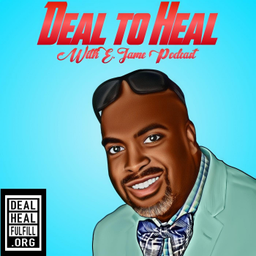
Deal To Heal With E. James
Deal To Heal Podcasting Network
5.0from 1 ratings
- 255
- Episodes
- 1
- Ratings
- Daily
- Cadence
- 2021
- First episode
About Deal To Heal With E. James
The Deal to Heal with E. James Podcast is a podcast dedicated to sharing a message of hope and healing to the world. On our podcast, my guest and I, discuss topics and ways to help us to heal in every area of our lives. Our belief, on the podcast, is that everyone can, and should, live a life that’s whole, healthy, and healed. So, our Mission is to help people to deal, heal, and fulfill. “Deal with their problems, heal from the pain, and fulfill their purpose.” We believe that as we heal ourselves, we heal our families. Our families heal our communities. And our communities heal our world.
- Publisher
- Deal To Heal Podcasting Network
- Category
- education
- Language
- en
- Explicit
- No
- First episode
- 29 Aug 2021
- Latest episode
- 7 Oct 2026
Latest episodes
255 episodes in the feed.
7 Oct 2026
EP 528 Why Christians Should Talk About Mental Health | Brandy Chandler
Can Christians struggle with depression, anxiety, trauma, or suicidal thoughts and still have strong faith—and why do some people feel forced to choose between prayer and therapy? In Episode 297 of the Deal to Heal with E. James Podcast, Earnest James welcomes Brandy Chandler, wife, mother, counselor-in-training, and founder of Evermercy Wellness, for a vulnerable conversation about faith, mental health, trauma, depression, suicidal ideation, healing, and purpose. Brandy's passion for mental wellness comes from lived experience. She shares her history of trauma, depression, anxiety, self-harm, suicidal ideation, and suicide attempts. Growing up in the church, she also encountered an unspoken message that certain mental-health struggles weren't things Christians talked about. As Brandy began pursuing both her mental-health journey and her faith journey, however, she discovered what she describes as significant space in Scripture for conversations about emotional and mental well-being. That realization eventually helped shape the mission of Evermercy Wellness, her Christ-centered mental-wellness ministry. One of the episode's most important conversations challenges the idea that people must choose between faith and professional mental-health care. Brandy explains that her own recovery involved both: professional support and a deeper understanding of her relationship with Jesus. The conversation also explores the reality that healing isn't always instantaneous. Sometimes healing happens “as you go.” Progress may include therapy, developing coping skills, changing old mindsets, finding supportive community, understanding yourself, strengthening your faith, and accepting that needing help isn't evidence of spiritual failure. Brandy's story eventually shifts from pain toward purpose. Hospitalizations interrupted her college journey, but she returned, completed her bachelor's degree, and is now working toward her master's degree while training to become a counselor. She also created Evermercy Wellness to begin serving others now through faith-based education and practical mental-health resources. Her closing message captures the heart of the episode: don't allow shame—or other people's interpretation of faith—to convince you that you must carry your struggles alone. Faith and help do not have to be enemies. 🔑 7 Key Takeaways 1. Faith and Mental-Health Care Don't Have to Compete A central theme throughout the episode is the false choice some people experience between trusting God and seeking professional help. Brandy's experience included both. At approximately 12:21, she describes her healing as a mixture of professional help and learning who Jesus actually is. Seeking counseling doesn't automatically indicate weak faith, and faith doesn't require ignoring legitimate mental-health needs. 2. Silence Can Make Mental-Health Struggles Harder Brandy grew up in church but remembers an unspoken understanding that mental-health struggles weren't openly discussed. She experienced trauma, depression, anxiety, self-harm, and suicidal thoughts before receiving professional mental-health care as a teenager. Her experience highlights why creating safe spaces for honest conversations—particularly within faith communities—matters. 3. Healing Doesn't Always Happen Instantly Earnest introduces a powerful biblical distinction during the conversation: some people in Scripture experienced immediate healing, while others were healed “as they went.” That becomes a metaphor for mental and emotional healing. Not every breakthrough happens overnight. Sometimes healing occurs while you're going to therapy, learning healthier coping skills, changing thought patterns, deepening your faith, building community, and continuing to move forward. 👤 Guest Bio — Brandy Chandler Brandy Chandler is a wife, mother, counselor-in-training, and founder of Evermercy Wellness, a Christ-centered mental-wellness ministry. Brandy created Evermercy Wellness out of both her personal experiences and her developing professional work. Her journey includes navigating trauma, depression, anxiety, self-harm, suicidal ideation, suicide attempts, hospitalizations, therapy, and questions about how mental-health treatment fits alongside Christian faith. After having to leave college because of hospitalizations, Brandy returned and completed her bachelor's degree. At the time of this recording, she says she is nearing completion of her master's degree and is continuing her training toward professional counseling. Through Evermercy Wellness, Brandy currently focuses on faith-based mental-health education, practical tools, biblical support, compassionate care, and Hope Guides addressing specific mental-health challenges. Her mission grew from a simple realization: she wanted to become the kind of person she needed when she was struggling. Connect With Brandy Website: evermercywellness.com Social Media: @evermercywellness across social platforms
30 Sept 2026
EP 257 Building Resilience: You Survived, Now It's Time to Thrive | Earnest James
How can you stop allowing grief, divorce, failure, depression, or past trauma to become your identity while still acknowledging how those experiences affected you? After more than three years of consistently releasing the Deal to Heal with E. James Podcast, Earnest James uses Episode 257 to reflect on his own journey and introduce the next chapter of his work. Earnest explains why his professional positioning has evolved from author, podcaster, speaker, and grief guide toward Resilience Educator. Grief remains an important part of his work, but resilience provides a larger umbrella for conversations about grief, suicidal ideation, depression, life transitions, workplace change, education, setbacks, and the many obstacles people encounter throughout life. Drawing from his own experiences, Earnest challenges listeners to look backward before deciding they aren't strong enough to handle what's ahead. He recommends creating a written inventory of the experiences you've already survived. That list can become evidence of your resilience when the next difficult season makes you question your ability to keep going. But Earnest makes an important distinction: survival is only the beginning. Resilience isn't about denying pain, pretending everything is okay, or allowing trauma to become your identity. It means acknowledging where you are, dealing honestly with what happened, and developing the tools necessary to regain your footing. Earnest also discusses identity. Divorce, grief, depression, suicidal ideation, failure, rejection, and other painful experiences can become parts of our stories without becoming the definition of who we are. The episode introduces listeners to Earnest's developing E.M.B.R.A.C.E. framework, which he is bringing into schools, organizations, corporate environments, workshops, and future podcast conversations to teach practical resilience. Episode 257 ultimately represents both a celebration and a transition: celebrating 257 episodes of Deal to Heal while moving more deeply into the message that has been present throughout Earnest's journey all along: You've already survived more than you sometimes remember. Now the question becomes: how will you use that evidence to move forward? 🔑 Key Takeaways 1. Your Past Can Provide Evidence of Your Resilience Earnest offers listeners a practical exercise: make a list of what you've already overcome. Go as far back as you can remember and write down significant experiences—good and bad—that affected your life. When the next obstacle makes you question whether you can make it, that list can remind you: “If I've overcome all of this, surely I can overcome what I'm facing now.” 2. Resilience Doesn't Mean Pretending You're Okay At approximately 12:37, Earnest makes an important distinction. Resilience isn't: Pretending something didn't happen Pretending everything is okay Denying that an experience affected you Instead, resilience begins by acknowledging: “Yes, I am in this situation. What do I need to do, and how do I need to move in order to get out of this space?” That's the Deal portion of Deal. Heal. Fulfill.—we can't effectively move forward from something we refuse to acknowledge. 3. Surviving Is an Accomplishment—but It's Not the Finish Line One of the episode's strongest messages comes around 13:54: “Surviving is just the beginning. It's not the end.” Getting through the crisis matters. But resilience also asks how we regain our footing, rebuild, and eventually move from merely surviving toward thriving. You survived the fall. Now it's time to get back up. 👤 Host Spotlight — Earnest James Earnest James is the host of the Deal to Heal with E. James Podcast and a Resilience Educator, speaker, author, podcaster, coach, and workshop facilitator. His work centers on helping people navigate adversity, grief, change, and difficult life experiences while developing the resilience needed to move forward. Through the Deal. Heal. Fulfill. philosophy, Earnest encourages people to: Deal with their problems. Heal from their pain. Fulfill their purpose.
23 Sept 2026
EP 256 Why Talking About Suicide can save lives with Leah Williams
What do you do when grief becomes so heavy that you don't know how to carry it—and how do we better support people who may be struggling in silence? In Episode 256 of the Deal to Heal with E. James Podcast, Earnest James welcomes Leah Williams, author and mental health advocate, for an open conversation about suicide prevention, suicide-loss postvention, grief, mental health, community, and hope. Leah's advocacy comes from lived experience. During her freshman year of college, one of her closest friends died by suicide. Alongside the devastating grief of losing her friend, Leah wrestled with guilt and questions about what she could have known or done differently. That loss eventually became part of Leah's own struggle with suicidal ideation. Rather than keeping those experiences hidden, Leah now uses her story to help normalize conversations about suicide and mental health. She makes a particularly powerful point: “Community is suicide prevention. Conversations are suicide prevention.” Earnest and Leah discuss why simply becoming comfortable enough to say the word suicide matters. Silence and stigma can prevent people from expressing what they're experiencing, while honest conversations can create opportunities for people to ask for help and for loved ones to recognize when support is needed. The conversation also explores postvention—the support provided to people after someone they love dies by suicide. Leah introduces listeners to LOSS Teams, or Local Outreach to Suicide Survivors, which connect survivors of suicide loss with resources and support. The episode then broadens into grief itself. Earnest and Leah emphasize that grief isn't limited to death. People can grieve a marriage, a dream, a community, a move, or anything meaningful that has been lost. Leah also reminds listeners that grief changes across seasons and that community can provide perspective, safety, companionship, and moments of relief. Perhaps the episode's simplest lesson is also one of its most important: Sometimes love looks like showing up. You don't always need the perfect words. Sometimes sitting beside someone, studying together, sharing a meal, going for a walk, or simply making sure they aren't alone can matter more than trying to fix their pain. 🔑 Key Takeaways 1. We Have to Become Willing to Talk About Suicide Leah argues that awareness begins with becoming comfortable enough to have uncomfortable conversations. She specifically discusses the tendency to substitute words such as “unalive” for suicide. While social-media algorithms may influence that language, Leah believes we need to become comfortable saying suicide when having serious mental-health conversations. Silence doesn't create prevention. Conversation creates opportunities for connection and help. 2. Community Can Be a Form of Suicide Prevention One of Leah's most memorable statements is: “Community is suicide prevention. Conversations are suicide prevention.” Checking on someone, noticing when they stop showing up, creating space for honest conversations, and helping people connect with resources can all matter. Mental health shouldn't only become a topic after a crisis occurs. 3. Suicide Loss Creates Its Own Grieving Journey After losing her friend, Leah experienced guilt while grieving. Questions such as “What could I have done?” or “Why didn't I know?” can become part of the experience for people left behind after a suicide. This is why Leah is passionate about postvention as well as prevention. Survivors of suicide loss need support too. 4. Grief Is Bigger Than Bereavement Earnest expands the conversation by emphasizing that grief isn't limited to someone dying. We can grieve: A relationship or divorce A dream A community A major move A former version of our lives Someone we love Recognizing these experiences as grief can help us acknowledge rather than minimize what we're feeling. 👤 Guest Bio — Leah Williams Leah Williams is an author and mental health advocate passionate about suicide prevention and postvention. Her advocacy grew from personal experience after one of her closest friends died by suicide during Leah's freshman year of college. Leah subsequently navigated grief, guilt, and her own suicidal ideation. Today, she uses her experiences to encourage more open conversations about mental health, increase awareness of available resources, and help people better understand how to support someone experiencing grief or suicidal thoughts. Leah is the author of Gray Thoughts, a memoir chronicling the loss of her friend, her grieving process, and her experiences throughout the remainder of college. Connect with Leah / Find the Book Website: graythoughtsbook.com Book: Gray Thoughts Amazon: Available in book format Audible: Available as an audiobook Spotify: Available in audio format
Reach and audience
Public platform figures. Ratings count people who left a rating, not total listeners.
- Spotify
- 5.0 / 5
- 1 ratings
Host of Deal To Heal With E. James?
Claim your podcast to manage its listing and keep your show details accurate.
Pod Engine is an independent podcast discovery and analytics service and is not affiliated with or endorsed by this podcast. Artwork and show content belong to their owners. Full legal notice.
Explore this show
Podcast research with Pod Engine