- 14
- Episodes
- Weekly
- Cadence
- 2026
- First episode
About Decode Teen Emotions Podcast
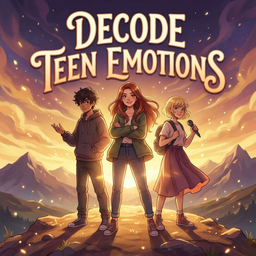
Real tools for teen anger, confidence, and communication for teens and the parents who love them. Host John, expert Susan, and a teen guest decode what's really going on beneath the surface, covering the real situations teens face every day.
- Publisher
- Agnes Blake
- Category
- health & fitness · kids & family
- Language
- en
- Explicit
- No
- First episode
- 17 Mar 2026
- Latest episode
- 30 Sept 2026
Latest episodes
14 episodes in the feed.
30 Sept 2026
Episode 13: The Feelings You Haven't Named
Ever answer "I'm fine" when you're really anything but? Welcome back to Decode Teen Emotions. I'm John, here with Susan, and today Braydon is back with us for an episode about something that trips up teens and adults alike: actually naming what you feel instead of rounding everything down to mad, sad, or fine. This one's for every teen, guy or girl, who's ever said "I'm fine" when they weren't. In this episode, Braydon admits "fine" is basically his default answer to everything, and Susan uses that to unpack why most of us never got handed a bigger emotional vocabulary than mad, sad, happy, and fine. She walks through how one word like "mad" can actually be hiding frustration, disappointment, or embarrassment underneath, using Braydon's own group project story as an example. From there, Susan introduces a simple way to track emotional triggers over time, shares the story of a teen named Jake who used a single pause to defuse a blowup with friends, and runs through a handful of in the moment tools, from breathing to bullet point journaling to a body scan, so listeners can find the one or two that actually fit them. The episode ends by connecting all of it back to values, the things underneath your reactions that actually matter to you. By the end of this episode, you will have a bigger emotional vocabulary, a simple way to spot your own triggers, and at least one calming tool you can try the next time something sets you off. In this episode: Why "fine," "mad," and "sad" are often standing in for more specific feelings Braydon's group project story and how "mad" turned out to be annoyed and worried A simple way to track your emotional triggers using just three quick notes Jake's story, how one pause changed an entire argument with friends A few in the moment tools to try, including breathing, journaling styles, and a body scan This week's challenge: three times this week, try answering "how are you doing" with a more specific word than fine, mad, or sad, even if it's just in your head. Then pick one tool from the episode, breathing, bullet point journaling, or a body scan, and try it exactly once. [The Feelings You Haven't Named Yet Worksheet Worksheet for this episode 13 download it and follow along at your own pace. Based on the book series by Agnes Blake: Anger Management for Teens: Mad to Calm Want to go deeper? Teens Emotional Wellness Workbook
15 Sept 2026
Decode Teen Emotions: Episode 12: Digital Distress: Social Media and Your Emotional Health
It's 7am and you're already comparing yourself to people who look like they have more going on, more followers, and a better life than you. Sound familiar? In this episode, John and therapist Susan get into what social media actually does to your emotional health, and why comparing your insides to everyone else's carefully curated outsides is never a fair fight. Page shares what it was like to experience online cruelty and want to fight back. Maya shares what happened when she deleted her apps on impulse for a week and discovered something unexpected: mental space, quiet, and a completely different relationship with her phone on the other side. Susan gives four practical tools for auditing your digital habits without giving up the things you actually value about being online. This one is honest about both sides. Social media has real benefits. It also has a real cost. This episode helps you figure out which one is winning. Based on the book "Anger Management for Teens: Mad to Calm." In this episode: Why social comparison hits differently on social media Cyberbullying: why responding angry gives the other person more material Maya's three-week digital detox and what she found on the other side A practical audit of your feed, your habits, and your phone-free zones How much of what you post is really you? 📄 Download the Episode 12 worksheet: https://docs.google.com/document/d/1ly-2EgyOs9lPHDauAIpvqN34oH8k-aw4oTvt1ZFX3dw/edit?usp=sharing
30 Aug 2026
Decode Teen Emotions: Episode 11: Fitting In vs. Being Real
Maya hid her love of astronomy for two whole years after one uncomfortable moment in sixth grade. It made sense at the time. The problem is when hiding becomes so automatic you stop knowing what you're hiding anymore. In this episode, John and therapist Susan get into the emotional cost of performing a version of yourself all day, and what it actually takes to start being real. Maya shares what it felt like to have a big friend group and still feel completely alone, because none of them knew the real her. Susan explains why that exhaustion is real even when "nothing happened," and how the decisions we make about ourselves in moments of pain can quietly run our lives for years after the original moment has passed. This episode is about reviewing those old rules, noticing the comparison trap, and taking one small step toward letting someone see who you actually are. Based on the book "Anger Management for Teens: Mad to Calm." In this episode: The mask we wear and how hiding becomes automatic Why performing yourself all day is exhausting in a way that's hard to explain Old decisions, new questions: reviewing the rules you made about yourself The comparison trap: why comparing your insides to everyone else's outsides isn't fair How vulnerability creates connection 📄 Download the Episode 11 worksheet: https://docs.google.com/document/d/1tNUjUBB2kodHW07-Mgwu2XzSh6VxjEIdZly4LNkrCfI/edit?usp=sharing
15 Aug 2026
Decode Teen Emotions: Episode 10: Peer Pressure: The Power of Being You
Have you ever agreed with someone just to avoid the awkward silence? Changed how you talk, what you laugh at, or what you admit to liking depending on who's in the room? In this episode, John and therapist Susan break down what peer pressure actually is, why your brain is wired to feel social rejection like physical pain, and what it costs you when you keep saying yes to things that aren't really you. Teen guest Page shares what it felt like to realize he'd been agreeing with everyone for so long he didn't know what he actually thought anymore. Susan calls it identity debt, and a lot of teens are carrying more of it than they realize. This episode gives you two practical tools: a values map to help you know yourself well enough to notice when you're drifting, and a simple framework for saying no without drama or long explanations. Because your discomfort, your values, and your gut feeling count. They're enough. Based on the book "Anger Management for Teens: Mad to Calm." In this episode: Direct vs. indirect pressure: which one is harder to resist and why Identity debt: what happens when you perform for so long you lose track of yourself Building a values map so you have something to check against when pressure hits Practising assertiveness without aggression Finding the people who know the real you 📄 Download the Episode 10 worksheet: https://docs.google.com/document/d/1If_ttHyX6F2v3-p2o_ncXgiWG1bzu8C70WNIzuPBdz8/edit?usp=sharing
30 Jul 2026
Decode Teen Emotions: Episode 9: The Past Isn't Over Until We Face It
Why do you keep ending up in the same arguments? Why do certain friendships hit a wall every time? Why do some reactions feel way bigger than the moment seems to call for? In this episode, John and therapist Susan get into what actually happens when you don't face the hard stuff from your past, and what it looks like when you finally do. Teen guests Page and Maya share what it's like to start tracing your patterns back to where they started. Maya realized she'd been pushing close friends away for two years, all because of something she learned at age 8. Page has been quietly noticing her own patterns since the backpack episode and finally deciding she's ready to do something about them. Susan introduces two practical tools: the pattern journal (for tracking reactions that feel bigger than the situation) and the compassionate update (for talking to the younger version of you who learned something that's still running the show). This episode won't fix everything. But it might help you get curious enough to start looking. Based on the book "Anger Management for Teens: Mad to Calm." In this episode: Why knowing something affected you is not the same as facing it Maya's story: three lost friendships and the eight-year-old behind them The pattern journal: how to become a detective of your own reactions The compassionate update: what to say to a younger version of yourself When self-reflection isn't enough and therapy is worth considering 📄 Download the Episode 9 worksheet: https://docs.google.com/document/d/1dEQOB0fkPXbgaFEbYLCOFzx6drrRvrO7PPeR2I0K7Ec/edit?usp=sharing
15 Jul 2026
Decode Teen Emotions: Episode 8: Home Isn't Always a Haven
Home is supposed to be a safe place. But what happens when it isn't? In this episode, John and therapist Susan tackle the harder side of home life: sibling rivalry, financial stress, and parental conflict, and what it actually does to you emotionally when the place you're supposed to feel safe doesn't feel that way. Susan and teen guest Braydon get into what it's like to carry tension you can sense but nobody explains. Why teens almost always know something is wrong even when adults try to hide it. And why so many teens quietly blame themselves for things that were never their fault or their responsibility. This episode is about naming what's making home hard, recognizing how it shows up in your body, and building a toolkit for getting through the heavy days without having to fix everything at once. Based on the book "Anger Management for Teens: Mad to Calm." In this episode: Sibling rivalry and the roles we get assigned without choosing them The "silent shadow" of financial stress and why not knowing is often worse Why parental conflict activates your nervous system even when you try to ignore it How to separate the weather from the climate Building your toolkit for the hard days 📄 Download the Episode 8 worksheet: https://docs.google.com/document/d/1-Qz9ch_9zqQDpilpUgUvoaS6VrYG9RCrc5OX125RENE/edit?usp=sharing
30 Jun 2026
Decode Teen Emotions: Episode 7: Family Pressure or Family Peace?
Do you ever feel like you're carrying an invisible scorecard at home, constantly being measured against expectations you never agreed to? In this episode, John and therapist Susan unpack where family pressure actually comes from (hint: it's usually love and anxiety, not criticism), and teen guest Braydon shares what it's like to carry that low-level hum every day. Susan and Braydon explore the difference between performing for your family and actually living with them, and why that gap quietly builds resentment. They also dig into the generational divide: why your parents' solutions often don't fit your problems, and how to start bridging that gap with one honest conversation. You'll walk away with a simple framework for naming what you need, creating calm corners, and starting the kind of real connection most families never quite get to but wish they had. Based on the book "Anger Management for Teens: Mad to Calm." In this episode: The invisible scorecard and who set the expectations Why pressure usually comes from fear, not criticism Performing vs. living: are you always "on" at home? What parents don't know they don't know How to name what you need without it turning into a fight 📄 Download the Episode 7 worksheet: https://docs.google.com/document/d/14X_xD5gDJI17Btm1jpH_DWKaUlz90xbzmbEqpSqWAoA/edit?usp=sharing
15 Jun 2026
Decode Teen Emotions: Why am I like This? Unpacking the Past to Understand the Present
Have you ever reacted to something and wondered why it hit so hard? In this episode, host John sits down with teen emotional wellness expert Susan and teen guest Page to answer one of the most searched questions teens type into Google at midnight, "Why am I like this?" and what your past actually has to do with how you feel right now. Page opens up about going disproportionately hurt every time someone cancels plans, and traces it all the way back to a Monday morning in fifth grade that changed how her brain reads certain situations. John gets honest about his own avoidant tendencies and what growing up with an emotionally distant dad still shows up in how he parents today. Susan breaks down attachment styles, emotional imprints, and the story of Leo, a teen who spent years shutting down every time someone raised their voice, until he finally understood why. By the end of this episode, you will understand that your patterns have roots, and knowing those roots is the first step to changing them. In this episode: Why early experiences leave marks on your emotional skin even when you don't remember them What attachment styles are and how to recognize yours How Leo's nervous system was still following a rule from childhood years later The three questions that help you trace a big reaction back to where it actually started Why you don't need a big trauma to deserve support This week's challenge: Think of one reaction you had recently that felt bigger than the situation called for. Sit with these three questions and write them down: What just happened? What did that remind me of? And what was I actually afraid of? Backpack Check Worksheet download it and follow along at your own pace. Based on the book series by Agnes Blake: Anger Management for Teens: Mad to Calm Want to go deeper? Teens Emotional Wellness Workbook
30 May 2026
Decode Teen Emotions: Episode 5: Home or Pressure Cooker Understanding Family Dynamics
Ever walked into your own house and felt your whole body tense up for no reason you can explain? In this episode, host John sits down with teen emotional wellness expert Susan and teen guest Braydon to unpack one of the most overlooked sources of teen stress, the home environment itself, and why it hits differently for both guys and girls. John gets real about life with three teenage boys and admits he has not always gotten it right. Braydon opens up about walking through the front door and instantly knowing something is off, absorbing stress that nobody is talking about, and becoming the "human mood detector nobody asked to be." Susan breaks down why home hits on a deeper level than anywhere else, what different parenting styles do to teen emotions, and how one teen named Jalen went from constant explosions to actually feeling heard by making one simple change. By the end of this episode, you will have real tools to start saying what you feel at home in a way that opens doors instead of slamming them. In this episode: Why tension at home follows you everywhere, even when nobody says a word The difference between parenting styles and how they shape your emotions How Jalen went from acting out to feeling heard with one small shift The "I feel" formula and how to use it in a real conversation What parents can do to stay curious instead of reactive This week's challenge: Try the "I feel" formula at least once in a real conversation at home this week. It does not have to be a big moment. Just practice putting your feeling into words instead of letting it come out sideways. Notice what happens. My Family My Voice Worksheet download it and follow along at your own pace. Based on the book series by Agnes Blake: Anger Management for Teens: Mad to Calm Want to go deeper? Teens Emotional Wellness Workbook
15 May 2026
Decode Teen Emotions: Episode 4 Riding the Hormone Hurricane What's Happening to Me?
Ever wondered why some days feel completely impossible for no clear reason? In this episode, host John sits down with teen emotional wellness expert Susan and teen guest Page to get into the real science behind hormonal mood shifts during puberty, and what they mean for both guys and girls. John kicks things off by admitting he is a dad of three boys with zero personal experience in this territory, counting entirely on Susan to carry him through. Page opens up about crying at a dog food commercial, feeling hurt by a best friend's totally normal joke, and spending a midnight Google spiral wondering if something was actually wrong with her. Susan breaks down what hormones do to the teenage brain, why the adults around you sometimes make it worse without meaning to, and how one teen named Mia used a simple daily journal to go from feeling like an emotional mess to finally understanding her own patterns. By the end of this episode, you will understand why your brain reacts the way it does and have a simple tool to start making sense of your own patterns. In this episode: Why hormones make emotions feel bigger and harder to control for both guys and girls What estrogen actually does to the teenage brain Why "calm down" is the worst thing you can say to someone in that moment How one teen used a 30-second daily journal to stop feeling like an emotional mess What parents can do to actually help instead of making things worse This week's challenge: For the next seven days take 30 seconds at the end of each day and write down how your emotional energy felt and one thing that helped or made things harder. That is it. The Hormonal Journal Prompts Worksheet download it and follow along at your own pace. Based on the book series by Agnes Blake: Anger Management for Teens: Mad to Calm Want to go deeper? Teens Emotional Wellness Workbook
30 Apr 2026
Decode Teen Emotions | Episode 3: Trigger Tracking. What Sets You Off?
Ever explode over something small and wonder why it hit so hard? In this episode, host John sits down with teen emotional wellness expert Susan and 16-year-old guest Brayden to break down one of the most powerful tools for managing your emotions: understanding your triggers. Susan explains what triggers actually are, why they sneak up on you, and how "stacked triggers" can turn a small moment into a big reaction. Brayden gets real about his own patterns, from getting called out at basketball practice to firing off messages in group chats, and walks through Susan's five-step Trigger Tracking Worksheet live on air. By the end of the episode, you'll know how to spot your triggers, read your body's early warning signals, and build a simple plan that actually works. In this episode: What triggers are and why everyone has them How your "emotional battery" changes the way you react The five-step Trigger Tracking Worksheet Why making the gap between trigger and reaction even slightly bigger rewires your brain over time This week's challenge: Pick one trigger, run it through the five steps, and write it down at least once. That's it. The Trigger Tracking Worksheet is attached to this episode — download it and follow along with the five steps at your own pace. ----more---- Based on the book series by Agnes Blake, including Anger Management for Teens: Mad to Calm and the Teens Emotional Wellness Workbook. Anger Management For Teens - Mad to Calm Teens Emotional Regulation Teens Self Esteem and Emotional Strength Teens Emotional Wellness Workbook
13 Apr 2026
Decode Teen Emotions: Episode 2: The Soccer Game Snap
Decode Teen Emotions | Episode 2: The Soccer Game Snap — When Anger Gets Loud Ever said something in anger and immediately thought, "Why did I just do that?" You're not alone. In this episode, host Chris and teen guest Peyton get real about those moments when anger takes over — the snaps, the text spirals, the blowups that seem to come out of nowhere. With expert Susan breaking down the science, we unpack why anger is rarely just anger, and what's really going on underneath. We cover: Why your brain "hijacks" you before you can think How to identify the real emotions hiding behind anger (hint: it's usually fear, shame, or feeling left out) A step-by-step Emotional Check-In you can use before a tough conversation, a test, or a stressful social situation How teen hormones make all of this louder — and why that doesn't make you "too much" 🎯 Free Worksheet — Episode 2 Stress & Anger Checklist Follow along with the episode using the free downloadable worksheet! It walks you through the same Emotional Check-In Chris and Peyton use in real time — so you can map your own triggers, body signals, and patterns. Decode Teen Emotions: Worksheet Episode 2 Whether you're a teen who's ever exploded over something that felt bigger than it looked, or a parent trying to understand what's going on, this episode gives you real tools — not just "calm down." Inspired by Anger Management for Teens: Mad to Calm by Agnes Blake
24 Mar 2026
Decode Teen Emotions: Episode 1 - Anger Hits Like a Storm
When anger hits, it can feel overwhelming — like a storm you didn’t see coming. In this first episode of Decode Teen Emotions, we break down what anger really is, why it shows up so fast, and what it’s trying to tell you. Instead of feeling out of control, you’ll start to understand what’s happening inside — and how to respond in a healthier, more confident way. 📝 Grab your companion worksheet here:Episode 1 Worksheet This worksheet will help you:✔ Identify your personal anger triggers✔ Recognize emotional and physical warning signs✔ Reflect on how you typically react✔ Start building calmer responses
17 Mar 2026
Decode Teen Emotions
New format. Real teens. Expert voices. Welcome back to the John & Susan Podcast — your go-to space for real conversations that help families and teens grow, connect, and thrive. In this intro episode, we’re reintroducing ourselves and sharing what’s new. You’ll hear from teens and special guests, including experts who work directly with them, bringing real perspectives and meaningful conversations to every episode. Each episode now includes a companion worksheet designed to help you apply what you learn. These worksheets are inspired by the Wellness Workbook and our teen-focused books, giving you practical tools you can use right away. Hit subscribe and join us as we build stronger communication, healthier habits, and more confident voices—one episode at a time.
Contact Decode Teen Emotions Podcast
- Guest appearances
- Books guests
Based on episode analysis; this does not confirm that the show is currently accepting guests.
Host of Decode Teen Emotions Podcast?
Claim your podcast to manage its listing and keep your show details accurate.
Pod Engine is an independent podcast discovery and analytics service and is not affiliated with or endorsed by this podcast. Artwork and show content belong to their owners. Full legal notice.
Explore this show
Podcast research with Pod Engine