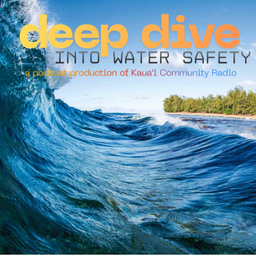
Podcast thumbnail for Deep Dive Into Water Safety

Deep Dive Into Water Safety

Claim This Podcast

by Kauaʻi Community Radio - KKCR

35 episodes
Updated Daily
Accepts GuestsHas SponsorsLocation 🇺🇸

Podcast Overview

Deep Dive Into Water Safety is a podcast dedicated to to one powerful truth: Drowning is preventable. Hosted by Kauaʻi waterperson Margaret Wright, the show features conversations with experts and community leaders from around the world who are working to save lives in and around the water. Together, we explore practical strategies to prevent drownings, educate swimmers, keiki, and parents, and create clear, culturally grounded messaging that makes a difference. Deep Dive is guided by Hawaiʻiʻs first statewide Water Safety Plan, a plan built on the realities that Hawaiʻi has the second highest drowning rate in the United States and that we can do better. Deep Dive Into Water Safety is produced on Kauaʻi by Kauaʻi Community Radio - KKCR, Kauaʻiʻs independent, non-commercial, listener-supported community radio station. kkcr.org.

Language

🇺🇲

Publishing Since

12/23/2025

2 verified contact emails on file for Deep Dive Into Water Safety

Pitch yourself as a guest, propose sponsorships, or reach out directly to the host.

Recent Episodes

Episode thumbnail for Deep Dive: An Interview with Sara Kehaulani Goo

July 3, 2026

Deep Dive: An Interview with Sara Kehaulani Goo

<h1>Episode Notes</h1> <p>**What's Your Kuleana?The Question Hawaiʻi Asks the World</p> <p>What does kuleana really mean?</p> <p>In this thought provoking conversation, award winning journalist <a href="https://www.saragoo.com/" rel="nofollow">Sara Kehaulani Goo</a>, President of Creator Content at The Washington Post and author of Kuleana: A Story of Family, Land, and Legacy in Old Hawaiʻi, shares the story behind her family's effort to protect ancestral land on Maui and the deeper journey that followed into history, identity, culture, and the responsibilities we inherit from those who came before us.</p> <p>Sara explains that kuleana is often translated as responsibility, but in the Hawaiian understanding it means much more. It is an honor, a stewardship, and a commitment to something larger than ourselves. It connects us to family, community, place, and future generations.</p> <p>The conversation explores the legacy of the Māhele, the Hawaiian Renaissance, the experiences of Native Hawaiians living throughout the diaspora, and what visitors should understand when they come to Hawaiʻi. Sara encourages visitors to approach Hawaiʻi with curiosity, humility, and a desire to learn. She reminds us that Hawaiʻi is not simply a vacation destination, but a living culture, a unique environment, and a place with a rich history that deserves understanding and respect. She encourages visitors to become more informed travelers, to appreciate the culture and history of the islands, and to recognize their connection to the places and communities they visit.</p> <p>Along the way, Sara challenges listeners to consider a simple but powerful question:</p> <p>What's your kuleana?</p> <p>For Deep Dive Into Water Safety, this conversation offers an important insight. Building a culture of safety is not only about sharing information. It is about helping people feel connected to the places they visit, and to the communities they become part of. People protect what they value, and they value what they understand.</p> <p>Whether your kuleana is to family, culture, land, water, or community, this episode explores a Hawaiian idea that may have something to teach all of us.</p> <p>Because the question is not just what kuleana means, the question is: What's your kuleana?**</p> <p>2026 SUMMER TOUR</p> <p>July 7, 2 pm Honoka'a, Big Island, @<a href="https://www.beachdogbookshawaii.com/" rel="nofollow">Beach Dog Books</a> with Kolby Akamu Moser</p> <p>July 7, 6 pm Kona, Hawai'i Island, @<a href="https://konastories.com/events/2026/07" rel="nofollow">Kona Stories</a> Words &amp; Wine Author Night</p> <p>July 8, 12 pm, Hilo, Hawai'i Island, at Hilo Public Library with Dr. Larry Kimura co-hosted by @<a href="https://basicallybooks.com/" rel="nofollow">Basically Books</a></p> <p>July 10, 10:30 am, Honolulu, @Civil Beat with Blaze Lovell <a href="https://www.eventbrite.com/e/a-talk-story-with-sara-kehaulani-goo-tickets-1991639335867?aff=website" rel="nofollow">Register here</a>.</p> <p>July 11, 2 pm Honolulu, @Barnes &amp; Noble in conversation with journalist and author Kirstin Downey</p> <p>July 13, 12 pm Līhu'e, Kaua'i, @Līhu'e Public Library</p> <p>6 pm, @Waimea Public Library</p> <p>July 14, 10 am, Kaumakani, Kaua'i @<a href="https://www.talkstorybookstore.com/" rel="nofollow">Talk Story Bookstore</a></p> <p>Support Deep Dive Into Water Safety by contributing to their tip jar: <a href="https://tips.pinecast.com/jar/deep-dive-into-water-safety" rel="payment nofollow">https://tips.pinecast.com/jar/deep-dive-into-water-safety</a></p>

Episode thumbnail for Deep Dive: An Interview with Sam Proffitt

June 29, 2026

Deep Dive: An Interview with Sam Proffitt

<h1>Episode Notes</h1> <p>Beyond the Rescue: What One Rip Current Incident Teaches Us About Saving Lives</p> <p>This episode features Sam Proffitt, Ocean Rescue Director for Wrightsville Beach, firefighter, paramedic, veteran lifeguard, researcher, and member of the International Drowning Researchers' Alliance (IDRA). His work bridges frontline rescue operations and drowning research, including studies on drowning care, responder mental health, rip currents, and emergency messaging.</p> <p>Also joining the conversation was Lt. Jamie Miess of Wrightsville Beach Ocean Rescue.</p> <p>A recent high-profile rip current rescue featured on Good Morning America became the starting point for a far-reaching discussion about drowning prevention, emergency response, public education, data collection, lifeguard mental health, and the future of water safety.</p> <p>The conversation began with a review of the rescue itself. Sam Proffitt, who responded to the incident, described arriving after reports of multiple swimmers in distress approximately 50–55 yards offshore. Rescuers made immediate contact with a child and recovered an unconscious adult who had become submerged. Initial treatment included five rescue breaths, chest compressions, CPR, police assistance, and transport to a trauma center.</p> <p>The rescue also sparked a broader discussion about media coverage and public messaging. Participants noted that early news reports often contain inaccuracies because they rely on witness accounts collected during stressful and chaotic situations. Rather than focusing on sensational details, speakers argued that media coverage should emphasize prevention.</p> <p>Rip currents emerged as a major focus of the discussion. Sam described an unusually busy three-week period during which lifeguards responded to approximately 60 rip-current-related incidents, illustrating how frequently lifeguards intervene before a situation becomes a drowning emergency. Lifeguards explained that many drownings occur on calm-looking days when beachgoers underestimate risk and fail to recognize the hazards beneath the surface.</p> <p>The group emphasized that drowning is a process rather than a single event. Panic, increasing fatigue, loss of confidence, and physiological deterioration often occur long before a person submerges. Participants argued that public education should focus on helping people recognize the early stages of distress and understand how drowning develops.</p> <p>A recurring theme throughout the conversation was the challenge of collecting accurate drowning data. Fatal and non-fatal drowning incidents remain underreported and inconsistently classified. Without better data on non-fatal drownings, it remains difficult to determine which interventions and treatments are most effective.</p> <p>The discussion also explored practical prevention strategies. Speakers advocated simple, universal messaging, swimming near lifeguards, understanding warning flags, bringing flotation devices to unguarded beaches, and asking lifeguards about local conditions before entering the water. A central theme was that prevention efforts must reach visitors before they arrive at the beach.</p> <p>The discussion also emphasized the value of flotation as a prevention tool. Lt. Jamie Mies discussed encouraging visitors to consider bringing a flotation device when visiting the beach, particularly when lifeguards are not present or when they are unfamiliar with local ocean conditions.</p> <p>The conversation also examined water safety education programs, including junior guard programs, school outreach initiatives, and seasonal camps serving approximately 150–160 children each summer.</p> <p>Another important topic was the mental health of lifeguards and first responders. Participants discussed the emotional toll associated with rescues, fatalities, and repeated exposure to traumatic incidents, highlighting concerns about PTSD and the need for stronger support systems.</p> <p>The final portion of the discussion focused on research and innovation. Sam described a collaborative project with the University of North Carolina Wilmington that will use artificial intelligence to analyze approximately ten years of drone footage collected during rip-current events. Researchers hope the findings will help improve future safety messaging and better understand rip-current behavior.</p> <p>The conversation also explored doctoral research examining how people process emergency messages and whether artificial intelligence can help tailor messages to specific audiences. With approximately 1,000–1,500 data points collected, the research seeks to identify factors that influence how people respond to safety information.</p> <p>Regional collaboration was also discussed. Puerto Rico was highlighted as an example of a locally driven water-rescue and water-safety program that has grown through community leadership and partnerships. Participants discussed sharing regional plans and lessons learned, and Sam expressed interest in reviewing Hawaiʻi's Water Safety Plan to identify opportunities for collaboration and shared learning.</p> <p>Looking ahead, participants agreed that technology—including AI-driven detection systems, autonomous rescue devices, drone surveillance, and personalized messaging—has tremendous potential to improve drowning prevention. However, they emphasized that technology should support lifeguards rather than replace them.</p> <p>Ultimately, the discussion reinforced a simple but important lesson: every rescue offers an opportunity to learn. By improving data collection, strengthening public education, supporting first responders, expanding prevention programs, and embracing research and innovation, communities can move beyond reacting to emergencies and begin preventing them.</p> <p>Every rescue tells a story. The challenge is making sure we learn from it before the next one happens.</p> <p>**</p> <p>Support Deep Dive Into Water Safety by contributing to their tip jar: <a href="https://tips.pinecast.com/jar/deep-dive-into-water-safety" rel="payment nofollow">https://tips.pinecast.com/jar/deep-dive-into-water-safety</a></p>

Episode thumbnail for Deep Dive: Brook and Zane Silvester

June 25, 2026

Deep Dive: Brook and Zane Silvester

<h1>Episode Notes</h1> <p>**</p> <h1>Eyes for Lives: Building the Next Generation of First Nations Lifeguards</h1> <p>What if one of the most effective ways to prevent drowning is not a new rescue technique, but helping people reconnect with culture, community, and the ocean?</p> <p>In this episode of Deep Dive Into Water Safety, Bundjalung Saltwater People Brook Silvester and his son Zane join the program to discuss the work they are doing to create new pathways into water safety for Indigenous youth on Australia's Gold Coast.</p> <p>Among many coastal First Nations communities in Australia, Saltwater People are those whose identity, culture, stories, food sources, travel routes, and responsibilities are closely tied to the sea and waterways. Knowledge of currents, tides, weather, fishing grounds, and safe movement through the water has traditionally been passed from one generation to the next.</p> <p>Brook is the founder of First Nations Lifeguards and Bombora Surf School. He brings more than four decades of experience in and around the ocean as a surfer, water cinematographer, surf coach, and lifeguard.</p> <p>Many people will also recognize Brook's work behind the camera on Bondi Rescue, where he spent more than 11 years filming rescues and working alongside some of Australia's most experienced lifeguards, including Bruce &quot;Hoppo&quot; Hopkins. Brook credits those experiences, and Hoppo's mentorship, with helping shape his approach to water safety one that focuses not only on rescue, but on prevention, education, trust, and community connection.</p> <p>Zane is a professional sponsored surfer, surf coach, lifeguard, and proud Bundjalung man who is helping carry that work forward. He understands the importance of being visible to young Indigenous people who may never have seen someone from their community working in those roles.</p> <p>The conversation centers on the First Nations Lifeguards Academy, the Eyes for Lives pathway, and Bombora Surf School. While these programs teach swimming, surfing, ocean awareness, hazard recognition, and lifesaving skills, they are really about something much bigger. They are about confidence, identity, leadership, and connection.</p> <p>For Saltwater People, the ocean is not simply a place for recreation. It is connected to culture, family, story, responsibility, and knowledge that has been passed from one generation to the next for thousands of years. Brook and Zane explain how reconnecting young people to that knowledge can also help create safer relationships with the water.</p> <p>At the center of that work is Eyes for Lives, a pathway that helps young people develop water confidence, environmental awareness, leadership skills, and a sense of belonging before moving toward lifeguard qualifications and employment opportunities. The goal is not simply to create lifeguards. It is to create future leaders.</p> <p>Brook also shares the story behind the name Bombora Surf School. A bombora is an offshore reef or submerged rock formation that can create powerful breaking waves. Like the ocean environments that inspired its name, the school emphasizes awareness, respect, and learning how to read the water safely.</p> <p>While Bombora Surf School has only been operating for about a year, the knowledge, values, and connection to the water that guide its programs have been passed from generation to generation for thousands of years.</p> <p>The discussion also explores Bombora Surf School's commitment to inclusion through adaptive and all-abilities surfing programs. Participants living with disabilities are supported through adaptive equipment, beach wheelchairs, and trained instructors. For Brook and Zane, inclusion is not a separate initiative. It is simply part of ensuring that everyone has the opportunity to experience the ocean safely and confidently.</p> <p>A recurring theme throughout the conversation is the importance of representation. When young people see someone who looks like them, shares their culture, and understands their experiences working as a lifeguard, surf coach, or ocean leader, it helps them believe those opportunities are available to them as well.</p> <p>For listeners in Hawaiʻi, there is a great deal to consider. Many conversations about water safety focus on hazards, warnings, and risk. Brook and Zane challenge us to think about connection, belonging, culture, and community as important parts of keeping people safe around the water.</p> <p>Both Brook and Zane expressed enthusiasm for future collaboration between First Nations communities in Australia and Indigenous communities in Hawaiʻi. The discussion explored how lifeguards, educators, and community leaders from both regions can learn from one another while strengthening water safety through shared knowledge, cultural understanding, and ocean stewardship.</p> <p>Throughout the conversation, Brook and Zane make the case that water safety starts long before a rescue ever happens. It starts with helping people build a relationship with the ocean, understand the environment, and feel like they belong there.</p> <p>Their message is simple: when people feel connected to the water, their culture, and their community, they are more likely to develop the knowledge, confidence, and respect needed to stay safe.</p> <p><a href="https://www.firstnationslifeguards.com.au/" rel="nofollow">First Nations Lifeguards Australia</a></p> <p><a href="https://www.bomborasurfschool.com.au/" rel="nofollow">Bombora Surf School</a></p> <p>**</p> <p>Support Deep Dive Into Water Safety by contributing to their tip jar: <a href="https://tips.pinecast.com/jar/deep-dive-into-water-safety" rel="payment nofollow">https://tips.pinecast.com/jar/deep-dive-into-water-safety</a></p>

35 total episodes available

Deep-dive analytics for Deep Dive Into Water Safety

Frequently asked questions

Have a different question and can't find the answer you're looking for? Reach out to our support team by sending us an email and we'll get back to you as soon as we can.

What is Deep Dive Into Water Safety?

Deep Dive Into Water Safety is a podcast dedicated to to one powerful truth: Drowning is preventable. Hosted by Kauaʻi waterperson Margaret Wright, the show features conversations with experts and community leaders from around the world who are working to save lives in and around the water.

Together, we explore practical strategies to prevent drownings, educate swimmers, keiki, and parents, and create clear, culturally grounded messaging that makes a difference. Deep Dive is guided by Hawaiʻiʻs first statewide Water Safety Plan, a plan built on the realities that Hawaiʻi has the second highest drowning rate in the United States and that we can do better.

Deep Dive Into Water Safety is produced on Kauaʻi by Kauaʻi Community Radio - KKCR, Kauaʻiʻs independent, non-commercial, listener-supported community radio station. kkcr.org.

How often does this podcast release new episodes?

This podcast updates daily.

Where can I listen to this podcast?

This podcast is available on 4 platforms including Apple Podcasts, Spotify, and more. You can also use the RSS feed directly.

Does this podcast accept guests?

Information about guest appearances is not available.

Legal Disclaimer

Pod Engine is not affiliated with, endorsed by, or officially connected with any of the podcasts displayed on this platform. We operate independently as a podcast discovery and analytics service.

All podcast artwork, thumbnails, and content displayed on this page are the property of their respective owners and are protected by applicable copyright laws. This includes, but is not limited to, podcast cover art, episode artwork, show descriptions, episode titles, transcripts, audio snippets, and any other content originating from the podcast creators or their licensors.

We display this content under fair use principles and/or implied license for the purpose of podcast discovery, information, and commentary. We make no claim of ownership over any podcast content, artwork, or related materials shown on this platform. All trademarks, service marks, and trade names are the property of their respective owners.

While we strive to ensure all content usage is properly authorized, if you are a rights holder and believe your content is being used inappropriately or without proper authorization, please contact us immediately at hey@podengine.ai for prompt review and appropriate action, which may include content removal or proper attribution.

By accessing and using this platform, you acknowledge and agree to respect all applicable copyright laws and intellectual property rights of content owners. Any unauthorized reproduction, distribution, or commercial use of the content displayed on this platform is strictly prohibited.