- 12
- Episodes
- 15
- Ratings
- 2023
- First episode
About Delivery Charge
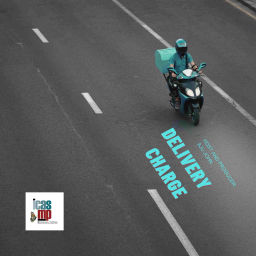
By 2023, a large portion of Berlin’s food delivery workers were international students from South Asia. In the second season of this podcast, host and producer Aju John explores their struggle for survival and their resistance to exploitation.
- Publisher
- Aju John
- Category
- society & culture
- Language
- en
- Explicit
- No
- First episode
- 23 Feb 2023
- Latest episode
- 27 Jun 2025
Latest episodes
12 episodes in the feed.
27 Jun 2025
E1: Punjab to Potsdamer Platz
International students Shivani, Mohammed, and Abhay recount their experiences transitioning from South Asian professionals to food delivery workers in Berlin, highlighting the challenges of low-wage labor and exploitation within Germany's platform economy; this is an interview episode.
20 Mar 2024
E10: Friends and Supporters
For the last episode of this season of the Delivery Charge podcast, host and producer Aju John is interviewed by some of its friends and supporters: the cultural anthropologist Jagat Sohail, and the doctoral researchers Joanna Bronowicka, Marini Thorne, Nicolas Palacios, and Sneha P. These interviews cover many of the themes that emerged in the previous nine episodes. Those episodes featured my interviews with platform worker activists in Berlin and India between August 2021 and November 2023. In Berlin, delivery worker activists led efforts to establish works councils at the delivery companies Gorillas, Lieferando, and Flink, and resisted the company managements’ efforts to install a friendly works council at Getir. In India, activists of the Telangana Gig and Platform Workers Union and the Rajasthan App-based Transport Workers Union, organised to seek legal reform by influencing key elections and the worker activists affiliated with the All India Gig Workers Union sought the activation of the existing labour bureaucracy to benefit platform workers. These interviews gave us a perspective on their organised pursuit of power in platform work. With the emergence of platforms, there is even more standardisation, granular control and planning in logistical operations. App-based delivery workers have even less discretion on how to complete their tasks. At the same time, platforms and platform work are also being determined by the particular geographies of the places they serve, including as we have explored in this podcast: demographic compositions, labour market segregations, and labour regulations. In making this podcast, we learnt how Berlin’s delivery worker collectives used Germany’s works councils law to seek tangible material outcomes such as termination protection and the ability to organise co-workers during paid working hours. In India, platform workers unions and unofficial associations leveraged competitive democratic politics to aspire towards the legal regulation of platforms and social protection for platform workers. In both contexts, we saw that as workers movements embraced the law, the law embraced them back and left its deep imprint.
23 Dec 2023
E9: A Test of Employment
Generally speaking, in industrial or workplace disputes, the strike is a weapon of last resort and is used by workers to persuade the employer to accept their demands. On July 21, 2022, when a group of delivery workers stopped work in Bangalore, like some other gig work protests and strikes that we have observed in previous episodes of this podcast, the strike was not the weapon of last resort but simply a signal to commence negotiations. These workers delivering through Swiggy’s Instamart app wanted to be able to finish their work within the agreed upon shift timings but found themselves having to work up to fourteen hours every day. They had opinions on the conditions of their work, and felt that if they wanted to be heard, they had to go on strike. So far, in their struggle against their arbitrary suspensions from these apps, and for fair pay, reasonable working hours, holidays, and social security, India’s platform workers have not been able to use India’s mid-twentieth-century labour laws. For the All India Gig Workers Union, the CITU-affiliated federation that supported the July 2022 strikes, the strategy now is to have full-time workers recognised as employees of a platform. These strikes took place during the same month that The Guardian began publishing a series of reports into the files leaked from Uber by a whistleblower documenting the company’s unethical practices, including as they lobbied for favourable labour regulations. Bit by bit, sector by sector and state by state, AIGWU’s activists are helping platform workers pry open the gates to this legal infrastructure. It is precisely what platforms have been resisting around the world.
5 Dec 2023
E8: Against the Dying of the Light
In 2021, a year during which large parts of India had been under lockdown, Albinder Dhindsa wanted his company Blinkit to provide “instant commerce indistinguishable from magic”. A few months later, the delivery workers that were integral to the magic in Delhi-NCR were protesting their new rates and refusing to work. In 2021, Urban Company, which wanted to provide standardised home-based services through trained service professionals, was valued at an astounding 2 billion US dollars in 2021. On October 8 of that year, roughly 100 women, most of them beauty workers, protested the abrupt blocking of their IDs and compulsory retraining programmes. In December, more than fifty of them stayed overnight in front of the company’s office, in freezing temperatures. Both these protests were supported by trade union activists from the All India Gig Workers Union, a national federation of gig worker unions affiliated with the Centre of Indian Trade Unions, a national trade union of more than 62 lakh workers. The CITU believes in socialising the means of production and is the trade union arm of a leftist political party. The AIGWU’s work with Blinkit and Urban Company workers is a window to understand what it means to be part of the mainstream of the Indian labour movement today, more than thirty years after the liberalisation of the economy in 1991. During these years, much doubt has been cast on union strategies of mobilisation that rely only on formal state protections and employer accountability. Pushing back, the AIGWU contests the characterisation of Blinkit and Urban Company workers as part of the informal sector and advocates with them to use the labour law and to petition the state labour administration to enforce the labour law. While it is tempting to perceive it as a twentieth century union raging against the dying of the light, the potential growth of the platform economy is also an opportunity to expand the country's trade union movement.
19 Sept 2023
E7: Law’s embrace
The work of driving cars for Uber is not like the work of delivering food on Swiggy or the work of delivering groceries on Dunzo. A provider of beauty services on Urban Company does not do the same work as someone servicing or repairing air conditioners on the same app. They work at different locations, the tools of their work are different, and their work processes are managed differently. In July of 2023 however, the Rajasthan legislative assembly passed a law that would entitle all those workers to welfare benefits and social security. Until quite recently, platforms operated without regulation. In 2022 and 2023, gig and platform worker leaders like Shaik Salauddin and Ashish Singh were speaking directly to the politicians engaged in India’s competitive democratic politics, using the opportunities presented by elections to demand reforms of the law governing gig and platform work in India. This episode looks at this pursuit of legal reforms. For their demands to be credible, different types of platform workers need to come together as a category of workers that can be decisive in elections. They need to move beyond the identity markers of caste and religion, and the status of some of them as migrants from other parts of the country. Platform work leaders are building a wider tent for gig and platform workers, at least partly to be able to credibly make demands for legal reform. On the other hand, even the law’s recognition of different types of gig and platform workers as a single category can itself provide the impetus for workers organising and mobilising together. The law and platform worker movements are locked in a tight embrace, each leaving its imprint on the other.
3 Sept 2023
E6: Workers and Voters
Two events happened in southern India during the first week of May this year (2023). The first was the tragic death of a delivery worker in Hyderabad. Raju, who delivered for Swiggy, was killed in an accident while on his way to complete an order. His friends and colleagues tried to request the management of the food delivery platform company for some assistance for his family, but to no avail. The second was a video released by the Congress party during its campaign to get voted into power in the state of Karnataka. Rahul Gandhi, the party's most prominent leader, was sharing food with a handful of the city’s app-based delivery workers who are speaking to him about their declining incomes and the long hours they need to work to make ends meet. During the campaign, the Congress party made a manifesto promise that it would set up a gig workers' welfare board with an initial corpus of Rs. 3,000 crore and also ensure minimum hourly wages for gig workers and other workers in the unorganised sector. The death of a primary breadwinner could push a family into poverty. Their descent can, in theory, be arrested through solutions such as accident compensation and compulsory insurance schemes, that have become part of the fabric of work in many countries, especially countries where industrialisation happened early. The significant majority of workers in India however, over 90% of it by most accounts, do not benefit from compulsory social security schemes such as the employee state insurance and the provident fund. They are also not protected by the laws that regulate employment, such as the Factories Act. Thanks to the mischaracterisation of workers like Raju by platforms such as Swiggy, even working for a company valued at several billion US dollars is not a sufficient condition for a worker to climb out of informality. Platforms like Swiggy imply that they merely facilitate the transactions between customers and service providers like Raju to whom they owe no obligations arising from a contract of employment. After votes were counted on May 13, the Indian National Congress won the Karnataka elections in a landslide. Only a few weeks later, the legislative assembly in the state of Rajasthan, also scheduled to head into elections in November this year, passed the gig and platform worker social security law. At least in some states of India, gig and platform workers have become electorally significant to the extent that they can reasonably aspire for legal regulation and social security benefits that alter the current imbalance of power between them and platform companies. This episode of the Delivery Charge podcast is the first on the struggles of platform workers in India. The new and historic law in Rajasthan is our point of entry but it covers how the struggles for the law have been inspired by those of the hamals of Pune and the welfare board model of social security; the impact of the Bharat Jodo Yatra during which some gig worker leaders met Rahul Gandhi; the history of informal worker movements that, for several decades now, have used their power as citizens and voters to demand welfare benefits from the state; and why one particular gig and platform worker union opposes the broad coverage of the law. Thanks to Workers United for permitting us the use of material from this interview with Aruna Roy and Nikhil Dey (https://www.youtube.com/watch?v=56PYXFou9c8&pp=ygUuYXJ1bmEgcm95IG5pa2hpbCBkZXkgcmFqYXN0aGFuIHNvY2lhbCBzZWN1cml0eQ%3D%3D).
28 Jun 2023
E5: A Normal Working Day
Previous episodes of this podcast have covered the worker-led campaigns to establish works councils or Betriebsrats at Gorillas, Getir, Flink, and Lieferando. For the "rider" activists, the Betriebsverfassungsgesetz was a device that could stabilise their lives. With the establishment of a Betriebsrat (works council), they hoped to get paid for their activism and for helping other workers and also be protected against retaliatory firings. This episode contrasts that pursuit of stability with the notion of "flexibility" which, platform companies have argued, is beneficial for platform workers. The companies argue that they provide workers with the ability to work where they want and how they want. Indeed, for migrants into Germany, like Lieferando courier Mohammed Arif Khan, delivery work for platforms like Liferando is a convenient point of entry into the German job market. On the other, what is being seen by the platform companies as flexibility has been seen by platform workers as a lack of predictability. When platform companies talk about flexibility, they highlight a worker’s control over working time but not how reducing labour costs during periods of low demand has been a route to profitability. In spite of him holding a "permanent" job contract, Lieferando terminated Mohammed Arif Khan's employment. As we dive into the experience of worker complaints about shift planning, we also learn that perhaps working time is not actually flexible. To what extent for example, is the fact that one is a parent with childcare responsibilities, considered by a global algorithm in determining how working time is distributed among workers? Rob and Mo campaigned in 2022 to establish Betriebsrats at Flink and Lieferando respectively but achieved different results. Flink continues to resist the establishment of a Works Council through quite "extraordinary" interpretations of the German labour law on employment protection for workers who participate in the process of establishing a Works Council. Mo and his colleagues, on the other hand, quite successfully established a Works Council through elections. This body was able to help Mohammed Arif Khan retain his employment at Lieferando and open negotiations with the company about the knotty issues of shift planning.
12 May 2023
E4: Delivery Workers v. The Ghost of Hans Carl Nipperdey
At 11 am on April 25, 2023, Duygu Kaya's appeal against a decision of Berlin’s labour court was to be heard by the Appellate Labour Court for Berlin and Brandenburg. An hour before that, outside the court building, Duygu addressed a group that included some from the media, some representatives of German unions, and several current and former platform delivery workers. Duygu, along with Fernando and Ronnie, had been colleagues at Gorillas when they were fired less than a week after the strikes at the company in Berlin during the first week of October 2021. Their legal challenge had now arrived before an appellate court. Her address made it clear that this was not simply a matter of three workers who felt that they had been fired unjustly. The strikes at Gorillas were termed variously as wild strikes or wildcat strikes because they were conducted outside the framework of organising that is favoured in Germany’s system of industrial relations. Simply put, the strikes at Gorillas in early October of 2021 did not have the blessings of one of Germany’s mainstream unions. By asking why they were fired therefore, this litigation provoked an examination of those limits on the right to strike. Duygu wanted her individual case challenging her termination from Gorillas to have an impact on the freedom of German workers to strike. This litigation also asked us to consider whether those limits were appropriate at a workplace such as Gorillas, which was different from the types of work for which those limits had been developed. In this episode, we peel back the layers of this litigation. The workers in these platform delivery companies are part of the 46% of employees in Germany who are not covered by collective bargaining agreements. We hear from Duygu about her campaign for a strike right that is unconnected with mainstream unions and collective bargaining processes. Diego Danemiller Batres remembers his discussions with some mainstream unions as part of the Gorillas Workers Collective. The constraints within which such workers’ collectives have organised are legal and institutional on the one hand, but also social. We learn more about work processes and labour control in platform work, from the scholarship of Tatiana Lopez and Sarrah Kassem.
18 Apr 2023
E3: (For)getir about Co-determination
Workers are represented in Germany by trade unions and by their elected representatives in works councils. The works council (or "Betriebsrat" in German) is a key institution under German labour law, of which mitbestimmung or co-determination at the level of the workplace, is a defining principle. In the Delivery Charge podcast, host Aju John explores how platform delivery workers are organising for fairer conditions of work in India where he is from, and in Germany, where he lives. In the first two episodes of this podcast, we learnt about delivery workers organising in Berlin at the platform delivery companies Gorillas, Flink, and Lieferando. One notable aspect of their organising activity were the sometimes parallel campaigns to establish Betriebsrats at these companies. After a campaign that lasted several months, and despite the legal hurdles placed in their way, the Gorillas Workers Collective conducted Berlin-wide elections in November 2021, at which some among them were elected to the Betriebsrat (or Works Council). For some of the worker activists that we met on those episodes, Germany’s Works Constitution law or the Betriebsverfassungsgesetz, which is the law that provides for the establishment of works councils at workplaces, was an article of faith. For these workers, it promised the difficult process of organising workers, a measure of stability. Its provisions could protect some worker activists against retaliatory firings and also extend them financial resources. For them, the exercise of the space provided by the law in order to meet and make plans, was itself a form of worker resistance. But Ronnie's experience of this law as he worked at Getir, perhaps the world's largest quick commerce firm, was almost the polar opposite. Ronnie, an engineer from Kerala in India, moved to Berlin in 2019 for better economic opportunities. He was fired from Gorillas in 2021 and from Getir in 2022. In between these firings, he experienced Getir's attempt to install a works council at the company, and had to organise his colleagues to oppose it. The story of this eye-opening attempt to quell the spirit of the Betriebsverfassungsgesetz was also one about how a recent migrant from India learnt to fight a company valued at 20 billion dollars. Also in this episode, our closer look at some parts of the law that governs labour relations at these companies, leads us to an examination of the position of such bodies as the Gorillas Workers Collective, in the context of a dual system of worker representation that recognises only trade unions and works councils. We look for answers in the campaign for a Betriebsrat at Flink and the contest at Lieferando's Betriebsrat elections between the Lieferando Workers Collective and a list put forward by the trade union NGG. Apart from Ronnie, you can also listen to Rob from the Flink Workers Collective, Mo from the Lieferando Workers Collective, Dr. Eva Kocher, a professor of law at Centre for Interdisciplinary Labour Law Studies at the European University in Frankfurt (Oder), and Dr. Oğuz Alyanak, a postdoctoral researcher with the Fairwork project.
3 Apr 2023
E2: Flink Twice if you Want to Form a Works Council
Generally, the enforcement of legal labour standards such as the maximum limits on working time, the minimum limits on wages, and the minimum health and safety conditions at the workplace, is the job of the state. Systems of labour inspection and labour courts in their turn however, rely on the vigilance and courage of workers. In the Delivery Charge podcast, host Aju John explores how platform delivery workers are organising for fairer conditions of work in India where he is from, and in Germany, where he lives. In the first episode, we learnt about Gorillas, a startup company that promised to deliver groceries quicker that it would take someone to visit the supermarket for the same purchases. It became the fastest European company to become a unicorn, but was accused of doing so at the cost of disrespecting German labour law and the rights of its workers, most of whom were recent migrants to Berlin. Some of them, dissatisfied with their conditions of work, organised themselves into the Gorillas Workers Collective. After a campaign that lasted several months, and despite the legal hurdles placed in their way, this group conducted Berlin-wide elections in November 2021, at which some among them were elected to the Betriebsrat (or Works Council). The story did not end with the election of a Gorillas Betriebsrat for Berlin. The company restructured and separated its German subsidiary into multiple entities. In response, the members of the Betriebsrat that was elected in November 2021 decided that in the company’s new segmented structure, it was important to establish works councils at the level of individual warehouses. A year after the first election, workers in the warehouses at the Friedenau and Treptow districts of Berlin elected their respective works councils. Among those elected from Friedenau were Maria Coelho and Jose Silva. Listen to their stories on this episode. In between the Gorillas elections of November 2021 and December 2021, Betriebsrat elections also took place at Flink and Lieferando. The former, like Gorillas, is an "instant delivery" business that operates through a network of warehouses in city neighbourhoods. The latter delivers cooked food from restaurants and so-called dark kitchens. Both these companies have also been accused of pursuing extraordinary growth even as they are unable to meet basic labour standards. On this episode of the Delivery Charge podcast, you can also listen to Rob and Mo, who were pivotal in the campaigns to establish the Betriebsrats at these companies. In doing so, we will learn a bit more about the institution of the Betriebsrat in German labour law, with some help from Dr. Eva Kocher, a professor of law at Centre for Interdisciplinary Labour Law Studies at the European University in Frankfurt (Oder).
2 Mar 2023
E1: Form a Works Council in these Six Easy Steps
The works council (also known as the Betriebsrat) is a key institution under German labour law and illustrates the aspect of mitbestimmung or co-determination at the level of the workplace. Broadly speaking, workers, through this body directly elected by and composed of those working in the company, have rights to participate in the management of the companies they work for. In the Delivery Charge podcast, host Aju John explores how platform delivery workers are organising for fairer conditions of work in India where he is from, and in Germany, where he lives. In 2021, the delivery workers of Gorillas, many of whom were recent migrants to Germany, navigated several intimidating procedures, to campaign for, conduct elections to, and establish a betriebsrat for the company in Berlin. This episode contains the story of the Gorillas Workers Collective. Gorillas was established in Berlin in May 2020, not long after the city had imposed its pandemic containment measures. The company’s services rapidly spread to several other cities in Europe and attracted large amounts of capital investment. In the process, it became the fastest European company to become a unicorn. The company’s key attraction was its promise to deliver groceries quicker that it would take someone to visit the supermarket for the same purchases. The company’s growth at breakneck speed and its aggressive strategies to acquire customers during the pandemic, may have come at a great cost to its workers. Some riders and warehouse workers began their resistance through stoppages at some warehouses in the city during a snowstorm in February, 2021 that was supported by a campaign on social media under the name Gorillas Workers Collective. This perhaps set in motion a cycle of retaliatory firings and wildcat strikes. In April of 2021, the Gorillas Workers Collective began the legal process to establish a betriebsrat for Berlin. By the time the elections were concluded and a betriebsrat established in November, the company had altered it operational structure and there were doubts about whether the betriebsrat could discharge its duties in these changed circumstances. Listen to experiences of organising of Ahmad Hadeda, Avik Majumder, Jakob Pomeranzev, and Camilo Alvarez, who were all part of the Gorillas Workers Collective in 2021, and Maria Coelho, who was elected to the Betriebsrat for the Friedenau warehouse in 2022.
23 Feb 2023
Trailer: Delivery Charge
Does the experience of platform delivery workers mobilising to establish works councils at their companies in Germany give us a new way of looking at how unions are working among the platform delivery workers in India? Does the role of strikes and work stoppages by delivery workers in India give us a new way of looking at how delivery workers are organising in Germany? Apart from featuring interviews with delivery worker activists and trade union activists in India and in Germany, and the stories of their activism during the Covid years of 2020, 2021 and 2022, the Delivery Charge podcast explores themes such as the role of the works council under Germany's labour law, resistance to algorithmic management, the impact of the pandemic on delivery work, and forms of control in location-based platform work. You can listen to Eva Kocher, Uma Rani, Balaji Parthasarathy, Noopur Raval, Sarrah Kassem, Antonio Aloisi, Tatiana Lopez, Oguz Alyanak, Denis Neumann and other scholars of platform work and labour relations in the platform economy. The Delivery Charge podcast is supported by the M.S. Merian – R. Tagore International Centre of Advanced Studies ‘Metamorphoses of the Political’ (ICAS:MP), which is an Indo-German research collaboration funded by the German Federal Ministry of Education and Research (BMBF). It is hosted by Aju John, a lawyer and organiser and the founder of Nagrik Open Civic Learning. It will be available on all podcast platforms, including Spotify, Google Podcasts, and Apple Podcasts. Just search for Delivery Charge on any of these apps and you should find this podcast feed. Subscribe to the feed so that you are notified when the first episode releases.
Who has been a guest on Delivery Charge
Names identified in recent episode analyses. Showing up to five guests.
- Shivani
- Mohammed
- Abhay
Reach and audience
Public platform figures. Ratings count people who left a rating, not total listeners.
- Spotify
- 5.0 / 5
- 15 ratings
Podcast Authority Score: 16 / 100
A composite of feed quality, social presence, YouTube performance and engagement. Read the methodology.
- Quality
- 3
- Social presence
- 0
- YouTube
- 0
- Engagement
- 71
Contact Delivery Charge
- Guest appearances
- Does not typically book guests
Based on episode analysis; this does not confirm that the show is currently accepting guests.
Host of Delivery Charge?
Claim your podcast to manage its listing and keep your show details accurate.
Pod Engine is an independent podcast discovery and analytics service and is not affiliated with or endorsed by this podcast. Artwork and show content belong to their owners. Full legal notice.
Explore this show
Podcast research with Pod Engine