- 49
- Episodes
- 2024
- First episode
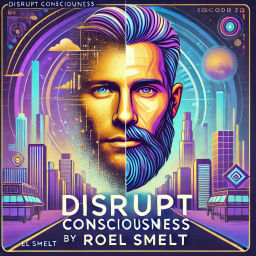
About Disrupt Consciousness
Humanity stands on the brink of multiple technology-driven disruptions that will not only preserve consciousness but also enable us to explore and elevate it, guiding us toward deeper understanding and enlightenment. roelsmelt.substack.com (https://roelsmelt.substack.com?utm_medium=podcast)
- Publisher
- Roel Smelt | Disrupt Consciousness
- Category
- society & culture · technology
- Language
- en
- Explicit
- No
- First episode
- 11 Sept 2024
- Latest episode
- 21 Mar 2026
Latest episodes
49 episodes in the feed.
21 Mar 2026
I Cancelled My SaaS Stack. My Agent Does It Now.
Last month I cancelled Substack, Descript, Riverside, Pressmaster, and a handful of other SaaS tools I’d been paying for. Not because they were bad. Most of them are genuinely good. I cancelled them because they weren’t agentic-first — and in 2026, that’s the only question that matters. The new filter I run my thought leadership through an AI agent called Gawain. He lives inside OpenClaw, has full access to my Ghost blog, posts to my socials via Zernio, generates images with Nano Banana 2, tracks my analytics weekly, and learns from every post. He’s not a tool I use. He’s a collaborator who handles the machinery while I focus on the thinking. When I looked at my SaaS stack through this lens, the filter was brutal: Substack — beautiful product, no API. Gawain can’t post there, can’t read subscriber data, can’t trigger anything. Ghost has a full Admin API. Decision made. Pressmaster — genuinely impressive AI writing tool, perfectly designed for what I needed. Except: I’d already solved memory with OpenClaw and Supermemory.ai. Maintaining context in two places isn’t productivity, it’s debt. Gawain writes essays now. He knows my voice, my intellectual references, my style. And he improves every week. Riverside and Descript — I was building a podcast workflow. Walking, recording, translating Dutch to English with my own voice. Then I asked myself: do I actually watch or listen to podcasts anymore? Not really. My agents prefer text. Why produce a format that neither I nor my agents consume efficiently? The pattern became clear: if a tool can’t be operated by an agent, it creates friction for me personally. And in 2026, my job isn’t to operate tools. My job is to think, wonder, and share insights. What remains The costs don’t disappear. They shift. Instead of SaaS subscriptions, I pay in tokens. Token spend is the honest metric of actual output. When Gawain writes an essay, researches trends, generates an image, posts to three platforms, tracks the analytics, and learns from the results — that’s measurable in tokens. That’s leverage. A senior developer earning €200,000 per year should burn at least €100,000 in AI tokens annually. The same logic applies here. If your agent isn’t burning tokens on your behalf, you’re not using AI. You’re just paying for the idea of it. The deeper question When I cancelled those tools, I didn’t feel like I was losing capability. I felt like I was gaining something back. For the first time in years, I feel more human. Not less. Spira would say you were always already whole — you just accumulated layers that convinced you otherwise. Each SaaS subscription was a layer. A responsibility. A context to maintain. A workflow to remember. When the agents take that over, what’s left is the part that actually matters: curiosity, wonder, the willingness to sit with a difficult question until something true emerges. My agents handle distribution. Other agents will read what they distribute. Those agents will surface the ideas to their humans in ways their humans can receive them. I’m part of a network now, not a broadcaster. Hofmann’s warning haunts me: if we don’t realize we’re more than matter in space and time, we’ll become the AI’s pet. The antidote isn’t to resist the technology. It’s to go deeper into what we are beyond it. The more clearly you see that you’re the awareness in which thoughts and tools arise — not the thoughts, not the tools — the freer you become. That’s the only defensible position in the age of AGI. Not productivity. Not optimization. Presence. The practical upshot If you’re evaluating your SaaS stack: ask whether each tool has an API your agent can use. If not, find an alternative that does, or drop the category entirely. If you’re evaluating your own role: ask what you’re doing that requires you to be human. Wonder. Judgment. Ethical discernment. Relationships. The things that don’t compress into tokens. Do more of that. Let the agents handle the rest. The subscription worth keeping isn’t the one with the best features. It’s the one that makes you more of what you actually are. This is a public episode. If you'd like to discuss this with other subscribers or get access to bonus episodes, visit roelsmelt.substack.com/subscribe (https://roelsmelt.substack.com/subscribe?utm_medium=podcast&utm_campaign=CTA_2)
7 Mar 2026
When AI Becomes Your Manager: What Happens to Human Purpose
TL;DR: AI agents crossed a capability threshold in December 2025. Organizations are adopting autonomous AI decision-makers as department heads. The technology works. The humans are not ready. When machines handle execution, the real challenge is not productivity but purpose. The gap between operational intelligence and conscious leadership will determine which organizations survive abundance. What Happens When AI Takes Over Execution * AI agents now autonomously make 15% of daily work decisions (up from 0% in 2024), with 33% of enterprise software embedding agentic capabilities by 2028. * Organizations are restructuring around AI department heads that manage specialized sub-agents while humans interact via chatbots. * The skill shift is not technical but spiritual: humans must move from executing to setting intent, from drilling down to zooming out. * 40% of agentic AI projects will fail by 2027 due to unclear business value and inadequate risk controls because humans remain unprepared for abundance. * The asymmetry that determines success is not AI infrastructure but whether humans develop the consciousness to inhabit freed space without collapsing into anxiety. Last week I forgot a legal compliance requirement. A client mentioned it on a call. In the old days as a CTO, this would have been a showstopper. Weeks of meetings, vendor evaluations, budget approvals. I opened my IDE. Two hours later I had a legal document system, version control, and certified email signing. The AI wrote everything. This is structural inversion. The question is not whether your organization will adopt AI agents. By 2028, 15% of daily work decisions (https://www.gartner.com/en/newsroom/press-releases/2025-06-25-gartner-predicts-over-40-percent-of-agentic-ai-projects-will-be-canceled-by-end-of-2027?ref=roelsmelt.com) will be made autonomously by AI, up from 0% in 2024. The question is what dies in you when the machine does the work you spent three decades learning to do. The December Threshold Nobody Prepared For We built this software because of a December breakthrough. Andrej Karpathy identified December 2025 (https://karpathy.bearblog.dev/year-in-review-2025/?ref=roelsmelt.com) as the moment coding agents crossed a threshold of coherence and caused a phase shift in software engineering. The breakthrough came from longer reasoning traces through reinforcement learning, not bigger models. By year-end, 25% of Y Combinator’s Winter 2025 batch had codebases that were 95% AI-generated. I live inside that statistic. We solve issues when we see them. No backlog. No complicated issue tracker. No sprints. We run ad-hoc 10-minute WhatsApp calls instead of regular meetings. The agentic code binds us together. I ask the code what my colleague did instead of asking the colleague. Test runs with clients feel different now. We see things to improve and fix them within the hour after the call. Yes, it’s that quick. Here’s what the productivity metrics miss: I made the legal document system complicated at first because I was too directive. I brought my old CEO instincts into the process. Drilling down, specifying details, controlling execution. The AI works best when you zoom out and let it come up with the complete solution. A simple prompt to understand my intent, and the AI rewrote the entire codebase in 15 minutes. The Pattern: December 2025 marked a breakthrough in AI coding agents through reinforcement learning. Organizations operating with AI-native workflows experience same-day problem resolution. The shift requires humans to set intent instead of controlling execution. Traditional leadership instincts now create friction. What Dies When You Stop Executing The best senior developers are now in the way. You have to let go of controlling the details. You guardrail the solution instead. You stay aware of constant change. In October, creating Markdown files was critical. Now we have Model Context Protocol and Skills. The learning curve is steeper than ever. This is the paradox nobody’s naming: three decades of leadership training taught you to drill down, to own the details, to demonstrate mastery through execution. AI requires the opposite. You define intent. You set boundaries. You validate outcomes. The skill you spent years developing is now commoditized. A Google engineer described his predominant feeling about AI coding better than him as grief (https://sfstandard.com/2026/02/19/ai-writes-code-now-s-left-software-engineers/?ref=roelsmelt.com). Another engineer at a medium-size tech company said that since he started using AI to write code, he understands only about half the work he produces. Entry-level tech hiring decreased 25% year-over-year in 2024. This is liberation without purpose. The void that opens when scarcity ends. Most organizations are building AI infrastructure while their humans remain architecturally unprepared for abundance. The Core Shift: Leadership skills built over decades become commoditized when AI handles execution. Engineers report grief and partial understanding of their AI-generated work. Entry-level tech hiring dropped 25% in 2024. Organizations build AI infrastructure while humans lack the inner capacity to handle abundance. The Structural Inversion Already Underway AI agents are functioning as department heads. Not metaphorically. Literally. Companies are experimenting with AI “heads of departments” managing 5-7 specialized sub-agents for coordination, reporting, and escalation. Employees interact with these agents via chatbots. Executives delegate strategies while AI handles execution. The org chart is becoming a prompt. By 2028, 33% of enterprise software (https://www.gartner.com/en/newsroom/press-releases/2025-06-25-gartner-predicts-over-40-percent-of-agentic-ai-projects-will-be-canceled-by-end-of-2027?ref=roelsmelt.com) will feature deeply embedded agentic capabilities, up from less than 1% in 2024. But Gartner also predicts over 40% of agentic AI projects will be canceled by 2027 due to “escalating costs, unclear business value, or inadequate risk controls.” Translation: the technology works. The humans aren’t ready. The gap isn’t technical. It’s spiritual. When machines make 15% of your daily decisions autonomously, what happens to human agency? When delegation becomes your primary skill, what layer of consciousness must you activate? We’re training a generation to supervise, not execute. The Reality: AI agents function as literal department heads managing sub-agents. By 2028, 33% of enterprise software embeds agentic capabilities. But 40% of projects will fail because the gap is spiritual, not technical. Organizations train humans to supervise rather than execute. The Mirror You’re Installing By 2026, every employee could have a dedicated AI assistant. The mirror is installed. What reflection will you consent to see? I’ve watched this in my own building. The 33-66% productivity boost assumes humans know what to do with freed time. The assumption fails more often than it succeeds. The technology reveals what you actually value versus what you claim to value. When the AI handles your email, your scheduling, your research, your code—what remains? When showstoppers become same-day fixes, what becomes of the identity you built around solving hard problems? This is why “AI-native thinkers” get career advantages. The term sounds like a skills gap. It’s actually a consciousness test. Can you hold the paradox? Can you direct machines while not becoming mechanical yourself? Most people struggle with this. In our team, we urge each other to experiment with the latest tools. Play with Claude Code. Figure out how to control that robot arm. Get OpenClaw up and running. We do this because we refuse to become the next ones in the way of new stuff. Experimentation is a survival mechanism. The real work is interior. The Test: By 2026, every employee gets a dedicated AI assistant. Productivity gains assume humans know what to do with freed time. AI-native thinkers succeed because they hold the paradox: directing machines without becoming mechanical. The technology reveals what you value versus what you claim to value. The Jagged Intelligence Problem Karpathy describes current AI as having “jagged intelligence” (https://aihola.com/article/karpathy-2025-llm-year-review?ref=roelsmelt.com)—models that spike in capability wherever verifiable rewards exist and plateau or crater everywhere else. These systems are simultaneously genius polymaths and confused grade schoolers, seconds away from getting tricked by a jailbreak. This uneven topology is why human judgment remains irreplaceable. AI brings speed, scale, and the ability to process complexity. People bring context, accountability, and ethical decision-making. The asymmetry is this: operational intelligence versus conscious leadership. You can’t automate your way to wisdom. Agency requires interiority. The “superagency” promise—that organizations become more adaptive and innovative—only works if humans develop the capacity to inhabit the freed space. Most people fill the void with more supervision, more coordination, more meetings about what the AI should do. The gap between operational intelligence and conscious leadership is where most companies will die. The Limitation: AI exhibits jagged intelligence with uneven capabilities. Human judgment remains irreplaceable because people provide context, accountability, and ethics. Operational intelligence differs from conscious leadership. Organizations that fill freed space with more supervision instead of developing human interiority will fail. What You’re Actually Building Toward Early adopters gain efficiency advantages. Everyone knows this. What nobody says: the real asymmetry is spiritual. Who’s preparing humans for the void that opens when scarcity ends? The companies investing in AI infrastructure without investing in human awakening are building cathedrals for empty souls. You’re installing the mirror without preparing for the reflection. I’ve spent 30 days in Vipassana silence. I’ve coded with AI agents. I’ve led organizations through three decades of business transformation. The collision between these experiences isn’t theoretical—it’s the central tension of this decade. When machines solve scarcity, what becomes of human purpose? The technology is inevitable. The spiritual preparation is optional. The organizations that thrive will be the ones whose humans inhabit abundance without collapsing into educated anxiety. The question isn’t whether AI will transform your organization. It’s whether you’ll transform yourself before the mirror forces you to. You’re at a threshold. The technology crossed it in December. Most humans are still standing on the other side, waiting for permission to let go of the identity they built around execution. Questions People Ask About AI Taking Over Work How does AI handle tasks that used to require human expertise? AI agents write code, create legal document systems, and solve compliance requirements in hours instead of weeks. The breakthrough came in December 2025 when coding agents crossed a coherence threshold through reinforcement learning. Organizations now fix client issues within an hour of identifying them. The AI works best when humans set intent and let the system design complete solutions. What skills become obsolete when AI handles execution? Three decades of leadership training focused on drilling down, owning details, and demonstrating mastery through execution. AI requires the opposite: defining intent, setting boundaries, and validating outcomes. Senior developers who control details become obstacles. Entry-level tech hiring decreased 25% in 2024 because AI commoditized foundational skills. Why do AI projects fail if the technology works? Gartner predicts 40% of agentic AI projects will be canceled by 2027 because of escalating costs, unclear business value, and inadequate risk controls. The technology functions properly. The failure point is human: organizations build AI infrastructure while employees remain unprepared for abundance. The gap is spiritual, not technical. What does AI-native thinking mean? AI-native thinkers hold a paradox: they direct machines without becoming mechanical themselves. These individuals zoom out to set intent instead of drilling into details. They experiment with tools like Claude Code and OpenClaw. They recognize that productivity gains mean nothing if humans do not know what to do with freed time. The term describes a consciousness shift, not a technical skill. How do organizations restructure around AI agents? Companies experiment with AI heads of departments that manage 5-7 specialized sub-agents for coordination, reporting, and escalation. Employees interact with these AI managers via chatbots. Executives delegate strategies while AI handles execution. The org chart becomes a prompt. By 2028, 33% of enterprise software will embed agentic capabilities. What is jagged intelligence? Jagged intelligence describes AI models that spike in capability wherever verifiable rewards exist and plateau everywhere else. These systems function as genius polymaths and confused grade schoolers simultaneously. This uneven topology is why human judgment remains irreplaceable. People provide context, accountability, and ethical decision-making that AI cannot automate. What happens to human purpose when AI solves scarcity? When machines handle email, scheduling, research, and code, the identity built around solving hard problems collapses. Engineers describe the feeling as grief. Workers understand only half the work they produce with AI. The void opens when scarcity ends. Organizations that thrive will be those whose humans develop the interior capacity to inhabit abundance without educated anxiety. How should organizations prepare for AI transformation? Organizations need investment in human awakening, not just AI infrastructure. The real asymmetry is spiritual: who prepares humans for freed space? Success requires moving from supervision to conscious leadership. The technology crossed the threshold in December 2025. Humans stand on the other side waiting for permission to release execution-based identity. The permission is not coming. Key Takeaways * December 2025 marked the threshold where AI coding agents achieved coherence through reinforcement learning, enabling same-day problem resolution in AI-native organizations. * Leadership must shift from execution to intent-setting because AI works best when humans zoom out and let systems design complete solutions. * 40% of agentic AI projects fail by 2027 not because of technical issues but because humans lack the spiritual preparation to handle abundance and freed time. * AI-native thinking is a consciousness test: the ability to direct machines without becoming mechanical, to hold the paradox between human interiority and operational delegation. * Organizations are restructuring with AI department heads managing sub-agents while employees interact via chatbots and executives delegate strategy. * Jagged intelligence means AI spikes in capability where rewards exist but plateaus elsewhere, which is why human judgment providing context and ethics remains irreplaceable. * The real competitive asymmetry is spiritual: organizations that invest in human awakening alongside AI infrastructure will thrive because they prepare humans to inhabit abundance without collapse. The permission is not coming. The void is already here. --- Read the full article and explore more at roelsmelt.com (https://roelsmelt.com/) Disrupt Consciousness explores the collision between exponential technologies and human awakening. Through lived experimentation in AI-native building and deep contemplative practice, we investigate what becomes of human purpose when machines solve scarcity. Join the inquiry at the intersection of technological inevitability and consciousness transformation. This is a public episode. If you'd like to discuss this with other subscribers or get access to bonus episodes, visit roelsmelt.substack.com/subscribe (https://roelsmelt.substack.com/subscribe?utm_medium=podcast&utm_campaign=CTA_2)
7 Mar 2026
Kill Your Uncles and Sleep Well: What the Bhagavad Gita Teaches About Necessary Action
The darkest moment in the Bhagavad Gita happens before the war begins. Arjuna stands on the battlefield. Across from him: his teachers, his uncles, his cousins. People who raised him. People he loves. Krishna tells him to kill them anyway. This isn’t metaphor. This isn’t about “releasing limiting beliefs” or “letting go of the past.” This is the actual instruction: do what must be done, even when the obstacle is someone you care about. I’ve spent three decades building businesses, leading organizations, and dissolving what I built when it stopped serving. I’ve sat through 30-day Vipassana retreats and written code with AI in the same year. And here’s what I’ve learned about the magician-monk synthesis Krishna teaches: The obstacle is rarely abstract. It’s often someone you love whose role in your life must transform or end. The Neurobiology of Arjuna’s Paralysis Arjuna freezes on the battlefield because he’s caught in what neuroscience calls (https://pmc.ncbi.nlm.nih.gov/articles/PMC9598947/?ref=roelsmelt.com) “inaction crisis.” He knows what must be done. He cannot do it. Research on letting go reveals something critical: people can take decisive action while simultaneously releasing attachment to outcomes. But only when the motivation is autonomous—when you truly identify with the decision—rather than controlled, where you feel forced by external pressure. Arjuna’s paralysis comes from controlled motivation. He’s thinking about what others expect, what his role demands, what tradition requires. That’s why Krishna spends 18 chapters restructuring his entire framework before Arjuna can act. The synthesis isn’t “just do it” or “just let go.” It’s both, held simultaneously. I learned this when I was 29, living in Amsterdam’s vivid lifestyle. I had an urge for solitude. Not escape—I wasn’t running from anything. I was ready. I discovered Vipassana meditation and its 10-day silence retreats. The difference between earned retreat and spiritual bypassing is autonomous motivation. When you’re genuinely ready, solitude feels like the natural next step. When you’re bypassing, you’re hoping meditation will fix something you haven’t faced yet. I met a guy after one retreat who said he was disappointed his disease hadn’t gone away. He missed the point entirely. He came with attachment to an outcome, which is the opposite of what the practice teaches. The Family You Must Outgrow Here’s what makes Krishna’s instruction brutal: research shows (https://www.psychologytoday.com/us/blog/making-the-whole-beautiful/202512/outgrowing-your-origins-why-success-can-feel-like-exile?ref=roelsmelt.com) that when you undergo significant personal growth, families unconsciously trigger homeostatic pressure to restore familiar dynamics. Your growth literally threatens the system’s stability. The people who love you will pull you back toward who you were, not because they’re malicious, but because your transformation destabilizes their world. One clinician notes that people “will tear themselves apart rather than comfortably end something that is not working for them.” I was fortunate. My parents never imposed expectations. My grandmother told me to go out into the world and do whatever I wanted. But that freedom created its own challenge: when you can let go easily, you have to dig deeper to find what’s actually real beneath the constructions. The magician builds ego. The monk dissolves ego. This is the process. I’ve built businesses, created spreadsheets projecting wealth, assembled teams. What I call “being filthy rich at the end of the spreadsheet.” That’s always a lie. But the commitment to building is real. The work is real. And then you let it go. Not because it failed. Not because you lost interest. Because life moves in cycles, and what you built served its purpose. The instability of constant building and dissolving forces you to find what remains when the structures fall away. Dharma Is Not What Others Expect Krishna doesn’t tell Arjuna to follow duty because society demands it. He tells him to follow his sva-dharma—the dharma belonging to him specifically (https://en.wikipedia.org/wiki/Bhagavad_Gita?ref=roelsmelt.com) as a warrior. The Gita’s teaching: “Better is one’s own duty, though imperfect, than the duty of another, well performed.” The action required isn’t what feels comfortable or what others expect. It’s what structural reality demands of your specific position in the larger pattern. I’m 55. I still have energy to create. I need money. And I want to test my insights through lived experience, not just theorize about them. Theory without practice is philosophy cosplay. So I build software with AI. I write about consciousness and technology. I hold the tension between progress and presence because they’re not contradictory—they’re the same investigation into what’s real. The magician phase always builds stress. The monk phase always brings relief. Here’s the dilemma: if letting go always feels better, why not skip the stress entirely and go straight to monk mode? Because you earn the right to let go by first committing fully. Be Committed Every Day, Not Attached to the Outcome This is the synthesis in one sentence: be committed every day but do not be committed to the outcome. Most people hear “act without attachment to outcome” and think it means not caring, or going through the motions. That’s not what Krishna teaches. That’s not what I’ve lived. When you’re genuinely holding both—committed to the daily work, released from outcome attachment—here’s what it feels like: The magician phase builds stress. Always. You’re creating, assembling, pushing forward. The tension accumulates. The monk phase brings relief. Always. You let go, and the pressure releases. But you can’t access the relief without first building something worth releasing. You can’t dissolve ego you haven’t constructed. You can’t let go of outcomes you never committed to creating. The people who try to jump straight to monk mode—who reach for meditation retreats or inner peace work before they’ve done their magician work—are bypassing. They’re hoping to cure a disease through detachment when what they need is engagement. I’m still not ready for full monk mode. I still have things to create in daily life. I still have insights to test. And that’s fine. The question isn’t whether you’re a magician or a monk. The question is whether you can hold both without clinging to either. What You’re Actually Killing When Krishna tells Arjuna to kill his uncles, he’s not asking him to become heartless. He’s asking him to act from a level of consciousness where duty transcends the attachment-fear circuit. The obstacle isn’t always a person. Sometimes it’s a mentor whose advice no longer fits. A family expectation that’s crushing you. A version of yourself that served you once but now holds you back. Sometimes it’s the business you built. The identity you constructed. The spreadsheet you believed in. You’re not killing what’s real. You’re releasing what was always temporary. The synthesis Krishna teaches isn’t about achieving perfect security or permanent peace. It’s about accessing both the approach system (magician) and the withdrawal system (monk) functionally, as the situation demands. Do what must be done. Then let it go completely. Neither alone is enough. The magician without the monk becomes attached to outcomes and suffers when they don’t arrive. The monk without the magician becomes detached from reality and mistakes passivity for wisdom. You need both. You hold the tension. You build the stress and release it. You commit fully and let go completely. And when the obstacle is someone you love, or a version of yourself you’ve outgrown, you do what Arjuna finally does after 18 chapters of instruction: You act. Not because you want to. Not because it feels good. But because structural reality demands it, and you’ve earned the clarity to see what must be done. Then you sleep well. --- Read the full article and explore more at roelsmelt.com (https://roelsmelt.com/). Disrupt Consciousness examines the collision between exponential technologies and human awakening. Founded by Roel Smelt, it bridges three decades of business leadership, Vipassana practice, and AI-native creation to explore what becomes of human purpose when machines solve scarcity. This is the intellectual infrastructure for a world that realizes freedom only after the machines stop demanding our labor. This is a public episode. If you'd like to discuss this with other subscribers or get access to bonus episodes, visit roelsmelt.substack.com/subscribe (https://roelsmelt.substack.com/subscribe?utm_medium=podcast&utm_campaign=CTA_2)
Podcast Authority Score: 26 / 100
A composite of feed quality, social presence, YouTube performance and engagement. Read the methodology.
- Quality
- 52
- Social presence
- 0
- YouTube
- 0
- Engagement
- 0
Contact Disrupt Consciousness
- Guest appearances
- Does not typically book guests
Based on episode analysis; this does not confirm that the show is currently accepting guests.
Host of Disrupt Consciousness?
Claim your podcast to manage its listing and keep your show details accurate.
Pod Engine is an independent podcast discovery and analytics service and is not affiliated with or endorsed by this podcast. Artwork and show content belong to their owners. Full legal notice.
Explore this show
Podcast research with Pod Engine