- 12
- Episodes
- 11
- Ratings
- Bi-weekly
- Cadence
- 2026
- First episode
About do whatever
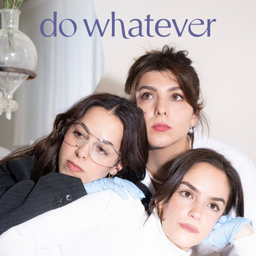
Some things are worth saying out loud. do whatever started around a table, with wine, and the kind of honesty that only happens when you are far from home and trust the people next to you. Three friends in science, navigating academia, migration, identity, and the life choices nobody really prepares you for. We don't have it all figured out, and we're not here to give advice - just to ask the questions out loud, sit with the contradictions, and make the long hours feel a little less lonely. If any of this sounds familiar, you are in the right place. Find us on Instagram: @dowhateverpodcast
- Publisher
- Podrum
- Category
- science
- Language
- en
- Explicit
- No
- First episode
- 1 Jun 2026
- Latest episode
- 19 Oct 2026
Latest episodes
12 episodes in the feed.
19 Oct 2026
chapter 10: the nightmare on campus
The creepiest science stories aren’t fiction: Marie Curie’s glowing “fairy lights,” seabirds falling from the sky, and the strange afterlife of Einstein’s brain all have real explanations - and real consequences. Ardiana, Burcu and Mirna serve up science with a spooky-season twist.First, they celebrate the Nobel Prize for the scientists behind optogenetics. A discovery rooted in green algae now helps researchers study memory, fear, sleep, and movement, and may even point toward new treatments for blindness. Then it’s into the lab: the hosts swap stories about late-night scares, hazardous experiments, and the real-life mishaps that make lab safety more than a box to check. They also weigh in on The Love Hypothesis and the fun, complicated question of how accurately science needs to be portrayed in a rom-com. The episode’s spooky science stories are the main event. Hear how the Curies’ fascination with radioactive glow came with a devastating cost, how a marine toxin linked to tiny diatoms may explain a bizarre mass bird death, and how Einstein’s brain was removed, divided, and scattered across the world. The hosts connect these unsettling tales to a bigger idea: what once seemed supernatural can sometimes be explained by science - though the truth may be stranger than the story. For curious minds, science lovers, and anyone who prefers their Halloween scares with a side of neuroscience, this is a tour through the eerie, funny, and very human side of research.
5 Oct 2026
chapter 9: conferences
Conferences can inspire your science, test your social battery, and occasionally leave you replaying an awkward moment for years. Burcu, Mirna, and Ardiana share what it really takes to navigate academic conferences, from asking questions and presenting your work to finding your people and knowing when to take a break.They exchange practical strategies and very human stories: how to choose the talks, prepare for a presentation, approach new people without forcing yourself to network nonstop, and handle the pressure of speaking up. They also get into conference “blues,” post-event inspiration, uncomfortable questions, and the unspoken rules of social events.Then the conversation takes a more serious turn. They address the best and worst moments. Along the way, expect conference-cringe moments, legendary professor antics, dream destinations, and strong opinions about bad sandwiches, uncomfortable chairs, and conference freebies nobody needs. Whether you’re heading to your first academic event or have spent years collecting lanyards, this is an honest, funny, and thoughtful guide to making conferences more meaningful, more manageable, and safer for everyone.
21 Sept 2026
chapter 8: the big catch-up
Burcu, Mirna, and Ardiana reconnect after a month apart, catching up on everything that piled up: a new city, a new fellowship, and a stomach that picked the worst possible moments to act up. Burcu talks about settling into Brussels, feeling like an outsider in small everyday moments, and the language choices she didn't expect to be making so often. Mirna gets into something messier and more physical: living with IBS through holidays and professional networking, and how much it quietly drains your energy, mood, and confidence when your body won't cooperate on cue. Ardiana adds the whiplash of family celebrations, getting sick while abroad, and the odd relief of finally recovering somewhere familiar instead of far from home. Mirna also shares her experience at a bio-design conference, covering what bio-design looks like when scientists start working with artists, designers, architects, and even chefs, including a sea urchin project that somehow grows into materials, pigments, food, and a whole creative ecosystem. From there, the conversation turns to career updates: Ardiana on starting her MSCA fellowship, and Burcu and Mirna on where things stand with their submitted paper reviews. Mirna also raises a question that sticks with the group: is this the end of social media as they know it, with platforms rewarding outrage and speed over anything careful or real. Between jokes about croissants, cows, and mood boards, one question keeps surfacing: how do you stay curious and connected when everything, work, health, relocation, social media, is pulling at you at once? Needless to say, this catch-up was needed.
7 Sept 2026
chapter 7: it's good on your cv
A strong academic CV is not a collection of random achievements - and adding more lines will not necessarily make you more competitive. For PhD students, postdocs, and researchers planning their next move, this conversation reveals what selection panels actually look for, what belongs on your CV at each career stage, and how to show potential without losing your authenticity. Burcu, Ardiana, and Mirna draw on their experiences winning highly selective postdoctoral fellowships, serving on hiring panels, changing research fields, and navigating academic applications across countries. They unpack why publications and grants matter, but also how conferences, memberships, teaching, supervision, invited talks, networking, and evidence of independence can shape the story your CV tells. The conversation also tackles the uncomfortable realities of academic careers: invisible networks, unfair hiring processes, cultural and gender differences in self-promotion, and the risk of underselling yourself in a system that rewards people who can communicate their value. The central message is both practical and reassuring: you do not need to have followed a perfect path. You need to understand your strengths, build a coherent trajectory, and make the case for where you are going. Essential listening if you are applying for a PhD, postdoc, fellowship, or academic position - or if your CV feels like a list of disconnected experiences rather than the story of the researcher you are becoming.
24 Aug 2026
chapter 6: inside the academic bubble
Academia is not just experiments and papers - it is politics, money, authorship games, and the strange social rules nobody explains out loud. Burcu, Ardiana, and Mirna pull back the curtain on what it really takes to survive and stay sane in the academic bubble, from protecting your integrity to learning how to pitch your research without getting trapped in a 10-minute rant. They break down the parts of research life that usually stay whispered about: how to talk about your work to anyone from a taxi driver to a future collaborator, why "interesting" and "novelty" are ruined words, and what happens when lab culture turns passive-aggressive. You will also hear how they handle the pressure to publish, why quantity-over-quality thinking can warp science, and why phd students should be learning how to think, not just how to generate data. You will discover: • how each of them explains their research in a way real people can understand • why hidden costs like consumables, standards, microscopy time, and maintenance shape what science gets done • the unwritten rules around authorship, first-author status, and who actually deserves credit • how emotional spillover, failed experiments, and colleague drama affect the whole lab • why they think academic hiring should value personality and integrity, not just paper count Ardiana brings the exposome perspective, explaining how environmental exposures and maternal health connect to baby health and development. Burcu shares the realities of inherited retinal disease research and the frustration of missing heritability in non-coding dna. Mirna adds the biologist's view of ultra-niche research, grant-chasing, and the pressure to make basic science sound useful enough for anyone to care. If you have ever wondered why academia can feel like a zoo, a business, and a calling all at once, this episode will feel uncomfortably familiar in the best way. essential listening for researchers, phd students, postdocs, and anyone who has ever had to defend their work, their time, or their sanity.
10 Aug 2026
chapter 5: academic nomads
Ardiana opens by reflecting on a viral video: a surprise visit home, a mom's very unfiltered reaction, and suddenly a million people watching a moment she never meant to be public. And this all, just because she really missed watermelons and booked a flight home. Therefore, Ardiana, Burcu, and Mirna dig into what it costs to build a life outside the country you grew up in, starting with the question that trips them all up in different ways: "where are you from?" Depending on the day, the audience, or how much energy they have left, the honest answer changes. From there they trace how each of them ended up abroad in the first place, Burcu's path arriving more by chance and a supervisor's nudge, Mirna's move from Slovenia to Belgium turning from "a few years" into an actual life without anyone officially deciding that. They get into the unglamorous machinery nobody warns you about: visas, admin, proving you exist to three different bureaucracies at once, and the specific loneliness of missing ordinary things back home, not the milestones. They compare notes on how you actually build a safety net from scratch in a new country, who ends up being family when your real family is a flight away, and the culture shocks that still catch them off guard: nude beaches, the unspoken rules of splitting a bill, someone showing up at your door unannounced like that's a normal thing to do. The conversation circles back to what moving around does to a research career and to a sense of self, the strange math where you're too foreign for one place and too changed for the other, and why going "home" can end up feeling more disorienting than leaving did. It's the viral video that gets people to click play, but it's the quiet, familiar ache of building a life in translation that makes them stay.
27 Jul 2026
chapter 4: serving a summer break
It's summer, and Ardiana, Burcu, and Mirna are talking about something academics rarely give themselves permission to do: rest. They open with listener comments, including reflections on power dynamics and toxic supervision in academia, before moving into lighter topics like asking their moms to describe what they actually do for a living. Spoiler: frogs are not genetically closest to humans, no matter what the STEM romance novels say. From there, the conversation turns to the real topic of the episode: holidays, and how loaded that word can be in academia. They talk about the guilt that comes with asking for time off, how that guilt is shaped by culture, contracts, and country, and what it actually takes to step away when you're responsible for living samples: frogs and diatoms don't take breaks just because you do. They get into the difficulty of truly disconnecting, from checking email mid-holiday to the now-infamous story of answering emails on horseback, and the particular exhaustion of "holidays" that are really just family visits back home. The episode also digs into workplace comparison culture: judging colleagues by their hours, the pressure to overwork, and why efficiency matters more than time logged - before wrapping up with a "would you rather" on good data versus good holidays.
13 Jul 2026
chapter 3: the colleague from hell
Burcu, Mirna, and Ardiana are back after a chaotic June full of conferences, moves, and last-minute grant deadlines! They kick things off catching up on summer life, meddling moms with career advice, and the eternal reference-manager debate (Zotero vs. Mendeley vs. EndNote). Then it's time travel: this episode revisits one of the show's earliest recordings, a story so wild they couldn't leave it in the vault. Burcu recounts a real-life "colleague from hell" during her master's: a manipulative coworker who sabotaged experiments, gaslit her in the lab, and charmed his way into her supervisors' trust while tearing her down behind her back. It's a jaw-dropping tale of workplace manipulation, gut instincts, and standing your ground. The trio close out with an honest reflection on power dynamics in academia, competitiveness vs. integrity, and why speaking up matters - even when no one believes you at first. 🎧 Tune in for chaos, catharsis, and a masterclass in reading red flags at work.
29 Jun 2026
chapter 2: the final boss or just a phd defense?
do whatever | episode 4: chapter 2: the final boss or just a phd defense? Burcu, Mirna, and Ardiana kick off with quick updates - lab struggles, a first three-hour lecture, and highlights from a Paris trip including a staged Eiffel Tower couple and the Mona Lisa crowd chaos. They then dive into what the episode is really about: the PhD defense, from first draft to final applause.The hosts walk through every stage - writing the thesis, assembling a jury, surviving the internal defense, and the public defense day. Key themes include the pressure of writing under a tight deadline, the surprise of actually enjoying the defense itself, and the myth that jury members are there to intimidate you. They share honest advice: start writing early, read throughout your PhD, and don't spend the final week studying DNA structure from scratch. The episode ends with Ardiana’s memorable defense-day chaos: a dad whose shoes disintegrated on the venue floor, a mom falling asleep in the front row mid-presentation, and a confetti cleanup complaint from a botanical garden. The hosts close by reflecting that the title of "Doctor" feels less like a finish line and more like a starting point - and that whoever you become during those years matters more than the day itself.
15 Jun 2026
chapter 1: anxious, avoidant, academic
do whatever | episode 3: chapter 1: anxious, avoidant, academic What does your attachment style look like when your PI goes silent on your manuscript? In this episode, Ardiana, Burcu, and Mirna dive into attachment theory - anxious, avoidant, fearful avoidant, and secure - and explore how these patterns show up not in romantic relationships, but in the lab. They share their own quiz results, reflect on how their PhD experiences shaped (and shifted) their styles, and get honest about the moments they felt triggered, overlooked, or just desperate for a "great work" from their supervisor. From toxic PIs and visa traps to dancing at conference parties and asking for weekly check-ins, this conversation goes deep on what it really means to feel safe - or not - in academia. Take the quiz on Instagram to find out your academic attachment style.
1 Jun 2026
introduction: who are we anyway?
do whatever | episode 2: introduction: who are we anyway? Burcu, Mirna, and Ardiana kick off the episode with travel updates: Mirna returns from Croatia and a stop at the Venice Biennale, while Ardiana reflects on a yoga retreat in Normandy that pushed her to slow down, cut screen time, and reconnect with single-tasking. The hosts celebrate a major milestone, after eight months of setbacks, Burcu's lab experiments finally worked, lifting the mood of her entire research group. The main topic explores just how many roles academics juggle beyond their research titles: graphic designer, teacher, finance manager, statistician, technician, lab manager, and more. They discuss how unprepared most PhD students are for supervision, admin, grant writing, equipment troubleshooting, and workplace politics. The conversation turns to communication across cultures, sharing candid stories about direct vs. polished styles, false apologies, and how non-native English speakers often translate politeness conventions literally from their own languages. The hosts also reflect on the unexpected skills they've gained: Mirna learned to ask for help; Ardiana developed patience and cross-cultural communication; and all three found ways to bring creativity into their science, through storytelling, figure design, project writing, and experiment design. They close with what they would be if not scientists, the blurry line between work and personal life in academia, and what they genuinely love about their work.
1 Jun 2026
abstract: do we have it figured out?
do whatever | episode 1: abstract: do we have it figured out? After nearly a year of silence, Burcu, Mirna, and Ardiana are finally back. In this long-overdue catch-up episode, the trio reunites online for the first time to talk about why it took so long, what perfectionism costs you, and why "not being ready" might actually be the most honest place to start. They share what's changed since they last recorded: a move to London, a commute that's turning Mirna into a pissed-off woman, a hard-won MSCA fellowship, six months of failed experiments finally explained, and a yoga teaching certificate along the way. They also dig into the gap between PhD and postdoc life, the pressure of publishing, how to choose a lab (what no one tells you), and the question looming over all three of them: have you figured it out? Spoiler: no one has. The episode wraps with a round of brutal "Would You Rather" dilemmas - career vs. city, ambition vs. family. Let them know where you land. Do whatever. Roll with it.
Reach and audience
Public platform figures. Ratings count people who left a rating, not total listeners.
- Spotify
- 5.0 / 5
- 11 ratings
Contact do whatever
- Guest appearances
- Does not typically book guests
Based on episode analysis; this does not confirm that the show is currently accepting guests.
Host of do whatever?
Claim your podcast to manage its listing and keep your show details accurate.
Pod Engine is an independent podcast discovery and analytics service and is not affiliated with or endorsed by this podcast. Artwork and show content belong to their owners. Full legal notice.
Explore this show
Podcast research with Pod Engine