- 18
- Episodes
- Weekly
- Cadence
- 2026
- First episode
About Don Talk - Conversations with Mike Turner
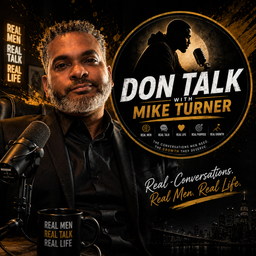
Welcome to Don Talk — Conversations with Mike Turner, where real men have real conversations about life, legacy, leadership, and everything we carry in between. I’m Mike Turner, and this is a space for conversations that challenge us to think deeper, heal stronger, grow intentionally, and become better men. Because being a Don isn’t about power. It isn’t about ego or pretending to have all the answers. It’s about responsibility. It’s about growth. It’s about showing up—for ourselves and for the people we love. We’re talking relationships, mental health, fatherhood, purpose, faith, culture, success, failure, and the things men experience but don’t always know how to say out loud. And ladies, you’re invited into the conversation too. Because sometimes understanding the men in your life starts with hearing the conversations they don't always have in front of you. This is Don Talk — Conversations with Mike Turner. Real Men. Real Talk. Real Life.
- Publisher
- Don Talk
- Category
- health & fitness · society & culture
- Language
- en
- Explicit
- No
- First episode
- 31 Aug 2026
- Latest episode
- 15 Oct 2026
Latest episodes
18 episodes in the feed.
15 Oct 2026
The Hidden Cost of Success: Building a Business, Losing Yourself | John Rossiter
The hidden cost of success: entrepreneur burnout, pressure to prove yourself, and the relationships that suffer when business comes first. On this episode of Don Talk Conversation with Mike Turner, Mike and R. Manasseh Thornton sit down with UK entrepreneur John Rossiter for an honest conversation about ambition, self-worth, and building a business without losing yourself. From selling sweets in a Wrexham schoolyard to co-founding Zolato, John shares the lessons behind his entrepreneurial journey—including burning out twice, betting on himself, and spending $16,000 on mentorship he says he didn’t need. What happens when success becomes the way a man proves he belongs? And how do you recognize when the pressure to succeed is costing too much? In this episode, we discuss: • Entrepreneur burnout and the changes John noticed in his patience, focus, and habits • Family expectations and the pressure to make your parents proud • Ego, fear of failure, and tying your identity to achievement • Protecting your relationship while growing a business • Prioritizing sleep, fitness, personal time, and boundaries • Why asking for help matters—and how to build your own “Avengers” • How losing his mother at 11 shaped John’s resilience • Defining success through peace, freedom, and fulfillment • Zolato’s vision for home service businesses, CRM, automation, and AI Chapters 00:00 The Hidden Cost of Success 09:47 Navigating Academic Pressure 20:03 The Entrepreneurial Journey 30:10 Overcoming Fear and Burnout 30:39 The Importance of Self-Care 31:11 Vision and Goals in Business 34:09 Navigating the Fear of Selling Out 36:21 Recognizing Burnout 40:04 The Importance of Self-Care 40:40 Sacrifices for Success 43:25 The Need for Support 46:48 Asking for Help 47:33 Validation in Relationships 52:17 Entrepreneurial Confessions 55:54 The Cost of Accountability 57:17 Impact of Loss on Personal Growth 01:02:39 Building Meaningful Relationships 01:03:06 Entrepreneurial Wisdom and Values 01:10:05 Creating Your Ideal Self If you’re an entrepreneur, small business owner, or someone who feels the constant need to prove yourself, this conversation offers a reason to pause and rethink what you’re building—and why. CONNECT WITH JOHN Facebook: Search John Rossiter LinkedIn: Search John Rossiter Instagram: Search John Rossiter Official What has pursuing success cost you—and what are you no longer willing to sacrifice? Share your thoughts in the comments. If you haven't already.... Subscribe to the channel here: https://www.youtube.com/@official_DonTalk (https://www.youtube.com/@official_DonTalk) Or follow the podcast on your other favorite platforms... • Apple Podcasts: Don Talk - Conversations with Mike Turner • Spotify: Don Talk - Conversations with Mike Turner • Like Don Talk on Facebook: Don Talk Podcast • Follow Don Talk on Instagram: @officialdontalk • Follow Don Talk on TikTok: @dontalkwithmiketurner #Entrepreneurship #Burnout #DonTalk
8 Oct 2026
When the Game Ends, Who Are You?
The conversation explores the experiences of former athletes Mike Turner and Jarius Hayes, focusing on their journeys through sports, the impact of injuries on their careers, and the lessons learned from their athletic experiences. They discuss the duality of their personas as athletes and individuals, the importance of sports in shaping their identities, and the challenges they faced in transitioning from competitive sports to life afterward. The conversation delves into the experiences of athletes dealing with injuries, the emotional toll of being cut from teams, and the societal pressures faced by black male athletes. It highlights the importance of mental health support and the need to address emotional struggles in a healthy manner. The conversation explores the impact of NIL (Name, Image, Likeness) on college athletes, reflecting on how it has changed the landscape of college sports. The discussion also delves into the emotional challenges faced by athletes when transitioning out of their sports careers, particularly when injuries force them to retire prematurely. The conversation explores the emotional and psychological challenges faced by athletes after their sports careers, focusing on coping mechanisms, identity struggles, and the impact of societal changes on sports culture. The speakers reflect on their personal experiences with pain, addiction, and the transition to life beyond athletics, emphasizing the importance of resilience and self-discovery. Takeaways Athletics shape identity and character Transitioning from sports can be challenging Injury timing affects careers Mental health support is crucial NIL has transformed college sports Transitioning from sports is emotionally challenging Coping with post-athletic identity Impact of societal changes on sports Chapters 00:00 Introduction and Setting the Stage 02:11 Athletic Backgrounds and Career Highlights 04:12 Ego and Confidence in Sports 10:01 Transforming on the Field vs. Off the Field 12:51 Managing Adrenaline and Emotions 16:42 The Role of Sports in Personal Development 25:10 Hazing and Bullying in Sports Culture 29:55 Rookie Hazing and Veteran Expectations 31:00 The Impact of Injuries on Athletes 39:36 Coping with Injury and Fear of Failure 44:34 Playing Hurt: The Athlete's Dilemma 52:23 Transitioning from Athlete to Civilian Life 59:32 NIL Deals and the Changing Landscape of College Sports 01:01:45 The Impact of NIL on College Sports 01:06:02 Navigating Career Endings and Injuries 01:19:41 Mental Health and Life After Sports 01:20:24 Adjusting to Life Beyond Athletics 01:28:25 Coping Mechanisms and Identity Struggles 01:30:00 The Journey of Self-Discovery 01:32:40 The Shift in Sports Culture 01:34:24 The Love for the Game 01:39:25 Parental Pressure and Expectations 01:41:01 The Pay-to-Play Culture 01:43:01 The Impact of NIL and Social Media 01:45:39 Reflections on Athletic Identity If you haven't already.... Subscribe to the channel here: https://www.youtube.com/@official_DonTalk (https://www.youtube.com/@official_DonTalk) Or follow the podcast on your other favorite platforms... • Apple Podcasts: Don Talk - Conversations with Mike Turner • Spotify: Don Talk - Conversations with Mike Turner • Like Don Talk on Facebook: Don Talk Podcast • Follow Don Talk on Instagram: @officialdontalk • Follow Don Talk on TikTok: @dontalkwithmiketurner ABOUT DON TALK Don Talk, Conversations with Mike Turner is a space for real men having real conversations about life, legacy, leadership, mental health, fatherhood, faith, relationships, and everything men carry but rarely say out loud. Real Men. Real Talk. Real Life.
1 Oct 2026
The Failure that Changed My Life
In this engaging conversation, Mike Turner and Tyrone Miller explore the theme of motivation, particularly focusing on the impact of public failure and the drive to prove others wrong. Through personal anecdotes, they discuss how experiences in competition, especially in the realms of rap battles and sports, shape one's character and future aspirations. In this conversation, the speakers discuss their personal journeys as fathers, the challenges and rewards of being stay-at-home dads, and the motivations behind writing books that resonate with their experiences. They also share insights on the cultural significance of barbershops and the importance of self-care in their lives. In this conversation, the speakers delve into personal anecdotes and life lessons, emphasizing the importance of emotional expression, support systems, and the value of genuine connections. They share insights on how unexpected encounters can lead to profound realizations and the significance of nurturing relationships as one navigates life's challenges. Takeaways Public failure can drive success Motivation evolves over time Fatherhood brings unexpected challenges Writing can be a form of therapy Embrace emotional vulnerability Cultivate meaningful relationships Chapters 00:00 Introduction to the Renaissance Man 02:27 The Cost of Competition 04:14 The Infamous Rap Battle 10:17 Lessons from Public Embarrassment 12:40 The Drive to Prove Others Wrong 16:13 The Athlete's Mindset 20:01 Shifting Motivations 29:29 The Journey to Fatherhood 31:44 Transitioning to Stay-at-Home Dad 36:20 The Motivation Behind Writing 37:44 Connecting Through Shared Experiences 43:39 The Barbershop Experience and Self-Care 45:00 The Forty Jewels of Life 48:00 Life Lessons from Unexpected Encounters 49:04 The Importance of Brotherhood and Support 50:03 Emotional Expression and Vulnerability in Fatherhood 57:04 Surrounding Yourself with the Right People
24 Sept 2026
Prayer Doesn't Replace the Work
Can prayer be part of your healing while also becoming a way to avoid doing the work? In this episode of Don Talk, Mike Turner sits down with clinical psychologist, minister, professor, author and MMA fighter Dr. Marshall Thompson Jr. for an honest conversation about faith, therapy, men’s mental health and the pressure men feel to have everything together. Dr. Thompson challenges the idea that needing therapy means a man is weak, broken or lacking faith. Instead, he explains why prayer and professional mental-health support can work together—and why healing still requires personal responsibility. The conversation goes beyond therapy. Mike and Dr. Thompson unpack why men say “I’m good” when they may not be, how childhood experiences can create performance-based identity, why some coping mechanisms that helped us survive as children stop serving us as adults, and how unresolved patterns can follow us into marriage, relationships and adulthood. They also tackle a difficult question for people of faith: Where should the pastor’s role end and the therapist’s role begin? Dr. Thompson explains why trauma and deeper psychological issues may require trained professional support, while faith, church and spiritual community can still play important roles in healing. And underneath the entire conversation is one recurring message: Prayer doesn’t replace the work. If you’ve ever felt like you were supposed to carry everything yourself, questioned whether therapy fits with your faith, or wondered why the same patterns keep showing up in your life, this conversation is for you. CHAPTERS 00:00 Faith, Therapy & Having It All Together 01:34 When Prayer Becomes Avoidance 03:11 What Men Really Mean by “I’m Good” 06:03 “I Don’t Need Anybody” 06:52 Prayer Without Doing the Work 08:09 The Phrases Men Use to Avoid Accountability 13:14 Why Men Avoid Therapy 15:09 Validation & Performance-Based Identity 21:22 Where Does the Healing Work Begin? 23:04 Childhood Coping Patterns in Adulthood 26:01 “I Can’t Afford Therapy” 27:26 Family Systems & Relationship Advice 31:01 If I Have God, Why Do I Need a Therapist? 31:58 What Therapy Can Teach That Faith May Not 36:00 Where the Church Can Fall Short 38:04 When the Psychologist Has to Do the Work 41:22 Faith Without Taking Action 45:06 Pastor, Therapist—or Both? 45:55 When Your Pastor Isn’t Your Therapist 47:55 “I Don’t Know Who I Am Anymore” 49:10 When Everyone Depends on You 51:51 Where the Pastor’s Role Should End 53:14 How Churches Can Better Support Men 54:20 Who Takes Care of the Man Helping Everyone Else? 57:27 Who Fills Your Cup? 59:21 Why Nobody Else Can Make You Happy 1:01:15 Final Thoughts Subscribe to Don Talk for honest conversations about manhood, mental health, relationships, fatherhood, faith, identity and the things men often carry in silence. Real men. Real talk. Real life. #MensMentalHealth #FaithAndTherapy #BlackMenMentalHealth #MentalHealthMatters #DonTalk
17 Sept 2026
What Men Don't Understand About Postpartum
What do men actually understand about what happens to a woman after childbirth? Postpartum recovery is more than a six-week checkup. The physical, hormonal, emotional, and psychological changes can continue long after the baby arrives—and sometimes the people closest to a mother may not recognize that she’s struggling. On this episode of Don Talk: Conversations with Mike Turner, I’m joined by psychologist Dr. Malaika Brown, executive and entrepreneur Chakeyla Anderson, and husband and father Tim Upshur for an honest conversation about postpartum mental health, motherhood, race, relationships, and what support from men should actually look like. We discuss why some women don’t feel safe telling their partners what they’re experiencing, how men can create emotionally safe relationships, and why simply being present doesn’t always mean we recognize when something is wrong. The conversation also examines the cases of Andrea Yates, Latarsha Sanders, and Lindsay Clancy and raises a difficult question: when severe mental illness enters the conversation, who gets afforded empathy—and who gets seen only through their actions? Dr. Brown discusses what she describes as an empathy gap in perceptions of mental illness, while Chakeyla shares the additional pressures Black women can face navigating healthcare, motherhood, careers, and expectations of strength. But this conversation isn’t only about extreme cases. It’s about the mother who goes to work, takes care of her children, answers texts, handles responsibilities and appears fine—while the people around her may have no idea what she’s carrying. And it’s about what men can do differently. TIMESTAMPS 00:00 — The racial empathy gap in mental health 01:39 — Welcome to Don Talk 02:35 — Who was prepared for the first baby? 07:27 — Parenting questions nobody prepares you for 13:10 — Who complains about losing sleep? 19:58 — What people misunderstand about postpartum 20:56 — Psychological changes after childbirth 22:01 — Chakeyla’s postpartum experience with twins 24:39 — What could a partner completely miss? 29:20 — Why some women don’t feel safe opening up 33:18 — What makes a man emotionally safe? 35:42 — What fathers are afraid to admit 40:40 — Yates, Sanders & Clancy 43:01 — The racial empathy gap around mental illness 44:32 — Black women, healthcare & expectations of strength 47:57 — Do women need men as allies? 51:54 — Are we failing women experiencing postpartum illness? 54:03 — What men need to become better allies 58:57 — Postpartum stigma in the workplace 1:03:12 — Pregnancy discrimination at work 1:07:45 — Motherhood, work & pressure to push through 1:14:21 — What pregnancy and postpartum do to the body 1:28:43 — “Why are you crying?” 1:32:38 — What does real support from men look like? 1:33:14 — Signs partners should pay attention to 1:36:04 — When it’s time to involve a professional 1:36:42 — Advocating for your partner’s healthcare This isn’t about men pretending we fully understand what women experience. It’s about paying attention, asking better questions, creating safe spaces, educating ourselves, and knowing when someone we love needs more support than we can provide ourselves. Who checks on Mom? Real men. Real talk. Real life. Don Talk — Conversations with Mike Turner #PostpartumMentalHealth #MensMentalHealth #PostpartumDepression #BlackMaternalHealth #DonTalk
10 Sept 2026
We Don’t Have a Black Boy Problem — We Have an Adult Problem
What happens to a young Black boy when everyone recognizes what he can DO—but nobody helps him understand who he IS? Dr. Brian Dinkins went from graduating high school with a 1.9 GPA and arriving at Purdue University focused almost entirely on football to earning five degrees from four universities and dedicating his career to emotional intelligence, education, and helping Black boys thrive. But that transformation came at a cost. In this episode of Don Talk — Conversations with Mike Turner, Brian and Mike reconnect decades after their Purdue days for a powerful conversation about identity, athletics, childhood trauma, fatherhood, emotional intelligence, discipline, education, and what Black boys actually need from the adults responsible for developing them. Brian opens up about losing his football identity, struggling to figure out what came next, discovering the impact of childhood experiences later in adulthood, and learning how emotional intelligence changed the way he understood himself. The conversation also tackles a bigger question: Do we really have a problem with children—or do we have a problem with adults who haven't been equipped to understand and develop them? Brian explains the four components of emotional intelligence, why discipline without emotional awareness can fail children, how men can create healthier emotional outlets, and why Black boys need more than expectations—they need relationships, support, emotional skills, and exposure to identities beyond athletics and entertainment. This isn't just a conversation about Black boys. It's about the men they become. TIMESTAMPS 00:00 — We Don't Have a Child Issue—We Have an Adult Issue 01:52 — Welcome to Don Talk: Dr. Brian Dinkins 03:19 — Purdue Football, Childhood & a 1.9 GPA 06:56 — When Football Becomes Your Entire Identity 09:04 — The Emotional Cost of Waiting for Your Opportunity 10:54 — From 1.9 GPA to Five Degrees 11:55 — “What Did It Cost You?” 12:43 — Men, Mental Health & the “Suck It Up” Generation 14:31 — Finding Purpose After Football 16:28 — What Happens When the Game Ends? 18:49 — Turning an Athlete's Work Ethic Into a Career 20:25 — Discovering Trauma & Emotional Intelligence 22:38 — Becoming What He Needed as a Child 24:34 — The Child We Carry Into Adulthood 26:34 — Mike's Own Journey of Understanding His Younger Self 30:58 — Can Emotional Intelligence & Strict Discipline Coexist? 31:29 — The Four Skills of Emotional Intelligence 35:04 — Why We're Living Through a “Trust Recession” 36:02 — Dr. Dinkins as a Husband & Father 40:23 — Why Men Need Other Men They Can Be Vulnerable With 41:28 — Men, Crying & Emotional Release 43:58 — Finding Healthy Outlets for Anger 45:17 — Knowing When to Walk Away 46:45 — Why Black Men & Black Women Need Better Conversations 49:30 — Understanding Experiences Different From Our Own 51:43 — Locker Room vs. Classroom: Rapid Fire 56:44 — What Football Can Teach Educators 58:03 — What Teachers Can Teach Football Coaches 59:34 — What Do Black Boys Actually Need? 1:02:40 — “We Have an Adult Issue” 1:05:23 — Final Thoughts & Closing If this conversation gives you something to think about, like the episode, subscribe to Don Talk, and share it with someone who needs to hear it. Real men. Real talk. Real life. #DonTalk #BlackBoys #EmotionalIntelligence #MensMentalHealth #BlackMen
9 Sept 2026
Why Men Say “I’m Good” When They’re Not | Carl Donaldson
Why do men say “I’m good” when they’re exhausted, angry, overwhelmed, or struggling in their relationships? In this episode of Don Talk, Mike Turner sits down with Dr. Carl Donaldson to explore what happens when men spend years surviving instead of addressing what they’re carrying. From the pressure to provide and the fear of vulnerability to childhood experiences, fatherhood, and the need for approval, this conversation examines how unresolved stress can become a normal part of everyday life. Mike also shares a personal story about his father, his athletic career, and how seeking approval affected his identity. Carl discusses his approach to traditional Chinese medicine, Qigong, meditation, and reconnecting with yourself. The conversation also explores the difference between coping and healing, the importance of asking for help, and why taking care of yourself matters for the people who depend on you. In this episode, we discuss: Why men hide behind “I’m good” Survival mode and the pressure Black men carry Emotional stress, self-awareness, and forgiveness Fatherhood, approval, and breaking generational patterns Qigong, meditation, and traditional Chinese medicine Journaling versus talking things out Sleep, nutrition, and building healthier habits What it means to live according to your own purpose CHAPTERS 00:00 Why men say “I’m good” 02:12 Rapid-fire: What is real self-care? 08:32 Are men just moving stress from one place to another? 10:35 Surviving versus processing emotions 11:38 Forgiveness and personal responsibility 16:14 Survival mode and the Black male experience 21:43 Carl Donaldson’s background and medical training 24:29 Moving from survival toward thriving 28:25 What the body may reveal about stress 34:27 When prolonged stress starts to feel normal 37:03 Asking for help and exploring healing approaches 41:02 The Alchemy Project and emotional healing 43:17 Generational trauma and epigenetics 45:56 Recognizing patterns that need attention 47:54 Mike’s personal story about seeking approval 51:15 Breath, movement, and Qigong 54:30 “This isn’t going to pay the bills” 55:27 What “I’m good” can really mean 59:00 Healthy or not: Therapy, meditation, and sleep 1:04:15 Golf, Qigong, and taking time for yourself 1:05:15 Journaling versus talking it out 1:21:01 Nutrition and the challenges of changing habits 1:28:47 Closing reflections 1:29:19 The meaning of your birthright Don Talk is about giving men language for the things they carry in silence. Women are invited into the conversation, too, because understanding each other starts with honest dialogue. If this conversation resonates, share it with someone who always says they’re good. Subscribe, like, and leave a comment: What is one thing you’ve been carrying that you haven’t made time to address? Subscribe to Don Talk — Conversations with Mike Turner for more conversations about men’s mental health, relationships, fatherhood, identity, and personal growth. This episode features the guest’s personal perspectives and traditional medicine practices. It is intended for conversation and education, not as a substitute for qualified medical or mental health care. Do not discontinue prescribed treatment based on this discussion. #DonTalk #MensMentalHealth #CarlDonaldson #BlackMensMentalHealth #PersonalGrowth
3 Sept 2026
Do Men Lose Themselves When They Become Fathers?
Do men lose themselves when they become fathers? Becoming a dad can be one of the greatest experiences of a man’s life — but nobody talks enough about what fatherhood can cost you emotionally. Your priorities change. Your freedom changes. Your relationships change. And somewhere between providing, protecting, parenting and trying to be the man your family needs, you may start wondering: Who am I outside of being a father? In this episode of Don Talk — Conversations with Mike Turner, we have an honest conversation about the side of fatherhood men don't always say out loud. We talk about: • Losing your sense of identity after becoming a father • The anxiety and pressure that comes with raising children • Why dads sometimes feel guilty for wanting time for themselves • Balancing fatherhood, relationships and personal fulfillment • How our own childhood experiences shape the fathers we become • The emotional support fathers often don't receive • Whether becoming a parent means giving up part of your freedom • The complicated feelings of sacrifice, responsibility and even regret • Why taking care of yourself can actually make you a better father Fatherhood can give a man tremendous purpose. But that doesn't mean the transition is easy. Sometimes becoming a good father requires figuring out how to remain a whole man at the same time. So here's the question: Can you be a great father without losing the man you were before you had children? Drop your answer in the comments. Fathers especially — what changed most about YOU after having kids? If conversations like this matter to you, subscribe to Don Talk and join us for real conversations about fatherhood, relationships, identity, mental health and the things men carry but don't always say. CHAPTERS 00:00 Reflections on Fatherhood & Future Aspirations 25:00 Parenthood, Identity & Self-Discovery 42:16 The Anxiety of Parenthood 42:59 Fatherhood: A Different Kind of Fun 53:08 The Truth About Parenthood 1:28:41 Self-Care, Guilt & Personal Fulfillment 1:43:23 What Society Expects From Fathers 2:05:28 Regret, Responsibility & Parenthood #Fatherhood #MensMentalHealth #DadLife #Parenting #BlackFathers #MensHealth #FatherhoodJourney #ModernFatherhood #DonTalk #MikeTurner
1 Sept 2026
Stay Strong Bro: The Phrase We Need to Rethink
The conversation delves into the importance of male friendship and support, the struggles of finding community and purpose, and the exploration of self-worth and value in relationships. It highlights the need for deeper connections and the impact of societal expectations on self-perception. The conversation delves into the pressure to stay strong, the struggle to find a sense of home and belonging, and the need for emotional outlets. It also explores the themes of seeking purpose and connection, highlighting the challenges and experiences of individuals in navigating these aspects of life. Takeaways Importance of male friendship and support Struggles with finding community and purpose Self-worth and value in relationships Seeking purpose and connection Struggles with finding a sense of home and belonging The pressure to stay strong and the need for emotional outlets Chapters 00:00 The Importance of Male Friendship 02:58 Struggles with Finding Community and Purpose 10:11 Self-Worth and Value in Relationships 33:03 The Pressure to Stay Strong 36:20 Struggles with Finding Home and Belonging 45:01 Seeking Purpose and Connection
31 Aug 2026
Why Some Men Struggle to Love | Love Languages vs. Survival Languages
The conversation delves into personal well-being, financial concerns, self-care, and the impact of societal expectations on self-worth. It also explores the concept of love languages in relationships and the alignment of love languages between partners. The conversation delves into the importance of effective communication, the impact of love languages and survival languages on relationships, and the significance of self-love. It also explores the role of upbringing in shaping one's understanding of love and the distinction between survival and love in relationships. The conversation delves into the nature of love and pain, exploring the concept of survival versus thriving in relationships. It touches on the impact of past experiences, parenting, societal influences, and gender roles on the perception of love and survival mentality. The shift from survival to thriving is emphasized as a key factor in fostering love and growth in relationships. Takeaways Love languages and survival languages Understanding love languages in relationships Effective communication is key Love languages and survival languages impact relationships Love and pain Survival vs Thriving Chapters 00:00 Introduction and Co-host Banter 01:08 Checking In: How Are You Doing Today? 02:06 Personal Well-being and Financial Concerns 03:06 Balancing Investments and Family Support 04:16 Prioritizing Self-care and Personal Growth 07:01 Reflection on Achievements and Future Outlook 08:05 Reframing Expectations and Self-worth 10:20 Value Beyond Productivity and Societal Expectations 15:37 Love Languages and Survival Languages Discussion 43:28 Survival vs. Love: Impact on Relationships 46:23 The Nature of Love and Pain 47:48 Pain as a Sign of Growth 49:45 Learning and Growth from Experience 51:07 Shift in Perception of Love and Survival Mentality 53:03 Parenting and Shifting Perspectives on Love and Survival 54:15 Survival Mentality and Parenting 56:27 Forced Survival by Design 58:01 Gender Roles and Survival Mentality 01:01:12 Conflicting Ideologies in Relationships 01:02:05 Thriving and Love 01:06:24 Reflection and Growth in Relationships
31 Aug 2026
Code Switching & Identity: Who Are You When You Stop Performing?
The conversation explores the concept of code-switching and its impact on personal and professional interactions. It delves into the experience of reverse code-switching and cultural adaptation, highlighting the challenges and nuances of navigating different cultural contexts. The discussion also addresses the changing standards of professionalism and the evolving nature of qualifications and standards in various domains. The conversation delves into the complex topic of code switching, exploring its impact on identity, survival, and cultural authenticity. It also addresses the importance of self-acceptance and the wisdom gained from life experiences. The discussion highlights the role of language, gender, and cultural suppression in the context of code switching, offering valuable insights into the human experience. Takeaways Code-switching as a form of adaptation The evolving nature of qualifications and standards Code switching as a means of survival The importance of authenticity and self-acceptance Chapters 00:00 Evolving Qualifications and Standards 32:29 The Art of Code Switching 36:15 The Scene in Roots 42:20 Navigating Gender and Identity 48:26 Cultural Suppression and Success 59:58 The Wisdom of Experience
31 Aug 2026
Code Switching to Survive: The Hidden Cost of Being Black in America
The conversation delves into the topic of code-switching, exploring its origins, impact, and the need to navigate two worlds. It touches on the concept of safety, the pressure to prove belonging, and the necessity of code-switching in colonized spaces. The speakers share personal experiences and insights, highlighting the challenges and complexities of code-switching. The conversation delves into the concept of code-switching and its impact on personal and professional interactions. It explores the influence of children in shaping behavior, the intersection of professionalism and cultural identity, and the definition of success in different contexts. Takeaways Safety and the need for acceptance drive the practice of code-switching. Code-switching is a mechanism for success and survival in colonized spaces. The pressure to prove belonging and the impact of code-switching on personal identity are significant aspects of the experience. Code-switching is influenced by the presence of children and the desire to maintain authenticity in their eyes. Professionalism is subjective and often influenced by Eurocentric standards, leading to a lack of authenticity in professional settings. Success is defined differently for each individual, with personal experiences and survival often shaping one's perception of success. Chapters 00:00 Navigating Two Worlds 32:09 The Influence of Children 33:45 The Impact of Code-Switching on Behavior 35:03 The Art of Cold-Switching and Professionalism 38:04 The Authenticity of Cultural Identity 44:02 The Subjectivity of Professionalism and Success
31 Aug 2026
Men - Would You Move for Love?
The conversation delves into the impact of relocation on relationships, exploring the dynamics of moving for love and career. It highlights the challenges and decisions involved in relocating, as well as the long-term effects on personal and professional lives. The conversation delves into the challenges and personal growth associated with moving for love, as well as the importance of self-acceptance and understanding in relationships. It explores the emotional impact, struggles, and sacrifices involved in making such a move, as well as the significance of personal motivation and self-encouragement. The themes of acceptance, support, and individuality in relationships are also highlighted, along with the power of words and the impact of conditional love and acceptance. Takeaways Relocating for love and career The impact of relocation on relationships Moving for love Personal growth and self-acceptance Chapters 00:00 Relocating for Love and Career 01:02:25 Personal Growth and Self-Reflection
31 Aug 2026
Daughter, Women and the Way We Show Up
The conversation delves into the impact of daughters on men's self-perception and the dynamics of fatherhood in relation to daughters. It explores the transformative effect of daughters on men's self-perception and the unique challenges and responsibilities of fatherhood in raising daughters. The conversation delves into the philosophy of parenting and the importance of inclusion, openness, and interaction in a child's development. It also explores the impact of childhood experiences on adult behavior and the process of self-reflection and growth. The dialogue highlights the significance of vulnerability and the role of impactful words in shaping personal growth. The conversation delves into the impact of past experiences on relationships, highlighting a pivotal moment that changed the approach to women. It also explores the power of a woman's words and the influence of a daughter on personal growth and resilience. Takeaways Fatherhood and daughter relationships The impact of daughters on men's self-perception Parenting with openness and inclusion Reflecting on childhood experiences The impact of past experiences on relationships The power of a woman's words Chapters 00:00 The Impact of Daughters on Men's Self-Perception 03:42 Fatherhood and Daughter Relationships 23:09 Parenting Philosophy and Inclusion 26:24 Teaching Life Skills Through Interaction 27:38 Parenting Styles and Self-Reflection 30:01 Recognizing Flaws and Growth 35:40 Vulnerability and Self-Improvement 42:13 Impactful Words and Personal Growth 48:12 The Impact of Past Experiences 55:48 The Power of a Woman's Words 01:09:54 The Influence of a Daughter
31 Aug 2026
Breaking the Strong Black Male Myth
The conversation delves into the myth of the strong black man and the impact of societal expectations on emotional expression. It explores the origins of emotional suppression, the impact of emotional suppression on mental health, the role of emotional expression in relationships, and the societal and cultural influence on emotional expression. Additionally, it discusses the need for emotional intelligence and support, the challenge of societal expectations, the importance of emotional release, and the response to emotional expression. The conversation delves into the importance of embracing and expressing emotions for a meaningful life. It explores the role of strength, protection, and emotional security, as well as the biblical perspective on emotions. The discussion also highlights the need for emotional support and empathy among men, challenging traditional gender norms. The conversation delves into the importance of open and honest communication, the impact of isolation, the role of friends in decision-making, the influence of media and music, the importance of real conversations, and the definition of true friendship. It emphasizes the need for supportive and understanding friendships and the significance of vulnerability in relationships. Takeaways Emotional suppression in men Impact of societal expectations on emotional expression Embracing and expressing emotions is essential for a meaningful and full life. Men are often taught to be protectors and providers, but emotional security is equally important. Importance of open and honest conversations The need for supportive and understanding friendships Chapters 00:00 The Myth of the Strong Black Man 02:58 The Origins of Emotional Suppression 06:02 The Impact of Emotional Suppression 09:06 The Role of Emotional Expression in Relationships 11:52 The Societal and Cultural Influence on Emotional Expression 15:09 The Need for Emotional Intelligence and Support 17:57 The Challenge of Societal Expectations 21:05 The Importance of Emotional Release 23:56 The Response to Emotional Expression 27:35 Embracing Emotions for a Meaningful Life 28:32 Teaching Emotional Resilience to Children 29:21 The Importance of Allowing Emotions 30:13 Supporting Emotional Expression 38:25 The Role of Strength and Protection 40:40 The Biblical Perspective on Emotions 42:26 Defining Protection and Emotional Security 45:37 Perception and Self-Image 50:31 The Need for Emotional Support Among Men 52:13 The Need for Vulnerability 52:45 The Impact of Isolation 53:14 The Role of Friends in Decision-Making 56:36 The Influence of Media and Music 57:36 The Importance of Real Conversations 01:14:33 The Definition of True Friendship
31 Aug 2026
Manhood, Relationships, and Trauma
The conversation delves into the impact of childhood experiences on adult behavior, the role of communication in relationships, recognizing and addressing triggers, personal views on infidelity and marriage, and the influence of family on views of marriage and relationships. The discussion highlights the importance of honesty in relationships and the lasting impact of childhood experiences on adult behavior. The conversation delves into the deep emotional journey of two individuals, exploring vulnerability, reframing masculinity, and navigating emotional growth. It uncovers past trauma, addresses the impact of father-son relationships, and emphasizes the healing power of forgiveness. The meaning of 'Don Talk' is revealed, and personal stories are shared, aiming to uplift and inspire others. Takeaways Honesty in relationships Impact of childhood experiences on adult behavior Embracing vulnerability Reframing masculinity Navigating emotional growth Chapters 00:00 Influence of Family on Views of Marriage and Relationships 33:29 The Bond Between Two People 34:23 Uncovering Past Trauma 36:27 Father-Son Relationship 39:23 Dealing with Traumatic Experiences 40:25 The Need for Expression 44:03 The Healing Power of Forgiveness 51:15 Facing Fear and Overcoming It 55:56 The Meaning of 'Don Talk' 01:02:05 Sharing Personal Stories 01:05:56 Redefining Masculinity
31 Aug 2026
Survival Mode is Destroying Men and Most Don't Even Know They're In It
The conversation explores the concept of survival mode and its impact on men's lives. It delves into the signs and characteristics of survival mode, as well as the methods for recognizing and addressing it. The guests share their personal experiences and approaches to dealing with survival mode, offering insights and strategies for self-assessment and transformation. The conversation delves into the impact of survival mode on individuals, the correlation between achievement and survival mode, and the long-term health effects of staying in survival mode. It also explores the emotional and physical toll of survival mode, the importance of self-care, and the need for regular health screenings. Takeaways Survival mode can manifest as feeling mentally overloaded, avoiding important decisions, overthinking simple choices, and struggling to rest without guilt. Recognizing the signs of survival mode and understanding its impact is crucial for self-assessment and transformation. Approaches to addressing survival mode include self-assessment tools, therapy, and a structured program for rebuilding and reinforcing new behaviors. Survival mode can have a significant impact on an individual's emotional and physical well-being. Achievement can serve as an umbrella that hides individuals behind survival mode, and long-term health effects of staying in survival mode can be detrimental. Chapters 00:00 Introduction and Sipping on Beverages 01:19 Life and Well-Being Check-In 04:53 The Impact of Survival Mode 20:48 Recognizing Survival Mode 26:27 The Impact of Survival Mode 35:11 Achievement and Survival Mode 43:24 Long-Term Health Effects
31 Aug 2026
The Silent Struggle of Dads No One Talks About
What happens to a man's identity when he becomes a dad? We often discuss how men raise their children, but we rarely talk about what fatherhood does to the man himself. In this episode of Don Talk, hosts Mike Turner and Dar’Ron sit down with R. Manasseh Thornton—author of Uncharted Territory, social-work professional, and longtime stay-at-home dad. Together, they dive into a funny, vulnerable, and uncomfortable conversation about modern fatherhood, identity loss, sacrifice, purpose, and men's mental health. Manasseh describes becoming a father as the ultimate "murdering of the ego"—a moment when personal dreams, freedom, and mental health take a back seat to the responsibilities of being a provider and protector. Years later, as his sons grow up, he faces the silent struggle many men experience: "Who am I now?" If you have ever felt like you lost yourself in parenting, or wondered how to balance being a good father with pursuing your own goals, this episode is for you. You can love your children and still miss your pre-kid freedom. 🕒 CHAPTERS / TIMESTAMPS 0:00 - What happens to a man when he becomes a father? 02:15 - The stay-at-home dad reality & identity loss 05:40 - Overcoming anxiety, pressure, and the "murdering of the ego" 09:10 - Raising teenagers and breaking generational trauma in parenting 13:35 - Marriage, money, sports, and the rising cost of raising kids 17:20 - How to find your purpose and dream again after kids grow up 📌 WHAT WE TALK ABOUT IN THIS EPISODE: * Losing and rediscovering your identity after becoming a dad * Why fathers put their dreams on hold for their families * The reality of being a stay-at-home father and dealing with isolation * Fatherhood, responsibility, anxiety, and finding your purpose * Why becoming a dad makes a man more serious, driven, and protective * Raising teenagers and learning to parent differently than your own father did * Missing your pre-kid freedom without regretting your children * Finding the courage to dream again when your kids no longer need you the same way Once his children became self-sufficient, Manasseh began searching for that creative "wind" again. This isn't a conversation about fathers abandoning responsibility. It's about recognizing that Dad is still a man underneath the title. 💬 JOIN THE CONVERSATION: * Fathers: Who were YOU before you became a dad, and how much of that man still exists today? Drop your thoughts below. * Women: Ask the father in your life this question, and really listen to his answer. 🎙️ ABOUT DON TALK: Real Men. Real Life. Real Talk. Subscribe for honest conversations about men's mental health, fatherhood advice, relationship dynamics, modern masculinity, identity, purpose, emotional healing, and the silent struggles men carry. #Fatherhood #MensMentalHealth #DadLife #MensMentalHealthMatters #DonTalk #FatherhoodJourney #ParentingTipsForDads #StayAtHomeDad #Masculinity #IdentityCrisis #DadsOfInstagram #NewDad Tips #RaisingTeenagers #MensCoaching
Contact Don Talk - Conversations with Mike Turner
- Guest appearances
- Books guests
Based on episode analysis; this does not confirm that the show is currently accepting guests.
Host of Don Talk - Conversations with Mike Turner?
Claim your podcast to manage its listing and keep your show details accurate.
Pod Engine is an independent podcast discovery and analytics service and is not affiliated with or endorsed by this podcast. Artwork and show content belong to their owners. Full legal notice.
Explore this show
Podcast research with Pod Engine