- 19
- Episodes
- 3
- Ratings
- Monthly
- Cadence
- 2025
- First episode
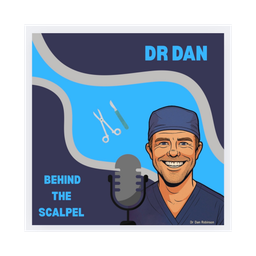
About Dr Dan - Behind the Scalpel
Dr Dan Behind the Scalpel takes you into a world of facial plastic surgery and rhinology - from the operating room to the personal journey of becoming a surgeon. Hosted by Dr Dan - a double board certified ENT and facial plastic surgeon, this podcast unpacks the science, the challenges, and the real stories behind facial transformation and healing. Whether you are in medicine or simply fascinated by the art of surgery, join Dr Dan for a unique perspective that goes beyond the surface.
- Publisher
- Dan Robinson
- Category
- health & fitness · science
- Language
- en
- Explicit
- No
- First episode
- 10 Sept 2025
- Latest episode
- 28 Jul 2026
Latest episodes
19 episodes in the feed.
28 Jul 2026
Roman Nose
Episode 19 – Podcast Show Notes 🎙️ Dr Dan Behind the Scalpel – Episode: The Roman Nose The Roman nose is one of the classic nasal shapes that patients may seek rhinoplasty to address. Characterised by a prominent dorsal hump and a long, downward-pointing nasal tip, a Roman nose can make patients feel that their nose is too large or prominent for their face. In this episode, Dr Dan explains what causes a Roman nose, why it often runs in families, and the structural changes that contribute to its distinctive appearance. He also discusses the complexities involved in correcting a Roman nose, including hump reduction, nasal bone restructuring, rebuilding the middle third, managing tip position and addressing the nasal valve to ensure that both the appearance and function of the nose are considered. 🔎 What You’ll Learn in This Episode: • What is meant by a “Roman nose”. • The key features that characterise a Roman nose. • Why a Roman nose can make the nose appear overly large or prominent. • Why Roman noses often run in families. • How overgrowth of the septal cartilage contributes to the appearance. • How a large dorsal hump and tip ptosis develop. • What columella show and a long alar can have to do with nasal growth. • Why skin thickness is an important consideration when correcting a Roman nose. • The role of hump reduction and nasal bone restructuring. • Why rebuilding the middle third of the nose is important. • How spreader grafts and septal grafting may be used. • Why tip position and projection need to be carefully considered. • Why some female patients may also require alar base reduction. • How a Roman nose can be associated with nasal obstruction and nasal valve problems. • Why addressing nasal function is an important part of Roman nose surgery. • Why complex Roman nose surgery may benefit from an experienced rhinoplasty surgeon with a strong understanding of nasal valve anatomy.
27 Jul 2026
Saddle Nose Deformity After Previous Surgery
🎙️ Dr Dan Behind the Scalpel – Episode: Saddle Nose Deformity After Previous Rhinoplasty A saddle nose deformity doesn’t only occur following significant trauma. In some cases, it can develop after previous rhinoplasty surgery when too much structural support has been removed without adequate reconstruction. In this episode, Dr Dan discusses saddle nose deformity following previous nasal surgery, including why the nose can gradually collapse months after an operation, the role of over-resection and inadequate structural support, and the less common complication of septal perforation. Dr Dan also explains why timing can be critical when a saddle nose deformity is identified shortly after surgery, how early intervention may sometimes prevent a more complex reconstruction, and what happens when patients present months or years later with established scar tissue and skin contraction. 🔎 What You’ll Learn in This Episode: • What causes a saddle nose deformity following previous rhinoplasty. • How over-resection of the nasal dorsum can contribute to structural collapse. • Why the middle third of the nose needs adequate structural support. • Why a saddle nose deformity may not become obvious immediately after surgery. • How septal perforation can contribute to loss of nasal support. • Why the timing of revision surgery can be critical. • When early intervention may be possible following a previous rhinoplasty. • Why scar tissue and contracture can make delayed reconstruction more complex. • How skin stretching may be used in selected patients. • Why hydrodissection may sometimes be required in severe cases. • When hyperbaric oxygen therapy may be considered. • Why rib cartilage may be required for complex saddle nose reconstruction. • How extended spreader grafts can restore support to the middle third. • How fascia and crushed cartilage may be used for camouflage and contouring. • Why complex revision rhinoplasty requires specialised experience.
23 Jul 2026
Traumatic Saddle Nose Deformity
Dr Dan Behind the Scalpel – Episode: Traumatic Saddle Nose Deformity A saddle nose deformity is one of the more complex problems that can occur following significant trauma to the nose. In this episode, Dr Dan discusses what a traumatic saddle nose deformity is, how it develops, and the functional and cosmetic concerns it can cause. From contact sports injuries to major accidents, severe trauma can disrupt the nasal septum and nasal bones, resulting in a loss of structural support and a characteristic collapse of the middle third of the nose. Dr Dan explains when it may be appropriate to consider surgery, why ongoing participation in contact sports can influence the timing of reconstruction, and the complex techniques and grafting required to rebuild the structure and projection of the nose. 🔎 What You’ll Learn in This Episode: • What a saddle nose deformity is. • How trauma can cause collapse of the middle third of the nose. • How severe trauma can also affect the nasal bones. • Why traumatic saddle nose deformities can cause significant nasal obstruction. • The cosmetic concerns patients may experience following a traumatic injury. • How a saddle nose deformity can affect wearing glasses. • Why participation in contact sports can influence the timing of surgery. • The importance of risk mitigation following reconstruction. • Why saddle nose reconstruction is a complex rhinoplasty procedure. • Why rib cartilage grafting may be required to rebuild the nose. • The role of fascia grafts in camouflage and reconstruction. • How skin contraction can affect patients with previous compound fractures. • Why patients may need to prepare the skin before surgery. • How structural grafts are used to support and reconstruct the middle third of the nose. • Why patients with traumatic saddle nose deformities should seek a surgeon with extensive rhinoplasty experience.
22 Jul 2026
Post op rhinoplasty - what to expect and what to do
You’ve had your rhinoplasty—now what? The post-operative period is one of the most important parts of the rhinoplasty journey, and it’s also when patients often have the most questions. In this episode, Dr Dan takes you through what to expect after surgery, from waking up in recovery and managing pain and congestion, through to your first post-operative appointment and the months that follow. He explains the importance of pain relief, saline nasal washes, medications and proper wound care, as well as when patients can return to exercise and other activities. Dr Dan also discusses common concerns during recovery, including nasal congestion, unpleasant smells, dissolving sutures, nose taping and differential swelling. 🔎 What You’ll Learn in This Episode: • What to expect immediately after waking up from rhinoplasty surgery. • Why Dr Dan does not routinely use nasal packing. • Why staying on top of your pain relief is important during early recovery. • How and when to use saline nasal washes. • The role of antibiotics, steroids and Clorsig ointment after surgery. • How to sleep comfortably during the first week. • What to expect between day 2 and your first post-operative appointment. • What happens when your external and internal splints are removed. • When you can safely return to exercise. • What is normal during the first 8–10 weeks after surgery. • What to do if you notice an unpleasant smell inside your nose. • Dr Dan’s approach to nose taping. • When you can return to Botox, laser and heavy microdermabrasion. • When steroid injections may be considered. • How nasal massage may help manage areas of differential swelling.
20 Jul 2026
Splints in Rhinoplasty
Episode 15 – Podcast Show Notes 🎙️ Dr Dan Behind the Scalpel – Episode: Understanding Rhinoplasty Splints Splints are one of the most talked-about parts of rhinoplasty recovery and one of the most misunderstood. In this episode, Dr Dan explains the purpose of both external and internal splints, why they are essential for healing, and how his customised approach helps achieve the best possible surgical outcomes. He also discusses why he no longer uses traditional plaster casts, how customised internal splints differ from standard off-the-shelf options, and what patients can expect during the first week after surgery. 🔎 What You’ll Learn in This Episode: • The difference between external and internal rhinoplasty splints. • Why external splints are used to reduce swelling and protect the nose - not change its shape. • Why Dr Dan prefers mouldable plastic splints over plaster casts. • How customised internal splints help control swelling inside the nose. • What it feels like to wear splints during recovery. • How to care for your splints and keep them clean after surgery. • What to expect when your splints are removed. • When splints may need to remain in place for longer than one week. 🗝️ Key Notes • Rhinoplasty recovery typically involves two types of splints: – External splints (over the nose) – Internal splints (inside the nose) • External splints: – Help reduce post-operative swelling. – Protect the nose from accidental bumps during the early healing phase. – Do not reshape or structurally change the nose. – Are typically worn for 5–10 days and may naturally fall off without affecting the surgical result. • Dr Dan uses mouldable plastic splints rather than plaster of Paris because: – They provide excellent protection and swelling control. – They avoid the potential risks associated with plaster. – They are easier to customise to each patient.
22 Mar 2026
Treatment of the columella
Episode 14 – Podcast Show Notes 🎙️ Dr Dan Behind the Scalpel – Episode: Treatment of the Columella The columella plays a subtle but important role in nasal aesthetics and tip support. In this episode, Dr Dan explains how the columella is assessed in rhinoplasty, what causes it to appear too prominent or retracted, and the surgical techniques used to correct it. Understanding the balance between the columella, tip, and nostrils is key to achieving a natural and harmonious result. 🔎 What You’ll Learn in This Episode: • What the columella is and how it contributes to nasal shape. • Common columella deformities, including hanging and retracted columella. • How the columella relates to tip position and projection. • Surgical techniques used to adjust columella position. • How small changes in the columella can significantly impact overall nasal aesthetics. 🗝️ Key Notes • The columella is the strip of tissue between the nostrils, formed by the medial crura of the lower lateral cartilages. • Ideal columella show is subtle and balanced when viewed from the side. • Common deformities include: – Hanging columella (excess show below the nostrils) – Retracted columella (not enough visible columella) • These issues are often related to: – Tip cartilage position – Septal length and support – Overall nasal projection • Treatment techniques may include: – Tongue-in-groove to control projection and columella position – Adjustment or repositioning of the medial crura – Septal modification or grafting for support • Overcorrection can lead to unnatural appearance or imbalance with the nasal tip. • Careful assessment of the entire nose — not just the columella — is essential. 💡 Key Takeaway The columella may be small, but it has a big impact on nasal balance. Successful treatment requires subtle adjustments and a strong understanding of how it interacts with the tip and septum.
18 Mar 2026
Alar base reduction
🎙️ Dr Dan Behind the Scalpel – Episode: Alar Base Reduction Alar base reduction is a powerful but often misunderstood component of rhinoplasty. In this episode, Dr Dan explains when and why alar base reduction is performed, how it changes the width of the nose, and the key principles required to achieve a balanced, natural result. From patient selection to surgical technique, this episode highlights why subtlety and precision are critical when altering the base of the nose. 🔎 What You’ll Learn in This Episode: • What the alar base is and how it affects nasal width. • When alar base reduction is indicated in rhinoplasty. • How surgeons determine how much to reduce. • The different techniques used to narrow the nostrils. • How alar base reduction fits into overall nasal harmony. • Risks and complications associated with over-resection. 🗝️ Key Notes • The alar base refers to the width of the nostrils at the base of the nose. • Wide nostrils can be due to: – Naturally broad alar bases – Flaring of the nostrils – Under-projected nasal tip • Alar base reduction is often performed to: – Improve facial balance – Reduce nostril flare – Complement tip refinement or projection • Surgical techniques may include: – Wedge excision at the alar base – Sill excision to reduce nostril width • Precise measurement and symmetry are critical before removing tissue. • Over-resection can lead to: – Visible scarring – Distorted nostril shape – Breathing issues • Conservative reduction is key — small changes can have a significant aesthetic impact. 💡 Key Takeaway Alar base reduction is a subtle but powerful tool in rhinoplasty. When performed conservatively and in the right patient, it can significantly improve nasal balance — but overcorrection can be difficult to reverse.
18 Feb 2026
Making the Bent Nose Straight
Episode 12– Podcast Show Notes 🎙️ Dr Dan Behind the Scalpel – Episode: Making a Bent Nose Straight A crooked or bent nose is one of the most common reasons patients seek rhinoplasty. In this episode, Dr Dan explains why noses become bent, the structural principles behind straightening them, and why achieving a “perfectly straight” nose isn’t always realistic. From congenital asymmetry to trauma from contact sports, this episode breaks down how each third of the nose is surgically corrected — and what can go wrong long after surgery. 🔎 What You’ll Learn in This Episode: • The two main causes of a bent nose: facial growth asymmetry and trauma. • Why the nose often bends toward the smaller side of the face. • How trauma from sports like rugby, AFL, boxing, and league can distort nasal bones. • The surgical principles behind straightening each third of the nose. • Why perfection doesn’t exist when it comes to facial symmetry. • What causes noses to deviate again months after surgery. 🗝️ Key Notes • No human face is perfectly symmetrical — the nose sits in the centre and often reflects that imbalance. • A bent nose can result from: – Congenital facial asymmetry – Trauma causing displaced nasal bones and cartilage • Straightening the nose typically requires an external (open) rhinoplasty approach. • Treatment of each nasal third: – Upper third (nasal bones): Osteotomies to reposition and realign bone. May involve double, triple, or quad-line osteotomies for controlled fracture patterns. – Middle third: Spreader grafts extending from nasal bones to tip to create a cantilevering stabilising effect. In congenital bends, a double spreader graft may be required on one side. – Lower third (tip): Septal removal and replant (septal replantation) to create a new straight foundation. Tip cartilages are then secured to the reconstructed septum to maintain alignment. • A perfectly straight nose does not exist — the goal is improvement, not perfection. • Late deviation can occur due to: – Differences in soft tissue tension between facial sides. – Ongoing muscular pull. • Post-operative nasal massage plays a key role in maintaining long-term alignment. • In select cases, a K-wire may be used for additional structural support. 💡 Key Takeaway Making a nose straight isn’t about forcing symmetry — it’s about rebuilding the nasal framework so it sits in better balance with the face. Long-term success depends on structural reconstruction, patient expectations, and careful post-operative management.
9 Feb 2026
Treatment of the tip
Episode 11 – Podcast Show Notes 🎙️ Dr Dan Behind the Scalpel – Episode: Treatment of the Nasal Tip Treating the nasal tip is one of the most technically demanding aspects of rhinoplasty. In this episode, Dr Dan explains how surgeons approach tip correction, the principles that guide decision-making, and why long-term support is far more important than simply reshaping cartilage. 🔎 What You’ll Learn in This Episode: The goals of nasal tip treatment in rhinoplasty. Why structural support is essential for long-term tip stability. Common techniques used to refine and reposition the nasal tip. How tip support affects both appearance and breathing. Mistakes that can lead to tip distortion over time. 🗝️ Key Notes Successful tip treatment focuses on support, projection, and rotation, not just narrowing. Weak or poorly supported tip cartilages can lead to: Tip droop Loss of definition Nasal obstruction Common techniques used in tip surgery include: Tongue-in-groove fixation to control projection and rotation Lateral crural tensioning to refine shape and improve support Cartilage grafting where native support is insufficient Over-reliance on tight sutures without structural support can cause long-term distortion. A stable nasal tip requires careful integration with the septum and middle vault. 💡 Key Takeaway Treating the nasal tip is about building a stable framework first. When support is prioritised, refined tip shape and long-lasting results naturally follow. 🎧 Listen & Subscribe Find this episode and more on: Spotify Apple Podcasts Google Podcasts Follow the show for clear, anatomy-based explanations of facial plastic surgery from behind the scalpel. ⸻ 🔥 Social Media Teaser The nasal tip can make or break a rhinoplasty 👃 Dr Dan explains how surgeons treat the tip, why support matters more than sutures, and how to avoid long-term distortion. Essential listening for anyone considering nose surgery.
5 Feb 2026
Treatment of the middle vault
Episode 10 – Podcast Show Notes 🎙️ Dr Dan Behind the Scalpel – Episode: Treatment of the Middle Vault The middle vault is a critical structural component of the nose and one of the most common sources of functional and cosmetic failure in rhinoplasty. In this episode, Dr Dan focuses on how the middle vault should be treated surgically, why reconstruction is essential, and what happens when it is overlooked. 🔎 What You’ll Learn in This Episode: The surgical goals when treating the middle vault. Why the middle vault must be reconstructed after rhinoplasty. Techniques used to stabilise and support the middle vault. How middle vault treatment impacts nasal airflow. Common errors that lead to deformity and breathing problems. 🗝️ Key Notes The middle vault is formed by the upper lateral cartilages and the dorsal septum. Any dorsal hump reduction or septal work will disarticulate the middle vault, requiring reconstruction. Key treatment principles include: Restoring width and symmetry Supporting the internal nasal valve Maintaining smooth dorsal lines Common surgical techniques include: Spreader grafts to restore support and valve angle Precise reattachment of the upper lateral cartilages Failure to properly treat the middle vault can result in: Inverted V deformity Middle vault collapse Persistent nasal obstruction These issues are frequently seen when structural grafting is omitted. 💡 Key Takeaway The middle vault must be actively reconstructed — not ignored. Proper treatment is essential to preserve both nasal function and long-term aesthetic outcomes. 🎧 Listen & Subscribe Find this episode and more on: Spotify Apple Podcasts Google Podcasts Follow the show for anatomy-driven insights into safe, effective facial plastic surgery. ⸻ 🔥 Social Media Teaser The middle vault is where many rhinoplasties fail 👃 Dr Dan explains how it should be treated, why reconstruction is mandatory, and how skipping spreader grafts leads to collapse and breathing problems. A must-listen episode.
3 Feb 2026
Hump Reduction
🎙️ Dr Dan Behind the Scalpel – Episode: Dorsal Hump Reduction Dorsal hump reduction is one of the most recognisable components of rhinoplasty — but it’s far more complex than simply “shaving down a bump.” In this episode, Dr Dan revisits what forms a dorsal hump, explains the different surgical approaches to reducing it, and highlights the critical reconstructions required to avoid long-term deformities. 🔎 What You’ll Learn in This Episode: What structures form a dorsal hump and why it varies between patients. How dorsal hump reduction is performed surgically. The difference between traditional hump reduction and dorsal preservation techniques. When augmentation of the middle third is required, particularly in saddle deformities. Key structural considerations surgeons must address after hump reduction. Important post-operative precautions following surgery. 🗝️ Key Notes A dorsal hump is formed by a combination of: Nasal bones Septum Upper lateral cartilages For a more detailed anatomical breakdown, listeners are referred back to Episode 4, where dorsal humps are discussed in depth. Dorsal hump reduction can be performed using: Osteotomies to remove bone and reshape the nasal dorsum Dorsal preservation techniques, which maintain the natural dorsum while lowering it In cases of a saddle deformity, the middle third may need to be augmented rather than reduced. After hump removal, the mid-vault becomes disarticulated and must be reconstructed. Failure to reconstruct the middle vault can result in: Open book deformity Widening of the nasal dorsum Functional breathing problems Proper reconstruction helps restore both nasal width and valve function. Post-Operative Considerations Patients must be mindful when wearing glasses after surgery. Pressure from glasses can affect healing and final shape. Specific post-operative guidance is discussed in this episode (see attached reference). 💡 Key Takeaway Dorsal hump reduction is not just about removal — it’s about reconstruction. Long-term success depends on restoring mid-vault support, preserving function, and respecting nasal anatomy. 🎧 Listen & Subscribe Find this episode and more on: Spotify Apple Podcasts Google Podcasts
2 Feb 2026
The middle vault
Episode 8 – Podcast Show Notes 🎙️ Dr Dan Behind the Scalpel – Episode: The Middle Vault The middle vault is one of the most important — and most commonly misunderstood — parts of the nose. In this episode, Dr Dan explains what the middle vault is, why it is critical for both nasal appearance and breathing, and how failure to support it during rhinoplasty can lead to classic long-term deformities. 🔎 What You’ll Learn in This Episode: What the middle vault is and where it sits within the nasal framework. Why the middle vault plays a key role in nasal airflow and valve function. Common deformities that occur when the middle vault is weakened or disrupted. How surgeons reconstruct and stabilise the middle vault during rhinoplasty. Why some rhinoplasty patients develop breathing issues or visible deformities months after surgery. 🗝️ Key Notes The middle vault is formed by the upper lateral cartilages attached to the dorsal septum. It acts as the structural bridge between the nasal bones above and the nasal tip below. Damage or collapse of the middle vault can result in: Narrowing of the nasal sidewalls Internal nasal valve collapse Postoperative breathing difficulty Visible contour deformities Proper treatment of the middle vault often requires: Spreader grafts to restore width and support Reattachment and stabilisation of the upper lateral cartilages A common cause of poor outcomes is: Failure to use spreader grafts, particularly in non-specialist rhinoplasty This can lead to the classic inverted V deformity, where the nasal bones remain narrow but the middle vault collapses inward. 💡 Key Takeaway The middle vault is essential for long-term nasal function and aesthetics. Without proper reconstruction, rhinoplasty can look acceptable early on but fail structurally over time — leading to deformity and breathing problems. 🎧 Listen & Subscribe Find this episode and more on: Spotify Apple Podcasts Google Podcasts Follow the show for clear, anatomy-driven explanations of facial plastic surgery from behind the scalpel. ⸻ 🔥 Social Media Teaser Struggling to breathe after a nose job? 👃 Dr Dan breaks down the middle vault, why it collapses, and how skipping spreader grafts can cause the inverted V deformity. Essential listening for anyone considering rhinoplasty.
27 Jan 2026
Tip Cartilages in Rhinoplasty
🎙️ Dr Dan Behind the Scalpel – Episode: Nasal Tip Cartilages The nasal tip is one of the most complex and delicate parts of rhinoplasty. In this episode, Dr Dan breaks down the anatomy of the tip cartilages, the common deformities that affect tip shape, and the surgical techniques used to refine and support the nasal tip while maintaining long-term function and aesthetics. 🔎 What You’ll Learn in This Episode: What the nasal tip cartilages are and why they are critical to nasal shape and support. Common nasal tip deformities, including boxy tips, twisted tips, and hanging columella. Why some tip deformities are caused by cartilage shape, spacing, or weakness. Key surgical techniques used to correct tip cartilage problems. The defining features of a beautiful, well-supported nasal tip. Common mistakes in tip surgery and how they lead to long-term complications. 🗝️ Key Notes The tip cartilages (lower lateral cartilages) are responsible for tip shape, definition, and nostril contour. A boxy tip can result from broad cartilages, widely spaced domes, or a combination of both. Lateral crural concavity can distort nostril shape and weaken tip support. A twisted tip is often due to asymmetry in cartilage orientation or strength. A hanging columella is frequently caused by imbalance or malposition of the tip cartilages. Tip correction techniques include: Lateral crural tensioning Tongue-in-groove fixation to the columella Flip-flop flap for cartilage concavity A beautiful nasal tip features: A clear supratip break A strong tip-defining point Everted nostril rims, created by lower lateral cartilage eversion or rim grafts Common causes of poor outcomes include: Failure to use a septal extension graft Over-tight dome-binding sutures leading to nostril retraction and distortion 💡 Key Takeaway The nasal tip is where rhinoplasty success or failure is most visible. Precise cartilage support and thoughtful technique are essential to achieving a refined, stable, and natural-looking tip. 🎧 Listen & Subscribe Find this episode and more on: Spotify Apple Podcasts Google Podcasts
26 Jan 2026
How to choose a surgeon
🎙️ Dr Dan Behind the Scalpel – Episode: How to Choose the Right Surgeon Choosing a surgeon is one of the most important decisions you’ll ever make — whether it’s for yourself or a loved one. In this episode, Dr Dan shares his insights on what really matters when deciding who should operate on you. From formal qualifications to soft skills like trust and communication, this guide gives you the confidence to make an informed choice. 🔎 What You’ll Learn in This Episode • Why your surgeon must hold a qualification from a recognised College of Surgeons. • The importance of being a Fellow of the Royal Australasian College of Surgeons in Australia. • Why comfort and trust with your surgeon matter just as much as technical skill. • How fellowship training provides additional expertise in complex procedures. • The right way to ask: “How many of these procedures have you actually done?” • How surgeons can (and should) measure their outcomes, from metrics to before-and-after photos. • Why it’s perfectly okay — even encouraged — to seek a second opinion. 🗝️ Key Notes • Always check for accredited surgical training — don’t assume every “doctor” is a surgeon. • The Australian training program is among the toughest worldwide. • Extra fellowship training is especially valuable for complex or delicate surgeries. • Numbers matter: ask how often your surgeon performs the procedure you need. • A good surgeon should welcome your questions and never pressure you into surgery. 💡 Key Takeaway The right surgeon is qualified, experienced, and — most importantly — someone you feel comfortable with. If you don’t, it’s always worth getting another opinion.
23 Jan 2026
The Turbinates
🎙️ Dr Dan Behind the Scalpel – Episode: The Inferior Turbinates Blocked nose keeping you up at night? It might not just be your septum — your inferior turbinates could be the cause. In this episode, Dr Dan explains what turbinates are, why they swell, and how they can be treated when they become a problem. 🔎 What You’ll Learn in This Episode • What inferior turbinates are and why they’re often mistaken for nasal polyps. • The role of turbinates in airflow sensation, humidification, and the nasal cycle. • First-line treatment with steroid sprays (safe and effective for long-term use). • When surgery (turbinoplasty) is needed, what it involves, and why it’s safe. • The importance of post-op saline rinses to ensure recovery. 🗝️ Key Notes • Inferior turbinates are normal structures, not growths or polyps. • Swelling often worsens at night or when lying down due to venous congestion. • The nasal cycle (every ~6 hours) naturally causes alternating blockage. • Steroid sprays should always be trialled before surgery. • Turbinoplasty safely reduces turbinate size without affecting nasal function. • Post-surgery saline rinses for 3 months are key to full recovery. 🎧 Listen & Subscribe Catch this episode and more on: • Spotify • Apple Podcasts • Google Podcasts Follow the show to keep up with everything facial plastics!
21 Jan 2026
The Dorsal Hump
In this episode Dr Dan is talking all about the dorsal hump
19 Jan 2026
What is a Rhinoplasty
In this episode Dr Dan talks all about "What is a rhinoplasty"
13 Sept 2025
The Septum - All about it
In this episode, Dr Dan dives into the fascinating world of the nasal septum, the thin piece of cartilage and bone that separates your left and right nostrils. Although most people have a septum that isn’t perfectly straight, for some it can cause significant breathing problems. 🔎 What You’ll Learn in This Episode: • What the septum is and why it’s so important for nasal airflow. • How common septal deviation is (spoiler: almost everyone has one!). • The difference between caudal deviations (at the front of the nose) and posterior/bony deviations (further back). • Why facial asymmetry and natural growth patterns often cause deviation, even without trauma. • How to know if your septum is deviated, including the role of nasal endoscopy vs. CT scans. • When a deviated septum needs no treatment at all versus when it can benefit from sprays or surgery. • Dr Dan’s approach to surgical correction, including rhinoplasty, cartilage reinforcement, and when rib or ear cartilage may be used. 💡 Key Takeaway A deviated septum is extremely common and not always a problem. But if it’s causing breathing issues, an ENT consultation and possibly surgery may significantly improve quality of life. 👨⚕️ About the Host Dr Dan Robinson is a specialist in facial plastic surgery, sharing insights from thousands of rhinoplasty procedures and years of experience in nasal surgery. 🎧 Listen & Subscribe Find this episode and more on: • Spotify • Apple Podcasts (if applicable) • Google Podcasts / Amazon Music Be sure to follow the show so you don’t miss future episodes!
10 Sept 2025
Introduction
Episode Description: Welcome to Dr. Dan Behind the Scalpel! In this introductory episode, Dr. Dan Robinson, a Gold Coast-based ENT surgeon and International Board Certified Facial Plastic Surgeon, shares what you can expect from this podcast. Dr. Dan takes you on a journey through facial plastic surgery, exploring the patient experience, common pathologies, and the surgical procedures involved. With over 1,500 rhinoplasties performed and 13 years of experience, he gives insight into the world of facial plastics from both a professional and patient perspective. Whether you're curious about rhinoplasty, other facial procedures, or simply want to understand the science behind facial aesthetics, this episode is the perfect starting point. Show Notes / Key Points: Introduction to Dr. Dan Robinson: ENT surgeon and facial plastic specialist Overview of the podcast focus: patient perspective + pathology Experience and credentials: 13 years in practice, 1,500+ rhinoplasties What listeners can expect from future episodes Behind-the-scenes production credits: Sound design: Chelsea Lee Inches Fact-checking & narration: Dr. Dan Robinson Sound editing, artwork & footnotes: Chelsea Lee Inches
Reach and audience
Public platform figures. Ratings count people who left a rating, not total listeners.
- Spotify
- 5.0 / 5
- 3 ratings
Contact Dr Dan - Behind the Scalpel
- Guest appearances
- Does not typically book guests
Based on episode analysis; this does not confirm that the show is currently accepting guests.
Host of Dr Dan - Behind the Scalpel?
Claim your podcast to manage its listing and keep your show details accurate.
Pod Engine is an independent podcast discovery and analytics service and is not affiliated with or endorsed by this podcast. Artwork and show content belong to their owners. Full legal notice.
Explore this show
Podcast research with Pod Engine