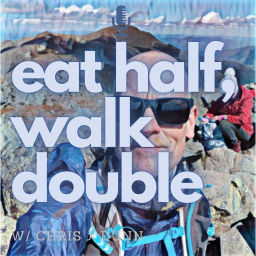
This show is for anyone who believes our potential has no preset. Rather, we are the authors of our own Epic Hero's Story. I'll share what I've learned over the last four decades about human performance and potential in short easily consumed episodes. As an exercise physiologist I have developed a deep understanding of the scientific theories of human performance. But time and again I have witnessed ordinary people do extraordinary things which are not easily explained by 'science'. This show is about the keys that unlock those performances.
In this episode of Rise & Shine, we explore one of the most important concepts in athletics: belief.
When athletes chase something they've never accomplished before, they often run into a challenge. There is no evidence yet that they can do it. No previous result. No proof. So where do we hang our hat?
In this conversation, we explore the difference between belief and faith, why belief is often misunderstood, and why athletes may be placing belief in the wrong place. Rather than attaching belief to outcomes that can't be fully controlled, we discuss the power of placing belief in the process.
Using the story of the Chinese bamboo tree and examples from sport, we unpack why breakthrough performances are rarely sudden and why people often see the trophy but not the roots.
Key takeaways:
• Belief is accepting something as true enough to act upon• Belief is not certainty and it is not the absence of doubt• Belief often grows from evidence while faith reaches toward the future• Outcomes are uncertain, but processes are actionable• People see the breakthrough, but they rarely see the underground work• Preparation is not just producing results, it is helping us become the kind of person capable of achieving them
Question to reflect on:
Where are you placing your belief right now? Is it attached to a finish line, a podium, or a number? Or is it attached to the daily behaviors that move you toward those things?
For more information on the work we're doing with athletes, recreationalist, and executives please visit us at www.ascendhumanperformancecoaching.com.
15 Jun 2026
E25: Fueling to Plan, Fueling to Feel, or Adaptive Fueling?
One of the most common questions endurance athletes ask is also one of the most misunderstood: How should you fuel during long training sessions?
In this episode, we unpack the three primary approaches athletes use—fueling to plan, fueling to feel, and adaptive fueling—and explore the strengths and limitations of each. From structured, pre-determined intake strategies…to intuitive, body-driven decisions…to a more flexible, experience-based approach that blends the two.
You’ll learn why precision can support performance, where intuition can fall short, and how real-world conditions—like heat, intensity, and gut tolerance—should influence your decisions in the moment.
Most importantly, we reframe long sessions as more than just fitness builders—they’re opportunities to practice and refine your fueling strategy so it becomes something you trust when it matters most.
Because ultimately, great fueling isn’t about rigid rules or guesswork…
It’s about developing a system that keeps your energy steady, supports the work you’re asking your body to do, and evolves with experience.
Precision. Intuition. Adaptation.
Which approach are you using?
To learn more about our work with athletes visit us at www.ascendhumanperformancecoaching.com (www.ascendhumanperformancecoaching.com).
8 Jun 2026
E24: Aim Small, Miss Small: Why Precision Drives Performance
In this episode of Rise & Shine, I explore the idea behind the phrase “aim small, miss small.”
I’ve noticed that when our targets are broad and vague, our results tend to be broad and vague as well. But when the target becomes small and precise, attention sharpens and performance improves.
I talk about how this idea shows up in different areas — from professional baseball hitters focusing on the seams of the ball, to leaders walking into meetings with a single clear objective, to endurance athletes navigating difficult terrain one controlled step at a time.
I also share a mental training exercise I use with athletes called “From Small to Large,” inspired by Steve Magness’s book Do Hard Things. When things get difficult and the brain starts to feel overwhelmed, this exercise helps athletes regain control by focusing first on the smallest thing they can control and gradually expanding outward.
Along the way, I connect this idea to what I call the Daily Excellence Mission — the small daily acts that quietly shape who we become and how we perform.
And it all comes back to a simple practice on the putting green: aiming at a quarter instead of the hole.
Small targets sharpen focus.
Small actions build consistency.
And over time, those small daily acts add up.
Aim small. Miss small.
For more information about our work with athletes, recreationalists, and business leaders visit us at www.ascendhumanperformancecoaching.com (www.ascendhumanperformancecoaching.com).
Reach and audience
Public platform figures. Ratings count people who left a rating, not total listeners.
Apple Podcasts (US)
5.0 / 5
2 ratings
Spotify
5.0 / 5
18 ratings
Contact Eat Half, Walk Double
Guest appearances
Books guests
Based on episode analysis; this does not confirm that the show is currently accepting guests.
Host of Eat Half, Walk Double?
Claim your podcast to manage its listing and keep your show details accurate.
Pod Engine is an independent podcast discovery and analytics service and is not affiliated with or endorsed by this podcast. Artwork and show content belong to their owners. Full legal notice.
Explore this show Podcast research with Pod Engine