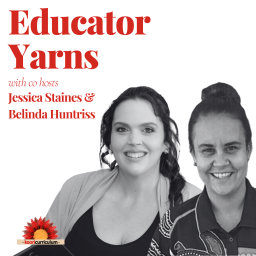
Educator Yarns serves as an informative and insightful discussion about the importance of embedding Aboriginal perspectives in early childhood education and the need for ongoing education and support in alignment with the Early Years Framework 2.0. Jessica Staines, Director of Koori Curriculum is back for season five with new co-host Bec Burch from Bush Kindy Australia. Together the dynamic duo provide practical advice and resources focusing on the intersection of nature play and Aboriginal culture for early childhood educators who are wanting to delve deeper into Aboriginal programs and explore opportunities for rich and meaningful nature play experiences.

Educator Yarns with Jessica Staines & Belinda Huntriss
Claim This Podcastby Jessica Staines
Podcast Authority
Beta
Podcast Overview
Educator Yarns serves as an informative and insightful discussion about the importance of embedding Aboriginal perspectives in early childhood education and the need for ongoing education and support in alignment with the Early Years Framework 2.0. Jessica Staines, Director of Koori Curriculum is back for season five with new co-host Bec Burch from Bush Kindy Australia. Together the dynamic duo provide practical advice and resources focusing on the intersection of nature play and Aboriginal culture for early childhood educators who are wanting to delve deeper into Aboriginal programs and explore opportunities for rich and meaningful nature play experiences.
Language
🇺🇲
Publishing Since
12/2/2019
Unlock The Full Podcast Authority Score Report
See how your podcast performs across key metrics
Podcast Authority
Beta
Recommendations available
Unlock the full report to see detailed tips
Recommendations available
Unlock the full report to see detailed tips
Unlock comprehensive insights including:
- • YouTube presence analysis
- • Social media reach metrics
- • RSS compliance scoring
- • Podcast 2.0 features
- • Technical standards
Detailed Analytics
- Complete breakdown of all 19 authority metrics
- Personalized recommendations for each metric
- Industry benchmarks and comparisons
- Technical RSS feed analysis and compliance scoring
Growth Strategies
- Step-by-step action plans for improvement
- Quick wins to boost your score immediately
- Pro tips from successful podcasters
See how your show performs across every key metric
High authority scores make your podcast more attractive to industry leaders and influencers who want to appear on credible shows.
Sponsors look for podcasts with proven authority and engagement. Your score demonstrates your podcast's value to potential partners.
Understanding your strengths and weaknesses helps you make data-driven decisions to expand your listener base effectively.
4 verified contact emails on file for Educator Yarns with Jessica Staines & Belinda Huntriss
Pitch yourself as a guest, propose sponsorships, or reach out directly to the host.
Recent Episodes

July 27, 2025
S5 EP17: Six Seasons and Storytelling: Creating Authentic Aboriginal Curriculum in Rural Victoria
<p class="MsoNormal">In this episode of Educator Yarns, we sit down with Sue Currell, an early childhood teacher from rural Cobden, Victoria, who has spent over 25 years transforming how Aboriginal perspectives are embedded in early learning settings.</p> <p class="MsoNormal">As a proud Gunditjmara woman who discovered her Aboriginal heritage later in life, Sue brings a unique perspective to reconciliation and cultural education. Working with a vibrant group of 16 children in the Narang room (meaning 'sun' in local Dhauwurd Wurrung language), Sue demonstrates how authentic Aboriginal education goes far beyond tokenistic activities.</p> <p class="MsoNormal">From her early days attending workshops with Aunty Fay Muir to becoming a driving force for cultural change across her organisation, Sue's journey exemplifies how one educator's commitment can ripple throughout an entire community.</p> <p class="MsoNormal">Her nomination as Educator of the Year beautifully captures her impact: "When you walk through Sue's classroom, Aboriginal culture is part of the day-to-day programme… You can hear and see a balance of traditional, contemporary, urban, regional and local perspectives through her holistic approach to teaching."</p> <p class="MsoNormal"><strong>Key Takeaways:</strong></p> <p class="MsoNormal"><strong>Start small and authentic</strong> - Focus on one aspect that resonates with you, whether it's learning about local seasons or animal names, rather than trying to implement everything at once</p> <p class="MsoNormal"><strong>The Eight Ways of Learning framework</strong> - Use this pedagogical tool to ensure all children can access learning outcomes equally, regardless of their preferred learning style</p> <p class="MsoNormal"><strong>Create resource repositories</strong> - Sue developed a digital 'wall' where all educators can access Aboriginal stories, songs, and resources shared by Koorie Preschool Field Officers</p> <p class="MsoNormal"><strong>Six seasons curriculum</strong> - Learn how incorporating Indigenous seasonal calendars creates meaningful connections between children, Country, and community throughout the year</p> <p class="MsoNormal"><strong>Building genuine partnerships</strong> - Success comes from actively seeking connections with local Elders, attending cultural events, and most importantly, listening to Aboriginal voices</p> <p class="MsoNormal"><strong>Document and share knowledge</strong> - Prevent valuable learning moments from being lost by systematically collecting and sharing resources with your teaching team</p> <p class="MsoNormal"><strong>Embed culture in daily rhythms</strong> - From morning acknowledgements to using Dhauwurd Wurrung language for local animals, make Aboriginal perspectives part of everyday practice</p> <p class="MsoNormal"><strong>Tell truth-telling stories gently</strong> - Use resources like Adam Goodes' 'Birrarung's Country' to introduce concepts of colonisation in age-appropriate ways</p> <p class="MsoNormal"><strong>Connect with families meaningfully</strong> - Share your Aboriginal education journey with families weekly and invite them to contribute their own cultural knowledge</p> <p class="MsoNormal"><strong>Recognise it's an ongoing journey</strong> - As Sue quotes from Banjo Clarke's wisdom: "It's not like a jigsaw that at some point one day the jigsaw is complete"</p> <p class="MsoNormal">Sue's story reminds us that embedding Aboriginal perspectives authentically requires patience, humility, and genuine commitment to learning. Her transformation from having minimal resources 20 years ago to creating a classroom where Aboriginal culture breathes through every experience shows what's possible when educators take an active rather than passive approach.</p> <p class="MsoNormal">Whether you're just beginning your journey or looking to deepen your practice, Sue's practical wisdom and heartfelt dedication offer a roadmap for creating truly inclusive early learning environments where all children can see themselves reflected and valued.</p> <p class="MsoNormal">Access the episode resources <a href= "https://kooricurriculum.com/blogs/news/educator-yarns-s05-episode-17-six-seasons-and-storytelling-creating-authentic-aboriginal-curriculum-in-rural-victoria" target="_blank" rel="noopener">here.</a></p> <p class="MsoNormal">Have a question for Educator Yarns? Call 02 5300 0306 and leave a voicemail with your early childhood query about embedding Aboriginal perspectives, and you might hear your question answered in a future episode.</p>

July 20, 2025
S5 EP16: Beyond Google: One Educator's Path to Authentic Aboriginal Perspectives
<p class="MsoNormal">In this episode of Educator Yarns, we meet Andrea de Silva, a finalist for Ally of the Year at the Koorie Curriculum Educator Awards.</p> <p class="MsoNormal">Originally from India, Andrea shares her remarkable journey of cultural discovery and connection as she learned to authentically embed Aboriginal perspectives into her early childhood education practice. From initial uncertainty about protocols to becoming a confident advocate for Gana culture and language, Andrea's story demonstrates how educators from diverse backgrounds can meaningfully engage with Aboriginal cultures.</p> <p class="MsoNormal">Through her experiences with Uncle Tamaru's Gana language course, building relationships with Aboriginal families, and navigating cultural protocols with respect and humility, Andrea offers practical wisdom for educators beginning their own reconciliation journey.</p> <p class="MsoNormal">Her approach—rooted in genuine curiosity, cultural humility, and a commitment to getting it right—provides a roadmap for non-Indigenous educators seeking to create inclusive learning environments that honour Aboriginal voices and perspectives.</p> <p class="MsoNormal"><strong>Key Takeaways:</strong></p> <ul> <li class="MsoNormal"><strong>Start with genuine connection</strong>: Andrea's journey began by wanting to connect more closely with Aboriginal families in her centre, recognising that understanding culture was essential for building authentic relationships</li> <li class="MsoNormal"><strong>Seek proper cultural guidance</strong>: Working with Uncle Tamaru through Galkina Beek provided authentic knowledge about Gana language, symbols, and protocols—moving beyond generic Google searches to place-based learning</li> <li class="MsoNormal"><strong>Embrace mistakes as learning opportunities</strong>: When Andrea unknowingly photographed an Aboriginal girl with a didgeridoo, she used the family's gentle correction as a chance to deepen her understanding of gendered cultural protocols</li> <li class="MsoNormal"><strong>Daily practice creates lasting impact</strong>: Implementing daily yarning circles and incorporating Gana language into everyday routines helps children naturally integrate Aboriginal words into their vocabulary</li> <li class="MsoNormal"><strong>Understand diversity within Aboriginal cultures</strong>: Andrea learned the important distinction between general Aboriginal culture and specific Gana practices, including differences in artwork, language, and customs</li> <li class="MsoNormal"><strong>Build resource networks</strong>: Utilising tools like the Gana Language Dictionary and maintaining ongoing connections with cultural mentors ensures continued authentic practice</li> <li class="MsoNormal"><strong>Find cultural connections</strong>: Andrea discovered surprising similarities between Indian and Aboriginal cultures, particularly in bush tucker plants, family structures, and respect for Elders</li> <li class="MsoNormal"><strong>Don't let fear stop you</strong>: Andrea's key advice—"don't be scared to explore the culture"—emphasises that taking the first step leads to community support and guidance</li> <li class="MsoNormal"><strong>Involve families meaningfully</strong>: Regular communication about cultural activities, smoking ceremonies, and invitations to participate keeps Aboriginal families engaged as active partners</li> <li class="MsoNormal"><strong>Make learning fun and relevant</strong>: Teaching songs like "Head, Shoulders, Knees and Toes" in Gana language makes cultural learning engaging and memorable for young children</li> </ul> <p class="MsoNormal">Andrea's journey reminds us that becoming an ally isn't about perfection—it's about showing up with respect, humility, and a genuine desire to learn.</p> <p class="MsoNormal">Her story proves that educators from any cultural background can become powerful advocates for Aboriginal perspectives when they approach the work with an open heart and commitment to getting it right. As Andrea says, "Support the Aboriginal culture and connect with the generations… don't be fearful."</p> <p class="MsoNormal">Access the episode resources <a href= "https://kooricurriculum.com/blogs/news/educator-yarns-s05-episode-16-beyond-google-one-educators-path-to-authentic-aboriginal-perspectives" target="_blank" rel="noopener">here.</a></p> <p class="MsoNormal">Have a question for Educator Yarns? Call 02 5300 0306 and leave a voicemail with your early childhood query about embedding Aboriginal perspectives, and you might hear your question answered in a future episode.</p>

July 13, 2025
S5 EP15: Creating Belonging: Practical Strategies for Cultural Inclusion in Early Learning
<p class="MsoNormal">In this episode of Educator Yarns, we sit down with Hayley Callaghan, a dedicated cultural officer and early childhood educator at Learning Pathways in Toowoomba.</p> <p class="MsoNormal">Hayley, a proud Kamilaroi woman from Goondiwindi Country, shares her profound journey of cultural rediscovery and how she's transformed her personal exploration into meaningful educational practices.</p> <p class="MsoNormal">From raising over $500 through a Where It Yellow fundraiser to implementing the Aboriginal Eight Ways of Learning pedagogy, Hayley demonstrates how one educator's passion can create ripple effects throughout an entire learning community.</p> <p class="MsoNormal">As a mother of five who grew up disconnected from her cultural roots, Hayley's story resonates deeply as she discusses the challenges and triumphs of fostering cultural understanding in mainstream early childhood settings.</p> <p class="MsoNormal">Her candid insights about building relationships with families, supporting fellow educators, and creating culturally safe environments offer practical wisdom for anyone seeking to authentically embed Aboriginal perspectives in their practice.</p> <p class="MsoNormal"><strong>Key Takeaways:</strong></p> <p class="MsoNormal"><strong>Personal cultural journey matters</strong> - Hayley's experience of rediscovering her own Kamilaroi heritage whilst teaching demonstrates that educators are learners too, and authenticity comes from acknowledging we're all on a continuous learning journey</p> <p class="MsoNormal"><strong>Start with connection, not perfection</strong> - Building genuine relationships with Indigenous families begins with simple invitations and regular communication, even if uptake is initially low</p> <p class="MsoNormal"><strong>The Eight Ways of Learning pedagogy</strong> - Hayley is actively working to unpack and implement this Aboriginal pedagogical framework throughout her centre, showing how Indigenous ways of knowing can enhance all children's learning</p> <p class="MsoNormal"><strong>Visible cultural presence creates belonging</strong> - Strategic use of hallway displays, provocations with natural materials, and welcoming signage helps families know they belong from the moment they enter</p> <p class="MsoNormal"><strong>Challenge requires courage</strong> - Overcoming the perception that focusing on Aboriginal culture excludes others required direct conversations with staff about ensuring all cultures are valued and represented</p> <p class="MsoNormal"><strong>Time constraints are real but manageable</strong> - As a working educator with limited cultural officer hours, Hayley emphasises the importance of planning and preparation to maximise cultural learning opportunities</p> <p class="MsoNormal"><strong>Community connections amplify impact</strong> - Attending cultural events and building relationships with local Indigenous community members like Tiffany provides invaluable support and authentic learning experiences</p> <p class="MsoNormal"><strong>Children as cultural leaders</strong> - Hayley's seven-year-old son's enthusiasm for cultural dancing and her older son applying to be his school's cultural leader shows how educator passion transfers to the next generation</p> <p class="MsoNormal"><strong>Nature as teacher</strong> - Getting outside and connecting with Country provides inspiration and authentic contexts for cultural learning that can't be replicated indoors</p> <p class="MsoNormal"><strong>Include Aboriginal perspectives regardless of enrolment</strong> - Teaching on Aboriginal land means embedding Indigenous perspectives is essential whether you have Aboriginal children in your service</p> <p class="MsoNormal">Hayley's journey reminds us that creating culturally rich early learning environments doesn't require perfection—it requires heart, humility, and a willingness to learn alongside the children and families we serve. </p> <p class="MsoNormal">Access the episode resources <a href= "https://kooricurriculum.com/blogs/news/educator-yarns-s05-episode-15-creating-belonging-practical-strategies-for-cultural-inclusion-in-early-learning" target="_blank" rel="noopener">here.</a></p> <p class="MsoNormal">Have a question for Educator Yarns? Call 02 5300 0306 and leave a voicemail with your early childhood query about embedding Aboriginal perspectives, and you might hear your question answered in a future episode.</p>
81 total episodes available
Recent guests on Educator Yarns with Jessica Staines & Belinda Huntriss
Guests from recent episodes — sign up to see every guest that has ever appeared on this show.
Jeff
Guest
Beck
Guest
Lisa Mavin
Guest
Bec Burch
Guest
Kat Fulford
Guest
Taylar Malouf
Guest
Stephanie Watson
Guest
Deep-dive analytics for Educator Yarns with Jessica Staines & Belinda Huntriss
Frequently asked questions
Have a different question and can't find the answer you're looking for? Reach out to our support team by sending us an email and we'll get back to you as soon as we can.
- What is Educator Yarns with Jessica Staines & Belinda Huntriss?
- How often does this podcast release new episodes?
This podcast updates bi-weekly.
- Where can I listen to this podcast?
This podcast is available on 9 platforms including Apple Podcasts, Spotify, and more. You can also use the RSS feed directly.
- Does this podcast accept guests?
Yes, this podcast regularly features guests.
Legal Disclaimer
Pod Engine is not affiliated with, endorsed by, or officially connected with any of the podcasts displayed on this platform. We operate independently as a podcast discovery and analytics service.
All podcast artwork, thumbnails, and content displayed on this page are the property of their respective owners and are protected by applicable copyright laws. This includes, but is not limited to, podcast cover art, episode artwork, show descriptions, episode titles, transcripts, audio snippets, and any other content originating from the podcast creators or their licensors.
We display this content under fair use principles and/or implied license for the purpose of podcast discovery, information, and commentary. We make no claim of ownership over any podcast content, artwork, or related materials shown on this platform. All trademarks, service marks, and trade names are the property of their respective owners.
While we strive to ensure all content usage is properly authorized, if you are a rights holder and believe your content is being used inappropriately or without proper authorization, please contact us immediately at hey@podengine.ai for prompt review and appropriate action, which may include content removal or proper attribution.
By accessing and using this platform, you acknowledge and agree to respect all applicable copyright laws and intellectual property rights of content owners. Any unauthorized reproduction, distribution, or commercial use of the content displayed on this platform is strictly prohibited.