- 10
- Episodes
- Weekly
- Cadence
- 2025
- First episode
About Electric Equity
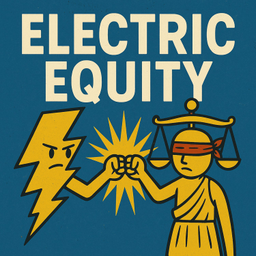
Electric Equity looks at energy poverty around the globe, explores how it limits people’s ability to flourish as human beings, and brings to light efforts to increase energy access. Your host is engineering Professor Brian Thomas, Executive Director of the nonprofit organization JustEnergy, which works to combat energy poverty in the poorest and least electrified country in the Western Hemisphere: Haiti. Fighting Energy Poverty is full of challenges: some are technical, some are cultural, some are financial, some are ethical. Our show will demystify energy and electricity and unpack the central role of energy access for international development and human flourishing. We’ll introduce you to people and organizations that are doing something about it and explore philosophical and ethical questions along the way.
- Publisher
- Brian Thomas
- Category
- education · technology
- Language
- en
- Explicit
- No
- First episode
- 20 Dec 2025
- Latest episode
- 4 Jun 2026
Latest episodes
10 episodes in the feed.
4 Jun 2026
The Dam Good Question
In this episode of Electric Equity, guest host Dr. Kayla Garrett speaks with Shannon Ames, the Executive Director of the Low Impact Hydropower Institute (LIHI). How does LIHI move the needle toward access to renewable energy sources, specifically hydropower, while minimizing or eliminating its environmental and cultural impacts? The conversation explores: What "low-impact hydropower" means and the eight environmental and community criteria used in LIHI certification. The historical tension between hydropower developers and river conservation groups. Fish passage technologies, including fish ladders, elevators, nature-like channels, and even the famous "salmon cannon." The differences between run-of-river and peaking hydropower facilities. Why hydropower remains valuable for energy access and grid stability, particularly in remote and developing regions. Whether environmental protection and expanded energy access must be viewed as competing goals. How thoughtful design, community engagement, and emerging technologies can reduce environmental impacts while still meeting urgent energy needs.
10 Apr 2026
Food Justice as Energy Justice
In this episode of Electric Equity, Brian speaks with Dr. Jenny Howell of Baylor University and explores the deep connections between theology, ecology, and food justice. Dr. Howell directs a unique graduate program at Truett Seminary that challenges students to break out of traditional silos and think holistically about the world’s most pressing issues. Teaching on-site at the World Hunger Relief Farm, she helps future leaders connect theological ideas about creation with the lived realities of land, food systems, and community life. Together, they unpack how food and energy intersect—not just as resources, but as essential components of human dignity and flourishing. From the weaponization of food in conflict zones to the concept of “integral ecology,” Jenny offers a compelling vision in which the health of the earth and the well-being of people are inseparable. The conversation is both sobering and hopeful, encouraging listeners to resist despair and instead find one meaningful way to participate in healing the world around them.
20 Mar 2026
Energy-as-a-Service: Rethinking Energy Equity
In this episode of Electric Equity, Brian sits down with Nick Stolberg to explore the intersection of energy access, rural livelihoods, and sustainable agriculture. From the surprising role of a “chicken farmer” to deeper questions about energy poverty, resilience, and community development, this conversation connects everyday work with global challenges. Together, they reflect on how local food systems, small-scale farming, and decentralized energy solutions can strengthen communities both in the United States and in places like Haiti. This episode will resonate with listeners interested in renewable energy, off-grid systems, regenerative agriculture, humanitarian engineering, and a different business model for renewable energy businesses in energy poor countries. Brian and Nick discuss practical and philosophical dimensions of building a more equitable energy future—one that values human dignity, local knowledge, and appropriate technology. Whether you're a farmer, engineer, nonprofit leader, or simply curious about sustainable living and energy justice, this conversation offers thoughtful insights grounded in real-world experience. Power to the Chicken People.
8 Mar 2026
Good Business
In this episode of Electric Equity, Brian Thomas speaks with Bryan McInnis, Director of Business Development for the Europe, Middle East, and Africa region at EG4 Electronics. Bryan recently relocated to Kampala, Uganda, placing him at the center of one of the fastest-growing regions in the world for off-grid solar and energy access. In their conversation, Bryan explains how EG4 partners with nonprofit organizations to deploy solar energy systems and support electrification efforts in communities where reliable grid power is limited or unavailable. Bryan also describes how EG4 has invested heavily in training and workforce development, including NABCEP certification and other professional training programs for solar installers and inspectors. The discussion explores how partnerships between technology companies and nonprofit organizations can help build local capacity, create marketable skills, and expand access to electricity. As the conversation unfolds, listeners gain insight into how solar technology, education, and local partnerships can work together to address energy poverty and strengthen communities both in the United States and across East Africa.
25 Feb 2026
The Indignity of Misery
In this episode of Electric Equity, Brian talks with Nathan Nickerson, former executive director of Konbit Sante, a nonprofit that has partnered with Haitian healthcare institutions since 2001. Nate explains what “Konbit Sante” means—an idea of shared effort and collaboration—and describes the organization’s long-term approach to strengthening healthcare in northern Haiti. Rather than focusing on one-off interventions, Konbit Sante works alongside local partners on the full set of “building blocks” a functional health system needs: trained staff, management, supply chains, and core infrastructure like water and, of course, electricity. The conversation also highlights why electricity access is inseparable from medical care in Haiti, where public power is extremely limited and most facilities must rely on diesel generators and—more and more—solar-plus-battery systems. Brian and Nate discuss how energy constraints shape everything from nighttime maternity care to neonatal support equipment, and why sustainable impact depends as much on maintenance, local ownership, and planning as it does on technology. Along the way, they reflect on the difference between relief and development, the dignity implications of “misery,” and what it takes to stay hopeful—and effective—in long-term humanitarian work.
11 Feb 2026
Puerto Rico's Ongoing Electricity Struggles
Bad Bunny's Superbowl LX halftime show gives us a glimpse of Puerto Rico's struggling electric grid, especially since Hurricane Maria's impact in 2017. Was privatization the right way to rebuild PR's infrastructure, or has it caused more problems than before? In this brief episode we provide a high-level history for those made curious by Bad Bunny's performance.
21 Jan 2026
EarthSpark's Micro Utilities
Jean Thaylord is a member of the nonprofit group EarthSpark, which builds micro utilities in Haiti. He grew up in Haiti, but was able to study electrical engineering at Rutgers University in New Jersey. He joined EarthSpark in 2018 where he helps operate two prepaid town-level micro grids in the remote Tiberon Peninsula of Southeast Haiti. Together, these two microgrids have about 1000 connections that use an innovative electric meter for control, planning, and visibility. Customers on the EarthSpark microgrids are encouraged to use their electricity for creating value, which often looks like agricultural processes that enhance businesses already in operation. Jean and the EarthSpark team feel a sense of responsibility to educate their customers, many of whom have never had electricity access before. Although these two grids were designed to be 75% solar and 25% diesel powered, EarthSpark is moving away from diesel, citing a lack of control of the fuel supply. The next six grids being planned will be designed for 100% solar. The cost of energy is around 30 to 45 cents per kilowatt hour in Tiberon. Electricity theft is greatly limited by using branch level totalizing meters reconciled against the sum of the household meters on that branch. Key services such as telecommunications and hospitals are secured by a microgrid within the microgrid for added reliability in anticipation of natural disasters such as earthquakes and hurricanes. Enèji Pwòp is a microgrid operations company also launched by EarthSpark that runs the day-to-day businesses of the microgrids. Enèji Pwòp's technicians and its grid ambassadors live in their respective towns and are well known by everyone. As a result, locals have a strong sense of ownership, which is both highly motivating and a source of community pride. Jean's interactions with customers as they transition to electricity is rewarding. Working on these Haitian microgrids is the best way he can imagine to use his God-given abilities. For him, it's a matter of stewardship. He encourages other people to seek meaningful service working in this space, to step outside their comfort zone and work abroad on similar projects. See www.justiceandmercy.energy for extra content including episodes that explain electrical terms in accessible ways.
20 Dec 2025
Remote Alaskan Microgrids
In this episode, I speak with Aimie Servant, a licensed professional engineer at the Alaska Village Electric Cooperative (AVEC), about what it really takes to keep the lights on in some of the most remote communities in North America. While much of Alaska relies on the Railbelt grid, AVEC operates independent microgrids serving rural villages—small “electrical islands” powered close to the people they serve. We explore how these systems depend largely on diesel generation, sometimes supported by wind power and battery energy storage, and why fuel logistics drive electricity costs to around 40¢ per kilowatt-hour. With fuel and equipment delivered by barge during short seasonal windows, reliability requires careful planning, large storage capacity, and a layered maintenance model involving local operators, traveling technicians, and engineers. The conversation also looks forward, discussing the role of lithium iron phosphate batteries, potential thermal energy storage, and why diesel remains essential in extreme cold. Aimie reflects on the charge of her faith to be “the light of the world” in very tangible ways. Main Points: Alaska’s roughly 200 microgrids operate as isolated electrical systems. Diesel remains central to reliability despite growing renewables. Fuel logistics and seasonal access shape system design and cost. Power Cost Equalization supports energy equity in rural communities. Multiple energy systems work best as complements, not competitors. See www.justiceandmercy.energy for extra content including episodes that explain electrical terms in accessible ways.
20 Dec 2025
Mackendy's Story
This episode introduces us to Mackendy, the General Manager and Cultural Liasson for JustEnergy's work in Haiti. We learn how how he lost his mother as a child amid Vodou curses, but was able to study languages and translation services. He recalls the story of a blackout during his wife's c-section, and unpacks Haitian fuel shortages, black market fuel sales, and using propane as a fuel for electricity generation. Main Points: Poverty is rampant and life is hard in Haiti. Electricity is primarily generated through private generators using diesel and gasoline. Fuel shortages exacerbated by gang violence mean even hospitals have blackouts - sometimes during surgery. Black market fuel sales mean gasoline is like cash - but more dangerous. Propane offers a viable alternative for electricity generation. See www.justiceandmercy.energy for extra content including episodes that explain electrical terms in accessible ways.
20 Dec 2025
Energy Virtue, Energy Vice
In this episode, I speak with Dr. Kayla Garrett, a professor in Baylor University's department of Environmental Science and co-founder of the nonprofit JustEnergy, about how electricity access shapes human freedom and responsibility. Kayla’s journey began as an undergraduate in humanitarian engineering, when a service-learning trip to Haiti involved helping a hospital install an off-grid solar and battery system—an experience that permanently altered how she thinks about development and energy justice. Since earning her PhD in environmental science, Dr. Garrett has continued teaching and leading JustEnergy, supporting projects in both Texas and Haiti. Our conversation centers on the Human Development Index (HDI), which integrates life expectancy, education, and income as measures of human flourishing. We explore why electricity consumption correlates so strongly with HDI: small amounts of energy dramatically improve quality of life for the energy-poor, while additional energy provides diminishing returns for energy-rich societies. Could this be called "energy gluttony?" Dr. Garrett also reflects candidly on returning from Haiti with feelings of anger and shame, and how those emotions evolved into a call for energy temperance—a disciplined, neighbor-centered approach to energy use. We conclude by distinguishing between energy conservation as a behavioral choice and energy efficiency as a technological strategy. Main Points: Humanitarian engineering and formative experiences in Haiti HDI as a measure of freedom and development Electricity’s nonlinear impact on quality of life Energy temperance, energy gluttony, conservation, and efficiency See www.justiceandmercy.energy for extra content including episodes that explain electrical terms in accessible ways.
Contact Electric Equity
- Guest appearances
- Books guests
Based on episode analysis; this does not confirm that the show is currently accepting guests.
Host of Electric Equity?
Claim your podcast to manage its listing and keep your show details accurate.
Pod Engine is an independent podcast discovery and analytics service and is not affiliated with or endorsed by this podcast. Artwork and show content belong to their owners. Full legal notice.
Explore this show
Podcast research with Pod Engine