- 13
- Episodes
- 3
- Ratings
- Daily
- Cadence
- 2025
- First episode
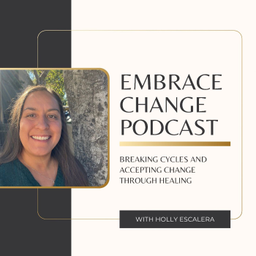
About Embrace Change Podcast
A podcast where we talk about breaking cycles, accepting change, and embracing the healing process through being vulnerable
- Publisher
- Holly Escalera
- Category
- kids & family · religion & spirituality · society & culture
- Language
- en
- Explicit
- No
- First episode
- 2 Jan 2025
- Latest episode
- 22 Mar 2025
Latest episodes
13 episodes in the feed.
22 Mar 2025
Broken but not beyond repair
"Have you ever felt like you’re too broken to change? That no matter how hard you try, you just can’t shake the feeling that something is wrong with you? You’re not alone—but here’s the truth: You were never broken to begin with. In this episode, we’re diving deep into the power of self-doubt, guilt, and shame, and how these hidden forces keep us trapped in a cycle of believing we’re unfixable. We’ll uncover where these beliefs come from, challenge the lies we’ve been told, and most importantly—learn how to embrace our wholeness, flaws and all. If you’re ready to stop searching for validation and start reclaiming your truth, this episode is for you."
14 Mar 2025
Vulnerable hearts: stronger minds
Vulnerability and honesty are essential for personal growth because they allow for self-awareness, help build authentic connections, and allow for genuine self-acceptance, and emotional processing. When we allow ourselves to be vulnerable, we open the door to deeper self-awareness. Honesty helps us break through the barriers of self-deception, allowing us to build real, authentic connections with others. And through this process, we cultivate genuine self-acceptance and emotional resilience. Today we will explore how embracing vulnerability and truth can transform not only our minds but our lives.
7 Mar 2025
Compromise or boundaries
In this episode of Embrace Change, we dive into the delicate balance between compromise and setting boundaries. Disagreements happen in all relationships, but the way we navigate them determines whether they lead to growth or frustration. I start by sharing a personal story from my childhood—growing up in a blended family where division was felt in subtle yet impactful ways. From this experience, I learned a powerful lesson: not every boundary is a necessary one, and not every compromise is healthy. Sometimes, we set boundaries out of fear rather than necessity, and other times, we compromise in ways that only lead to resentment. As you move through the week, I encourage you to listen to your emotions. Are you holding back words just to keep the peace? That might be a sign of an unhealthy compromise. Are you setting a boundary but feeling deep sadness afterward? That could mean it wasn’t the right boundary to begin with. But if an emotional conversation leaves you feeling lighter, even if sadness lingers, that’s a sign you made the right choice.
28 Feb 2025
Healing unseen wounds
What if the struggles you face today are actually echoes of wounds from your past? In this episode, we dive deep into the power of healing the unseen wounds that shape our thoughts, reactions, and relationships. You’ll learn how to recognize the hidden impact of past pain, shift your mindset, and respond to life with more awareness and self-compassion. Healing isn’t just for you—it’s for the world around you. When you choose to heal, you not only transform your own life but also create space for deeper connection, empathy, and understanding. Tune in to start your journey toward wholeness today.
21 Feb 2025
Overcoming fear of rejection
We have a fundamental need for connection and acknowledgment. Feeling seen, understood, and accepted is crucial for both our emotional and physical well-being. However, the deep desire for acceptance often comes with an equally strong fear of rejection, leading many to hide their true selves as a form of self-protection. When we lack genuine validation, appreciation, and a sense of belonging, it can foster feelings of shame and unworthiness, making us more sensitive to rejection. Fear of rejection has deep emotional and psychological effects, many of which keep people stuck in painful cycles. If rejection feels like a personal attack, you're not alone. But what if I told you rejection isn’t the end, but a redirection to something better. It is important to build up resilience within yourself to conquer all the uncertainty you will face when choosing to trust yourself. You’re tired of feeling stuck. You’ve spent so much of your life molding yourself to fit expectations that no longer serve you. You crave something deeper—freedom, confidence, and the ability to show up as your true self without fear. You know you’re meant for more, but you keep finding yourself trapped in the same cycles, wondering if real change is even possible. This episode will normalize those feelings you are experiencing and offer tips for building resilience in order to create a more fulfilling life for yourself.
14 Feb 2025
Why guilt and shame keep you stuck
Why Guilt and Shame keep you stuck? Hey there, and welcome! Today, we’re diving into an important conversation about the difference between guilt and shame—unpacking what’s really at the root of each. As you listen, I invite you to keep an open mind and an open heart, giving yourself the space to receive this message with kindness and curiosity. You are not alone in this, and I hope this episode brings you the clarity and encouragement you need. Some real-life examples of a person experiencing shame or guilt can be Someone who grew up in a household where emotions were dismissed (“Stop crying, you’re too sensitive”) may feel shame for having deep emotions as an adult. They suppress their feelings, struggle with vulnerability, and stay stuck in relationships where they feel unseen or misunderstood. Someone who chooses a path different from her family’s expectations—whether it's career, marriage, or faith—feels deep guilt for “disappointing” them. They stay stuck in a cycle of self-doubt, seeking approval, and minimizing their own desires to maintain acceptance. A person who grew up feeling unworthy of love keeps people at a distance due to fear of rejection. Shame says, “If they really knew me, they wouldn’t love me.” That person stays stuck in surface-level relationships, longing for connection but fearing exposure. Each of these experiences creates a loop—guilt turns into shame, shame leads to avoidance, and avoidance keeps people stuck in patterns that prevent healing. So lets talk about the difference between the two. Understanding the Difference Between Guilt and Shame Guilt is an emotion that occurs when a person realizes or believes they did something wrong such as lying, cheating, or stealing. Sounds pretty simple, right?? Wrong…because there is this thing called guilt complex and this can allow for someone to feel guilty for doing absolutely nothing wrong at all. People with guilt complex take on responsibility for situations that aren’t their fault, leading to unnecessary guilt. Unnecessary guilt often stems from deep-rooted beliefs and past experiences. Here are a few reasons why people experience it: 1. Childhood Upbringing– Growing up where love or approval was conditional can make someone feel responsible for others' emotions or outcomes. This can look like a parent blaming a child for grown up arguments. 2. Perfectionism – Holding yourself to impossibly high standards and feeling guilty when you fall short. 3. Past Trauma or Abuse – Experiencing manipulation or emotional abuse 4. Cultural or Religious Influences – Some teachings emphasize self-sacrifice or obedience, which can lead to guilt for prioritizing personal needs. 5. Fear of Conflict or Disapproval – Avoiding guilt by over-apologizing, over-explaining, or taking responsibility for things outside their control. Unnecessary guilt can hold you back in different ways. For instance: • In relationships: You over-apologize, feel responsible for others’ emotions, or struggle with setting boundaries. • In parenting: You feel like they’re never doing enough, questioning every decision, or carrying guilt because you take time for yourself. • In career/personal growth: You avoid opportunities or change out of fear of letting someone down or making the wrong choice. Shame on the other hand is a deeply personal emotion that arises when someone perceives they have done something wrong or that there is something inherently wrong with them. Unlike guilt, which is tied to a specific action (“I did something bad”), shame is more internalized (“I am bad”). It often leads to feelings of embarrassment, humiliation, or worthlessness. Shame can be especially painful because it is closely linked to our fundamental needs for safety, connection, and belonging. When we feel shame, it can make us believe that we are unworthy of love or acceptance, leading to isolation and self-judgment. Because shame feels so threatening, people often try to hide the things they feel ashamed of—whether it’s a past mistake, a perceived flaw, or even emotions they were taught were “wrong” to express. This can result in: • Avoidance: Pretending something didn’t happen, suppressing emotions, or avoiding situations that trigger shame. • Perfectionism: Overcompensating by trying to be “flawless” to avoid feeling inadequate. • People-pleasing: Seeking validation to counter feelings of unworthiness. • Self-sabotage: Engaging in destructive behaviors due to believing they don’t deserve success or happiness.
7 Feb 2025
The Power of Loving Yourself
Welcome back to the podcast that helps you navigate life’s biggest challenges with clarity and confidence. I am your host Holly Escalera and im so happy you are here. Over the past few episodes, we’ve explored how to break free from the pressure to explain yourself and release the grip of feeling like you’re not enough. In this episode, we’re diving into what life looks like for someone who struggles with self-love and, more importantly, how to begin the journey toward healing and self-acceptance. You are a person, juggling work, family, and the endless list of responsibilities that come with both. From the outside, it seems like you have it all together—always taking care of others, always saying "yes" when someone needs you. But deep down, you feel empty. Morning Routine: Running on Empty You wakes up early, not because your well-rested, but because you have to. You skip breakfast most mornings—too busy packing lunches, laying out the necessary items for dinner and making sure everyone else is taken care of. You don’t have time for coffee, let alone a moment to breathe before the chaos of the day begins. As you drop your kids off at school, you catches a glimpse of yourself in the rearview mirror. You barely recognizes the woman staring back. You used to take care of yourself- you used to have dreams, passions, even hobbies. But now, you feel like your just going through the motions. At Work: Seeking Validation At your job, you are the go-to person. You stay late, picks up extra tasks, and rarely say "no." Deep down, you crave recognition, hoping that if you work hard enough, someone will finally notice you. But when you are overlooked for a promotion (again), you don’t fight for yourself. Instead, you tell yourself, Maybe I’m just not good enough. Relationships: Afraid to Speak Up Your spouse or partner asks what’s wrong when you seem distant, but you shrug it off with a smile. "I’m just tired," you say. The truth? You feel unseen. Unappreciated. But voicing that feels selfish, so you bury it. With friends, you listen to their struggles, offering support and encouragement, but you never shares your own burdens. You don’t want to be a bother. Evening Routine: Ignoring Her Own Needs At night, after the kids are asleep, You finally have a moment to yourself. But instead of using it for something you enjoy, you scroll through social media, comparing your life to others. You sees moms who look happy, successful women who seem confident, and wonders, Why can’t I be like them? You fall asleep exhausted, dreading another day of the same cycle.
31 Jan 2025
Breaking the chains of inadequacy-finding your worth
"Have you ever felt like you’re just not good enough—like no matter how hard you try, it never feels like it’s enough? Today, we’re unpacking the heavy feeling of inadequacy and learning how to reclaim your self-worth." Here is what you will take away from this episode: You will understand the root of inadequacy and how it impacts relationships You will identify and challenge the Inner critic within yourself You will receive validation and inspiration So lets start off by identifying real life scenarios in which inadequacy shows up The Overwhelmed Young Mom Scenario: You’re a young mother who feels like your failing as a parent. You see other moms on social media managing their homes perfectly, homeschooling their kids, and still having time for self-care. Meanwhile, you struggle just to get through the day without losing your cool. When your child’s teacher comes to you with a complaint, you feel ashamed, believing it’s your fault for not being a better mother. The exhaustion and self-doubt make you withdraw from friends, convinced they would judge you if they knew how much you were struggling. The High-Achieving but Insecure Professional Scenario: You are a 35-year-old marketing manager, who has climbed the corporate ladder quickly, but constantly feels like a fraud. Despite your accomplishments, your terrified that one day your boss will realize that you are not as smart or capable as people think. You overwork yourself, stay late and take on extra projects to prove your worth. When you receive constructive criticism, even minor feedback, you spiral into self-doubt, questioning whether you truly belong in this position. The Overcommitted Helper Scenario: You say yes to everything—helping at your kids' school, volunteering at church, taking on extra work projects, and always being the friend who’s available to listen. You thrive on being needed because it makes you feel important and valued. But deep down, your exhausted. You rarely have time for yourself, yet the idea of saying no fills you with guilt—what if people think you’re selfish? What if they stop relying on you? You keep pushing through, even when you are approaching burnout. When you finally break down in tears from the overwhelming pressure, you feel ashamed, believing you should be strong enough to handle it all. Understanding the Core of Inadequacy Inadequacy is more than just self-doubt—it’s the emotionally painful feeling that who you are or what you do isn’t good enough. This belief doesn’t just appear out of nowhere. It’s often a result of negative self-evaluations, whether shaped by past experiences, societal expectations, or a relentless inner critic. What makes inadequacy so challenging is that it feels real, even if it isn’t grounded in fact. For example: • A young professional might feel inadequate at work, convinced they’re not as talented as their peers—even when their boss praises their contributions. • A parent might believe they’re failing their children because they’re not living up to some idealized version of what a "perfect parent" should be. • Someone navigating relationships might feel they aren’t lovable or worthy of connection, even when their loved ones actively express appreciation and care. The hallmark of inadequacy is that it’s not just about what’s true—it’s about what feels true. These persistent, painful beliefs create a narrative of inferiority that shapes how people see themselves and interact with the world. For many, inadequacy can be tied to specific areas of life such as appearance, career choices, relationships, and parenting. What’s important to recognize is that inadequacy thrives on comparison—whether to others, to societal norms, or even to our past selves. And often, these comparisons aren’t fair or realistic. Have you ever found yourself questioning your worth because you haven’t accomplished everything you wanted to by a specific age? For example, earned a degree, purchased a home, traveled outside of the country, married the love of your life, had children, and so on and so fourth. That feeling of measuring your worth by a checklist of accomplishments is so real. Society sets these invisible deadlines—be married by 30, own a home by 35, have your career figured out by 40—and when life doesn’t unfold that way, it’s easy to feel like you’re behind or that you’ve failed. But the truth is, your worth has never been tied to those milestones. Your journey is yours—not anyone else’s. The absence of a degree, a home, a spouse, or travel experiences does not mean the absence of purpose, value, or impact. You are still becoming, still growing, still worthy. Life doesn’t have an expiration date for joy, success, or love. It’s okay to take a different path. It’s okay to start late. It’s okay to redefine what fulfillment looks like for you.
24 Jan 2025
Breaking free from needing to explain yourself
Did you know that research shows a strong correlation between a lack of authenticity in relationships and negative outcomes, including: Lower relationship satisfaction, increased conflict, decreased intimacy and a higher likelihood of ending the relationship all together. Individuals who are more authentic in their relationships tend to report greater happiness, stronger bonds, and higher levels of trust with their partners. This weeks episode is titled, Breaking free from needing to explain yourself. We will talk about why we feel the need to justify our actions, address how societal expectations contribute to our behaviors, understanding the roots of people pleasing behavior and how that connects to our self-worth, then we will shift gears and talk about how to stop explaining and start owning your decisions, and identify strategies to set boundaries without feeling guilt. By the end of this episode, you will feel encouraged to embrace who you are as a person, so lets get started. People feel the need to explain themselves because it’s uncomfortable when what we do doesn’t match what we believe. It feels like something’s off, so we try to make sense of it to feel better and stay true to how we see ourselves. Justifying our actions helps us maintain a positive self-image by explaining our choices in a way that aligns with our values. For example: Eating Junk Food While Trying to Be Healthy • Belief: "I want to eat healthy and take care of my body." • Behavior: Grabs fast food after a long day because it’s easy • Justification: "I’ve been so busy, and I deserved a treat today. One meal won’t hurt!" Avoiding a Difficult Conversation • Belief: "I value honesty and open communication." • Behavior: Avoids addressing a problem with a friend or partner. • Justification: "It’s not the right time, and I don’t want to make things worse. Sometimes, we explain ourselves because we’re looking for approval or validation. Deep down, we want people to understand our choices and accept us for them. By justifying our actions, we feel like we’re giving them enough information to see where we’re coming from. It’s almost like we’re trying to control how they see us—hoping that if we explain things the right way, they’ll like or respect us more. It’s all about wanting to feel understood and accepted. Some examples of this are: Overexplaining Why You’re Late • Situation: You show up late to a meeting or gathering. • Justification: “Sorry I’m late! Traffic was awful, and I had to stop to help someone. It’s been a crazy morning.” • Why: You want others to see you as responsible and considerate, not careless or disrespectful. 2. Explaining Career Choices • Situation: Someone questions why you left a steady job to pursue a creative career. • Justification: “I know it seems risky, but I’ve been unhappy for years, and this is something I’m really passionate about. I’ve done the research, and I have a plan.” • Why: You want them to see you as ambitious and thoughtful, not impulsive or unrealistic. 3. Defending Parenting Decisions • Situation: A family member questions your parenting style, like letting your kids use screens. • Justification: “I only let them watch educational shows, and it’s just so I can get a moment to breathe after work. Plus, they’re learning a lot from it!” • Why: You want them to see you as a good parent who has thought things through, not someone who’s taking the “easy way out.” 4. Explaining Why You Declined an Invite • Situation: You say no to going out with friends but feel the need to give a reason. • Justification: “I really want to come, but I’ve had such a long week, and I’m just exhausted. I need to catch up on sleep and be ready for Monday.” • Why: You want them to see you as considerate and busy, not rude or uninterested. 5. Justifying Personal Preferences • Situation: You tell someone you prefer staying in over going out. • Justification: “It’s not that I don’t like going out, I just really enjoy relaxing at home and recharging. I’m not a party person, but I love small, meaningful gatherings.” • Why: You want them to understand and accept your preferences instead of thinking you’re boring or antisocial. 6. Apologizing for Your Choices • Situation: You take a different path in life, like not having kids, getting a divorce, or moving away. • Justification: “I know it’s not what most people do, but this is what feels right for me. I’ve thought about it a lot, and I believe it’s the best decision for my happiness.” • Why: You want others to respect your choices and not judge you for being different. In all these examples, the core desire is to feel understood, accepted, and liked—often by people whose opinions might not even matter as much as we think. How societal expectations and conditioning contribute. Society has a huge influence on who we are and how we behave, often starting when we’re kids. Things like family, friends, media, and culture create invisible rules about how we “should” act, look, or think. These rules can be helpful sometimes, but they can also box us in and stop us from living authentically if we don’t question them. Most of the time, we don’t even realize these rules are shaping us. They become habits and beliefs that feel “normal” because we’ve been taught from such a young age. Real-Life Examples • Gender Roles: Society tells men to be strong and women to be caring, which can limit career options or emotional expression. • Beauty Standards: There’s constant pressure to look a certain way, leading to low self-esteem or unhealthy behaviors. • Education: Stereotypes like “girls are bad at math” or “boys don’t read” can hold people back in school and beyond. Society makes us feel like we’re “wrong” for thinking or being different. It creates limits on who we believe we can be and plants seeds of self-doubt. Over time, this pressure pushes us to follow the crowd and live up to the world’s expectations—even if it doesn’t feel true to who we are—because we’re afraid of being judged or rejected. Understanding the roots of People-Pleasing and how it connects to self-worth People pleasing is a disease that leaves you feeling exhausted, unworthy, not wanted, not important, and the list goes on. So why do we give so much of our energy to this disease. Well, it goes back to the fact that we all want to fit in somewhere, be accepted, and loved so much that we sacrifice our own happiness in the process. When you don’t value yourself enough, you will find yourself needing the approval from others to feel good. The fear of being disliked or abandoned can lead you to constantly pleasing others in order to maintain the relationship. People-pleasers will often go the distance to be liked, avoid disagreements, and mitigate the feeling that they will be abandoned, however over time this behavior can lead to resentment and relationship burnout. If you feel like you are drowning in sorrow and pain, desperately looking for a lifeline then look no further because the last part of this episode is going to inspire you to take control over your life and give you freedom. Here are some helpful steps to help you stop explaining and start owning your decisions: 1. Recognize When You’re About to explain o Pay attention to the moments when you feel the urge to explain yourself. Ask, “Do I really need to justify this, or can my answer just stand on its own?” 2. Practice Speaking Your Truth o Start small by saying “no” without adding excuses or long explanations. For example, instead of “I can’t because I’m so busy and exhausted,” just say, “I won’t be able to.” 3. Celebrate Your Wins o Every time you give a simple answer without overexplaining, acknowledge it! Tell yourself, “I’m learning to stand confidently in my decisions.” Reward yourself, even if it’s just with a little self-praise. Following these steps can make a person feel empowered, confident, and free. Here's how: 1. Empowered o By letting go of the need to explain everything, you will start to realize you don’t owe anyone a detailed justification for your choices. This creates a sense of personal power and control over your life. 2. Confident o Each time you manage to say “no” or express your thoughts without overexplaining, your confidence will grow. You will begin to trust yourself more and feel secure in your decisions, no longer needing external approval. 3. Free o By breaking the habit of overexplaining, you will experience a sense of freedom from the pressure to be understood or accepted by everyone. You can finally live life on your own terms without worrying about what others think. 4. Relieved o Letting go of overexplaining can feel like a weight has been lifted. You won’t have to waste energy on long justifications or overthinking conversations. 5. Proud o As you notice your progress, you will feel proud of yourself for stepping out of your comfort zone and embracing your worth without seeking constant validation. Strategies to set boundaries without guilt. Boundaries are important because they keep you safe Setting boundaries without feeling guilty happens by being assertive and respectful. Here are some helpful tips: 1. Be clear- express your needs and expectations 2. Be assertive- communicate your thoughts, feelings, and needs in a direct but respectful way 3. Be kind- Focus on your needs and feelings, rather than what the other person is doing wrong 4. Be firm- Stay calm and kind but firm 5. Set realistic expectations- Consider the consequences of weak boundaries 6. Make it about you- Focus on your limits and what you are comfortable with Something to consider: You may feel guilty if you grew up in an environment where boundaries were not implemented or respected. It is ok to feel this way, however it is important to push through the uncomfortable feeling and focus on the end goal because when you do, you will feel amazing. Setting boundaries is a fundamental aspect of healthy relationships. It will help you feel safe and comfortable, contributing to your personal growth both physically and mentally. I leave you with this final thought. Do not chase people, work hard and be true to you. The right people who belong in your life will come and stay. Others will come to show you what your capable of or what you can handle. Most importantly know that you serve a purpose for your life, embrace yourself, flaws and all because there is only one you.
17 Jan 2025
Breaking Cycles: Responding to Parenting Challenges with Grace
Welcome everyone to today’s episode where we’re diving into one of the biggest struggles parents face: the constant tug-of-war between wanting to be the “good enough” parent and simply trying to survive the day. Parenting is tough, and if you’re like most parents, you’ve probably had moments where you feel stretched so thin that it’s hard to focus on being the calm, present, and understanding parent you want to be. It’s okay to admit it—sometimes just making it through the day feels like an accomplishment in itself. What We’ll Cover Today In this episode, we’re going to: Normalize the reactivity that arises in those “survival mode” moments. Explore how our past experiences might be triggering our responses. Share practical tools for slowing down and responding with intention, even when life feels chaotic. If you’ve ever felt torn between being the parent you aspire to be and the parent you are on your hardest days, this episode is for you. Let’s dig in and give ourselves the grace to navigate this beautifully messy journey of parenting. Shall we?
10 Jan 2025
Healing from the past to live in the present
Hello and welcome everyone, Happy Friday, I hope this week has been good to you. In today’s episode I am going to share with all of you a little bit about my life story. I will highlight important concepts and share some of the more meaningful lessons I learned in order to grow and break free from negativity. I want to start by being honest with you. There was a time in my life when I felt trapped by my own thoughts and beliefs. I lived in fear of what others thought, constantly replaying moments from my past that I couldn’t seem to let go of. But here’s the thing—I’ve realized that to truly heal, we need to face that fear and allow ourselves to be vulnerable. So, I want to lead by example today. I want to share my heart with you because I believe that through vulnerability, we find strength and freedom. I’m not here as someone who has all the answers. I’m here as someone who’s walked through it, and I want to walk alongside you as you face what’s holding you back. Together, let’s break free from the thoughts and beliefs that have kept us stuck and step into the freedom waiting for us in the present.
3 Jan 2025
Change is scary but necessary
Why is change so scary? Well we can also say, change is uncomfortable or change is uncertain and those are just 2 important reasons why we steer away from it. I know there are many others. People will choose comfort, customs, distractions, and avoidance as a way to remain stagnant in life. This happens because we fear the possibility of failure, not being accepted by others, fear of judgement, and the amount of energy it takes to create change. Lets take fear of the unknown for example: when faced with change, we do not know exactly what to expect which leads to overthinking. Why do we automatically go there? Sometimes its related to stress, other times we connect the thought to a previous experience and therefore assume the worst-case scenarios. Have you ever found yourself debating between 2 jobs, 2 girlfriends or boyfriends, 2 dresses, or 2 vehicles? I’m sure you have as we all have and usually we will weight out the pros and cons, seek advice from others, sometimes even hope for someone to give us the answer, only to find out you wish you chose the other option. Now lets talk about how change is uncomfortable. We are creatures of habit, think about it, from our morning routine, to the people we talk with or check in with every day, we usually do the same things every day. Our brains are trained to find comfort in predictability, so when we choose to disrupt our thinking or our routine, it doesn’t feel good. Some examples of disruptions can include making small talk with the cashier at the coffee shop while you wait for your order or raising your hand to ask an important question in front of a large group of people. These examples I provided open up a door for criticism or judgement which is why we avoid it all together. Now I provided surface level examples just to paint the picture. I hope you get the idea because I would really like to address the deeper issues that remain true for all of us which is facing our loved ones. So when it comes to addressing family members, close friends, or spouses, we tend to avoid because of the fear of conflict, possible rejection, or a change in the family dynamic. We choose to go along with all the regular planned ideas without rocking the boat which internally causes emotional stress. But we wont say anything or ask questions because we don’t want to be the reason anything changes. Months pass, sometimes years pass and we continue this pattern of keeping our thoughts and opinions to ourselves. I often her the phrase, “I have to” followed by something most people dread. I challenge you to remove the word “have” from any phrase and replace it with, “want”. For example, instead of saying, ‘I HAVE to go to the party”, it will sound like this, “I WANT to go to the party”. This simple change will allow you to take back control over your decisions. If it doesn’t sit right with you then you should be saying, “I DON”T WANT to go to the party, therefore I WONT”. Now I don’t know about you, but some of my most significant, empowering relationships throughout my life involved people who held me accountable for my actions, weren’t afraid to address things with me, and offered me a different perspective in life, Yes, it is possible to reflect on what is being said and to challenge yourself to think differently. I believe that we cross paths with people for different reasons and how foolish would it be to not take advantage of what the other person has to offer. We must be willing to listen, to pause, and to take in new information because it could change our life forever. If we choose to continue this thought of not wanting to shake things up, we rob ourselves of success, joy, and abundance. We put limits on our own lives. Now I really want you to think for a moment to a time when you had to force yourself to be uncomfortable with a given situation because you were unsure of the outcome. How did that sit with you? How did you manage to get through it? How did it change your perspective? The secret to embracing a life full of possibilities is being ok with the outcome. I get it, we aren’t always going to know what will happen and that is the reality of it. We face this concept everyday. Tell yourself its ok if things don’t go as planned, allow yourself to be flexible and to adapt along the way. I leave you all with this final thought for the week You can’t change what is going on around you until you change what’s going on inside of you. Challenge yourself, take risks, and I encourage you to start small and slowly work your way up to the harder ones.
2 Jan 2025
Podcast Introduction
Hello and welcome to Embrace change Podcast. I am your host Holly Escalera and I am so excited you are here. Now, I know your probably thinking, “how could I embrace change when change creates an uncomfortable feeling inside of me”. Well, This podcast was designed to motivate, inspire, and encourage you to embrace fullness while coming to terms with the challenges and struggles of everyday life. The truth is we live in a world where we are taught to keep things bottled up and safe behind closed doors but the reality is we must change this thought in order to grow as a person. We all have a story and we come from different walks of life but one thing we all share is the desire to be accepted, wanted, and loved. You've experienced betrayal, abandonment, rejection, self-doubt, and disappointment in your life and you are ready to explore the endless possibilities of change. Weather you are wanting to face a loved one, declare your love for someone special, or agree to disagree on cultural values, this is the place for you. We will talk about difficult topics that such as cultural customs, parenting styles, apprehension to divorce or remarriage, career changes, relationship status, and social views). We will identify feelings attached to situations that make you feel numb because addressing these feelings will allow for insight and awareness. Together we will heal from negative childhood experiences that have made us feel trapped in a vicious cycle, we will embrace change and give ourselves permission to be honest in all situations. Now I would like to end this intro with one of my favorite quotes from George Bernard Shaw, “Those who cannot change their thoughts cannot change anything”. I encourage you to listen to this podcast as I will update a new episode each week. Change is scary but also necessary, lets live in the moment and challenge ourselves to be uncomfortable at times.
Reach and audience
Public platform figures. Ratings count people who left a rating, not total listeners.
- Apple Podcasts (US)
- 5.0 / 5
- 3 ratings
Podcast Authority Score: 32 / 100
A composite of feed quality, social presence, YouTube performance and engagement. Read the methodology.
- Quality
- 52
- Social presence
- 0
- YouTube
- 0
- Engagement
- 32
Contact Embrace Change Podcast
- Guest appearances
- Does not typically book guests
Based on episode analysis; this does not confirm that the show is currently accepting guests.
Host of Embrace Change Podcast?
Claim your podcast to manage its listing and keep your show details accurate.
Pod Engine is an independent podcast discovery and analytics service and is not affiliated with or endorsed by this podcast. Artwork and show content belong to their owners. Full legal notice.
Explore this show
Podcast research with Pod Engine