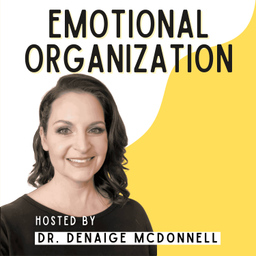
The Good Think looks at the problems we’ve learned to live with — from the patriarchy to food banks to participation ribbons — and asks what they reveal about how we think, lead, and connect. Hosted by Dr. Denaige McDonnell, it’s a mix of storytelling, systems insight, and straight talk about the messy realities behind modern life.

Emotional Organization
Claim This Podcastby Dr. Denaige McDonnell | EIHQ
Podcast Authority
Beta
Podcast Overview
The Good Think looks at the problems we’ve learned to live with — from the patriarchy to food banks to participation ribbons — and asks what they reveal about how we think, lead, and connect. Hosted by Dr. Denaige McDonnell, it’s a mix of storytelling, systems insight, and straight talk about the messy realities behind modern life.
Language
🇺🇲
Publishing Since
10/3/2024
Unlock The Full Podcast Authority Score Report
See how your podcast performs across key metrics
Podcast Authority
Beta
Recommendations available
Unlock the full report to see detailed tips
Unlock comprehensive insights including:
- • YouTube presence analysis
- • Social media reach metrics
- • RSS compliance scoring
- • Podcast 2.0 features
- • Technical standards
Detailed Analytics
- Complete breakdown of all 19 authority metrics
- Personalized recommendations for each metric
- Industry benchmarks and comparisons
- Technical RSS feed analysis and compliance scoring
Growth Strategies
- Step-by-step action plans for improvement
- Quick wins to boost your score immediately
- Pro tips from successful podcasters
See how your show performs across every key metric
High authority scores make your podcast more attractive to industry leaders and influencers who want to appear on credible shows.
Sponsors look for podcasts with proven authority and engagement. Your score demonstrates your podcast's value to potential partners.
Understanding your strengths and weaknesses helps you make data-driven decisions to expand your listener base effectively.
3 verified contact emails on file for Emotional Organization
Pitch yourself as a guest, propose sponsorships, or reach out directly to the host.
Recent Episodes

October 30, 2025
057 | The Food Bank Problem
<p>Food banks have become a symbol of generosity and resilience—neighbors helping neighbors in times of need. But what if that very system of charity is also propping up systemic failure?</p> <p>In this episode of The Good Think, we examine the rise of food banks in Canada and the United States, from their grassroots beginnings to their entrenchment as a second-tier social safety net. We explore how institutions designed for emergency relief have evolved into permanent infrastructure, often filling gaps left by shrinking government programs.</p> <p>Dr. Denaige McDonnell takes listeners on a deep dive into the economic forces, policy choices, and unintended consequences that define the modern food bank landscape. Along the way, we ask:</p> <ul> <li> <p>Who really benefits from food banks—citizens, corporations, or government?</p> </li> <li> <p>Why are food insecurity rates rising despite the scale of charity?</p> </li> <li> <p>And what might a future look like where food charity is no longer necessary?</p> </li> </ul> <h3>What You’ll Learn</h3> <ul> <li> <p>A history of food banks in North America: how they started and why they stayed</p> </li> <li> <p>The role of government withdrawal and charity normalization in shaping public policy</p> </li> <li> <p>The economics behind food banks—including the unpaid labor of volunteers, corporate tax benefits, and inefficiencies in donation models</p> </li> <li> <p>How framing hunger as a charitable issue obscures its political and economic roots</p> </li> <li> <p>What the data say about food insecurity, and why food bank success metrics can be misleading</p> </li> <li> <p>The trade-offs between feeding people today and changing the systems that cause hunger tomorrow</p> </li> <li> <p>Practical ideas for rethinking food assistance through income supports, policy, and justice</p> </li> </ul> <h3>Key Stats & Takeaways</h3> <ul> <li> <p>Over <strong>2.2 million visits</strong> to Canadian food banks are recorded each month—<strong>a historic high</strong>.</p> </li> <li> <p>Estimated <strong>value of unpaid volunteer labor</strong>: <strong>$100–200 million annually</strong> in Canada.</p> </li> <li> <p>Individual Canadians donate another <strong>$11–17 million</strong> in food and money—using <strong>after-tax dollars</strong>.</p> </li> <li> <p>Corporations receive tax benefits, avoid disposal fees, and generate brand value through food bank donations.</p> </li> <li> <p>Despite four decades of charitable expansion, <strong>food insecurity in Canada has nearly doubled</strong> since 2005.</p> </li> </ul> <h3>Resources & References</h3> <ul> <li> <p>Food Banks Canada – HungerCount 2025</p> </li> <li> <p>Daily Bread Food Bank – Who’s Hungry 2025</p> </li> <li> <p>PROOF (U of T) – Food Insecurity Data</p> </li> <li> <p>Feeding America – Food Rescue Statistics</p> </li> <li> <p>ActiveHistory.ca – Historical Context on Food Banks</p> </li> <li> <p>Andrew Fisher, Big Hunger: The Unholy Alliance Between Corporate America and Anti-Hunger Groups</p> </li> <li> <p>PutFoodBanksOutOfBusiness.com – Poverty Costs Estimates</p> </li> <li> <p>Canada Revenue Agency & U.S. IRS – Charitable Tax Deduction Policies</p> </li> </ul> <h3>🎧 Listen + Subscribe</h3> <p>Catch this episode and more on:</p> <ul> <li> <p><a class="decorated-link" href="https://podcasts.apple.com/de/podcast/the-good-think/id1773561323?l=en-GB" target="_blank" rel="noopener noreferrer">Apple Podcasts<span class="ms-0.5 inline-block align-middle leading-none"> </span></a></p> </li> <li> <p><a class="decorated-link" href="https://open.spotify.com/show/1fuT6bZ0zdoYlXAxVpiAUP">Spotify<span class="ms-0.5 inline-block align-middle leading-none"> </span></a></p> </li> <li> <p><a class="decorated-link" href="https://podcast.app/the-good-think-p6163832?">Google Podcasts<span class="ms-0.5 inline-block align-middle leading-none"> </span></a></p> </li> <li> <p><a class="decorated-link" href="https://www.thegoodthink.ca">TheGoodThink.ca<span class="ms-0.5 inline-block align-middle leading-none"> </span></a></p> </li> </ul> <p>And don’t forget to leave a review if you found the episode valuable—it helps others discover The Good Think.</p>

October 23, 2025
056 | The Patriarchy Problem
<p>Everyone blames the patriarchy. But what if it isn’t a villain — it’s a system we forgot to update? In this episode, Denaige traces the word’s origins from its Greek roots to modern headlines, unpacking how a structure that once organized society has become both a scapegoat and a mirror. From crash-test dummies and office thermostats to economics, medicine, and gender roles, she reveals the deeper truth: patriarchy isn’t about men — it’s about design. This isn’t a takedown. It’s an audit. Because once you can see the pattern, you can start redesigning it.</p> <h3>In This Episode</h3> <ul> <li> <p>The real etymology of “patriarchy” — and what it was originally meant to describe</p> </li> <li> <p>How patriarchal systems emerged naturally across cultures as tools for survival</p> </li> <li> <p>Why the Western model became dominant — and how colonialism globalized it</p> </li> <li> <p>The 20th-century turning point: feminism, academia, and the politicization of the term</p> </li> <li> <p>How words like patriarchy, trauma, and narcissism lost their diagnostic precision</p> </li> <li> <p>The patriarchy as a design system — visible in medicine, economics, and architecture</p> </li> <li> <p>Post-war gender dynamics: trauma, labour, and the rise of the dual-income household</p> </li> <li> <p>Why emotional and social exhaustion are symptoms of outdated systems, not failed people</p> </li> <li> <p>What “healing the patriarchy” actually means</p> </li> </ul>

October 16, 2025
055 | Season End: Getting Ready for a Good Think
<p>This is it — the closing chapter of Emotional Organization and the beginning of something entirely new.</p> <p>In this final episode, Denaige introduces The Good Think — a podcast for people who are tired of surface-level conversation and ready to explore the systems, emotions, and logic that shape how we live and lead.</p> <p>If Emotional Organization taught us how to feel, The Good Think teaches us how to think — critically, compassionately, and courageously — in a world that’s increasingly loud, polarized, and automated.</p> <p>This episode is both a farewell and a foundation. It explains what’s changing, why it matters, and how to engage with this new era of the show — one that’s part philosophy, part social analysis, and part emotional resistance training for the modern world.</p> <h3><strong>In This Episode</strong></h3> <p><strong>1. What The Good Think Is:</strong><br> A new kind of thinking practice — a mix of philosophy, psychology, social systems, and real-world messiness — designed to help you separate signal from static and rebuild your ability to reason clearly in a confusing world.</p> <p><strong>2. Why We Need It:</strong><br> Because we’ve become a culture that confuses data for knowledge and outrage for insight.<br> We scroll, repost, and react — but rarely digest.<br> This episode unpacks how we got here, why misinformation spreads like wildfire, and how minority voices now dominate attention through algorithmic amplification.</p> <p><strong>3. The Grade Seven Experiment:</strong><br> A personal story about rumor, reaction, and emotional contagion — and how a simple schoolyard moment revealed timeless truths about belief, information, and the psychology of trust.</p> <p><strong>4. What You’ll Hear in Season 2:</strong><br> Expect context, not just content.<br> Perspective, not just proof.<br> Insight, not just information.<br> From history lessons and social systems to bold new segments like Word of the Week and Top Five, this show brings depth and delight.<br> And yes, this season will be explicit — because real conversations require real language.</p> <p><strong>5. How to Listen:</strong><br> The Good Think isn’t background noise — it’s a participatory experience.<br> You’ll be challenged. You’ll disagree. You might even want to turn it off.<br> But if you stay to the end, you’ll come out sharper, calmer, and more informed than when you started.<br> Each episode is your weekly dose of self-improvement — not just entertainment, but education for your mind.</p> <p><strong>6. A Short History of Risky Thinking:</strong><br> From Socrates in ancient Athens to the algorithms of today, Denaige traces how critical thinking began as an act of defiance — and why it still is.<br> Back then, questioning power could cost your life.<br> Today, it costs your comfort, your belonging, or your digital credibility.<br> She explores how knowledge evolved from sacred and scarce to infinite and unstable — and why, in the age of AI, keeping knowledge wisely is now a human survival skill.</p> <p><strong>7. What It Means to Think Critically:</strong><br> Critical thinking isn’t about being smart — it’s about being honest.<br> It’s the discipline of pausing between what you feel and what you believe, and learning to tell the difference between a message that moves you and one that manipulates you.<br> Because curiosity, in an age of certainty, is an act of rebellion.</p> <p><strong>8. Why It Matters (Now More Than Ever):</strong><br> AI can store and process knowledge, but it can’t carry wisdom.<br> It can’t hold nuance, moral tension, or empathy — and that’s the work of human beings.<br> Critical thinking is the last firewall protecting us from intellectual decay.<br> It’s what keeps our humanity from being replaced by efficiency.</p> <p><strong>9. The Invitation:</strong><br> Season 2 begins next week with Episode 1: The Patriarchy Problem — and Promise.<br> A bold exploration of power, perception, and the systems that hold both together.<br> It’s going to be uncomfortable, challenging, and absolutely worth it.</p> <h3> </h3> <p> </p> <h3><strong>Takeaways</strong></h3> <ul> <li> <p>We’re drowning in information but starving for understanding.</p> </li> <li> <p>Discomfort is not danger; it’s a sign you’ve reached the edge of your own certainty.</p> </li> <li> <p>Knowledge is no longer about possession — it’s about preservation.</p> </li> <li> <p>Thinking critically is how we keep humanity alive in a world increasingly run by machines.</p> </li> </ul> <h3><strong>Episode Links</strong></h3> <ul> <li> <p>🎧 Listen to <a class="decorated-link" href="#">Episode 54: The Year I Learned to Listen to Myself<span class="ms-0.5 inline-block align-middle leading-none"> </span></a> for the reflection that led to this transition.</p> </li> <li> <p>💡 Subscribe to The Good Think — Season 2 launches next week.</p> </li> <li> <p>🪞 Explore related writing and show notes on <strong>Rabbit Holes</strong>, the blog at <a class="decorated-link" href="#">EIHQ.ca<span class="ms-0.5 inline-block align-middle leading-none"> </span></a>.</p> </li> <li> <p>📸 Follow Denaige on Instagram <a target="_new" class="decorated-link" href="https://instagram.com/denaigemcdonnell">@denaigemcdonnell<span class="ms-0.5 inline-block align-middle leading-none"> </span></a> for behind-the-scenes looks at creative process, research, and real-life reflections.</p> </li> </ul>
57 total episodes available
Recent guests on Emotional Organization
Guests from recent episodes — sign up to see every guest that has ever appeared on this show.
Dr Denaige McDonnell
Guest
Michael Wrayton
Guest
Deep-dive analytics for Emotional Organization
Frequently asked questions
Have a different question and can't find the answer you're looking for? Reach out to our support team by sending us an email and we'll get back to you as soon as we can.
- What is Emotional Organization?
- How often does this podcast release new episodes?
This podcast updates daily.
- Where can I listen to this podcast?
This podcast is available on 4 platforms including Apple Podcasts, Spotify, and more. You can also use the RSS feed directly.
- Does this podcast accept guests?
Yes, this podcast regularly features guests.
Legal Disclaimer
Pod Engine is not affiliated with, endorsed by, or officially connected with any of the podcasts displayed on this platform. We operate independently as a podcast discovery and analytics service.
All podcast artwork, thumbnails, and content displayed on this page are the property of their respective owners and are protected by applicable copyright laws. This includes, but is not limited to, podcast cover art, episode artwork, show descriptions, episode titles, transcripts, audio snippets, and any other content originating from the podcast creators or their licensors.
We display this content under fair use principles and/or implied license for the purpose of podcast discovery, information, and commentary. We make no claim of ownership over any podcast content, artwork, or related materials shown on this platform. All trademarks, service marks, and trade names are the property of their respective owners.
While we strive to ensure all content usage is properly authorized, if you are a rights holder and believe your content is being used inappropriately or without proper authorization, please contact us immediately at hey@podengine.ai for prompt review and appropriate action, which may include content removal or proper attribution.
By accessing and using this platform, you acknowledge and agree to respect all applicable copyright laws and intellectual property rights of content owners. Any unauthorized reproduction, distribution, or commercial use of the content displayed on this platform is strictly prohibited.